


Refine Results
Sort By
From
To

This textbook includes the most important management methods and tools. The author does not restrict himself to describing the scientific methods but also shows how to apply them to real-life situations. The management tools he introduces have been successfully tested during 20 years of experience. The various methods are described and analyzed in detail, and many examples illustrate their application. Thus, the textbook gives a fundamental and comprehensive insight into the practice of successful management. It is clearly structured and provides essential in-depth knowledge for students as well as for managers and consultants.
One of the central dynamics shaping organizations is a contradiction managers face between ensuring workforce discipline and harnessing worker creativity. In this rich study of American manufacturing, Matt Vidal offers a theory of 'organizational political economy', integrating concepts from organization theory into a classical Marxist framework
To support businesses managed through an organizational structure oriented by business processes, it is essential that the manager has a set of knowledge, technical skills, and professional demeanor. This text focuses on these aspects, presenting: a) the theoretical foundation, describing the central concepts of the M-B-BP approach; b) the set of necessary techniques from different areas, describing and exemplifying those skills; and c) the required behaviors of managers and employees for structuring, operation, management, and continuous improvement of the organization's business processes.

At a time when managers often provide fodder for unseemly headlines, and some are even compared unflatteringly with locusts, today’s business leaders are called upon as never before to demonstrate the moral justification for their activities, and to ensure that it is understood by all the key stakeholders of a company. What is required is nothing less than a management renaissance, based on a thoroughgoing concept of corporate leadership; there is no less a need for decision makers who hold themselves to the highest standards, with a positive perception of their fu- tion as agents of dissemination, and who are committed to the good not only of “their” firm, but also of society in general.
With the widespread transformation of information into digital form throughout society – firms and organisations are embracing this development to adopt multiple types of IT to increase internal efficiency and to achieve external visibility and effectiveness – we have now reached a position where there is data in abundance and the challenge is to manage and make use of it fully. This book addresses this new managerial situation, the post-digitalisation era, and offers novel perspectives on managing the digital landscape.
Management: Leading and Collaborating in a Competitive World is the perspective of a current or future manager and emphasizes six essential performance dimensions: cost, quality, speed, innovation, service, and sustainability. This bottom-line, results-oriented approach is a unique hallmark of this text. Leadership is also a vital theme and includes working collaboratively toward outstanding results
Intelligence is wasted on problems that themselves have been caused by an excess of intelligence. Lean Brain Management strives toward uncompromising Lean Brain Quality. Lean Brain stands for consistent economization of intelligence in all realms of life: Intelligent systems will only be operated by unskilled workers. Education, universities, and schools would become obsolete. A week of training would be enough for virtually any job. ("You are now the physician for the measles in the State of Ohio. In response to phone calls, send this prescription.") Lean Brain is not aimed at dumbing down! Lean Brain can survive on just a very small amount of central intelligence. Potential savings amount to trillions! This is demonstrated using Germany as an example. With this book, Dueck presents a radical suggestion for world improvement. The desire to laugh infinitely about it will eventually segue into a collective rude awakening. The book contains concrete advice for managers to economize on intelligence, and is thus--in keeping with the theme--written in an easy-to-read fashion.
Aimed at students and managers who seek detailed insights into contemporary knowledge management (KM). It explains the concepts, theories, and technologies that provide the foundation for knowledge management; the systems and structures that constitute KM solutions; and the processes for developing, deploying, and evaluating these KM solutions. It serves as a complete introduction to the subject of knowledge management, incorporating technical and social aspects, as well as concepts, practical examples, traditional KM approaches, and emerging topics. This third edition has been revised and expanded to include more coverage of emergent trends such as cloud computing, online communities, crowdsourcing and artificial intelligence.
Presents a unique blend of articles which combines both conceptual and practical concerns related to devising and implementing sustainable Knowledge Management systems and solutions in contemporary global organizations. The book's contributors are among the leading thinkers and practitioners in this growing field. The seamless synthesis of the human, organizational, and technological dimensions of Knowledge Management makes this book a definitive guide for academics and practising managers alike.

In her first essay Vera Magin uses primary experimental data to explore the effects of information on marketing decisions, performance, and competition. In her second essay the author discusses several approaches to measure product differentiation in spatial contexts. In doing so, she refers to the measurement of diversity and also applies methods from disciplines like spatial statistics, forestry, and geography.
Provides a set of integrated frameworks—capital, systems, and objects—that transcend managerial or technology hype by focusing on the long-term fundamentals that sustain organizational success. Many organizations are currently addressing two important transformational issues: ecological sustainability and digitization. Sustainability is a goal, an end, and digitization is a process, a means to achieve a goal. This book introduces a flexible model that can be applied to current and future organizational challenges, including sustainability and digitization, because the fundamentals are constant.
In this book practitioners of international companies are offered valuable insights and lessons from established and successful managers, academics and consultants.
"‘This user-friendly book will help the reader to develop insights with respect to a number of models that are important in the study and practice of operations management’. … all the chapters are extremely well written and a pleasure to read. … This would be a good book to use as a text in any operations management course, and in particular for operations management courses which are part of a ‘liberal studies’ program. It would also be good book for managers … ." (R Bharath, Journal of the Operational Research society, Vol. 60 (7), 2009)

Focuses on the concept of “brand hate” and consumer negativity in today’s digital markets. It explores the emotional detachment consumers generate against valued brands and how negative experiences affect their and other consumers' loyalty. The book defines consumer brand hate and discusses its dimensions, antecedents, and consequences as well as the semiotics and legality of such brand hate activities based on current brand dilution arguments. It describes the situations which lead to anti-branding and how consumers choose to express their dissatisfaction with a company on individual and social levels. This newly updated edition discusses recent research findings from brand hate literature with new cases and extended managerial analysis.

1 The tools of modern portfolio theory are in general use in the equity markets, either in the form of portfolio optimization software or as an accepted frame- 2 work in which the asset managers think about stock selection. In the ?xed income market on the other hand, these tools seem irrelevant or inapplicable. Bond portfolios are nowadays mainly managed by a comparison of portfolio 3 4 risk measures vis ¶a vis a benchmark. The portfolio manager’s views about the future evolution of the term structure of interest rates translate th- selves directly into a positioning relative to his benchmark, taking the risks of these deviations from the benchmark into account only in a very crude 5 fashion, i.e. without really quantifying them probabilistically. This is quite surprising since sophisticated models for the evolution of interest rates are commonly used for interest rate derivatives pricing and the derivation of ?xed 6 income risk measures.
Combines energy economics and big data modeling analysis in energy conversion and management and comprehensively introduces the relevant theories, key technologies, and application examples of the smart energy economy. With the help of time series big data modeling results, energy economy managers develop reasonable and feasible pricing mechanisms of electricity price and improve the absorption capacity of the power grid. In addition, they also carry out scientific power equipment scheduling and cost–benefit analysis according to the results of data mining, so as to avoid the loss caused by accidental damage of equipment. Energy users adjust their power consumption behavior through the modeling results provided and achieve the effect of energy saving and emission reduction while reasonably reducing the electricity expenditure.
This book examines the capabilities needed to transform a globally distributed organization into a virtual organization (an organization that exists and operates across time and distance with the support of global communications technologies such as the Internet). It introduces techniques for definition of goals for virtualization, for monitoring progress toward virtualization and for studying the impact of virtualization on social uncertainty, knowledge sharing and knowledge transfer, organizational memory, transactive memory, communities of practice and organizational commitment, power and control. These techniques are applied in an extended case study of a development aid organization's attempts to use knowledge management for virtualization over a two year period. The multidisciplinary team of authors examines virtualization from points of view ranging from the organizational to the technological to the sociological and psychological.

Hints of globalization have actually been around for several decades, even though they made only a modest impact; however, the availability of global capital and advances in communication technology have emp- sized the process of internationalization and the tools available to connect and integrate business activities to answer to more complex needs of c- ents. Moreover, the financial scandals and the review of mutual fund trade activity in the US by the Attorney General Elliot Spitzer have highlighted the importance to focus all efforts on renewing the confidence of prof- sional investors and their clients who have entrusted their capital to asset managers. Therefore, there is a growing need in the market to reinforce the concept of “Shared Positive Values” among the entire industry and among its stakeholders.
Topicality of Asian economy has refused to fade for almost four decades; if anything it has been levitating. The Asian economy has changed markedly since the economic and financial crisis of 1997-1998 and is continuing to evolve. As a scholarly subject matter, Asian economy has not stopped attracting academicians, policy mandarins, decision makers in the arena of business and students of Asian economy. The Asian crisis was a cataclysmic event for the region and brought to the surface several systemic limitations, like those in the financial sector, corporate governance, regulatory oversight, legal framework, and exchange rate management. Managers of Asian economy need to get to the bottom of these acutely problematical systemic issues. Additionally, Asian economies need to change with the demands of time and devise their post-crisis development strategy. Asia’s growth model, that served it so well for four decades, is overdue for renewal so that it can re-strengthen its bonds with the ever-evolving regional and global economic reality. The old growth model is likely to be less relevant and effective in the post-crisis future of the Asian economies. It is sure to run into the wall of diminishing returns.
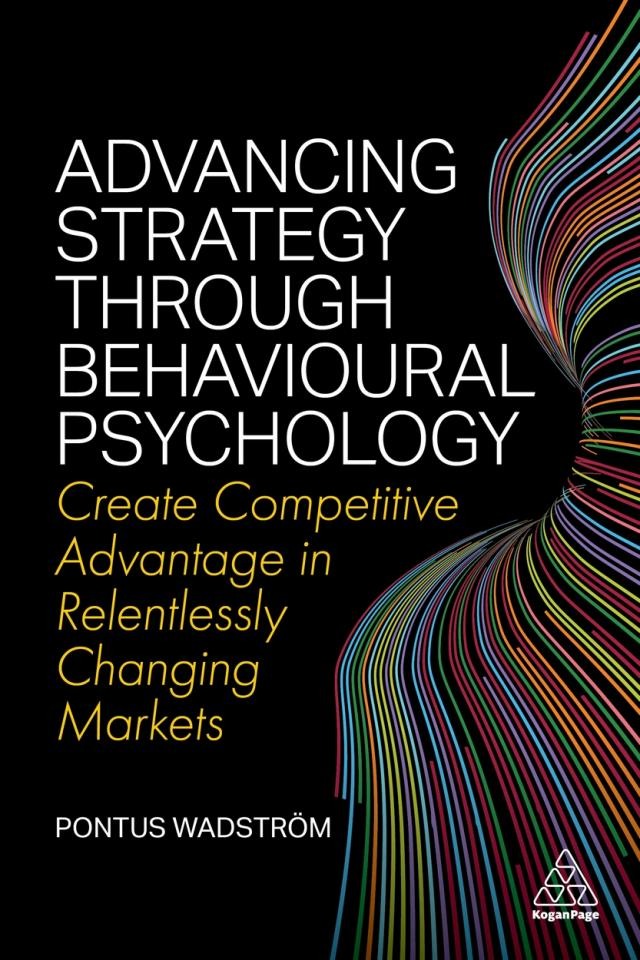
The realisation of strategy is entirely dependent on employee behaviour, so in order to achieve business results it is vital that managers and leaders develop an understanding of human behaviour. Advancing Strategy through Behavioural Psychology shows that by identifying which behaviours should be measured and encouraged, organizations can succeed in implementing strategies for continuous adaptation in a rapidly changing business environment.

Daraa Highway - Ghabagheb - Syria
+963-15 2050 - 15 860 380 /1/2/3 - 11 662 3900