



Page 1
Page 1

Logistics Systems Analysis
It has two new sections, a new appendix, and more than half a dozen new figures. A few references have also been added, Much of the new material is based on work , The financial support of the National Science Foundation and the Volvo Foundations Center of Excellence for the Future of Urban Transportation at U. C. Berkeley is also acknowledged. The new appendix presents the logic behind the traveling salesman and vehicle routing results used in Sec. 4. 2 to describe the transportation ope- tion; Chapter 4 is more self-contained as a result. New section 5. 6 int- duces and evaluates a general method that automatically translates the c- tinuum approximation recipes of Chapters 4 and 5 into discrete system designs. This closes a gap in previous editions. Other additions include an explanation of how to develop system designs that can efficiently acc- modate real-time control strategies to manage uncertainty (new section 4. 6. 3), and extensions of the many-to-many design ideas of Chap. 6

La pratica dellatopia = The practice of atopy
The purpose of this publication is to "translate" and outline the arguments developed in an academic manner in the first edition of the School of atopy and which have been condensed into the text of the same name. This book, on the other hand, aims to be a synthetic and quick reference tool, intended for those who deal with these patients on a daily basis.

Knowledge Enterprise : Intelligent Strategies in Product Design, Manufacturing, and Management ; Proceedings of PROLAMAT 2006, IFIP TC5, International Conference, June 15-17 2006, Shanghai, China
Contains the edited version of the technical presentations of PROLMAT 2006, the IFIP TC5 international conference held on June 15-17, 2006 at the Shanghai University in China. The main theme of this conference is Knowledge Enterprise – Intelligent Strategies in Product Design, Manufacturing and Management. These proceedings focus on the issue of how to translate data and information into knowledge in manufacturing enterprises.
Complexity management : Optimizing product architecture of Industrial products
This book presents a complexity management model that is based on the reasoning that product architecture determines to a considerable extent how external complexity is translated into physical products. The model demonstrates a procedure to optimize a product’s architecture and is applied to several industrial products.

Comparison of digital anesthesia using articaine vs. lidocaine for mandibular infiltration in pediatric patients : Aged 4-5 vs. 6-8 years
Articaine and lidocaine exhibit equivalent efficacy for mandibular infiltration via computerized systems in children aged 4–8 years. While articaine may marginally improve injection comfort, both agents provide reliable anesthesia with minimal complications. Computerized delivery enhances patient experience, supporting its adoption to reduce dental anxiety.This investigation aims to : determine whether articaine's theoretical advantages translate to clinically significant improvements in young children, identify optimal anesthetic protocols for different pediatric age groups, validate the effectiveness of digital delivery systems in pediatric mandibular anesthesia and provide robust data to replace current adult-derived guidelines with pediatric-specific evidence.

Carpooling optimization
The aim of this project is to collect and use the GPS data from mobile devices to get geolocations and translate this data to paths, starting points and destinations to detect patterns out of each individual trajectories that have stochastic nature on the close sight and find representations of those patterns. The second half of the artificial intelligence algorithms has the task of finding the optimal matching of the patterns that were detected in a computation efficient way that achieve the most efficient way of transportation.
Bond Portfolio Optimization
1 The tools of modern portfolio theory are in general use in the equity markets, either in the form of portfolio optimization software or as an accepted frame- 2 work in which the asset managers think about stock selection. In the ?xed income market on the other hand, these tools seem irrelevant or inapplicable. Bond portfolios are nowadays mainly managed by a comparison of portfolio 3 4 risk measures vis ¶a vis a benchmark. The portfolio manager’s views about the future evolution of the term structure of interest rates translate th- selves directly into a positioning relative to his benchmark, taking the risks of these deviations from the benchmark into account only in a very crude 5 fashion, i.e. without really quantifying them probabilistically. This is quite surprising since sophisticated models for the evolution of interest rates are commonly used for interest rate derivatives pricing and the derivation of ?xed 6 income risk measures.

Blind smart helmet
The Smart Helmet for the Blind is a project aimed at providing solutions for the challenges faced by blind individuals in their daily lives. The problem of detecting objects, identifying obstacles and distances, knowing the current location, and using a mobile application is a common issue for blind people. To address these problems, the Smart Helmet project was created, utilizing advanced technology and artificial intelligence to provide real-time assistance to the wearer. The helmet is connected to a Raspberry Pi 4, which processes information from the helmet's cameras and AI algorithms to analyze and predict the surrounding environment for a blind person.
Biomimetics for architecture & design : Nature - analogies - technology
Provides the readers with a timely guide to the application of biomimetic principles in architecture and engineering design. As a result of a combined effort by two internationally recognized authorities, the biologist Werner Nachtigall and the architect Göran Pohl, the book describes the principles which can be used to compare nature and technology, and at the same time it presents detailed explanations and examples showing how biology can be used as a source of inspiration and “translated” in building and architectural solutions (biomimicry). Even though nature cannot be directly copied, the living world can provide architects and engineers with a wealth of analogues and inspirations for their own creative designs. But how can analysis of natural entities give rise to advanced and sustainable design? By reporting on the latest bionic design methods and using extensive artwork, the book guides readers through the field of nature-inspired architecture, offering an extraordinary resource for professional architects, engineers, designers and urban planners, as well as for university teachers, researchers and students.
Basic Science Techniques in Clinical Practice
Medical researchers including doctors, nurses, medical students and allied health professionals are required to undertake a period of research as part of their career pathway. Basic Science Techniques in Clinical Practice covers the main areas, allowing anyone to set up and complete research projects and this information can easily be translated to clinical projects. Written by international authors to provide a flavor from many institutions, the book’s appeal is cross-sectional, both at hospital and primary care levels worldwide.
Artificial intelligence techniques for satellite image analysis
The main objective of this book is to provide a common platform for diverse concepts in satellite image processing. In particular it presents the state-of-the-art in Artificial Intelligence (AI) methodologies and shares findings that can be translated into real-time applications to benefit humankind. Interdisciplinary in its scope, the book will be of interest to both newcomers and experienced scientists working in the fields of satellite image processing, geo-engineering, remote sensing and Artificial Intelligence. It can be also used as a supplementary textbook for graduate students in various engineering branches related to image processing.
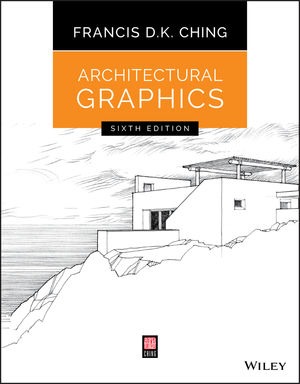
Architectural graphics ; 6th ed.
Offers a comprehensive introduction to using graphic tools and drafting conventions to translate architectural ideas into effective visual presentations, using hundreds of the author's distinctive drawings to illustrate the topic effectively. Includes new information on orthographic projection in relation to 3D models, and revised explanations of line weights, scale and dimensioning, and perspective drawing to clarify some of the most difficult concepts. New examples of modern furniture, APA facilities, and presentation layout provide more up-to-date visuals, and the Reference Center features all new animations, videos, and practice exercises. Architectural graphics are key tools for conveying design through representation on paper or on screen, and this book is the ultimate guide to mastering the skill, then applying your talent to create more effective design communication.

Antibiotic Drug Resistance
This book presents a thorough and authoritative overview of the multifaceted field of antibiotic science – offering guidance to translate research into tools for prevention, diagnosis, and treatment of infectious diseases.
A Risk-Benefit Perspective on Early Customer Integration
Customer integration in the early innovation phase has been considered the method of choice in theory and practice. Growing experience with the concept has shown unexpected side effects that may even outweigh its recognized advantages. Therefore, management needs to be able to assess in advance whether the involvement of customers will add overall value to each particular innovation project. To support but not to replace the final managerial decision, a mathematical formula is developed. It can be applied to all kinds of process structures, takes into account the risks and benefits contingent on a company's situation as well as risk-reducing and benefit-increasing measures and translates them into numerical values. The resulting figure indicates the prospective value of customer integration in a specific project.

A practical guide to corporate finance : Breaking the financial lce
Offers an approachable guide to all key concepts within corporate finance. Emphasizing the use of common sense rather than number-crunching models, A practical guide to corporate finance begins with the basics of how to read financial statements and how to estimate future cash flows. It also includes a guide to subjects such as capital budgeting decisions, the cost of financing for businesses, cash and working capital management, The process of business valuation, and how stock markets work. This textbook breaks the financial ice by offering real, practical advice, helping the reader to avoid common pitfalls, and translate the 'financialese', or business jargon that can cause confusion for those without a financial or banking background.
