


Refine Results
Sort By
From
To


Healthcare quality is not a new issue, but it is often underestimated. The doctor focuses on his relationship with the patient, and is led to believe that technique and technology are sufficient to guarantee effective and efficient performance, regardless of the organizational system. Quality understood as "Total Quality Management" is a way to cross a border, to create knowledge, to break the armor of self-referentiality and that individualistic vision of work learned during university studies and consolidated by professional practice. The path of professional peer accreditation is the tool that the scientific society Associazione Medici Diabetologi has developed and provided to diabetologists to facilitate the understanding of ways of looking at the world of healthcare that are different from those they usually use.

This multiauthored text provides information on the pathophysiology of GERD, appropriate medical management, and proper indications for and performance of surgical and endoscopic procedures for GERD. Thousands of patients will experience inadequate relief from medical therapy or will develop complications from their procedures or recurrent or new symptoms afterwards; this text describes in detail the proper evaluation and management of such patients.

Fifteen years after the first experiments, the breast cancer screening program was rolled out in France in 2004. It is aimed at more than eight million women aged 50 to 74. Public health action on such a scale is exemplary in Europe and especially in France where the health system is not centralized. The new edition of this book takes stock of the current state of the program and its initial results. It updates technical and radiological aspects, assessment indicators, communication and forensic problems and finally the progress of foreign programs. The history of the French program is detailed from the 1990s until 2006, with the publication of the latest version of the specifications by the Directorate General of Health. The short and medium term objectives are re-specified: to increase the participation of women, to retain them and to further improve the quality of practices. The challenge is to combine the performance of screening and therapeutic management to finally achieve a clear reduction in mortality, which has remained stable for twenty years.

Functional magnetic resonance imaging (fMRI) has contributed significantly to progress in neuroscience by permitting noninvasive imaging of the "human brain at work" under physiological conditions. Within clinical neuroimaging, fMRI is opening up a new diagnostic field by measuring and visualizing brain function. However, fMRI is not yet a standard diagnostic imaging procedure. This textbook is devoted to preoperative fMRI in patients with brain tumors and epilepsies, which are the most well-established clinical applications. By localizing and lateralizing specific brain functions in individual patients, as well as epileptogenic zones, fMRI facilitates the selection of a safe treatment and the planning and performance of function-preserving neurosurgery.

This book introduces fundamental concepts, methods, and advances in the areas of dissolution, absorption, and permeability and their key applications in dosage form performance. Case studies are used to discuss the applications of biopharmaceutic strategies in the development of successful drugs, with a specific focus on the applications of biopharmaceutic strategies in the development of successful drugs. The book presents an integrated view in linking pharmaceutic to the biological consequences of drug products and leverages those for decision making in drug development.

Provides an in-depth look at the many aspects of cancer screening and its assessment, including screening phenomena, performance measures, population-level outcomes, research designs, and other important and timely topics.

Excellence in Medical Education explores the essential question facing medical educators and learners today: What is our vision of educational excellence, and what can we do to enhance our performance?
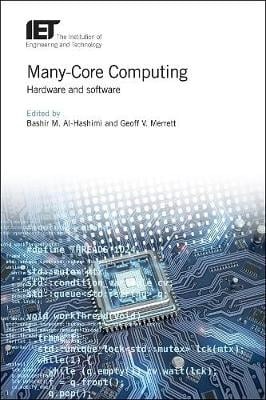
Provides a timely and coherent account of the recent advances in many-core computing research. Starting with programming models, operating systems and their applications; it presents runtime management techniques, followed by system modelling, verification and testing methods, and architectures and systems. Computing has moved away from a focus on performance-centric serial computation, instead towards energy-efficient parallel computation. This provides continued performance increases without increasing clock frequencies, and overcomes the thermal and power limitations of the dark-silicon era. As the number of parallel cores increases, we transition into the many-core computing era. There is considerable interest in developing methods, tools, architectures and applications to support many-core computing.

This open access book presents the outcomes of the “Design for Future – Managed Software Evolution” .The different lifecycles of software and hardware platforms lead to interoperability problems in such systems. Instead of separating the development, adaptation and evolution of software and its platforms, as well as aspects like operation, monitoring and maintenance, they should all be integrated into one overarching process. Accordingly, the book is split into three major parts, the first of which includes an introduction to the nature of software evolution, followed by an overview of the specific challenges and a general introduction to the case studies used in the project. The second part of the book consists of the main chapters on knowledge carrying software, and cover tacit knowledge in software evolution, continuous design decision support, model-based round-trip engineering for software product lines, performance analysis strategies, maintaining security in software evolution, learning from evolution for evolution, and formal verification of evolutionary changes. In turn, the last part of the book presents key findings and spin-offs. The individual chapters there describe various case studies, along with their benefits, deliverables and the respective lessons learned. An overview of future research topics rounds out the coverage.

Discusses the IT management tasks and the objects involved. This book outlines traditional IT management; deals with controlling IT; and, tackles the financial, personnel, purchasing, legal and security aspects in IT. It explains the effects of striving for 'utility computing' and control of IT by means of 'IT portfolio management'.
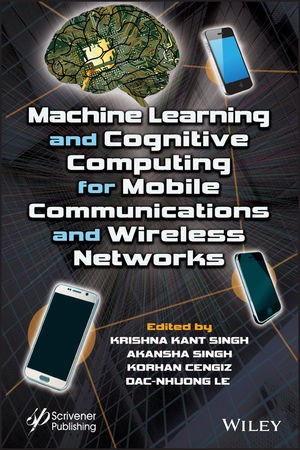
Communication and network technology has witnessed recent rapid development and numerous information services and applications have been developed globally. These technologies have high impact on society and the way people are leading their lives. The advancement in technology has undoubtedly improved the quality of service and user experience yet a lot needs to be still done. Some areas that still need improvement include seamless wide-area coverage, high-capacity hot-spots, low-power massive-connections, low-latency and high-reliability and so on. Thus, it is highly desirable to develop smart technologies for communication to improve the overall services and management of wireless communication. Machine learning and cognitive computing have converged to give some groundbreaking solutions for smart machines. With these two technologies coming together, the machines can acquire the ability to reason similar to the human brain. The research area of machine learning and cognitive computing cover many fields like psychology, biology, signal processing, physics, information theory, mathematics, and statistics that can be used effectively for topology management. Therefore, the utilization of machine learning techniques like data analytics and cognitive power will lead to better performance of communication and wireless systems.

LNA-ESD Co-Design for Fully Integrated CMOS Wireless Receivers fits in the quest for complete CMOS integration of wireless receiver front-ends. With a combined discussion of both RF and ESD performance, it tackles one of the final obstacles on the road to CMOS integration.

Laser-based additive manufacturing (LAM) is a revolutionary advanced digital manufacturing technology developed in recent decades, which is also a key strategic technology for technological innovation and industrial sustainability. This technology unlocks the design and constraints of traditional manufacturing and meets the needs of complex geometry fabrication and high-performance part fabrication. A deeper understanding of the design, materials, processes, structures, properties and applications is desired to produce novel functional devices, as well as defect-free structurally sound and reliable LAM parts.The topics in this Special Issue reprint include macro- and micro-scale additive manufacturing with lasers, such as structure/material design, fabrication, modeling and simulation, in situ characterization of additive manufacturing processes and ex situ materials characterization and performance, with an overview that covers various applications in aerospace, biomedicine, optics and energy.

Embedded systems are ubiquitous. They appear in cell phones, microwave ovens, refrigerators, consumer electronics, cars, and jets. Some of these embedded s- tems are safety- or security-critical such as in medical equipment, nuclear plants, and X-by-wire control systems in naval, ground and aerospace transportation - hicles. With the continuing shift from hardware to software, embedded systems are increasingly dominated by embedded software. Embedded software is complex. Its engineering inherently involves a mul- disciplinary interplay with the physics of the embedding system or environment. Embedded software also comes in ever larger quantity and diversity. The next generation of premium automobiles will carry around one gigabyte of binary code. The proposed US DDX submarine is e?ectively a ?oating embedded so- ware system, comprising 30 billion lines of code written in over 100 programming languages. Embedded software is expensive. Cost estimates are quoted at around US$15– 30 per line (from commencement to shipping). In the defense realm, costs can range up to $100, while for highly critical applications, such as the Space Shuttle, the cost per line approximates $1,000. In view of the exponential increase in complexity, the projected costs of future embedded software are staggering.

Media and communication have become ubiquitous in today’s societies andaffect all aspects of life. On an individual level, they impact how we learnabout the world, how we entertain ourselves, and how we interact withothers. On an organisational level, the interactions between media andorganisations, such as political parties, NGOs, businesses and brands, shapeorganisations’ reputation, legitimacy, trust and (financial) performance, aswell as individuals’ consumer, political, social and health behaviours. Atthe societal level, media and communication are crucial for shaping publicopinion on current issues such as climate change, sustainability, diversity,and well-being.

This book is written for members of the scholarly research community, and for persons involved in research evaluation and research policy. More specifically, it is directed towards the following four main groups of readers: – All scientists and scholars who have been or will be subjected to a quantitative assessment of research performance using citation analysis. – Research policy makers and managers who wish to become conversant with the basic features of citation analysis, and about its potentialities and limitations. – Members of peer review committees and other evaluators, who consider the use of citation analysis as a tool in their assessments. – Practitioners and students in the field of quantitative science and technology studies, informetrics, and library and information science. Citation analysis involves the construction and application of a series of indicators of the ‘impact’, ‘influence’ or ‘quality’ of scholarly work, derived from citation data, i.e. data on references cited in footnotes or bibliographies of scholarly research publications. Such indicators are applied both in the study of scholarly communication and in the assessment of research performance. The term ‘scholarly’ comprises all domains of science and scholarship, including not only those fields that are normally denoted as science – the natural and life sciences, mathematical and technical sciences – but also social sciences and humanities.

This book presents the most recent achievements in some fascinating and rapidly developing fields within Computer Science. The scientific works presented in this book have been partitioned into three topical groups: Image Analysis and Biometrics, Computer Security Systems, and Artificial Intelligence and Applications. Image Analysis and Biometrics is the branch of Computer Science dealing with the very difficult task of artificial, visual perception of objects and surroundings, as well as the problems connected with it. Computer Security and Safety is at present a very important and intensively investigated branch of Computer Science because of the menacing activity of hackers and computer viruses.

The use of computers to recognize humans from physical and behavioral traits dates back to the digital computer evolution of the 1960s. But even after decades of research and hundreds of major deployments, the field of biometrics remains fresh and exciting as new technologies are developed andoldtechnologiesareimprovedandfieldedinnewapplications.Wor- wide over the past few years,there has been a marked increase in both g- ernment and private sector interest in large-scale biometric deployments for accelerating human–machine processes, efficiently delivering human services, fighting identity fraud and even combating terrorism. The p- pose of this book is to explore the current state of the art in biometrics- tems and it is the system aspect that we have wished to emphasize. By their nature, biometric technologies sit at the exact boundary of the human–machineinterface.Butlikealltechnologies,bythemselvestheycan provide no value until deployed in a system with support hardware, n- work connections, computers, policies and procedures, all tuned together to work withpeople to improve some real business process within a social structure.

Presents a new bidding strategy for agents to adopt in CDAs and propose tools to enhance the performance of existing bidding strategies in CDAs. The superior performance of the new bidding strategy as well as the tools presented in this book are illustrated through extensive experiments.
There are no silver bullets in algorithm design, and no single algorithmic idea is powerful and flexible enough to solve every computational problem. Nor are there silver bullets in algorithm analysis, as the most enlightening method for analyzing an algorithm often depends on the problem and the application. However, typical algorithms courses rely almost entirely on a single analysis framework, that of worst-case analysis, wherein an algorithm is assessed by its worst performance on any input of a given size. The purpose of this book is to popularize several alternatives to worst-case analysis and their most notable algorithmic applications, from clustering to linear programming to neural network training. Forty leading researchers have contributed introductions to different facets of this field, emphasizing the most important models and results, many of which can be taught in lectures to beginning graduate students in theoretical computer science and machine learning.

Daraa Highway - Ghabagheb - Syria
+963-15 2050 - 15 860 380 /1/2/3 - 11 662 3900