


Refine Results
Sort By
From
To


Chemometrics and Cheminformatics in Aquatic Toxicology delivers an exploration of the existing and emerging problems of contamination of the aquatic environment through various metal and organic pollutants, including industrial chemicals, pharmaceuticals, cosmetics, biocides, nanomaterials, pesticides, surfactants, dyes, and more. The book discusses different chemometric and cheminformatic tools for non-experts and their application to the analysis and modeling of toxicity data of chemicals to various aquatic organisms.
For the past decade, there has been success in using conventional map-based strategies in identification and cloning of quantitative trait loci (QTL) in model plant species including tomato and Arabidopsis. These quantitative traits are generally the products of many loci with varying degrees of effect upon the observed phenotypes. Recently, a new approach to genetic mapping has emerged called association mapping. This new technique takes into account the thousands of genes to evaluate for QTL effect and is a more efficient approach that does not require generation of segregating populations/large numbers of progeny. As it can utilize all of the historic recombination events in a diverse population of individuals it can generate higher resolution genetic maps and, is needed to complement current map based cloning methods.

Evaluation questionnaires are the most used tools nowadays in the field of medicine and the human sciences to evaluate variables such as disability, altruism or pain. However, clinicians are often unfamiliar with these tools. What do they really measure? How are the results to be interpreted? This book tries to answer these questions.
Introduces various machine learning methods for cyber security analytics. With an overwhelming amount of data being generated and transferred over various networks, monitoring everything that is exchanged and identifying potential cyber threats and attacks poses a serious challenge for cyber experts. Further, as cyber attacks become more frequent and sophisticated, there is a requirement for machines to predict, detect, and identify them more rapidly. Machine learning offers various tools and techniques to automate and quickly predict, detect, and identify cyber attacks.

Presents the most interesting talks given at ISSE 2006 - the forum for the interdisciplinary discussion of how to adequately secure electronic business processes. The topics include: Smart Token and e-ID-Card Developments and their Application - Secure Computing and how it will change the way we trust computers - Risk Management and how to quantify security threats - Awareness raising, Data Protection and how we secure corporate information. Adequate information security is one of the basic requirements of all electronic business processes. It is crucial for effective solutions that the possibilities offered by security technology can be integrated with the commercial requirements of the applications. The reader may expect state-of-the-art: best papers of the Conference ISSE 2006.
This book is written for members of the scholarly research community, and for persons involved in research evaluation and research policy. More specifically, it is directed towards the following four main groups of readers: – All scientists and scholars who have been or will be subjected to a quantitative assessment of research performance using citation analysis. – Research policy makers and managers who wish to become conversant with the basic features of citation analysis, and about its potentialities and limitations. – Members of peer review committees and other evaluators, who consider the use of citation analysis as a tool in their assessments. – Practitioners and students in the field of quantitative science and technology studies, informetrics, and library and information science. Citation analysis involves the construction and application of a series of indicators of the ‘impact’, ‘influence’ or ‘quality’ of scholarly work, derived from citation data, i.e. data on references cited in footnotes or bibliographies of scholarly research publications. Such indicators are applied both in the study of scholarly communication and in the assessment of research performance. The term ‘scholarly’ comprises all domains of science and scholarship, including not only those fields that are normally denoted as science – the natural and life sciences, mathematical and technical sciences – but also social sciences and humanities.
This book presents the most recent achievements in some fascinating and rapidly developing fields within Computer Science. The scientific works presented in this book have been partitioned into three topical groups: Image Analysis and Biometrics, Computer Security Systems, and Artificial Intelligence and Applications. Image Analysis and Biometrics is the branch of Computer Science dealing with the very difficult task of artificial, visual perception of objects and surroundings, as well as the problems connected with it. Computer Security and Safety is at present a very important and intensively investigated branch of Computer Science because of the menacing activity of hackers and computer viruses.

Biometric User Authentication for IT Security: From Fundamentals to Handwriting conveys general principals of passive (physiological trait like fingerprint, iris, face) and active (learned and trained behavior like voice, handwriting and gait) biometric recognition techniques to the reader. This professional book, unlike other publications in this area which concentrate on passive schemes, reflects a more comprehensive analysis of one particular active biometric technique: handwriting. Aspects which are thoroughly discussed include sensor characteristic dependency, attack scenarios, and the generation of cryptographic keys from handwriting.
The use of computers to recognize humans from physical and behavioral traits dates back to the digital computer evolution of the 1960s. But even after decades of research and hundreds of major deployments, the field of biometrics remains fresh and exciting as new technologies are developed andoldtechnologiesareimprovedandfieldedinnewapplications.Wor- wide over the past few years,there has been a marked increase in both g- ernment and private sector interest in large-scale biometric deployments for accelerating human–machine processes, efficiently delivering human services, fighting identity fraud and even combating terrorism. The p- pose of this book is to explore the current state of the art in biometrics- tems and it is the system aspect that we have wished to emphasize. By their nature, biometric technologies sit at the exact boundary of the human–machineinterface.Butlikealltechnologies,bythemselvestheycan provide no value until deployed in a system with support hardware, n- work connections, computers, policies and procedures, all tuned together to work withpeople to improve some real business process within a social structure.
Presents an evaluation of nanotechnologies outputs (academic outputs and patents) and their impact from 2000-2019. The evaluation uses Elsevier’s Scopus (the largest abstract and citation database of peer-reviewed literature), SciVal (a scientific research analysis platform), Funding Institutional (a funding database), and PatentSight (a patent analysis platform). It covers four key topics regarding nanoscience research, including: 1) An overview of nano-related scholarly output, 2) Nanoscience and its contribution to basic science, 3) Nanoscience and its impact on and collaboration with industry partners, and 4) Key factors that promote the development of nanoscience.
Not everything that counts can be counted. Not everything that is counted counts. Albert Einstein This is a book about software measurement from the practitioner’s point of view and it is a book for practitioners. Software measurement needs a lot of practical guidance to build upon experiences and to avoid repeating errors. This book t- gets exactly this need, namely to share experiences in a constructive way that can be followed. It tries to summarize experiences and knowledge about software measurement so that it is applicable and repeatable. It extracts experiences and lessons learned from the narrow context of the specific industrial situation, thus facilitating transfer to other contexts. Software measurement is not at a standstill. With the speed software engine- ing is evolving, software measurement has to keep pace. While the underlying theory and basic principles remain invariant in the true sense (after all, they are not specific to software engineering), the application of measurement to specific contexts and situations is continuously extended. The book thus serves as a ref- ence on these invariant principles as well as a practical guidance on how to make software measurement a success.
An Integrated Approach to Software Engineering introduces software engineering to advanced-level undergraduate and graduate students of computer science. It emphasizes a case-study approach whereby a project is developed through the course of the book, illustrating the different activities of software development. The sequence of chapters is essentially the same as the sequence of activities performed during a typical software project. All activities, including quality assurance and control activities, are described in each chapter as integral activities for that phase of development. Similarly, the author carefully introduces appropriate metrics for controlling and assessing the software process. Chapters in this revised edition, updated for today’s standards, include these new features: Software Process, Requirements Analysis and Specification, Software Architecture, Project Planning, Object Oriented Design, Coding,Testing,
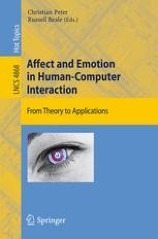
The present book provides an account of the latest work on a variety of aspects related to affect and emotion in human-technology interaction. It covers theoretical issues, user experience and design aspects as well as sensing issues, and reports on a number of affective applications that have been developed in recent years.
The Webisaliveenvironmentthatmanagesanddrivesawidespectrumofapp- cations in which a user may interact with a company, a governmental authority, a non-governmental organization or other non-pro?t institution or other users. User preferences and expectations, together with usage patterns, form the basis for personalized, user-friendly and business-optimal services. Key Web business metrics enabled by proper data capture and processing are essential to run an e?ective business or service. Enabling technologies include data mining, sc- able warehousing and preprocessing, sequence discovery, real time processing, document classi?cation, user modeling and quality evaluation models for them. Recipient technologies required for user pro?ling and usage patterns include recommendation systems, Web analytics applications, and application servers, coupled with content management systems and fraud detectors.
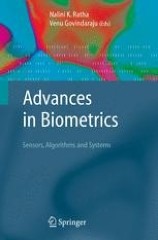
This book presents a comprehensive treatment of biometrics and offers coverage of the entire gamut of topics in the field, including data acquisition, pattern-matching algorithms, and issues that impact at the system level, such as standards, security, networks, and databases.

This volume provides a complete survey of the state-of-the-art research that encompasses all areas of ad hoc and sensor networks. These chapters focus on the theoretical and experimental study of advanced research topics involving security and trust, broadcasting and multicasting, power control and energy efficiency, and QoS provisioning.
Establishes scientific foundations for adaptive autonomous cyber systems and ultimately brings about a more secure and reliable Internet. The recent advances in adaptive cyber defense (ACD) have developed a range of new ACD techniques and methodologies for reasoning in an adaptive environment.

Specifically, this book covers the following topics: 6G Use Cases, Requirements, Metrics and Enabling Technologies, PHY Technologies for 6G Wireless, Reconfigurable Intelligent Surface for 6G Wireless Networks, Millimeter-wave and Terahertz Spectrum for 6G Wireless, Challenges in Transport Layer for Tbit/s Communications, High-capacity Backhaul Connectivity for 6G Wireless, Cloud Native Approach for 6G Wireless Networks, Machine Type Communications in 6G, Edge Intelligence and Pervasive AI in 6G, Blockchain: Foundations and Role in 6G, Role of Open-source Platforms in 6G, and Quantum Computing and 6G Wireless.

This book is so far the first that covers the current state of the art in 3D imaging for safety and security. Special attention was given to advanced 3D imaging technologies in the context of safety and security applications. Comparative evaluation studies showing advantages of 3D imaging over traditional 2D imaging for a given computer vision or pattern recognition task were emphasized. Moreover, additional experts in the field of 3D imaging for safety and security were invited by the editors for a contribution to this book.
Featuring examples from a range of organizations including Coca-Cola and Mercedes-Benz, it shows how to create a strategy which leverages consumer data for customer-centric marketing, establishes the ROI of channels and campaigns, strengthens brands and creates data-driven product strategies. Covering the range of new global laws that impact consumer privacy and data collection and usage, Marketing Metrics shows how to use data in a non-invasive, secure and ethical way.

Daraa Highway - Ghabagheb - Syria
+963-15 2050 - 15 860 380 /1/2/3 - 11 662 3900