


Refine Results
Sort By
From
To

Looks at what exactly artificial intelligence is, how it can be classified, how it differentiates from other concepts such as machine learning, big data, blockchain, or the Internet-of-Things, and how it has evolved and might evolve over time.
Artificial Intelligence for Business: A Roadmap for Getting Started with AI will provide the reader with an easy to understand roadmap for how to take an organization through the adoption of AI technology. It will first help with the identification of which business problems and opportunities are right for AI and how to prioritize them to maximize the likelihood of success. Specific methodologies are introduced to help with finding critical training data within an organization and how to fill data gaps if they exist.
AI Strategy for Sales and Marketing presents a framework for understanding how AI can boost customer-centricity and sales by creating a connected strategy that delivers value today and into the future. Supported by practical tips and advice throughout, it covers topics including personalization, upskilling, customer experience for both on and offline shopping channels and the importance of using AI responsibly to create consumer trust.
AI in marketing equips students with the knowledge to understand the impact of artificial intelligence (AI) on marketing strategies, processes, and activities, empowering them to navigate the AI-driven marketing landscape confidently. divided into four parts, it provides a comprehensive exploration of AI's transformative role in marketing. the first part lays the groundwork, offering foundational insights into the intersection of AI and marketing. Part II explores the various applications of AI in marketing, and the tools marketers use to optimize their processes and deliver enhanced customer experiences. the third part focuses on leveraging AI for consumer insights, enabling marketers to craft data-driven strategies. the final part examines ethical considerations and the pedagogical integration of AI into marketing education.
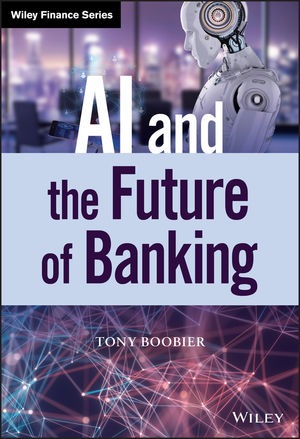
Across its entire breadth and depth, the banking industry is at the forefront of investigating Advanced Analytics and AI technology for use in a broad range of applications, such as customer analytics and providing wealth advice for clients. AI and the Future of Banking provides new and established banking industry professionals with the essential information on the implications of data and analytics on their roles, responsibilities and personal career development.
Contains a collection of scientific chapters addressing the emerging trends in IT and telecommunications, as well as the issues that accompany them in business. It addresses issues in cyber applications, ICT solutions and innovative cyber know-how, and demonstrates how high-tech IT communications resources can be used to improve business production, sales and service strategies, supply chains and logistics.
Presents a systematic, next-generation approach to marketing strategy, demonstrating how success is gained and sustained via continuous innovation to create new value for customers. George S. Day develops the outside-in approach to formulating strategy, while providing compelling insights into key market stakeholders to illustrate how to sustain customer value leadership in the face of mounting market turbulence.
Learning and adaption are key features of "real economies". Studying interesting real phenomena like innovation, industry evolution or the role of expectation formulation in financial markets thus necessitates novel methods of data analysis and modelling. This title covers statistical models of heterogeneity, artificial consumer markets, models of adaptive expectation formulation in financial markets and agent-based models of industry evolution, product diversification and energy markets. The joint findings are presented in a manner that is interesting both for readers with a background in economics/management and mathematics and statistics and also for non-expert readers because it allows them to grasp the ideas of modern management science. This book thus provides a unique integrated toolbox for building realistic agent-based models of learning and adaption in a variety of settings based on sound data analysis.
Presents the latest scholarly research on the widespread integration of technological innovations around the globe and examines how organizational agility, intelligence and resilience interprets, affects, and improves the entrepreneurship around the globe
Sheds light on the challenges and solutions for companies when dealing with the online consumer on social media and in the era of Web 4.0. It investigates the digital transformation in terms of customer experience, customer empowerment, resistance, influencer marketing, and trust. The volume shows how consumers perceive, react and behave towards brands’ digital marketing strategies in addition to the barriers, constraints, advantages and modes of action of online consumers.

"Market quality" is a complex, ambiguous term that means different things to different people. How should it be defined, measured, monitored, and improved? What is the evidence about the current state of our markets? How effective have recent innovations been? How can we better meet investor needs? These are some of the questions that we address in this book, along with a broad range of issues concerning equity market structure, regulation, and the quest for best execution. Throughout, particular attention is given to the perspective of front line participants on the buy-side and sell-side trading desks.

Customer integration in the early innovation phase has been considered the method of choice in theory and practice. Growing experience with the concept has shown unexpected side effects that may even outweigh its recognized advantages. Therefore, management needs to be able to assess in advance whether the involvement of customers will add overall value to each particular innovation project. To support but not to replace the final managerial decision, a mathematical formula is developed. It can be applied to all kinds of process structures, takes into account the risks and benefits contingent on a company's situation as well as risk-reducing and benefit-increasing measures and translates them into numerical values. The resulting figure indicates the prospective value of customer integration in a specific project.

A Customer-oriented Manager for B2B Services provides managers with the knowledge and tools necessary to implement customer orientation themselves, with the involvement of their extended team. To this end, this book presents a four-step approach: understand the fundamentals of customer orientation in B2B services, know the customer, make the most of the offer and deliver the service.

On the occasion of the 50th anniversary of the European Union experts present their analyses of historical developments and new economic challenges for the EU. After a reflection on historical dynamics, the contributors point out the dramatic economic shifts between Europe, Asia and the US. Representatives from major central banks (including the ECB), other leading banks, and academia analyze the dynamics of the Eurozone and financial market integration in the context of globalization and economic growth. Furthermore, the authors discuss the challenges of information and communication technologies by means of various country analyses. Moreover, the Schumpeterian prospects for Europe and the Lisbon Agenda, the long-term challenges of EU pension reforms, emission trading systems in the EU, and options for a new EU constitution are highlighted. At the bottom line of this EU analysis are major implications for investors, managers, policy-makers and the public at large in both the EU and the global economy.

Investigates the possible changes needed for industrial organizations to adapt to and remain competitive in their ever evolving environment. (R)Evolution’s main area of contribution to these very complex issues is embedded in the work’s ambitious attempt to borrow from evolutionary biology and genetics not only metaphors but also concepts and models to be adapted to the management of business organizations. The work provides us with a comprehensive vision of adaptation and variation in the business community, integrating various intellectual inputs which are based on an evolutionary vision of economic behavior. Using an extensive study of the literature in management science, and applying new models and methodologies in numerous case studies, Dekkers draws many insightful conclusions including the claim that companies often evolve slower than generally expected. Furthermore the research calls into question the effectiveness of the common practice of corporate reorganization. Embracing and merging most major contemporary developments in the theories of change into a comprehensive integrated approach, (R)Evolution is an invaluable resource for researchers specializing in the management of technological change.

This book offers an optimistic view of the future and provides a road map for societies to get there. Drawing upon extensive research and many years as a thought leader in environmental and sustainability issues in Japan and internationally, Hiroshi Komiyama analyzes the most pressing challenges to the attainment of sustainability of economically advanced nations and argues forcefully for Japan to lead them out of the present dilemma through active promotion of creative consumer and societal demand. He shows how an active industry–government–academic partnership can provide the environment needed to promote such new creative demand and illustrates its potential through presentation of a Platinum Society Network that was launched on a regional basis in Japan in 2010 to facilitate the solution of common issues through the exchange of information and ideas.

Leading architect Reinier de Graaf De Graaf punctures the myths behind the debates on what contemporary architecture is, with wit and devastating honesty. Architecture, it seems, has become too important to leave to architects. No longer does it suffice to judge a building solely by its appearance, it must be measured, and certified. When architects talk about "Excellence," "Sustainability," "Well-being," "Liveability," "Placemaking," "Creativity," "Beauty" and "Innovation" what do they actually mean? In Architect, Verb, De Graff dryly skewers the doublespeak and hot air of an industry in search of an identity in the 21st century

Tremendous human progress is becoming possible through the development of converging technologies stimulated by advances in four core fields: Nanotechnology, Biotechnology Information technology, and new technologies based in Cognitive science (NBIC). This book provides a unique review of technical developments related to the unification that is rapidly taking place today among these fields.

This book provides an in-depth study of the management of standards and regulation in sustainable and radical innovation development. It considers the case of micro Combined Heat and Power (mCHP) technology. The developers of this radical innovation in the European heating sector encountered major conflicts when attempting to create or adapt standards when bringing the technology to market. Utilising rich research data and interviews with key actors, the author uses this case to derive a grounded theory on the management of standards and regulation during an innovation process. The results also have important implications for innovators, which are reflected in clear advice for practice.

This book discusses the progress of science and the transfer of scientific knowledge to technological application. It also identifies the factors necessary to achieve this progress. Based on a case study of the physical chemist Fritz Haber's discovery of ammonia synthesis between 1903 and 1909, the book places Haber's work in historical and scientific (physicochemical) context. The scientific developments of the preceding century are framed in a way that emphasizes the confluence of knowledge needed for Haber's success. Against this background, Haber's work is presented in detail along with the indispensable contributions of his colleague, the physical chemist, Walter Nernst, and their assistants. The detailed accounts of scientific advancement remind us of the physical basis on which our scientific theories and ideas are built. Without this reminder we often forget how complex, and how beautiful achievements in science can be.

Daraa Highway - Ghabagheb - Syria
+963-15 2050 - 15 860 380 /1/2/3 - 11 662 3900