


Refine Results
Sort By
From
To

Local Newforms for GSp(4) describes a theory of new- and oldforms for representations of GSp(4) over a non-archimedean local field. This theory considers vectors fixed by the paramodular groups, and singles out certain vectors that encode canonical information, such as L-factors and epsilon-factors, through their Hecke and Atkin-Lehner eigenvalues. While there are analogies to the GL(2) case, this theory is novel and unanticipated by the existing framework of conjectures. An appendix includes extensive tables about the results and the representation theory of GSp(4).

This open access book focuses on the linear selection index (LSI) theory and its statistical properties. It addresses the single-stage LSI theory by assuming that economic weights are fixed and known - or fixed, but unknown - to predict the net genetic merit in the phenotypic, marker and genomic context. Further, it shows how to combine the LSI theory with the independent culling method to develop the multistage selection index theory. The final two chapters present simulation results and SAS and R codes, respectively, to estimate the parameters and make selections using some of the LSIs described. It is essential reading for plant quantitative geneticists, but is also a valuable resource for animal breeders.
Reinterprets Leonardo's legacy of notes, showing that apparently unconnected fragments from dispersed manuscripts actually comprise cohesive designs for functioning automata. Using the rough sketches scattered throughout almost all of Leonardo's notebooks, the author has reconstructed Leonardo's programmable cart, which was the platform for other automata: a Robot Lion, a Robot Knight, and a hydraulically powered automaton for striking a bell.
Lattice Boltzmann models have a remarkable ability to simulate single- and multi-phase fluids and transport processes within them. A rich variety of behaviors, including higher Reynolds numbers flows, phase separation, evaporation, condensation, cavitation, buoyancy, and interactions with surfaces can readily be simulated. This book provides a basic introduction that emphasizes intuition and simplistic conceptualization of processes. It avoids the more difficult mathematics that underlies LB models. The model is viewed from a particle perspective where collisions, streaming, and particle-particle/particle-surface interactions constitute the entire conceptual framework. Beginners and those with more interest in model application than detailed mathematical foundations will find this a powerful "quick start" guide. Example simulations, exercises, and computer codes are included. Working code is provided on the Internet.
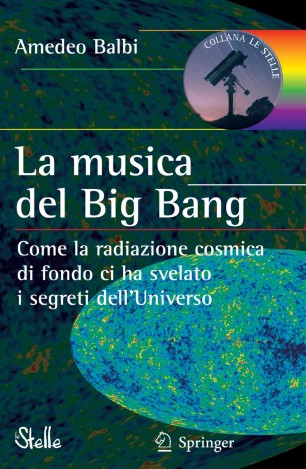
Cosmic microwave background radiation is the residue of the great heat following the Big Bang. A tenuous sign, over 13 billion years old, in which the answers to many of the questions about the nature of our Universe are hidden. Discovered by chance in 1964, in the last forty years this fossil trace of the origins of the Cosmos has been explored with every available means. Two Nobel Prizes in physics have already been awarded for research involving it, the last in 2006 for the results of the COBE satellite. Much of the information encoded in the cosmic background radiation was impressed by the superimposition of acoustic waves present in the early Universe: a "music" of the Big Bang, which cosmologists have tried for years to reconstruct, using techniques similar to those that allow to distinguish the sound of different musical instruments. Only recently have the first notes of this extraordinary cosmic symphony finally been revealed, but the investigation is not over yet. This book illustrates, with a language suitable even for non-specialists, the theories, observations and discoveries that have brought cosmology into a new era.
Cosmic microwave background radiation is the residue of the great heat following the Big Bang. A tenuous sign, over 13 billion years old, in which the answers to many of the questions about the nature of our Universe are hidden. Discovered by chance in 1964, in the last forty years this fossil trace of the origins of the Cosmos has been explored with every available means. Two Nobel Prizes in physics have already been awarded for research involving it, the last in 2006 for the results of the COBE satellite. Much of the information encoded in the cosmic background radiation was impressed by the superimposition of acoustic waves present in the early Universe: a "music" of the Big Bang, which cosmologists have tried for years to reconstruct, using techniques similar to those that allow to distinguish the sound of different musical instruments. Only recently have the first notes of this extraordinary cosmic symphony finally been revealed, but the investigation is not over yet. This book illustrates, with a language suitable even for non-specialists, the theories, observations and discoveries that have brought cosmology into a new era.
Almost a century earlier, in 1782, Euler [180] published some results on classifying small Latin squares, but for the ?rst few steps in this direction one should actually go at least as far back as ancient Greece and the proof that there are exactly ?ve Platonic solids. One of the most remarkable achievements in the early, pre-computer era is the classi?cation of the Steiner triple systems of order 15, quoted above. An onerous task that, today, no sensible person would attempt by hand calcu- tion. Because, with the exception of occasional parameters for which com- natorial arguments are e?ective (often to prove nonexistence or uniqueness), classi?cation in general is about algorithms and computation.
For a long time, the die cast industry has used trial and error as a leading development method, resulting in tremendous growth in the utilisation of available CFD (computational fluid dynamics) software. This software allows the development of better products that maximise the advantages the die cast process has to offer. Casting: An Analytical Approach will refresh knowledge of the governing laws of the fluid dynamics that have an effect on die cast die and die cast process design. MATLAB® (MathWorks, Inc.) and Visual Basic® (Microsoft) code are listed in Casting: An Analytical Approach for every stage of product, die and die cast process design; providing better understanding of die and process design and simplifying calculations of the die cast die as well as the die cast process. Gas ventilation system calculations and fundamentals of compressible gas flow are also included.
In the 1960s, it became increasingly clear that more and more information was going to be stored on computers, not on pieces of paper. With these changes in technology and the ways it was used came a need to protect both the systems and the information. For the next ten years, encryption systems of varying strengths were developed, but none proved to be rigorous enough. In 1973, the NBS put out an open call for a new, stronger encryption system that would become the new federal standard. Several years later, IBM responded with a system called Lucifer that came to simply be known as DES (data encryption standard).
Bioconductor is a widely used open source and open development software project for the analysis and comprehension of data arising from high-throughput experimentation in genomics and molecular biology. Bioconductor is rooted in the open source statistical computing environment R. This volume's coverage is broad and ranges across most of the key capabilities of the Bioconductor project, including: Importation and preprocessing of high-throughput data from microarray, proteomic, and flow cytometry platforms / Curation and delivery of biological metadata for use in statistical modeling and interpretation. / Statistical analysis of high-throughput data, including machine learning and visualization,modeling and visualization of graphs and networks. This book is a dynamic document. Code underlying all of the computations that are shown is made available on a companion website, and readers can reproduce every number, figure, and table on their own computers.
Economics went through great development in the 20th century. This development, which was based mainly on mathematical methods, is not an appropriate method of analyzing markets that change every hour and every day. In a stock market, prices constantly change depending on speculation. U-Mart, a manmade market, has been proposed in order to study such instantly moving markets. Although the U-Mart system is internationally acclaimed for being at the forefront of market research, its use is by no means limited to a small number of researchers on the fringe. The whole system, including its source code, is open and is distributed without charge, testifying to a philosophy of creating and providing a common testbed for research into financial markets.
The basic techniques of algebra and number theory useful in recent applications to cryptography and codes are developed, with the aim of being elementary and self-sufficient. The emphasis is on computational problems. This part of the volume can be useful as a textbook for a first course in algebra for mathematicians, computer scientists or engineers. Important applications of algebra and geometry to cryptography and codes are then illustrated. Both, cryptography and codes have significant applications in daily life which are illustrated here. Cryptography is developed in detail in much of its classic and current aspects, and both private and public key cryptography are developed. Cryptography with the use of elliptic curves on finite fields is also illustrated. A chapter introducing the subject is dedicated to linear codes.

Analysis, Synthesis, and Perception of Musical Sounds contains a detailed treatment of basic methods for analysis and synthesis of musical sounds, including the phase vocoder method, the McAulay-Quatieri frequency-tracking method, the constant-Q transform, and methods for pitch tracking with several examples shown. Various aspects of musical sound spectra such as spectral envelope, spectral centroid, spectral flux, and spectral irregularity are defined and discussed. One chapter is devoted to the control and synthesis of spectral envelopes. Two advanced methods of analysis/synthesis are given: "Sines Plus Transients Plus Noise" and "Spectrotemporal Reassignment" are covered. Methods for timbre morphing are given. The last two chapters discuss the perception of musical sounds based on discrimination and multidimensional scaling timbre models.
Most data sets collected by researchers are multivariate, and in the majority of cases the variables need to be examined simultaneously to get the most informative results. This requires the use of one or other of the many methods of multivariate analysis, and the use of a suitable software package such as S-PLUS or R. In this book the core multivariate methodology is covered along with some basic theory for each method described. The necessary R and S-PLUS code is given for each analysis in the book, with any differences between the two highlighted.
This book aims to present meshfree methods in a friendly and straightforward manner, so that beginners can very easily understand, comprehend, program, implement, apply and extend these methods. It provides first the fundamentals of numerical analysis that are particularly important to meshfree methods. Typical meshfree methods, such as EFG, RPIM, MLPG, LRPIM, MWS and collocation methods are then introduced systematically detailing the formulation, numerical implementation and programming. Many well-tested computer source codes developed by the authors are attached with useful descriptions. The application of the codes can be readily performed using the examples with input and output files given in table form. These codes consist of most of the basic meshfree techniques, and can be easily extended to other variations of more complex procedures of meshfree methods. Readers can easily practice with the codes provided to effective learn and comprehend the basics of meshfree methods.

This book treats the Mathematics of many important areas in digital information processing.It covers, in a unified presentation, five topics: Data Compression, Cryptography, Sampling (Signal Theory), Error Control Codes, Data Reduction. The thematic choices are practice-oriented. So, the important final part of the book deals with the Discrete Cosine Transform and the Discrete Wavelet Transform, acting in image compression. The presentation is dense, the examples and numerous exercises are concrete. The pedagogic architecture follows increasing mathematical complexity.

Simple tutorial chapters introduce the reader to cutting edge technologies, such as parallel and distributed computing, object-oriented technologies, grid computing, semantic grids, agent based computing and service-oriented architectures. On such bases, a variety of EM applications is proposed: 1) parallel FDTD codes (both for antenna analysis and for metamaterial applications), 2) grid computing for computational EM (CEM) (with applications to antenna arrays, wireless and remote-sensing systems) 3) mobile agents for parametric CEM modeling 4) complex/hybrid EM software environments (with applications to planar circuits, quasi-optical systems,…) 5) semantic grids for CAE of antennas arrays.

Firmly grounded in the scholarly literature globally, it engages with the experience of local practicioners. It presents aspects of academic integrity that is specific to Canada, such as the existence of an "honour culture", rather than relying on an "honour code". It also includes Indigenous voices and perspectives that challenge traditional understandings of intellectual property, as well as new understandings that have arisen as a consequence of Covid-19 and the significant shift to online and remote learning.
Satellite navigation receivers are used to receive, process, and decode space-based navigation signals, such as those provided by the GPS constellation of satellites. There is an increasing need for a unified open platform that will enable enhanced receiver development and design, as well as cost-effective testing procedures for various applications. This book provide hands-on exploration of new technologies in this rapidly growing field. One of the unique features of the work is the interactive approach used, giving readers the ability to construct their own Global Navigation Satellite Systems (GNSS) receivers. To construct such a reconfigurable receiver with a wide range of applications, the authors discuss receiver architecture based on software-defined radio (SDR) techniques. The presentation unfolds in a systematic, user-friendly style and goes from the basics to cutting-edge research.

Explores the history of literature as a history of changing media and modes of communication, from manuscript to print, from the codex to the computer, and from paper to digital platforms. It argues that literature has evolved, and continues to evolve, in sync with material forms and formats that engage our senses in multiple ways. Because literary experiences are embedded in, and enabled by, media, the book focuses on literature as a changing combination of material and immaterial features.

Daraa Highway - Ghabagheb - Syria
+963-15 2050 - 15 860 380 /1/2/3 - 11 662 3900