


Refine Results
Sort By
From
To

This book contains six chapters on central topics in materials science. Each is written by specialists in the field, and gives a state-of-the-art presentation of the subject for graduate students and scientists not necessarily working in that field. Computer simulations of new materials, theory and experimental work are all extensively discussed. As nanomaterials are of great current interest, most of the topics discussed have a bearing on nanomaterials and nanodevices. In addition to inorganic nanotubes, metallic nanocrystals, electronic nanodevices, spintronics and interfaces on an atomic scale, the text also presents computer simulations on one of the less well understood fields in solid-state physics and materials science: glasses and undercooled fluids.

By introducing mathematical objects, it teaches students how to use a computer to perform numerical and symbolic calculations, define a function and calculate its values, plot and explore graphs, and execute simple algorithms. The course is rich in examples, applications, and models, drawn from economics, physics, biology, statistics, and mathematics itself. The analysis of these models constitutes, in a certain sense, the true purpose of the mathematical theory covered. Automatic calculation tools (mathematics software, spreadsheets) are used extensively to explore and illustrate concepts and properties. Mathcad® software, in particular, was used, both as a calculation tool and as a simple yet powerful programming language. Considerable space is devoted to approximation, emphasizing the distinction between numerical and symbolic calculation; to algorithms as a synthesis of the syntactic and semantic aspects of mathematical objects; and to computer simulation, interpreted as a "physical" experiment and a source of conjecture. The ability to use a calculator marks a sort of "democratization" of mathematics: even complex results, which have always required a broad background of knowledge and laborious calculations, are now quickly accessible to anyone who understands the meaning of mathematical objects and knows how to use the syntax.

The matrix-based approach presented here is a solution to the real-time application of control in discrete event systems and flexible manufacturing systems (FMS), and offers a sound practical basis for the design of controllers for manufacturing systems.

In many parts of the world, weather and climate are one of the biggest production risks and uncertainty factors impacting on agricultural systems performance and management. Both structural and non-structural measures can be used to reduce the impacts of the variability (including extremes) of climate resources on crop production. While the structural measures include strategies such as irrigation, water harvesting, windbreaks etc., the non-structural measures include use of seasonal to interannual climate forecasts, improved application of medium-range weather forecasts and crop insurance. This book based on an International Workshop held in New Delhi, India should be of interest to all organizations and agencies interested in improved risk management in agriculture.
This book summarizes work being pursued in the context of the CIPRNet (Critical Infrastructure Preparedness and Resilience Research Network) research project, co-funded by the European Union under the Seventh Framework Programme (FP7). The project is intended to provide concrete and on-going support to the Critical Infrastructure Protection (CIP) research communities, enhancing their preparedness for CI-related emergencies, while also providing expertise and technologies for other stakeholders to promote their understanding and mitigation of the consequences of CI disruptions, leading to enhanced resilience.

Addresses the exciting and rapidly developing topic of nanostructured magnetic materials. It combines modern topics in nanoscale magnetism with issues relating to the fabrication and characterization of magnetic nanostructures. The chapters describe a wide range of physical aspects, together with theoretical and experimental methods. "Magnetic Nanostructures" will be of interest to researchers and specialists both in academic and industrial research. Graduate students will also find in this book an accessible introduction to the essential issues.
Machining is one of the most important manufacturing processes. Parts manufactured by others processes often require further operations before the product is ready for application. Machining is the broad term used to describe the removal of material from a work-piece. Machining processes can be applied to work metallic and non-metallic materials such as polymers, wood, ceramics and composites.
Modern control theory and in particular state space or state variable methods can be adapted to the description of many different systems because it depends strongly on physical modeling and physical intuition. The laws of physics are in the form of differential equations and for this reason, this book concentrates on system descriptions in this form. This means coupled systems of linear or nonlinear differential equations. The physical approach is emphasized in this book because it is most natural for complex systems. It also makes what would ordinarily be a difficult mathematical subject into one which can straightforwardly be understood intuitively and which deals with concepts which engineering and science students are already familiar.

This open access book focuses on the linear selection index (LSI) theory and its statistical properties. It addresses the single-stage LSI theory by assuming that economic weights are fixed and known - or fixed, but unknown - to predict the net genetic merit in the phenotypic, marker and genomic context. Further, it shows how to combine the LSI theory with the independent culling method to develop the multistage selection index theory. The final two chapters present simulation results and SAS and R codes, respectively, to estimate the parameters and make selections using some of the LSIs described. It is essential reading for plant quantitative geneticists, but is also a valuable resource for animal breeders.
Focuses on the foundations of linear estimation theory which is essential for effective signal processing. In its first part, it gives a comprehensive overview of several key methods like reduced-rank signal processing and Krylov subspace methods of numerical mathematics. Based on the derivation of the multistage Wiener filter in its most general form, the relationship between statistical signal processing and numerical mathematics is presented. In the second part, the theory is applied to iterative multiuser detection receivers (Turbo equalization) which are typically desired in wireless communication systems.

Light Scattering by Systems of Particles comprehensively develops the theory of the null-field method, while covering almost all aspects and current applications. The "Null-field Method with Discrete Sources" is an extension of the Null-field Method (also called T-Matrix Method) to compute light scattering by arbitrarily shaped dielectric particles. This book incorporates FORTRAN programs and exemplary simulation results that demonstrate all aspects of the latest developments of the method. Worked examples of the application of the FORTRAN programs show readers how to adapt or modify the programs for their specific application.

Light and Light Sources gives an introduction to the working principles of high-intensity discharge (HID) lamps and points out challenges and problems associated with the development and operation of HID lamps. The state-of-the-art in electrode and plasma diagnostics as well as numerical methods used for the understanding of HID lamps are described. This volume addresses students as well as scientists and researchers at universities and in industry.
The present volume is an introduction, largely from the physicists' perspective, to the subject matter with in-depth contributions by system neuroscientists. A conceptual model for complex networks of neurons is introduced that incorporates many important features of the real brain, such as various types of neurons, various brain areas, inhibitory and excitatory coupling and the plasticity of the network. The computational implementation on supercomputers, which is introduced and discussed in detail in this book, will enable the readers to modify and adapt the algortihm for their own research.
The present volume is an introduction, largely from the physicists' perspective, to the subject matter with in-depth contributions by system neuroscientists. A conceptual model for complex networks of neurons is introduced that incorporates many important features of the real brain, such as various types of neurons, various brain areas, inhibitory and excitatory coupling and the plasticity of the network. The computational implementation on supercomputers, which is introduced and discussed in detail in this book, will enable the readers to modify and adapt the algortihm for their own research.
Presents 8 novel approaches to measure and improve diagnostic competences with simulation. The book compares the effects of interventions on these diagnostic competences in both teacher and medical education. It includes analyses showing that important aspects of diagnostic competences and effects of instructional interventions aiming to facilitate them are comparable for teachers and doctors.
Describes in detail the practice of the Bayesian statistical approach using many examples chosen for their educational interest. The first part gives the general principles of statistical modeling making it possible to supervise but also to come to the aid of the imagination of the apprentice modeler. By examining examples of increasing difficulty, the reader forges the keys to building their own model. The second part presents the most useful calculation algorithms for estimating the unknowns of the model. Each inference method is presented and illustrated by numerous application cases.

Both experimental and theoretical studies of nearly every aspect of the LDH structure are discussed, including the range of metal cations and interlayer anions, M 3+ /M 2+ ratios, LDH polytypes, arrangement of the "interlayer" anions and water molecules, molecular modeling and molecular dynamics simulations, and the long- and short-range order in both the layers and interlayer galleries. Of especial value is the treatment of the more detailed aspects of the LDH structure that are still unresolved.
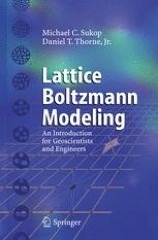
Lattice Boltzmann models have a remarkable ability to simulate single- and multi-phase fluids and transport processes within them. A rich variety of behaviors, including higher Reynolds numbers flows, phase separation, evaporation, condensation, cavitation, buoyancy, and interactions with surfaces can readily be simulated. This book provides a basic introduction that emphasizes intuition and simplistic conceptualization of processes. It avoids the more difficult mathematics that underlies LB models. The model is viewed from a particle perspective where collisions, streaming, and particle-particle/particle-surface interactions constitute the entire conceptual framework. Beginners and those with more interest in model application than detailed mathematical foundations will find this a powerful "quick start" guide. Example simulations, exercises, and computer codes are included. Working code is provided on the Internet.
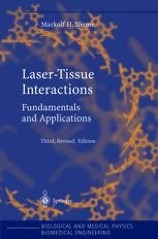
This essential work provides a thorough description of the fundamentals and applications in the field of laser-tissue interactions. Concepts such as the optical and thermal properties of tissue, and optical breakdown and its related effects, are treated in detail.

Laser Ablation and its Applications emphasizes the wide range of these topics rather than focusing on one specialty or discipline. It is intended for a graduate course in laser interactions with plasmas and materials, but it should be accessible to anyone with a graduate degree in physics or engineering.

Daraa Highway - Ghabagheb - Syria
+963-15 2050 - 15 860 380 /1/2/3 - 11 662 3900