


Refine Results
Sort By
From
To

Proposing a wide range of mathematical models that are currently used in life sciences may be regarded as a challenge, and that is precisely the challenge that this book takes up. Of course this panoramic study does not claim to offer a detailed and exhaustive view of the many interactions between mathematical models and life sciences. This textbook provides a general overview of realistic mathematical models in life sciences, considering both deterministic and stochastic models and covering dynamical systems, game theory, stochastic processes and statistical methods. Each mathematical model is explained and illustrated individually with an appropriate biological example. Finally three appendices on ordinary differential equations, evolution equations, and probability are added to make it possible to read this book independently of other literature.

The mechanics of Coupled Fields is a discipline at the edge of modern research connecting Continuum Mechanics with Solid State Physics. It integrates the Mechanics of Continuous Media, Heat Conductivity and the theory of Electromagnetism that are usually studied seperately. For an accurate description of the influence of static and dynamic loadings, high temperatures and strong electromagneticfields in elastic media and constructive installations, a new aproach is required; an approach that has the potential to establish a synergism between the above-mentioned fields. Throughout the book a vast number of problems are considered: two-dimensional problems of electro-magneto-elasticity as well as static and dynamical problems for piecewise homogenous compound piezoelectric plates weakened by cracks and openings. The boundary conditions, the constuctive equations and the mathematical methods for their solution are thoroughly presented, so that the reader can get a clear quantative and qualitative understnding of the phenomena taking place.
This book introduces and explains classical and modern mathematical procedures as applied to the real problems confronting engineers and geoscientists. Written in a manner that is understandable for students across the breadth of their studies, it lays out the foundations for mastering difficult and sometimes confusing mathematical methods.

Experience the discovery of mathematics by reading the original work of some of the greatest minds throughout history. Here are the stories of four mathematical adventures, including the Bernoulli numbers as the passage between discrete and continuous phenomena, the search for numerical solutions to equations throughout time, the discovery of curvature and geometric space, and the quest for patterns in prime numbers. Each story is told through the words of the pioneers of mathematical thought. Particular advantages of the historical approach include providing context to mathematical inquiry, perspective to proposed conceptual solutions, and a glimpse into the direction research has taken.
Russian mathematics (later Soviet mathematics, and Russian mathematics once again) occupies a special place in twentieth-century mathematics. In addition to its well-known achievements, Russian mathematics established a unique style of research based on the existence of prominent mathematical schools. These schools were headed by recognized leaders, who became famous due to their talents and outstanding contributions to science. The present collection is intended primarily to gather in one book the t- timonies of the participants in the development of mathematics over the past century. In their articles the authors have expressed their own points of view on the events that took place. The editors have not felt that they had a right to make any changes, other than stylistic ones, or to add any of their own commentary to the text. Naturally, the points of view of the authors should not be construed as those of the editors. The list of mathematicians invited to participate in the present edition was quite long.

Based on lecture notes of two summer schools with a mixed audience from mathematical sciences, epidemiology and public health, this volume offers a comprehensive introduction to basic ideas and techniques in modeling infectious diseases, for the comparison of strategies to plan for an anticipated epidemic or pandemic, and to deal with a disease outbreak in real time. It covers detailed case studies for diseases including pandemic influenza, West Nile virus, and childhood diseases. Models for other diseases including Severe Acute Respiratory Syndrome, fox rabies, and sexually transmitted infections are included as applications. Its chapters are coherent and complementary independent units. In order to accustom students to look at the current literature and to experience different perspectives, no attempt has been made to achieve united writing style or unified notation.

Mathematical Control Theory: An Introduction presents, in a mathematically precise manner, a unified introduction to deterministic control theory. With the exception of a few more advanced concepts required for the final part of the book, the presentation requires only a knowledge of basic facts from linear algebra, differential equations, and calculus. In addition to classical concepts and ideas, the author covers the stabilization of nonlinear systems using topological methods, realization theory for nonlinear systems, impulsive control and positive systems, the control of rigid bodies, the stabilization of infinite dimensional systems, and the solution of minimum energy problems.

The purpose of the volume is to provide a support for a first course in Mathematical Analysis, along the lines of the recent Programme Specifications for mathematical teaching in European universities. The contents are organised to appeal especially to Engineering, Physics and Computer Science students, all areas in which mathematical tools play a crucial role. Basic notions and methods of differential and integral calculus for functions of one real variable are presented in a manner that elicits critical reading and prompts a hands-on approach to concrete applications. The layout has a specifically-designed modular nature, allowing the instructor to make flexible didactical choices when planning an introductory lecture course. The book may in fact be employed at three levels of depth. At the elementary level the student is supposed to grasp the very essential ideas and familiarise with the corresponding key techniques.
The book is divided into three parts. The first part introduces the basic ideas of linear and metric spaces, including the Jordan canonical form of matrices and the spectral theorem for self-adjoint and normal operators. The second part examines the role of general topology in the context of metric spaces and includes the notions of homotopy and degree. The third and final part is a discussion on Banach spaces of continuous functions, Hilbert spaces and the spectral theory of compact operators.
Mathematica for Theoretical Physics: Electrodynamics, Quantum Mechanics, General Relativity, and Fractals This second edition of Baumann's Mathematica® in Theoretical Physics shows readers how to solve physical problems and deal with their underlying theoretical concepts while using Mathematica® to derive numeric and symbolic solutions. Each example and calculation can be evaluated by the reader, and the reader can change the example calculations and adopt the given code to related or similar problems. The second edition has been completely revised and expanded into two volumes: The first volume covers classical mechanics and nonlinear dynamics. Both topics are the basis of a regular mechanics course. The second volume covers electrodynamics, quantum mechanics, relativity, and fractals and fractional calculus. New examples have been added and the representation has been reworked to provide a more interactive problem-solving presentation. This book can be used as a textbook or as a reference work, by students and researchers alike. A brief glossary of terms and functions is contained in the appendices.
Mathematica for Theoretical Physics: Classical Mechanics and Nonlinear Dynamics This second edition of Baumann's Mathematica® in Theoretical Physics shows readers how to solve physical problems and deal with their underlying theoretical concepts while using Mathematica® to derive numeric and symbolic solutions. Each example and calculation can be evaluated by the reader, and the reader can change the example calculations and adopt the given code to related or similar problems. The second edition has been completely revised and expanded into two volumes: The first volume covers classical mechanics and nonlinear dynamics. Both topics are the basis of a regular mechanics course. The second volume covers electrodynamics, quantum mechanics, relativity, and fractals and fractional calculus. New examples have been added and the representation has been reworked to provide a more interactive problem-solving presentation. This book can be used as a textbook or as a reference work, by students and researchers alike. A brief glossary of terms and functions is contained in the appendices.

Understanding the physical and thermomechanical response of materials subjected to intensive dynamic loading is a challenge of great significance in engineering today. This volume assumes the task of gathering both experimental and diagnostic methods in one place, since not much information has been previously disseminated in the scientific literature. This book will thus be an invaluable companion for both the seasoned practioner as well as for the novice entering the field of experimental shock physics.

By introducing mathematical objects, it teaches students how to use a computer to perform numerical and symbolic calculations, define a function and calculate its values, plot and explore graphs, and execute simple algorithms. The course is rich in examples, applications, and models, drawn from economics, physics, biology, statistics, and mathematics itself. The analysis of these models constitutes, in a certain sense, the true purpose of the mathematical theory covered. Automatic calculation tools (mathematics software, spreadsheets) are used extensively to explore and illustrate concepts and properties. Mathcad® software, in particular, was used, both as a calculation tool and as a simple yet powerful programming language. Considerable space is devoted to approximation, emphasizing the distinction between numerical and symbolic calculation; to algorithms as a synthesis of the syntactic and semantic aspects of mathematical objects; and to computer simulation, interpreted as a "physical" experiment and a source of conjecture. The ability to use a calculator marks a sort of "democratization" of mathematics: even complex results, which have always required a broad background of knowledge and laborious calculations, are now quickly accessible to anyone who understands the meaning of mathematical objects and knows how to use the syntax.
This monograph firstly provides a detailed description of the constitutive equation of masonry-like materials, clearly setting out its most important features. It then goes on to provide a numerical procedure to solve the equilibrium problem of masonry solids.
While the original works on Malliavin calculus aimed to study the smoothness of densities of solutions to stochastic differential equations, this book has another goal. It portrays the most important and innovative applications in stochastic control and finance, such as hedging in complete and incomplete markets, optimisation in the presence of asymmetric information and also pricing and sensitivity analysis. In a self-contained fashion, both the Malliavin calculus with respect to Brownian motion and general Lévy type of noise are treated. Besides, forward integration is included and indeed extended to general Lévy processes. The forward integration is a recent development within anticipative stochastic calculus that, together with the Malliavin calculus, provides new methods for the study of insider trading problems.

The main topic of Magnetic Control of Tokamak Plasmas is the design of feedback control systems guaranteeing the stability of plasma equilibrium inside a tokamak and the regulation of the plasma position and shape during plasma pulses. Modelling and control details are presented, allowing the non-expert to understand the control problem. Starting from equations of magneto-hydro-dynamics, all the steps needed for the derivation of plasma state-space models are enumerated. The basics of electromagnetics are frequently recalled. The control problem is then described beginning with control of current and position – vertical and radial – and progressing to the more challenging shape control. The solutions proposed vary from simple PIDs to more sophisticated MIMO controllers.

Modern control theory and in particular state space or state variable methods can be adapted to the description of many different systems because it depends strongly on physical modeling and physical intuition. The laws of physics are in the form of differential equations and for this reason, this book concentrates on system descriptions in this form. This means coupled systems of linear or nonlinear differential equations. The physical approach is emphasized in this book because it is most natural for complex systems. It also makes what would ordinarily be a difficult mathematical subject into one which can straightforwardly be understood intuitively and which deals with concepts which engineering and science students are already familiar.
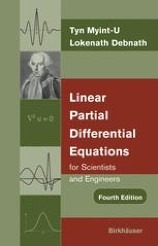
This significantly expanded fourth edition is designed as an introduction to the theory and applications of linear PDEs. The authors provide fundamental concepts, underlying principles, a wide range of applications, and various methods of solutions to PDEs. In addition to essential standard material on the subject, the book contains new material that is not usually covered in similar texts and reference books, including conservation laws, the spherical wave equation, the cylindrical wave equation, higher-dimensional boundary-value problems, the finite element method, fractional partial differential equations, and nonlinear partial differential equations with applications.

Linear programming attracted the interest of mathematicians during and after World War II when the first computers were constructed and methods for solving large linear programming problems were sought in connection with specific practical problems—for example, providing logistical support for the U.S. Armed Forces or modeling national economies. Early attempts to apply linear programming methods to solve practical problems failed to satisfy expectations. There were various reasons for the failure. One of them, which is the central topic of this book, was the inexactness of the data used to create the models. This phenomenon, inherent in most pratical problems, has been dealt with in several ways. At first, linear programming models used "average” values of inherently vague coefficients, but the optimal solutions of these models were not always optimal for the original problem itself. Later researchers developed the stochastic linear programming approach, but this too has its limitations. Recently, interest has been given to linear programming problems with data given as intervals, convex sets and/or fuzzy sets. The individual results of these studies have been promising, but the literature has not presented a unified theory. Linear Optimization Problems with Inexact Data attempts to present a comprehensive treatment of linear optimization with inexact data, summarizing existing results and presenting new ones within a unifying framework.
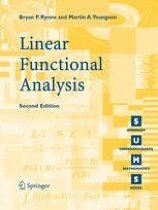
This introduction to the ideas and methods of linear functional analysis shows how familiar and useful concepts from finite-dimensional linear algebra can be extended or generalized to infinite-dimensional spaces. Aimed at advanced undergraduates in mathematics and physics, the book assumes a standard background of linear algebra, real analysis (including the theory of metric spaces), and Lebesgue integration, although an introductory chapter summarizes the requisite material. The initial chapters develop the theory of infinite-dimensional normed spaces, in particular Hilbert spaces, after which the emphasis shifts to studying operators between such spaces. Functional analysis has applications to a vast range of areas of mathematics; the final chapters discuss the particularly important areas of integral and differential equations.

Daraa Highway - Ghabagheb - Syria
+963-15 2050 - 15 860 380 /1/2/3 - 11 662 3900