


Refine Results
Sort By
From
To

Masonry construction is usually the top priority in the constructive exercises during the course. The basic principles of dimensions, construction and component joining are developed using simple masonry structures. Topics: Material and dimensions Building physics and load-bearing properties Typical associations Components Execution of masonry
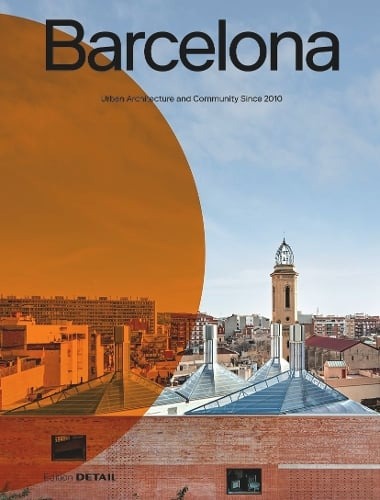
Highlights some of the most exciting structures built in Barcelona since 2010, bringing readers on a guided tour of surprising residential buildings, intriguing museums and extraordinary community spaces. The projects, including many additions to existing buildings, are documented with photos, floor plans and texts. Supplementary interviews introduce readers to key players in Barcelona’s architectural scene, while essays shed light on little-known aspects of the city’s urban development and transport planning.
Provides a foundation for understanding the critical context of architecture and design in this region. It does this by: presenting a practical overview of architectural know-how in the Middle East, and its potential for cultivating a sense of place introducing local architectural vocabularies and styles, and how they can still be reactivated in contemporary design exploring the cultural and contextual meaning of forms as references that may influence contemporary architecture discussing important discourses and trends in architecture that allow a rethinking of the current global/local dichotomy.
The book is structured into three sections (research, practice, and technologies), with the goal of creating a new framework useful for widespread awareness necessary to initiate technology transfer processes for the benefit of the public sector, universities, research centers, and innovative companies, and a new professional figure capable of controlling the entire process is essential. Thus, the book chapters arouse a series of relevant topics such as computational and parametric design, performance-based architecture, data-driven design strategies, parametric environmental design and analysis, computational and parametric structural design and analysis
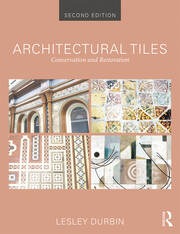
It not only contains new and up to date information on materials, practical methods, and historical research but also reflects changes in the attitudes, outlook and perceptions within the wider conservation, architectural heritage and construction communities which give a new dimension to the conservation and restoration. The growing interest in the preservation of post war ceramic tile murals and the subsequent demand for information pertaining specifically to this era is a welcome and useful addition.
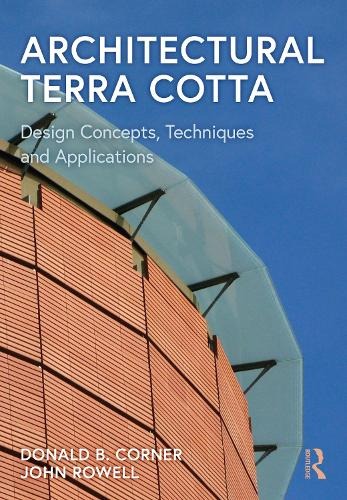
Examines the evolution of terra cotta and prepares architects and builders to make new, creative uses of the timeless material. Terra cotta is among the oldest of manufactured building products, yet it has once again become a material of choice in contemporary façade design. From the walls of Babylon to high performance rainscreens, terra cotta claddings have repeatedly proven to be technically superior and aesthetically triumphant. Understanding the evolution of terra cotta prepares architects to add new, creative chapters to a rich history.
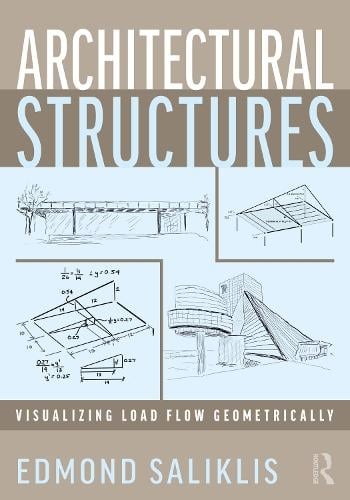
Presents an alternative approach to understanding structural engineering load flow using a visually engaging and three-dimensional format. This book presents a ground-breaking new way of establishing equilibrium in architectural structures using the Modern Müller-Breslau method. Includes approachable coverage of parametric modeling of two-dimensional and three-dimensional structures, as well as more advanced topics such as indeterminate structural analysis and plastic analysis. Hundreds of detailed drawings created by the author are included throughout to aid understanding. Architecture and structural engineering students can employ this novel method by hand sketching, or by programming in parametric design software.
Presents the town of Kavala in Northern Greece as an example of Ottoman urban and residential development, covering the long period of Kavala’s expansion over five centuries under Ottoman rule. Kavala was part of the Ottoman Empire from 1387 to 1912. In the middle of the sixteenth century, Ibrahim Pasha, grand vizier of Suleiman the Magnificent, contributed to the town's prosperity and growth by the construction of an aqueduct. The Ottomans also rebuilt and extended the existing Byzantine fortress.
Provides an index of ideas, theories, projects, and definitions that string into a methodology for evaluating the contemporary language of architecture described as “contemporism” through a review of topology (form) and typology (system and elements). Trying to answer the postmodern question of how to move beyond modernism through a thread of architectural styles that tried to respond to deficiencies from the modern promise and contextual changes. Yet, the question remains, should this ongoing struggle to move beyond modernism be a stylistic battle? Has the present architectural practice ever left the modernist tendencies, and is there a structure for a contemporary language in architecture? Presents a collection of highly illustrated projects that have worked under these parameters to break away from modernism in order to present a holistic integration of topology and typology as a language for “contemporism.” The index is illustrated with individual spreads, which can be read sequentially or independently, and encourages the reader to make their own connections. It also includes interviews and contributions from Toyo Ito, Anthony Vidler, Ben van Berkel, Christian Kerez, and Greg Lynn.

This volume is an interdisciplinary book, which introduces, in a very readable way, state of the art research in the fundamental topics of mathematical modelling of Biosystems. These topics include: the study of Biological Growth and its mechanisms, the coupling of pattern to form via theorems of Differential Geometry, the human immunodeficiency virus dynamics, the inverse folding problem and the possibility of analysing true protein backbone flexibility, the Biclustering techniques for the organization of microarray data, the analytical approach to the modelling of biomolecular structure via Steiner trees, the action of biocides on resistance mechanisms of mutated and phenotypic bacteria strains, a description of the fundamental processes for the distribution and abundances of species towards a unified theory of Ecology, and a special introduction to Protein Physics aiming to explain the all-or-none first order phase transitions from native to denatured states.
The present work is the first systematic attempt at answering the following fundamental question: what mathematical structures does Einstein-Weyl causality impose on a point-set that has no other previous structure defined on it? The authors propose an axiomatization of Einstein-Weyl causality (inspired by physics), and investigate the topological and uniform structures that it implies. Their final result is that a causal space is densely embedded in one that is locally a differentiable manifold. The mathematical level required of the reader is that of the graduate student in mathematical physics.
The book is divided into three parts. The first part introduces the basic ideas of linear and metric spaces, including the Jordan canonical form of matrices and the spectral theorem for self-adjoint and normal operators. The second part examines the role of general topology in the context of metric spaces and includes the notions of homotopy and degree. The third and final part is a discussion on Banach spaces of continuous functions, Hilbert spaces and the spectral theory of compact operators.

This book presents materials fundamentals of novel gate dielectrics that are being introduced into semiconductor manufacturing to ensure the continuous scalling of the CMOS devices. This is a very fast evolving field of research so we choose to focus on the basic understanding of the structure, thermodunamics, and electronic properties of these materials that determine their performance in device applications. Most of these materials are transition metal oxides. Ironically, the d-orbitals responsible for the high dielectric constant cause sever integration difficulties thus intrinsically limiting high-k dielectrics. Though new in the electronics industry many of these materials are wel known in the field of ceramics, and we describe this unique connection. The complexity of the structure-property relations in TM oxides makes the use of the state of the art first-principles calculations necessary. Several chapters give a detailed description of the modern theory of polarization, and heterojunction band discontinuity within the framework of the density functional theory. Experimental methods include oxide melt solution calorimetry and differential scanning calorimetry, Raman scattering and other optical characterization techniques, transmission electron microscopy, and x-ray photoelectron spectroscopy.
This book contains six chapters on central topics in materials science. Each is written by specialists in the field, and gives a state-of-the-art presentation of the subject for graduate students and scientists not necessarily working in that field. Computer simulations of new materials, theory and experimental work are all extensively discussed. As nanomaterials are of great current interest, most of the topics discussed have a bearing on nanomaterials and nanodevices. In addition to inorganic nanotubes, metallic nanocrystals, electronic nanodevices, spintronics and interfaces on an atomic scale, the text also presents computer simulations on one of the less well understood fields in solid-state physics and materials science: glasses and undercooled fluids.
"Written to fill the need for a textbook that addresses inorganic-, organic-, and nano-based materials from a structure vs. property treatment, Materials Chemistry aims to provide a suitable breadth and depth coverage of the rapidly evolving materials field - in a concise format. This modern treatment offers innovative coverage and practical perspective throughout.
The first part of the book deals with the geometrical description of uniform bodies and their homogeneity (i.e., integrability) conditions. In the second part, a theory of material evolution is developed and its relevance in various applied contexts discussed. The necessary geometrical notions are introduced as needed in the first two parts but often without due attention to an uncompromising mathematical rigour. This task is left for the third part of the book, which is a highly technical compendium of those concepts of modern differential geometry that are invoked in the first two parts (differentiable manifolds, Lie groups, jets, principal fibre bundles, G-structures, connections, frame bundles, integrable prolongations, groupoids, etc.).
We talk about theater even if the page cannot tell about Bustric's unforgettable show. And about art, and applied arts, such as geometric structure and spiritual meaning of the Zen garden of Ryoanji in Kyoto, and of soap bubbles, which are almost never lacking in Venetian encounters, Four-dimensional bubbles and gigantic bubbles that serve as a model for the Olympic swimming pool in Bejing
This book provides a comprehensive, self-contained and up-to-date treatment of the main topics in the theory of option pricing. The first part of the text starts with discrete-time models of financial markets, including the Cox-Ross-Rubinstein binomial model. The passage from discrete- to continuous-time models, done in the Black-Scholes model setting, assumes familiarity with basic ideas and results from stochastic calculus. However, an Appendix containing all the necessary results is included. This model setting is later generalized to cover standard and exotic options involving several assets and/or currencies. An outline of the general theory of arbitrage pricing is presented. The second part of the text is devoted to the term structure modelling and the pricing of interest-rate derivatives. The main emphasis is on models that can be made consistent with market pricing practice.

Examines the conditions where humans and martens are compatible and incompatible, and promotes land use practices that allow Martes to be representatively distributed and viable. All Martes have been documented to use forested habitats and 6 species (excluding the stone marten) are generally considered to require complex mid- to late-successional forests throughout much of their geographic ranges. All species in the genus require complex horizontal and vertical structure to provide escape cover protection from predators, habitat for their prey, access to food resources, and protection from the elements. Martens and the fisher have high metabolic rates, have large spatial requirements, have high surface area to volume ratios for animals that often inhabit high latitudes, and often require among the largest home range areas per unit body weight of any group of mammals. Resulting from these unique life history characteristics, this genus is particularly sensitive to human influences on their habitats, including habitat loss, stand-scale simplification of forest structure via some forms of logging, and landscape-scale effects of habitat fragmentation. Given their strong associations with structural complexity in forests, martens and the fisher are often considered as useful barometers of forest health and have been used as ecological indicators, flagship, and umbrella species in different parts of the world. Thus, efforts to successfully conserve and manage martens and fishers are associated with the ecological fates of other forest dependent species and can greatly influence ecosystem integrity within forests that are increasingly shared among wildlife and humans.We have made great strides in our fundamental understanding of how animals with these unique life history traits perceive and utilize habitats, respond to habitat change, and how their populations function and perform under different forms of human management and mismanagement.
Subject areas discussed in this book include shipwrecks and abandoned vessels, The application of National and State legislation and management regimes to these underwater cultural heritage sites is also highlighted, together with the important role of avocational divers and training programs in raising the profile of underwater and maritime heritage sites.The book includes a comprehensive bibliography of work conducted both in Australia and by Australian maritime archaeologists in the Asia-Pacific region. This book will be of interest to students and practitioners of maritime and historical archaeology and cultural heritage managers throughout the world .

Daraa Highway - Ghabagheb - Syria
+963-15 2050 - 15 860 380 /1/2/3 - 11 662 3900