


Refine Results
Sort By
From
To

This open access book presents a comprehensive analysis of biofuel use strategies from an interdisciplinary perspective using sustainability science. This interdisciplinary perspective (social science-natural science) means that the strategies and policy options proposed will have significant impacts on the economy and society alike. Biofuels are expected to contribute to reducing greenhouse gas emissions, revitalizing economies in agricultural communities and alleviating poverty. However, despite these anticipated benefits, international organizations such as the FAO, OECD and UN have published reports expressing concerns that biofuel promotion may lead to deforestation, water pollution and water shortages. The impacts of biofuel use are extensive, cross-sectoral and complex, and as such, comprehensive analyses are required in order to assess the extent to which biofuels can contribute to sustainable societies.
Food insecurity is a central concern and a fundamental challenge for human welfare and economic growth in Africa. Low agricultural production, results in low incomes, poor nutrition, vulnerability to risks and lack of empowerment. Land degradation and soil fertility depletion are considered the major threats to food security and natural resource conservation in sub-Saharan Africa (SSA). Investments in technology, policy and institutional reforms are needed to increase agricultural productivity to ensure food security and sustained national economies. Past research has generated numerous soil fertility management technologies which if adopted could propel the African continent out of the poverty trap. However, these technologies have had little, if any, impact due to low adoption by the smallholder farmers.
Aims to show which factors have been decisive in the rise of successful countries. Never before have so many people been so well off. However, prosperity is not a law of nature; it has to be worked for. A liberal economy stands at the forefront of this success – not as a political system, but as a set of economic rules promoting competition, which in turn leads to innovation, research and enormous productivity.
Despite the social, nutritional, economical and environmental importance of Tanzanian coastal areas, yet they are vulnerable to both over-exploitation and degradation of their habitats. Using the data from two coastal villages and econometric methods as well as Stochastic Production Frontier techniques, the book demonstrates the extent which various socio-economic dimensions of rural coastal households influence livelihood pathways, production efficiency and attitudes towards conservation initiatives. Thus, attention to differential patterns of rural coastal households presents more viable possibilities for coastal villages to have conservation-development policies/programs that lead to poverty reduction.
In this volume economists, ecology experts, geographers, agronomists, sociologist, and business experts come together to address marginality. The inter-disciplinary research offers conceptual innovations and presents the dimensions of marginality in developing countries. Economic, political, and environmental drivers are assessed and mapped globally and in detail for countries in Africa and Asia, especially Ethiopia, India, Bangladesh, China, Indonesia. Economic growth especially in rural areas remains and farming communities is central to poverty reduction but needs to be complemented with specific actions to reach those at the margins.
This book is an encyclopaedic analysis of the current and future energy system of the world’s most populous country and second biggest economy. What happens in China impacts the planet. In the past 40 years China has achieved one of the most remarkable economic growth rates in history. Its GDP has risen by a factor of 65, enabling 850,000 people to rise out of poverty.
Kuklys examines how Nobel Prize-winning economist Amartya Sen’s approach to welfare measurement can be put in practice for poverty and inequality measurement in affluent societies such as the UK. Sen argues that an individual’s welfare should not be measured in terms of her income, but in terms what she can actually do or be, her capabilities. In Chapters 1 and 2, Kuklys describes the capability approach from a standard welfare economic point of view and provides a comprehensive literature review of the empirical applications in this area of research. In the remaining chapters, novel econometric techniques are employed to operationalise the concepts of functionings and capability to investigate inequality and poverty in terms of capability in the UK. Kuklys finds that capability measurement is always a useful complement to traditional monetary analysis, and particularly so in the case of capability-deprived disabled individuals.
The topics addressed in this book are of vital importance to the survival of humankind. Agricultural biodiversity, encompassing genetic diversity as well as human knowledge, is the base upon which agricultural production has been built, and protecting this resource is critical to ensuring the capacity of current and future generations to adapt to unforeseen challenges. Agricultural biodiversity underpins the productivity of all agricultural systems and is particularly important for poor and food-insecure farmers, who maintain highly diverse production systems in response to the marginal and risky production conditions they operate under. Understanding the importance of agricultural biodiversity in the livelihoods of the food insecure and enhancing its performance through the use of a variety of tools, including biotechnology, is a critically important issue in the world today
Provides a comprehensive portrait of lone parenthood at the beginning of the XXI century from a life course perspective. The contributions included in this volume examine the dynamics of lone parenthood in the life course and explore the trajectories of lone parents in terms of income, poverty, labour, market behaviour, wellbeing, and health. Throughout, comparative analyses of data from countries as France, the United Kingdom, Ireland, Germany, Belgium, Sweden, Switzerland, Hungary, and Australia help portray how lone parenthood varies between regions, cultures, generations, and institutional settings. The findings show that one-parent households are inhabited by a rather heterogeneous world of mothers and fathers facing different challenges.
A collection of case studies that explore the learning that people do through community engagement. Developed within a network of Canadian researchers and their community partners, it explores learning that is organized by the learners themselves, collectively, rather than as individuals. Reflecting the contributors’ political priorities, the volume begins with groups that are highly marginalized in our society: immigrant women, sex trade workers, senior citizens, garment workers, women doing community economic development, and people who identify with disability and anti-poverty movements.
Recently, there has been, and continues to be, a tremendous interest on Lake Victoria and its environs, both locally and internationally. A casual browsing on the Internet indicates that the entries on the Lake have been rising phenomenally. At the same time, the issues discussed are as diverse as they are varied in their treatment of the subject, both in terms of depth and comprehensiveness. The information on Lake Victoria and its environ is scattered, isolated, and sometimes confusing even though documentation on the subject are available. Despite this situation, the fact remains that various people (e. g. , secondary and universitystudents,researchers,practitioners,etc. ,)wouldliketoaccess and know more about the Lake and its environs. Aware of the existing information gap about this world’s second largest fresh water Lake, this book is intended to provide readers with up-to-date information pertaining the Lake. The book gives an in-depth coverage of environmental issues, - source endowment, poverty amidst plenty, development opportunities, challenges and other related issues facing the Lake and its environs. It aims at providing information on the above variables, which hopefully will address the needs of various users.
Documents myriads of ways community-based climate change adaptation and resilience programs are being implemented in South Asian countries. The narrative style of writing in this volume makes it accessible to a diverse audience from academics and researchers to practitioners in various governmental, non-governmental and international agencies. At a time when climate change presents humanity with a gloomy future, the stories of innovation, creativity, grassroots engagement and locally applicable solutions highlighted in this book provides insights into hopeful ways of approaching climate solutions.
This book explores the historical, cultural and philosophical contexts that have made anti-poverty the core of Chinese society since Liberation in 1949, and why poverty alleviation measures evolved from the simplistic aid of the 1950s to Xi Jinping’s precision poverty alleviation and its goal of eliminating absolute poverty by 2020. The book also addresses the implications of China’s experience for other developing nations tackling not only poverty but such issues as pandemics, rampant urbanization and desertification exacerbated by global warming. The first of three parts draws upon interviews of rural and urban Chinese from diverse backgrounds and local and national leaders. These interviews, conducted in even the remotest areas of the country, offer candid insights into the challenges that have forced China to continually evolve its programs to resolve even the most intractable cases of poverty.
This book turns the research attention of social policy scholars and long-term care researchers from comparative descriptions of care systems, focusing mostly on expenditures and volumes of long-term care services, to outcomes, and in particular to the question whether older people really receive the support that they need. Without knowledge about which needs and which social groups are currently inadequately covered, it is impossible to guide policy development.
Our societies are ageing. The Family is changing. Labour force behaviour is evolving. How is the organisation of family and collective solidarity adapting in this context of longer life spans, low fertility, and work that is simultaneously scarce and abundant? The welfare states are currently facing three main challenges: ensure satisfactory living conditions for the elderly without increasing the cost burden on the active population, reduce social inequality, and maintain equity between successive generations. In this book, researchers from different countries compare their experiences and offer contrasting views on the future of social protection. They consider the theoretical aspects of the intergenerational debate, relations between generations within the family, the living standards of elderly people, and the question of social time.
Advocates for the Social Sciences and Humanities to be more involved in energy policymaking. It forms part of the European platform for energy-related Social Sciences and Humanities’ activities, and works on the premise that crossing disciplines is essential. All of its contributions are highly interdisciplinary, with each chapter grounded in at least three different Social Sciences and Humanities disciplines. These varying perspectives come together to cover an array of issues relevant to the energy transition, including: energy poverty, justice, political ecology, governance, behaviours, imaginaries, systems approaches, modelling, as well as the particular challenges faced by interdisciplinary work. As a whole, the book presents new ideas for future energy policy, particularly at the European level. It is a valuable resource for energy researchers interested in interdisciplinary and society-relevant perspectives. Those working outside the Social Sciences and Humanities will find this book an accessible way of learning more about how these subjects can constructively contribute to energy policy.
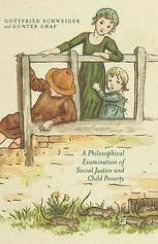
Investigates child poverty from a philosophical perspective. It identifies the injustices of child poverty, relates them to the well-being of children, and discusses who has a moral responsibility to secure social justice for children.

Daraa Highway - Ghabagheb - Syria
+963-15 2050 - 15 860 380 /1/2/3 - 11 662 3900