



Page 1
Page 1

Missions of universities : Past, present, future
provides an analysis of university missions over time and space. It starts out by presenting a governance framework focusing on the demands on universities set by regulators, market actors and scrutinizers. It examines organizational structures, population development, the fundamental tasks of universities, and internal governance structures. Next, offers a discussion of the idea and role of universities in society, exploring concepts such as autonomy and universality, and the university as a transformative institute. The next four chapters deal with the development of universities from medieval times, through the Renaissance, towards the research universities in the nineteenth century in Europe and the United States.

The 8051 microcontroller and embedded systems
The Classical Period: Nineteenth Century Sociology Auguste Comte (1798-1857) on Women in Positivist Society Harriett Martineau (1802-1876) on American Women Bebel, August (1840-1913) on Women and Socialism Emile Durkheim (1858-1917) on the Division of Labor and Interests in Marriage Herbert Spencer (1820-1903) on the Rights and Status of Women Lester Frank Ward (1841-1913) on the Condition of Women Anna Julia Cooper (1858-1964) on the Voices of Women Thorstein Veblen (1857-1929) on Dress as Pecuniary Culture The Progressive Era: Early Twentieth Cent.

Microbial protein toxins
Since the initial establishment of Robert Koch’s postulates in the nineteenth century, microbial protein toxins have been recognized as a major factor of bacterial and fungal virulence. An increasing number of proteins produced and secreted by various bacteria, yeasts and plants are extremely toxic and most of them developed remarkably "intelligent" strategies to enter, to penetrate and to finally kill a eukaryotic target cell by modifying or blocking essential cellular components. This book describes the strategies employed by protein toxins to render their pro- and eukaryotic producers a selective growth advantage over competitors. In providing an up-to-date overview on the mode of protein toxin actions, it accommodates biomedically and biologically relevant toxin model systems. As a result, it significantly broadens our perspective on biochemical architecture and molecular ploy behind the lethal principles of pro- and eukaryotic toxins.

Heaven Upon Earth : Joseph Mede (1586-1638) and the Legacy of Millenarianism
THE HISTORY OF BRITISHAPOCALYPTICTHOUGHT The study of early modern Britain between the Reformation of the 1530s and the Wars of the Three Kingdoms of the 1640s has undergone a series of historiographical revisions. The dramatic events during that century were marked by a religious struggle that produced a Protestant nation, divided internally, yet clearly opposed to Rome. Likewise the political environment instilled a sense of responsible awareness regarding the administration of the realm and the defense 1 of constitutional liberty. Whig Historians from the nineteenth century described 2 these changes as a “Puritan Revolution.”

From Melancholia to Depression : Disordered Mood in Nineteenth-Century Psychiatry
This book maps a crucial but neglected chapter in the history of psychiatry: how was melancholia transformed in the nineteenth century from traditional melancholy madness into a modern biomedical mood disorder

Framing global mathematics : The international mathematical union between theorems and politics
This book is about the shaping of international relations in mathematics over the last two hundred years. It focusses on institutions and organizations that were created to frame the international dimension of mathematical research. Today, striking evidence of globalized mathematics is provided by countless international meetings and the worldwide repository ArXiv. The text follows the sinuous path that was taken to reach this state, from the long nineteenth century, through the two wars, to the present day. International cooperation in mathematics was well established by 1900, centered in Europe. The first International Mathematical Union, IMU, founded in 1920 and disbanded in 1932, reflected above all the trauma of WW I. Since 1950 the current IMU has played an increasing role in defining mathematical excellence, as is shown both in the historical narrative and by analyzing data about the International Congresses of Mathematicians. For each of the three periods discussed, interactions are explored between world politics, the advancement of scientific infrastructures, and the inner evolution of mathematics. Readers will thus take a new look at the place of mathematics in world culture, and how international organizations can make a difference. Aimed at mathematicians, historians of science, scientists, and the scientifically inclined general public.

Fields and Galois Theory
The pioneering work of Abel and Galois in the early nineteenth century demonstrated that the long-standing quest for a solution of quintic equations by radicals was fruitless: no formula can be found. The techniques they used were, in the end, more important than the resolution of a somewhat esoteric problem, for they were the genesis of modern abstract algebra. This book provides a gentle introduction to Galois theory suitable for third- and fourth-year undergraduates and beginning graduates. The approach is unashamedly unhistorical: it uses the language and techniques of abstract algebra to express complex arguments in contemporary terms. Thus the insolubility of the quintic by radicals is linked to the fact that the alternating group of degree 5 is simple - which is assuredly not the way Galois would have expressed the connection.

Essays in Constructive Mathematics
This book aims to promote constructive mathematics, not by defining it or formalizing it, but by practicing it, by basing all definitions and proofs on finite algorithms. The topics covered derive from classic works of nineteenth century mathematics---among them Galois' theory of algebraic equations, Gauss's theory of binary quadratic forms and Abel's theorem about integrals of rational differentials on algebraic curves. It is not surprising that the first two topics can be treated constructively---although the constructive treatments shed a surprising amount of light on them---but the last topic, involving integrals and differentials as it does, might seem to call for infinite processes. In this case too, however, finite algorithms suffice to define the genus of an algebraic curve, to prove that birationally equivalent curves have the same genus, and to prove the Riemann-Roch theorem. The main algorithm in this case is Newton's polygon, which is given a full treatment. Other topics covered include the fundamental theorem of algebra, the factorization of polynomials over an algebraic number field, and the spectral theorem for symmetric matrices.

Drinking in Victorian and Edwardian Britain : Beyond the Spectre of the Drunkard
Investigates the reasons why Victorians and Edwardians consumed alcohol in the ways that they did and explores the ideas about alcohol that circulated in the period. This book shows that they had many reasons for purchasing and consuming alcoholic substances and these were driven by broader social, cultural, medical and commercial factors. Although drunkenness may have been the most visible consequence of alcohol consumption, it was not the only type of drinking behaviour. Alcohol played an important social role in the everyday lives of Victorians and Edwardians where its consumption held many different meanings.

Constructions of cancer in early Modern England : Ravenous natures
Cancer is perhaps the modern world's most feared disease. Yet, we know relatively little about this malady's history before the nineteenth century. This book provides the first in-depth examination of perceptions of cancerous disease in early modern England. Looking to drama, poetry and polemic as well as medical texts and personal accounts, it contends that early modern people possessed an understanding of cancer which remains recognizable to us today. Many of the ways in which medical practitioners and lay people imagined cancer – as a 'woman's disease' or a 'beast' inside the body – remain strikingly familiar, and they helped to make this disease a byword for treachery and cruelty in discussions of religion, culture and politics. Equally, cancer treatments were among the era's most radical medical and surgical procedures. From buttered frog ointments to agonizing and dangerous surgeries, they raised abiding questions about the nature of disease and the proper role of the medical practitioner.
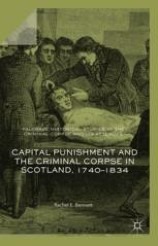
Capital Punishment and the Criminal Corpse in Scotland, 1740–1834
This book provides the most in-depth study of capital punishment in Scotland between the mid-eighteenth and early nineteenth century to date. Based upon an extensive gathering and analysis of previously untapped resources, it takes the reader on a journey from the courtrooms of Scotland to the theatre of the gallows. It introduces them to several of the malefactors who faced the hangman’s noose and explores the traditional hallmarks of the spectacle of the scaffold. It demonstrates that the period between 1740 and 1834 was one of discussion, debate and fundamental change in the use of the death sentence and how it was staged in practice. In addition, the study provides an innovative investigation of the post-mortem punishment of the criminal corpse. It offers the reader an insight into the scene at the foot of the gibbets from which criminal bodies were displayed, and around the dissection tables of Scotland’s main universities where criminal bodies were used as cadavers for anatomical demonstration. In doing so it reveals an intermediate stage in the long-term disappearance of public bodily punishment.
Business ethics from the 19th century to today : An economist's view
Combines elements of economic and business history to study business ethics from the nineteenth century to today. It concentrates on American and British business history, delving into issues such as slavery, industrialization, firm behavior and monopolies, and Ponzi schemes. This book draws on the work of economists and historians to highlight the importance of changing technologies, religious beliefs, and cultural attitudes, showing that what is considered ethical differs across time and place.
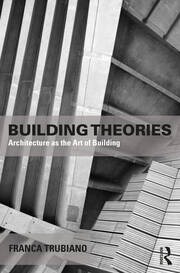
Building Theories : Architecture as the Art of Building
Discusses the content of treatises, essays, articles, and letters by those who have been, throughout history, committed to the art of building. In this, Building Theories argues for the return of a practice of architectural theory that is set amongst building, buildings, and builders. This journey of close reading reinterprets the words of Vitruvius, Alberti, de L’Orme, Le Camus de Mézières, Boullée, Laugier, Rondelet, Semper, Viollet-le-Duc, Hübsch, Bötticher, Berlage, Muthesius, Wagner, Behrendt, Gropius, and Arup. With chapters dedicated to texts from antiquity, the Renaissance, and the nineteenth century, and with a critical eye on architectural theory popularized in the Anglo-Saxon world post-1968, readers are introduced to a wider, more inclusive definition of architectural ideas.
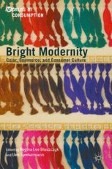
Bright modernity : Color, commerce, and consumer culture
Color is a visible technology that invisibly connects so many puzzling aspects of modern Western consumer societies research and development, making and selling, predicting fashion trends, and more. Building on Regina Lee Blaszczyk’s go-to history of the “color revolution” in the United States, This book explores further transatlantic and multidisciplinary dimensions of the topic. Covering history from the mid nineteenth century into the immediate past, it examines the relationship between color, commerce, and consumer societies in unfamiliar settings and in the company of new kinds of experts. Readers will learn about the early dye industry, the dynamic nomenclature for color, and efforts to standardize, understand, and educate the public about color.
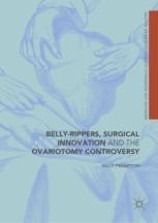
Belly-Rippers, surgical innovation and the ovariotomy controversy
This open access book looks at the dramatic history of ovariotomy, an operation to remove ovarian tumours first practiced in the early nineteenth century. Bold and daring, surgeons who performed it claimed to be initiating a new era of surgery by opening the abdomen. Ovariotomy soon occupied a complex position within medicine and society, as an operation which symbolised surgical progress, while also remaining at the boundaries of ethical acceptability. This book traces the operation’s innovation, from its roots in eighteenth-century pathology, through the denouncement of those who performed it as ‘belly-rippers’, to its rapid uptake in the 1880s, when ovariotomists were accused of over-operating. Throughout the century, the operation was never a hair’s breadth from controversy.
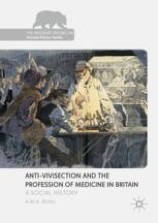
Anti-vivisection and the profession of medicine in Britain : A social history
This book explores the social history of the anti-vivisection movement in Britain from its nineteenth-century beginnings until the 1960s. It discusses the ethical principles that inspired the movement and the socio-political background that explains its rise and fall. Opposition to vivisection began when medical practitioners complained it was contrary to the compassionate ethos of their profession. Christian anti-cruelty organizations took up the cause out of concern that callousness among the professional classes would have a demoralizing effect on the rest of society. As the nineteenth century drew to a close, the influence of transcendentalism, Eastern religions and the spiritual revival led new age social reformers to champion a more holistic approach to science, and dismiss reliance on vivisection as a materialistic oversimplification.
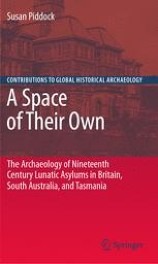
A Space of Their Own : The Archaeology of Nineteenth Century Lunatic Asylums in Britain, South Australia and Tasmania
The history of lunatic asylums – what do we really know about them? Films and television programs have portrayed them as places of horror where the patients are restrained and left to listen to the cries of their fellow inmates in despair. But what was the world of nineteenth century lunatic asylums really like? Are these images true? This book will explore this world using the techniques of historical archaeology and history.
