


Refine Results
Sort By
From
To

We talk about theater even if the page cannot tell about Bustric's unforgettable show. And about art, and applied arts, such as geometric structure and spiritual meaning of the Zen garden of Ryoanji in Kyoto, and of soap bubbles, which are almost never lacking in Venetian encounters, Four-dimensional bubbles and gigantic bubbles that serve as a model for the Olympic swimming pool in Bejing
The book addresses the “balancing act” between developing students’ modelling skills on the one hand, and using modelling to help them learn mathematics on the other, which arises from the integration of modelling into classrooms. In addition the book highlights professional learning and development for in-service teachers, particularly in systems where the introduction of modelling into curricula means reassessing how mathematics is taught.
The book provides a state-of-the-art overview of important theories from mathematics education and the broad variety of empirical approaches currently widely used in mathematics education research.
New research in mathematics education deals with the complexity of the mathematics’ classroom. The classroom teaching situation constitutes a pertinent unit of analysis for research into the ternary didactic relationship which binds teachers, students and mathematical knowledge. The classroom is considered as a complex didactic system, which offers the researcher an opportunity to gauge the boundaries of the freedom that is left with regard to choices about the knowledge to be taught and the ways of organizing the students’ learning, while giveing rise to the study of interrelations between three main elements of the teaching process the: mathematical content to be taught and learned, management of the various time dimensions, and activity of the teacher who prepares and manages the class, to the benefit of the students' knowledge and the teachers' own experience.
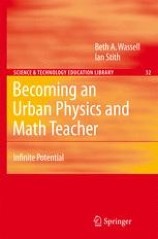
What happens as beginning urban teachers transition through their first few years in the classroom? This book captures one teacher's journey through the first three years of teaching science and mathematics in a large urban district in the US. The authors focus on Ian's agency as a beginning teacher and explore his success in working with diverse students. Using critical ethnography combined with first-person narrative, they investigate Ian's teaching practices in four contexts: his student teaching experience, his work with students on a summer curriculum development project, his first year of teaching in a small, urban high school, and his second year of teaching in a large, comprehensive high school. In each field, the authors describe the structural changes Ian encounters and the ways in which he re-utilizes the practices he used successfully in previous fields.
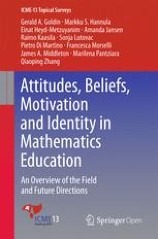
Records the state of the art in research on mathematics-related affect. It discusses the concepts and theories of mathematics-related affect along the lines of three dimensions. The first dimension identifies three broad categories of affect: motivation, emotions, and beliefs. The book contains one chapter on motivation, including discussions on how emotions and beliefs relate to motivation. There are two chapters that focus on beliefs and a chapter on attitude which cross-cuts through all these categories. The second dimension covers a rapidly fluctuating state to a more stable trait. All chapters in the book focus on trait-type affect and the chapter on motivation discusses both these dimensions. The third dimension regards the three main levels of theorizing: physiological (embodied), psychological (individual) and social. All chapters reflect that mathematics-related affect has mainly been studied using psychological
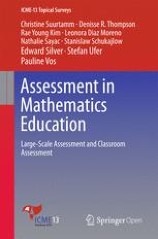
Provides an overview of current research on a variety of topics related to both large-scale and classroom assessment. First, the purposes, traditions and principles of assessment are considered, with particular attention to those common to all levels of assessment and those more connected with either classroom or large-scale assessment. Assessment design based on sound assessment principles is discussed, differentiating between large-scale and classroom assessment, but also examining how the design principles overlap. The focus then shifts to classroom assessment and provides specific examples of assessment strategies, before examining the impact of large-scale assessment on curriculum, policy, instruction, and classroom assessment.
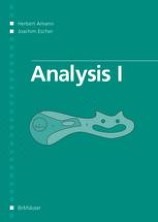
Logical thinking, the analysis of complex relationships, the recognition of und- lying simple structures which are common to a multitude of problems — these are the skills which are needed to do mathematics, and their development is the main goal of mathematics education. Of course, these skills cannot be learned ‘in a vacuum’. Only a continuous struggle with concrete problems and a striving for deep understanding leads to success. A good measure of abstraction is needed to allow one to concentrate on the essential, without being distracted by appearances and irrelevancies. The present book strives for clarity and transparency. Right from the beg- ning, it requires from the reader a willingness to deal with abstract concepts, as well as a considerable measure of self-initiative. For these e?orts, the reader will be richly rewarded in his or her mathematical thinking abilities, and will possess the foundation needed for a deeper penetration into mathematics and its applications.
Amongst Mathematicians offers a unique perspective on the ways in which mathematicians perceive their students' learning, teach and reflect on their teaching practice; also on how they perceive the often fragile relationship between the communities of mathematics and mathematics education.This book demonstrates the pedagogical potential that lies in collaborative undergraduate mathematics education research that engages mathematicians, researchers and students. Nardi also addresses the need for action in undergraduate mathematics education and offers a discourse for reform through demonstrating the feasibility and potential of collaboration between mathematicians and mathematics education researchers.
Presents the latest trends in research in the area. Following an introduction and a survey chapter providing a concise overview of the state-of-art in the field of mathematics-related affect, the book is divided into three main sections: motivation and values, engagement, and identity in mathematics education. Each section comprises several independent chapters based on original research, as well as a reflective commentary by an expert in the area. Collectively, the chapters present a rich methodological spectrum, from narrative analysis to structural equation modelling.
This volume provides new sources of knowledge based on Michael Otte’s fundamental insight that understanding the problems of mathematics education – how to teach, how to learn, how to communicate, how to do, and how to represent mathematics – depends on means, mainly philosophical and semiotic, that have to be created first of all, and to be reflected from the perspectives of a multitude of diverse disciplines.

Daraa Highway - Ghabagheb - Syria
+963-15 2050 - 15 860 380 /1/2/3 - 11 662 3900