


Refine Results
Sort By
From
To

Contains the Proceedings of the 1st International Conference on Cognitive Neurodynamics held in Shanghai, November 17-21, 2007. The participants were treated to an exciting and stimulating conference that left everyone with an enthusiastic vision for the future of the field. The latest important progress was covered by 13 mini-symposia including: Models of Mental Disorders; Cognitive Machines; Dynamics in learning and memory; Central nervous system synchronization; Neuroinformatics; Cognitive Computational Modeling of Human Language Processing; Cognitive Neurodynamics of Attention; Bottom-Up and Top-Down; Brain Networks; From Anatomy to Dynamics; Translational Cognitive Neuroimaging; K-sets; Theory and Applications; Advanced Signal Processing Techniques for Brain Data Analysis; Visual cortex: information processing and dynamics; Dynamics of Firing Patterns and Synchronization in Neuronal Systems.
Focuses on the most recent developments in intelligent optimization methods and their applications in various test cases. The reprint covers various topics, including distributed multiagent modeling, metaheuristic algorithms, multisource data fusion, mobile computing and mobile sensing, machine learning-based intelligent processing for modeling complex manufacturing systems, and data-driven intelligent modeling
Introduces various machine learning methods for cyber security analytics. With an overwhelming amount of data being generated and transferred over various networks, monitoring everything that is exchanged and identifying potential cyber threats and attacks poses a serious challenge for cyber experts. Further, as cyber attacks become more frequent and sophisticated, there is a requirement for machines to predict, detect, and identify them more rapidly. Machine learning offers various tools and techniques to automate and quickly predict, detect, and identify cyber attacks.
Covers the multidimensional perspective of machine learning through the perspective of cloud computing and Internet of Things ranging from fundamentals to advanced applications. Elucidates some of the best practices and their respective outcomes in cloud and fog computing environments. It focuses on all the various research issues related to big data storage and analysis, large-scale data processing, knowledge discovery and knowledge management, computational intelligence, data security and privacy, data representation and visualization, and data analytics. The featured technologies presented in the book optimizes various industry processes using business intelligence in engineering and technology. Light is also shed on cloud-based embedded software development practices to integrate complex machines so as to increase productivity and reduce operational costs. The various practices of data science and analytics which are used in all sectors to understand big data and analyze massive data patterns are also detailed in the book.
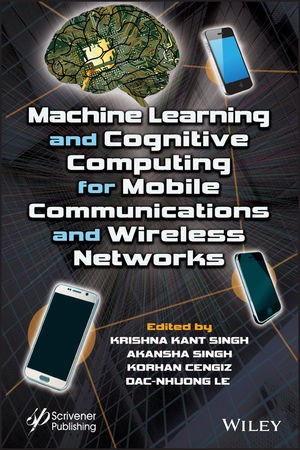
Communication and network technology has witnessed recent rapid development and numerous information services and applications have been developed globally. These technologies have high impact on society and the way people are leading their lives. The advancement in technology has undoubtedly improved the quality of service and user experience yet a lot needs to be still done. Some areas that still need improvement include seamless wide-area coverage, high-capacity hot-spots, low-power massive-connections, low-latency and high-reliability and so on. Thus, it is highly desirable to develop smart technologies for communication to improve the overall services and management of wireless communication. Machine learning and cognitive computing have converged to give some groundbreaking solutions for smart machines. With these two technologies coming together, the machines can acquire the ability to reason similar to the human brain. The research area of machine learning and cognitive computing cover many fields like psychology, biology, signal processing, physics, information theory, mathematics, and statistics that can be used effectively for topology management. Therefore, the utilization of machine learning techniques like data analytics and cognitive power will lead to better performance of communication and wireless systems.
Offers the first systematic guide to machine ethics, bridging between computer science, social sciences and philosophy. Based on a dialogue between an AI scientist and a novelist philosopher, the book discusses important findings on which moral values machines can be taught and how. In turn, it investigates what kind of artificial intelligence (AI) people do actually want.
Dedicated chapters address : the use of ASM (Abstract State Machines) in the classroom; the Event-B modelling method; a methodological guide to CafeOBJ logic; CASL, the Common Algebraic Specification Language; the Duration Calculus; the logic of the RAISE specification language (RSL); the specification language TLA+; the typed logic of partial functions and the Vienna Development Method (VDM); and Z logic and its applications. Each chapter is self-contained, with references, and symbol and concept indexes. Finally, in a unique feature, the book closes with short commentaries on the specification languages written by researchers closely associated with their original development.
This second volume of a comprehensive tour through mathematical core subjects for computer scientists completes the ?rst volume in two - gards: Part III ?rst adds topology, di?erential, and integral calculus to the t- ics of sets, graphs, algebra, formal logic, machines, and linear geometry, of volume 1. With this spectrum of fundamentals in mathematical e- cation, young professionals should be able to successfully attack more involved subjects, which may be relevant to the computational sciences. In a second regard, the end of part III and part IV add a selection of more advanced topics. In view of the overwhelming variety of mathematical approaches in the computational sciences, any selection, even the most empirical, requires a methodological justi?cation. Our primary criterion has been the search for harmonization and optimization of thematic - versity and logical coherence. This is why we have, for instance, bundled such seemingly distant subjects as recursive constructions, ordinary d- ferential equations, and fractals under the unifying perspective of c- traction theory.
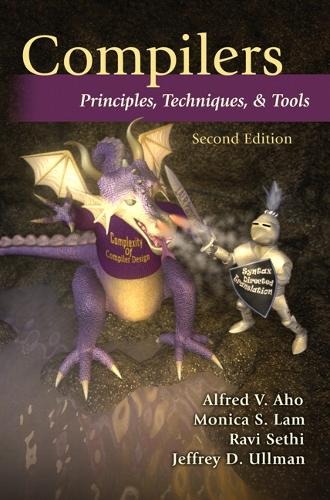
This introduction to compilers is the direct descendant of the well-known book by Aho and Ullman, Principles of Compiler Design. The authors present updated coverage of compilers based on research and techniques that have been developed in the field over the past few years. The book provides a thorough introduction to compiler design and covers topics such as context-free grammars, fine state machines, and syntax-directed translation.
The field of healthcare is constantly evolving and advancing with new technologies and innovations. Among these, assistive technologies, robotics, and automated machines are rapidly gaining ground as powerful tools to improve the quality of care and enhance patient outcomes. From wearable devices that monitor vital signs to surgical robots that assist in complex procedures, these technologies have the potential to revolutionize the way we deliver healthcare. The development and the integration of assistive technologies, care robots, and automated machines are strategic both as single components, when paired together, and when interconnected in the health domain.This reprint explores the latest developments in assistive technologies, robotics, and automated machines in the health domain, providing a comprehensive overview of their applications and potential impact. The reprint is for the benefit of healthcare professionals, researchers, engineers, and students interested in these rapidly evolving fields.

The sustainable management of water cycles is crucial in the context of climate change and global warming. It involves managing global, regional, and local water cycles, as well as urban, agricultural, and industrial water cycles, to conserve water resources and their relationships with energy, food, microclimates, biodiversity, ecosystem functioning, and anthropogenic activities. Hydrological modeling is indispensable for achieving this goal, as it is essential for water resources management and the mitigation of natural disasters. In recent decades, the application of artificial intelligence (AI) techniques in hydrology and water resources management has led to notable advances. In the face of hydro-geo-meteorological uncertainty, AI approaches have proven to be powerful tools for accurately modeling complex, nonlinear hydrological processes and effectively utilizing various digital and imaging data sources, such as ground gauges, remote sensing tools, and in situ Internet of Things (IoT) devices.
This volume contains the papers presented at the 18th International Conf- ence on Algorithmic Learning Theory.The main objective of the conference was to provide an interdisciplinary forum for high-quality talks with a strong theore- cal background and scientiبهc interchange in areas such as query models, on-line learning, inductive inference, algorithmic forecasting, boosting, support vector machines, kernel methods, complexity and learning, reinforcement learning, - supervised learning and grammatical inference.
This new monograph integrates mathematical theory and revealing experimental work. It demonstrates mathematically the validity of the reliability claimed by conformal predictors when they are applied to independent and identically distributed data, and it confirms experimentally that the accuracy is sufficient for many practical problems. Later chapters generalize these results to models called repetitive structures, which originate in the algorithmic theory of randomness and statistical physics. The approach is flexible enough to incorporate most existing methods of machine learning, including newer methods such as boosting and support vector machines and older methods such as nearest neighbors and the bootstrap.
This edited volume contains the selected papers presented at the scientific board meeting of the German Cluster of Excellence on “Integrative Production Technology for High-Wage Countries”, held in November 2014. The topical structure of the book is clustered in six sessions: Integrative Production Technology, Individualised Production, Virtual Production Systems, Integrated Technologies, Self-Optimising Production Systems and Human Factors in Production Technology. The Aachen perspective on a holistic theory of production is complemented by conference papers from external leading researchers in the fields of production, materials science and bordering disciplines.

Fuzzy logic systems have been a hot topic in the scientific and academic community for more than half a century. The idea of making machines behave and make decisions like humans do is astounding. The development and implementation of fuzzy logic systems can be seen in various real physical applications in daily human life. The methods employed using fuzzy logic have resulted in innovative technologies. This book provides insights into understanding the principles and concepts behind the advances of fuzzy logic systems. It presents ideas concerning fuzzy logic systems and their technological applications. The book is arranged into two sections on theories and foundations of fuzzy logic systems and implementations of fuzzy logic systems in service to the community.
Provides a comprehensive and cutting-edge study on big data analytics, based on the research findings and applications developed by the author and his colleagues in related areas. It addresses the concepts of big data analytics and/or data science, multi-criteria optimization for learning, expert and rule-based data analysis, support vector machines for classification, feature selection, data stream analysis, learning analysis, sentiment analysis, link analysis, and evaluation analysis. The book also explores lessons learned in applying big data to business, engineering and healthcare. Lastly, it addresses the advanced topic of intelligence-quotient (IQ) tests for artificial intelligence.
Apparently, the ability of animals and robots to adapt in a real world cannot be explained or realized by one single function in a control system and mechanism. That is, adaptation in motion is induced at every level from the central nervous system to the musculoskeletal system.Thus,weorganized the International Symposium on Adaptive Motion in Animals and Machines (AMAM) forscientist sandengineersconcerned with adaptation on various level stobebrought together todiscussprinciplesateachleveland to investigate principles governing total systems.
The book addresses ways and means of organizing computations, highlighting the relationship between algorithms and the basic mechanisms and runtime structures necessary to execute them using machines. It completely abstracts from concrete programming languages and machine architectures, taking instead the lambda calculus as the basic programming and program execution model to design various abstract machines for its correct implementation. The emphasis is on fully normalizing machines based on full-fledged beta-reductions as essential prerequisites for symbolic computations that treat functions and variables truly as first-class objects. Their weakly normalizing counterparts are shown to be functional abstract machines that sacrifice the flavors of full beta-reductions for decidedly simpler runtime structures and improved runtime efficiency. Further downgrading of the lambda calculus leads to classical imperative machines that permit side-effecting operations on the runtime environment.
This easy-to-follow text provides an accessible introduction to the key topics of formal languages and abstract machines within Computer Science.

Covers topics on both theoretical control systems and their applications across engineering domains such as automatic control, robotics, and adaptive controller design. It discusses several signal processing domains such as image, speech, biomedical signal processing and their applications in IOT, control, robotics, power and energy systems. The book emphasizes both conventional and non-conventional energy, environment, and green processes as related to energy and power systems engineering.

Daraa Highway - Ghabagheb - Syria
+963-15 2050 - 15 860 380 /1/2/3 - 11 662 3900