


Refine Results
Sort By
From
To

Management of Acute Pulmonary Embolism highlights traditional, novel, and evolving aspects of the diagnosis and treatment of pulmonary embolism (PE). Emphasis is placed on specific issues related to PE, including pregnancy, cancer, thrombophilia, and air travel. The authors critically review and interpret available data, and provide clear recommendations for diagnosis and therapeutic concerns in clinical management of PE patients. Management of Acute Pulmonary Embolism is organized in three precise sections - diagnosis, treatment, and special topics. Each section is up-to-date and detailed, and provides clear recommendations for diagnostic and therapeutic approaches to patients with PE in clinical practice. This practical volume is an essential starting point for future study for both medical students and established investigators.
Learning the diagnostic elements of lung pathology requires not only great familiarity with a wide diversity of cases, but also a sharp eye for analyzing pictorial images. In Lung Pathology: A Consultative Atlas, leading experts offer a novel and substantive approach to the teaching of pulmonary pathology. Drawing on 263 challenging, yet exemplary, referral cases taken from files collected over 20 years by internationally renowned lung pathologist, Dr. Eugene Mark, the authors introduce his state-of-the-art approach to the interpretation of pulmonary pathology. This text includes the primary and/or differential diagnosis and the pertinent histological features of each case, as well as clinical history, when available. Key words or phrases in the text are highlighted and digitally hyperlinked to associated images or regions of interest within those images to assist the readers in their correlation. Novel and user friendly, Lung Pathology: A Consultative Atlas describes a cutting-edge diagnostic approach to pulmonary pathology, describing its principles and demonstrating its application in text and full-color illustrations drawn from 263 difficult cases of human lung pathologies.

Clinical Neuro-Ophthalmology is a challenge for residents and experienced clinicians alike. This book covers all relevant techniques of diagnosis as well as interpretations of clinical signs. All information is highly structured, highlighting ‘definition’, ‘note’ and ‘pearl’, so that it can also be used by the physician during the patient encounter. The included flow chart posters remind the physician of the most important information.

Keeps students at the forefront of what continues to be one of the most rapidly advancing areas of laboratory medicine with clear explanations that balance analytic principles, techniques, and correlation of results with coverage of disease states. The book not only demonstrates the how of clinical testing, but also the what, why, and when of testing correlations to help students develop the knowledge and interpretive and analytic skills they'll need in their future careers.
Demonstrates the how of clinical testing, and also the what, why, and when of testing correlations to help students develop the knowledge and interpretive and analytic skills they'll need in their future careers
MRI has become the preferred noninvasive imaging modality for the heart and great vessels. The substantial technological progress achieved in recent years has provided the user with state of the art MRI systems, but their optimal use can be limited by restricted awareness of the potential patient benefit and the necessity for teaching. This extensively illustrated volume, has been specifically compiled to meet these needs. Essential theoretical background information is provided, and imaging acquisition and potential pitfalls are considered in detail. Most importantly, structured guidelines are provided on the interpretation of clinical data in the wide range of cardiac pathology that can be encountered. Throughout, the emphasis is on the implementation of cardiac MRI in clinical practice.

Chemical Leasing is an innovative business model within the sustainable management of chemicals. The economic benefit is achieved by selling chemicals services instead of increasing the sales volume. This book contains detailed descriptions and evaluations based on existing projects in Austria, Egypt, Russia and Mexico where in a broard range of sectors and companies the application of Chemical leasing was assisted. The book also contains political and scientific interpretations and analyses.
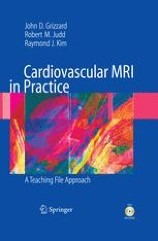
This text resource outlines the systematic approach to CMR interpretation. The depiction of a "core exam" and the modifications used for a variety of patient circumstances are demonstrated using simple visual assessment of the images. Special emphasis on the advantages of CMR relative to other modalities reinforces practical learning objectives, organized so that the reader starts with patient images – as one would in a clinical scenario – and works back to the didactic material.
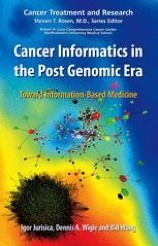
Medical information science requires analytic tools. This is achieved by developing and assessing methods and systems for the acquisition, processing, and interpretation of patient data, aided by scientific discovery. Cancer Informatics in Post-Genomic Era provides both the necessary methodology and practical information tools.Key challenges include integrating research and clinical care, sharing data, and establishing partnerships within and across sectors of patient diagnosis and treatment.Addressing important clinical questions in cancer research will benefit from expanding computational biology.

Blood Traces provides an authoritative resource that reviews many of the aspects of the interpretation of blood traces that have not been treated with the thoroughness they deserve. With strict adherence to the scientific method, the authors — noted experts on the topic — address the complexities encountered when interpreting blood trace configurations. The book provides an understanding of the scientific basis for the use of blood trace deposits, i.e. bloodstain patterns, at crime scenes to better reconstruct a criminal event.
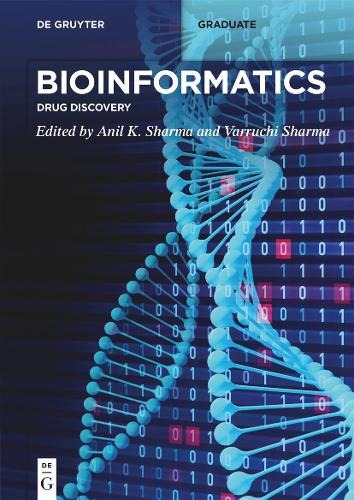
Quantitative tools are becoming increasingly important in order to understand complex cascade of signal transduction events, pathways or biochemical reactions. The book showcases how computational techniques and algorithms are applied to biological data analysis, interpretation, and modelling. It covers applications in drug design and discovery, immune systems, phylogenetic analysis and protein structures.
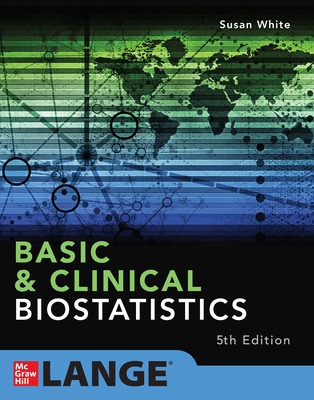
Provides medical students, researchers, and practitioners with the knowledge needed to develop sound judgment about data applicable to clinical care. This fifth edition has been updated throughout to deliver a comprehensive, timely introduction to biostatistics and epidemiology as applied to medicine, clinical practice, and research. Particular emphasis is on study design and interpretation of results of research.
In this book, anyone who can operate a PC, standard software and the Internet will learn to understand the biological basis of bioinformatics of the existence as well as the source and availability of bioinformatics software how to apply these tools and interpret results with confidence.This is aided by introductory chapters to important aspects of bioinformatics, detailed bioinformatics exercises, including solutions and a glossary of definitions and terminology relating to bioinformatics.
Analytical Techniques in Forensic Science is a comprehensive guide written in accessible terms that examines the interface between analytical chemistry and trace evidence in forensic science. With contributions from noted experts on the topic, the text features a detailed introduction analysis in forensic science and then subsequent chapters explore the laboratory techniques grouped by shared operating principles. For each technique, the authors incorporate specific theory, application to forensic analytics, interpretation, forensic specific developments, and illustrative case studies.

Describes the pathologic conditions of drug-induced lung injuries, monitoring strategies, and guides on how to interpret the evidence. It also dives into particular drugs that caused the disorder, such as EGFR inhibitors, anti-EGFR antibodies, mTOR inhibitors, proteasome inhibitors, immune checkpoint inhibitors, neoangiogenesis inhibitors, and other molecular targeted drugs. It outlines the analysis and interpretation of the post-marketing survey on surveillance of each drug for inducing pulmonary lesions presenting diffuse haziness. The data and analysis from this survey are valuable since a guideline is yet to be established due to limited clinical evidence and cases. As new drugs are developed, establishing treatment and event management is crucial.

Evaluation questionnaires are the most used tools nowadays in the field of medicine and the human sciences to evaluate variables such as disability, altruism or pain. However, clinicians are often unfamiliar with these tools. What do they really measure? How are the results to be interpreted? This book tries to answer these questions.
This book traces humanity’s long experience of natural amputations due to congenital absence, disease, frostbite, toxins, domestic and wild animal trauma, and for non-medical reasons related to punitive, ritual, and legal actions, ultimately leading to the development of elective surgical amputation. While the evolution of surgical techniques forms a major chapter in the book, many ancillary problems are addressed including the control of hemorrhage and infection, the approach to pain relief, the development of suitable instruments and equipment, and the invention of prostheses, all suitably illuminated with case histories and relevant illustrations. In addition, alternative procedures designed to avoid amputation, increasingly important in the last two centuries, are debated, and factors associated with self-amputation in extremis, not rare according to press reports, are also examined. A separate chapter considers the philosophy and interpretations of society, patients, and surgeons faced with amputation, particularly before anesthesia.

Offers contributions to a philosophical and realistic approach to the place of adjudication in contemporary constitutional democracies. Bringing together scholars from different legal and philosophical backgrounds, purports to cast light on the role(s) of judges and the function of judicial interpretation inside of constitutional states, from the standpoint of legal realism as a revisited and sophisticated jurisprudential outlook. In so doing, also copes with a few major jurisprudential issues, like, e.g., determining the ideas that make up the core of legal realism, exploring the relation between legal realism and legal positivism, identifying the boundaries of judicial interpretation as they appear from a realist standpoint, as well as considering some skeptical outlooks on the very claims of contemporary legal realism.
Presents recent advancements in research, a review of new methods and techniques, and applications in decision support systems (DSS) with Machine Learning and Probabilistic Graphical Models, which are very effective techniques in gaining knowledge from Big Data and in interpreting decisions. It explores Bayesian network learning, Control Chart, Reinforcement Learning for multicriteria DSS, Anomaly Detection in Smart Manufacturing with Federated Learning, DSS in healthcare, DSS for supply chain management, etc. Researchers and practitioners alike will benefit from this book to enhance the understanding of machine learning, Probabilistic Graphical Models, and their uses in DSS in the context of decision making with uncertainty. The real-world case studies in various fields with guidance and recommendations for the practical applications of these studies are introduced in each chapter.
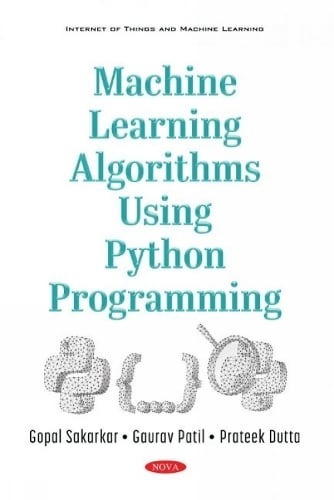
Presents the key concepts of Machine Learning which includes Python concepts and Interpreter, Foundation of Machine Learning, Data Pre-processing, Supervised Machine Learning, Unsupervised Machine Learning, Reinforcement Learning, Kernel Machine, Design and analysis of Machine Learning experiment and Data visualization. The theoretical concepts along with coding implementation are covered. This book aims to pursue a middle ground between a theoretical textbook and one that focuses on applications. The book concentrates on the important ideas in machine learning.

Daraa Highway - Ghabagheb - Syria
+963-15 2050 - 15 860 380 /1/2/3 - 11 662 3900