


Refine Results
Sort By
From
To

Intended for scientific and medical professionals and students who wish to improve their scientific writing skills. This book contains exercises that invite the reader to practice important aspects of scientific writing.

The multiplicity of cardiological tests and therapeutical procedures demands a sound knowledge of cardiological English and can be extremely demanding for non-native English speaking cardiologists, cardiology residents, nurses, and medical students.
The book includes 22 chapters by 28 authors united by the single theme: biogeography and ecology of Bulgaria. From the single-celled organisms in the Black Sea sand to the endemic cave crustaceans, from the mountain glacial relict insects to the most diverse bird fauna in Europe, the unique fauna of Bulgaria has been a subject of study of mostly Bulgarian zoologists for more than a century. This is the first monograph in English broadly addressing all vertebrate and many key invertebrate groups of Bulgaria, their faunistics, origin, geographical and ecological distribution, and conservation issues are addressed by the experts on each group.

States, analyses, illuminates and evaluates the law of civil jurisdiction and the enforcement of foreign judgments in English law, with this new edition taking into account the implications of the new Brussels I Regulation recast, Regulation (EU) 1215/2012, as well as the great number of developments in the case law which have taken place since 2009. This book looks in detail at: the jurisdictional rules put in place by the (recast) Brussels I Regulation; the common law rules of jurisdiction.
This book teaches the principles of natural language processing, first covering linguistics issues such as encoding, entropy, and annotation schemes; defining words, tokens and parts of speech; and morphology. It then details the language-processing functions involved, including part-of-speech tagging using rules and stochastic techniques; using Prolog to write phase-structure grammars; parsing techniques and syntactic formalisms; semantics, predicate logic and lexical semantics; and analysis of discourse, and applications in dialog systems. The key feature of the book is the author's hands-on approach throughout, with extensive exercises, sample code in Prolog and Perl, and a detailed introduction to Prolog. The reader is supported with a companion website that contains teaching slides, programs, and additional material.
Part I of this book presents a high-level description of an artificial agent which humans can freely communicate with in their accustomed language. Part II analyzes the major constructions of natural language, i.e., intra- and extrapropositional functor - argument structure, coordination, and coreference, in the speaker and the hearer mode. Part III defines declarative specifications for fragments of English, which are used for an implementation in Java.
Explores the affordances of disciplinary corpora for the teaching and learning of the language of dentistry, within the field of English for Specific Academic Purposes (ESAP). We extract disciplinary register features and vocabulary from three key genres of the dentistry discipline (published experimental research articles, case reports, and novice/professional research reports within the Dental Public Health domain), before integrating these features into ESAP pedagogy in the form of corpus-based ESAP materials that promote student-led direct engagement with disciplinary corpora – an approach known as 'data-driven learning'. This book is a timely and relevant addition to the field of corpus linguistics and ESAP, and is especially targeted at ESAP professionals who are required to teach disciplinary discourses but who may struggle to know what to teach as non-experts of the target discipline.

This book presents the first detailed study of one of the most important masterpieces of Renaissance cartography, Martin Waldseemüller’s Carta marina of 1516. By transcribing, translating into English, and detailing the sources of all of the descriptive texts on the map, as well as the sources of many of the images, the book makes the map available to scholars in a wholly unprecedented way.

A first comprehensive study combining and integrating advertising, culture and translation within the framework of colonial, Commonwealth, and postcolonial studies, and globalization. It addresses a number of controversial issues evident in two relatively young disciplines, as a result of decades of research and teaching in university courses. A cross-cultural approach to translational issues and the translatability of advertising cohesively is adopted here, exploring the dynamics of the conflict between the 'centre' and the 'periphery'. It introduces the concept of advertising English as lingua franca (AELF), marking new trends in the domain of varieties of English around the world (VEAW). The data examined here show the ambivalent polarity conditioning advertising and translation: both have been mutually exclusive, and both have been subject to bans, censorship and ideological control, racism, propaganda, and stereotyping. In their fundamental principles and concepts of theories and applications, however, neither discipline cannot exist outside a free market and total freedom of expression and trust
Making Meaning in English examines the broader purpose and reasons for teaching English and explores what knowledge looks like in a subject concerned with judgement, interpretation and value. He discusses the principles and tools we can use to make decisions about what to teach and offers a curriculum framework that draws these strands together to allow students to make sense of the knowledge they encounter.

Banter, chit-chat, gossip, natter, tete-a-tete: these are just a few of the terms for the varied ways in which we interact with one another through conversation. David Crystal explores the factors that motivate so many different kinds of talk and reveals the rules we use unconsciously, even in the most routine exchanges of everyday conversation. We tend to think of conversation as something spontaneous, instinctive, habitual.

These essays comprise a first attempt to assess overall the attention awarded to Leibniz’s philosophy in the English-speaking world in his own time and up to the present day. In addition to an introductory overview there are fourteen original and previously unpublished essays considering Leibniz’s connections with his English-speaking contemporaries and near contemporaries as well as the later reception of his thought in Anglo-American philosophy.
This volume considers the ways in which modernity challenges and informs the language policies of various Southeast Asians nations. Using case studies from Malaysia, the Philippines, Singapore and Thailand, the authors examine language policies that are explicitly articulated either in the form of State constitutions or in the public proclamations of political leaders. Particular attention is paid to the ways in which English, often seen as the language of globalization, impacts the status of indigenous Southeast Asian language.
It presents an original study that not only enriches our knowledge of the feasibility of modern technology in collecting large-scale data related to pragmatic competence but also eminently connects L2 pragmatics more closely with mainstream second language acquisition research by focusing on the role of motivation in pragmatic learning.

This book examines language choice in contemporary Cambodia, and uses the case study to explore and evaluate competing explanations for the spread of English globally. the multiple contexts in which Cambodians make individual and institutional language policy choices are considered. Chapters 2 and 3 examine the economic and political contexts for language choice, as Cambodia has transitioned from a planned economy and communism to a market economy and democracy. Chapters 4, 5, and 6 examine the assistance context for language choice; the bilateral, multilateral, and nongovernmental development agencies that have recently begun to work in Cambodia demand certain language skills of Cambodian employees and government counterparts, and support the learning of these languages in both nonformal and formal education.
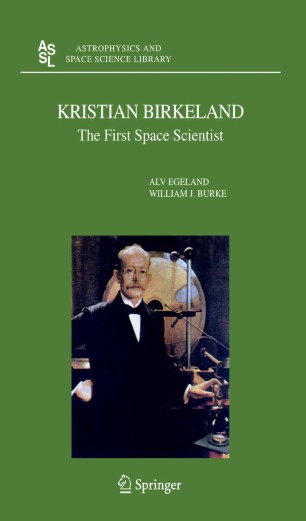
PREFACEThisscientific biography of Kristian Birkeland (1867–1917) was written to bring the story ofa Norwegian national hero to the attention ofthe English-speaking world. Birkeland’sheroic stature was established not on a field of military battle,but in the bitter cold of the Artic wilderness ashe sought to answer basic questions abouthow the Sun controlled northern lights andmag-netic storms. He was also afather of Norsk Hydro one ofNorway’s largest industries. Birkel and died before reaching the age of 50.Because Birkel and never kept adiary, documented information about his family and private life is sparse. Before he died, Olaf Devik, the last of Birke-ffland’s close friends, gave along interview and graciously transferred his personal archive to A.E. Birkeland’s 82 scientific papers and three book-length publications map the progress of his investigations. addressed this book questions that had vexed European scientists for centuries. Why do the northern lights appear overhead when the Earth’s magnetic field is disturbed? How are magnetic storms connected to disturbances on the Sun? To answer these questions Birkeland interpreted his advance laboratory simulations and daring campaigns in the Arctic wilderness in the light of Maxwell’s newly discovered laws of electricity and magnetism. Birkeland’s ideas were dismissed for decades, only to be vindicated when satellites could fly above the Earth’s atmosphere.
This volume records the diversity of scholarly approaches to John Dee which have emerged since the synthetic accounts of I. R. F. Calder, Frances Yates and Peter French. If these approaches have not succeeded in resolving the problematic multiplicity of Dee’s activities, they will at least deepen our understanding of specific and local areas of his intellectual life, and render them more historiographically legible.
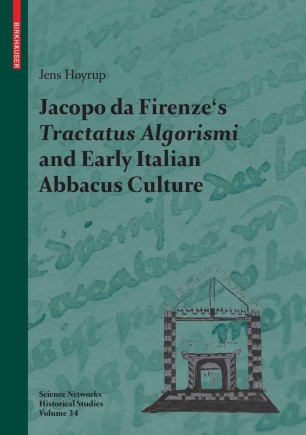
In the city republics of Renaissance Italy, it was a common practice among the merchant class to send sons for a two-year course of study at an "abbacus school", where they learned practical, mostly commercial mathematics, known as abbaco. From this school institution, several hundred manuscripts survive, all in Italian, often containing not only what the masters needed in their teaching but also algebra or other advanced mathematical material. A signal feature of the book by Jens Høyrup is the first translation of one of these abbacus manuscripts into English.

"Well, it’s not rocket science, is it?" How many times have you heard people use that expression when they mean something pretty simple? There are other areas of science and technology that are arguably more challenging than rocket science, but no other (perhaps apart from brain surgery) has entered mainstream English vocabulary as a byword for ‘difficult’.
It is fairly easy for a Finnish Jurist to understand German Company law. On the other hand, UK Company law seems very confusing. What is even more confusing is that the UK corporate govemance model is often regarded as one of the best in the World. Clearly German law cannot be as bad as it is often said to be. This books results from these kinds of thoughts and an interest in comparative law, Company law and securities markets law. I wanted to find out whether the functional method would give anything new to say about the regulation of corpo rate govemance in Germany and the UK. As I have been lecturing on Company law and corporate govemance myself, I also wanted to write a book that I could use as a textbook in my courses. For this reason, I focused on one of the key questions in corporate govemance: the regula tion of shareholder activism.

Daraa Highway - Ghabagheb - Syria
+963-15 2050 - 15 860 380 /1/2/3 - 11 662 3900