


Refine Results
Sort By
From
To

Marine, coastal and wetland habitats are threatened, not only through exploitation, but also by the prospect of climate change – as ocean currents change course, sea levels rise, and rainfall patterns change. Even the once-common cod is now under threat from the combined effects of over-fishing and a dramatic change-induced decrease in the plankton that cod larvae feed on. Meanwhile, coral reefs remain especially vulnerable to rapid sea-level changes exacerbated by the effects of tourism and disease. This book gathers together a wide range of papers reporting on key research into the biodiversity conservation of these critical and increasingly threatened habitats. Collectively these papers provide a snap-shot of the types of problems they are experiencing, and offer a wealth of topical examples which render this volume especially valuable to teachers of courses in marine, freshwater and wetlands ecology, biological conservation and ecological restoration.
This book offers a cross-sectoral reference for both managers and scientists interested in climate-smart forestry, focusing on mountain regions. It provides a comprehensive analysis on forest issues, facilitating the implementation of climate objectives. CLIMO has provided scientific analysis on issues including criteria and indicators, growth dynamics, management prescriptions, long-term perspectives, monitoring technologies, economic impacts, and governance tools.
Carbon and Nitrogen in the Terrestrial Environment is a comprehensive, interdisciplinary description of C and N fluxes between the atmosphere and the terrestrial biosphere; issues related to C and N management in different ecosystems and their implications for the environment and global climate change; and the approaches to mitigate emission of greenhouse gases.Drawing upon the most up-to-date books, journals, bulletins, reports, symposia proceedings and internet sources documenting interrelationships between different aspects of C and N cycling in the terrestrial environment, Carbon and Nitrogen in the Terrestrial Environment fills the gap left by most of the currently available books on C and N cycling. They either deal with a single element of an ecosystem, or are related to one or a few selected aspects like soil organic matter (SOM) and agricultural or forest management, emission of greenhouse gases, global climate change or modeling of SOM dynamics.
This volume adopts an ecosystems approach to understanding the world's boreal peatlands. It focuses on biogeochemical patterns and processes, production, decomposition, and peat accumulation, and provides additional information on animal and fungal diversity. A recurring theme is the legacy of boreal peatlands as impressive accumulators of carbon as peat over millennia. This carbon legacy is under threat from a wide diversity of disturbances, including wildfire, ongoing climate change, the changing chemistry of atmospheric deposition, and continuing resource exploitation. The volume is of inte.
There are several crucial feedbacks from forests to the climate system. The mechanisms for those feedbacks are elaborated in the book: they involve changes in the carbon cycle, albedo, N2O emissions and the production of aerosols. Much of this work is new and the feedback relationships have not yet been incorporated into models of the climate system. The book will be an important introduction for students and climate modellers alike, providing conceptual tools and ideas that are broadly applicable to terrestrial systems.

This book presents a concise and comprehensive review of the biology, ecology, and management of Norway spruce. It integrates classic and contemporary literature (more than 2000 works cited in the text), highlighting basic research and forestry practices in central and eastern Europe. The topics include anatomy and morphology, physiology and nutrition, reproductive biology and genetics, and ecology. In addition, it examines mycorrhiza, diseases and pests as well as silviculture and wood products. In the light of increasing threats to forest health from air pollution, climate change, and insects and disease, it provides an essential information source to those concerned with the ecology, conservation, and management of the species

This new volume on Biological Invasions deals with both plants and animals. It differs from previous books on the subject by extending from the level of individual species to an ecosystem and global level. Topics of highest societal relevance, such as the impact of genetically modified organisms, are interlinked with more conventional ecological aspects, including biodiversity. The combination of these approaches is new and makes compelling reading for researchers and environmentalists. The book’s 22 chapters cover a huge range of subjects relevant to the field. These include pathways of biological invasions (e.g. ballast water, waterways), traits of successful invaders (e.g. chemical weapons, empty niches), and patterns of invasion and invasibility, such as man-induced predisposition by fire, land use and eutrophication, and the role of climate change.
In the last few decades more and more yeast habitats that were not investigated earlier, spanning cold climates to tropical regions and dry deserts to rainforests, have been explored. As a result, a large body of ecological data has been accumulated and the number of known yeast species has increased rapidly. This book provides an overview of the biodiversity of yeasts in different habitats. The recent advances achieved by the application of molecular biological methods in the field of yeast taxonomy and ecology are also incorporated in the book. Wherever possible, the interaction between yeasts and the surrounding environment is discussed.
Sand dune dynamics plays a key role in many arid deserts. This volume provides a synthesis of a specific sand dune ecosystem, the Nizzana site in the Negev Desert. Describing its climate and geophysical/geochemical properties of soils, geological history, flora and fauna, and past/present land-use patterns, it elucidates ecological and geomorphological processes and their interrelations, based on long-term monitoring, in situ experiments and satellite imagery. Particular attention is drawn to the impact of the topsoil biological crust in controlling water availability at local/regional scales. The interdisciplinary approach adopted in this case study offers a good example of a highly complex and dynamic system, which could easily be applied to other sandy ecosystems.
This book, written by world experts in aquaponics and related technologies, provides the authoritative and comprehensive overview of the key aquaculture and hydroponic and other integrated systems, socio-economic and environmental aspects. Aquaponic systems, which combine aquaculture and vegetable food production offer alternative technology solutions for a world that is increasingly under stress through population growth, urbanisation, water shortages, land and soil degradation, environmental pollution, world hunger and climate change.
This volume provides an overview of climate change data, its effects on the structure and functioning of Antarctic ecosystems, and the occurrence and cycling of persistent contaminants. It discusses the unique physico-chemical characteristics of the Antarctic environment, ecophysiological adaptations of terrestrial and marine organisms, the transfer of contaminants in pelagic and neritic food chains and the possible consequences for animals at higher trophic levels.
A Sea Change in a Changing Sea The oceans, seas and coastal areas encompass over 70% of the earth’s surface. They are a critical driver of the earth’s hydrologic cycle and climate system, important for c- merce, transport, and tourism, a source of economically important living marine resources, minerals such as hydrocarbons, as well as new pharmaceutical compounds. The marine environment provides essential habitats for thousands of marine living 1 2 resources, which in turn contribute significantly to global food security, employment, 3 and trade. Overall, the sea’s contribution to human welfare, in terms of market and non-market resources and environmental services, has been estimated at US$21 trillion/year (Costanza, 2000). However, despite the importance of the ocean realm to humans, there is a growing sense that human impacts are destabilizing this system. Some experts believe that current fishing levels are approaching or exceeding the total 4 productivity of the ocean ecosystem (National Research Council, 1999).
The authors address the future role of atmospheric CO2 and its likely effects on ecosystems. This book incorporates the advances of various earth science, environmental, and ecological fields into an overall account of global change and the changing dynamics of life on Earth.

Media and communication have become ubiquitous in today’s societies andaffect all aspects of life. On an individual level, they impact how we learnabout the world, how we entertain ourselves, and how we interact withothers. On an organisational level, the interactions between media andorganisations, such as political parties, NGOs, businesses and brands, shapeorganisations’ reputation, legitimacy, trust and (financial) performance, aswell as individuals’ consumer, political, social and health behaviours. Atthe societal level, media and communication are crucial for shaping publicopinion on current issues such as climate change, sustainability, diversity,and well-being.
The sustainable management of water cycles is crucial in the context of climate change and global warming. It involves managing global, regional, and local water cycles, as well as urban, agricultural, and industrial water cycles, to conserve water resources and their relationships with energy, food, microclimates, biodiversity, ecosystem functioning, and anthropogenic activities. Hydrological modeling is indispensable for achieving this goal, as it is essential for water resources management and the mitigation of natural disasters. In recent decades, the application of artificial intelligence (AI) techniques in hydrology and water resources management has led to notable advances. In the face of hydro-geo-meteorological uncertainty, AI approaches have proven to be powerful tools for accurately modeling complex, nonlinear hydrological processes and effectively utilizing various digital and imaging data sources, such as ground gauges, remote sensing tools, and in situ Internet of Things (IoT) devices.
Presents the theoretical background of building physics, dealing with the evaluation of physical phenomena related to heat transfer and energy use in buildings, water and water vapour transfer in building structures, daylighting and electric lighting of buildings, sound transmission in building structures and protection against noise, the occurrence and spread of fires in buildings and the thermal response of cities. It contains numerical and computational evaluation methods, numerous computational case studies and examples of experimental analyses. The book demonstrates that the considered physical processes affect the quality of living and working comfort in indoor and outdoor environment.
This book identifies and discusses biodiversity’s contribution to physical, mental and spiritual health and wellbeing. Furthermore, the book identifies the implications of this relationship for nature conservation, public health, landscape architecture and urban planning – and considers the opportunities of nature-based solutions for climate change adaptation. This transdisciplinary book will attract a wide audience interested in biodiversity, ecology, resource management, public health, psychology, urban planning, and landscape architecture. The emphasis is on multiple human health benefits from biodiversity - in particular with respect to the increasing challenge of climate change.
This book is the first comprehensive guideline for the beryllium-7 (Be-7) technique that can be applied to evaluate short-term patterns and budgets of soil redistribution in agricultural landscapes. While covering the fundamental and basic concepts of the approach, this book distinguishes itself from other publications by offering step-by-step instructions on how to use this isotopic technique effectively. It covers experimental design considerations and clear instruction is given on data processing. As accurate laboratory measurement is crucial to ensure successful use of Be-7 to investigate soil erosion, a full chapter is devoted to its specific determination by gamma spectrometry.
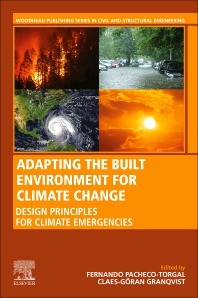
Adapting the Built Environment for Climate Change: Design Principles for Climate Emergencies analyzes several scenarios and proposes various adaptation strategies for climate emergencies (heat waves, wildfires, floods, and storms). Divided into three themes, the book offers an organized vision of a complex and multi-factor challenge. It covers climatic resilience and building refurbishment, implications for service life prediction and maintainability, and climate adaptation in the maintenance and management of buildings. Sections cover infrastructure materials, climate emergency adaptation and building adaptation to heat waves, wildfires, floods and storms.
"The book uses an economic lens to identify the main features of climate-smart agriculture (CSA), its likely impact, and the challenges associated with its implementation. This book offers tools and insights for a range of stakeholders to help meet these challenges in the many forms they are manifested."

Daraa Highway - Ghabagheb - Syria
+963-15 2050 - 15 860 380 /1/2/3 - 11 662 3900