


Refine Results
Sort By
From
To


A broad array of themes concerned with research on epilepsy and kindling is covered in the book: Pathogenesis of kindling, including developmental patterns; electrophysiology; anatomy, morphology, and neural circuitry; genes, species, and strains; synaptic pharmacology and neurochemistry ; Behavioral consequences of kindling ; Drugs and interventions against kindling ; Clinical relevance of kindling for our understanding of epilepsy in patients

Matching Properties of Deep Sub-Micron MOS Transistors examines this interesting phenomenon. Microscopic fluctuations cause stochastic parameter fluctuations that affect the accuracy of the MOSFET. For analog circuits this determines the trade-off between speed, power, accuracy and yield.
This book describes modern applications of computational human modeling with specific emphasis in the areas of neurology and neuroelectromagnetics, depression and cancer treatments, radio-frequency studies and wireless communications. Special consideration is also given to the use of human modeling to the computational assessment of relevant regulatory and safety requirements. Readers working on applications that may expose human subjects to electromagnetic radiation will benefit from this book’s coverage of the latest developments in computational modelling and human phantom development to assess a given technology’s safety and efficacy in a timely manner.
While the problems of long-term stability and biocompatibility are being addressed, several promising prototypes are starting to emerge for managing patients with acute diabetes, for treatment of epilepsy and other debilitating neurological disorders and for monitoring of patients with chronic cardiac diseases. Despite the technological developments in sensing and monitoring devices, issues related to system integration, sensor miniaturization, low-power sensor interface circuitry design, wireless telemetric links and signal processing still have to be investigated.
As individual needs have arisen in the fields of physics, electrical engineering and computational science, each has created its own theories of information to serve as conceptual instruments for advancing developments. This book provides a coherent consolidation of information theories from these different fields.It provides a versatile tool for quantifying complexity and information capacity in any physical system.
Intended for anyone who has an interest to learn the analysis and design of analog and digital systems. The book covers the foundation of analysis and design of all analog and pulse circuits. The book is organized into seven chapters. In each chapter, practical derivations are explained step by step.
Le champ des algorithmes d'approximation est aujourd'hui l'un des domaines de recherche les plus actifs en informatique. Il allie la profondeur de la théorie mathématique aux promesses d'applications pratiques d'un intérêt considérable. La plupart des problèmes issus d'applications relevant de domaines aussi différents que la conception de circuits VLSI, la conception et la planification de réseaux, l'ordonnancement, la théorie des jeux, la biologie ou la théorie des nombres, sont des problèmes NP-difficiles. Leur résolution exacte demanderait des ressources informatiques inaccessibles et ne peut donc être envisagée. Pour faire face à cette situation, un grand nombre d'algorithmes proposant des solutions approchées à ces problèmes ont été développés.

This volume provides a complete survey of the state-of-the-art research that encompasses all areas of ad hoc and sensor networks. These chapters focus on the theoretical and experimental study of advanced research topics involving security and trust, broadcasting and multicasting, power control and energy efficiency, and QoS provisioning.
This book celebrates Professor Peter Marwedel's outstanding achievements in compilers, embedded systems, and cyber-physical systems. The contributions in the book summarize the content of invited lectures given at the workshop “Embedded Systems” held at the Technical University Dortmund in early July 2019 in honor of Professor Marwedel's seventieth birthday.

The aim of this volume is to bring together research directions in theoretical signal and imaging processing developed rather independently in electrical engineering, theoretical physics, mathematics and the computer sciences. In particular, mathematically justified algorithms and methods, the mathematical analysis of these algorithms, and methods as well as the investigation of connections between methods from time series analysis and image processing are reviewed. An interdisciplinary comparison of these methods, drawing upon common sets of test problems from medicine and geophysical/enviromental sciences, is also addressed.
Presents a fundamental introduction to three solid-state approaches to achieving quantum computation: semiconductor spin-based, semiconductor charge-based, and superconducting approaches.
Low-Power High-Speed ADCs for Nanometer CMOS Integration is about the design and implementation of ADC in nanometer CMOS processes that achieve lower power consumption for a given speed and resolution than previous designs, through architectural and circuit innovations that take advantage of unique features of nanometer CMOS processes. A phase lock loop (PLL) clock multiplier has also been designed using new circuit techniques and successfully tested.
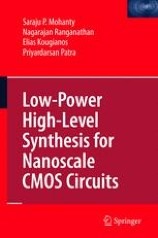
Low-Power High-Level Synthesis for Nanoscale CMOS Circuits addresses the need for analysis, characterization, estimation, and optimization of the various forms of power dissipation in the presence of process variations of nano-CMOS technologies. The authors show very large-scale integration (VLSI) researchers and engineers how to minimize the different types of power consumption of digital circuits.
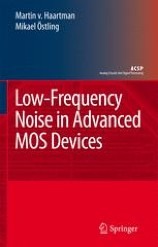
Low-Frequency Noise in Advanced CMOS Devices begins with an introduction to noise, describing the fundamental noise sources and basic circuit analysis. The characterization of low-frequency noise is discussed in detail and useful practical advice is given. The various theoretical and compact low-frequency (1/f) noise models in MOS transistors are treated extensively providing an in-depth understanding of the low-frequency noise mechanisms and the potential sources of the noise in MOS transistors. Advanced CMOS technology including nanometer scaled devices, strained Si, SiGe, SOI, high-k gate dielectrics, multiple gates and metal gates are discussed from a low-frequency noise point of view. Some of the most recent publications and conference presentations are included in order to give the very latest view on the topics. The book ends with an introduction to noise in analog/RF circuits and describes how the low-frequency noise can affect these circuits.
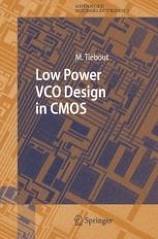
The performance of voltage controlled oscillators (VCO) is of extreme importance for any telecommunication or data communication system. This practical guide develops a systematic, fully-integrated LC-VCO design for low power and low phase noise, especially useful to meet the demands on mobile devices such as cell phones. The proposed VCO design approaches are experimentally verified with several fully integrated CMOS VCOs. The concise presentation is offered in three parts (VCO design; CMOS devices for VCO design; and fully-integrated CMOS DESIGNS) and supplemented by an appendix summarizing the state of the art.
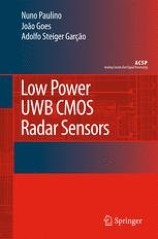
Low Power UWB CMOS Radar Sensors deals with the problem of designing low cost CMOS radar sensors. The radar sensor uses UWB signals in order to obtain a reasonable target separation capability, while maintaining a maximum signal frequency below 2 GHz. This maximum frequency value is well within the reach of current CMOS technologies. The use of UWB signals means that most of the methodologies used in the design of circuits and systems that process narrow band signals, can no longer be applied. Low Power UWB CMOS Radar Sensors provides an analysis between the interaction of UWB signals, the antennas and the processing circuits.
Linear systems theory plays a broad and fundamental role in electrical, mechanical, chemical and aerospace engineering, communications, and signal processing. A thorough introduction to systems theory with emphasis on control is presented in this self-contained textbook. The book examines the fundamental properties that govern the behavior of systems by developing their mathematical descriptions. Linear time-invariant, time-varying, continuous-time, and discrete-time systems are covered. Rigorous development of classic and contemporary topics in linear systems, as well as extensive coverage of stability and polynomial matrix/fractional representation, provide the necessary foundation for further study of systems and control.
It is essential for circuit and system designers to understand the components of leakage, sensitivity of leakage to different design parameters, and leakage mitigation techniques in nanometer technologies. This book provides an in-depth treatment of these issues for researchers and product designers.
This book uniquely combines new advances in the electromagnetic and the circuits&systems theory. It integrates both fields regarding computational aspects of common interest. Emphasized subjects are those methods which mimic brain-like and electrodynamic behaviour; among these are cellular neural networks, chaos and chaotic dynamics, attractor-based computation and stream ciphers.
Esterel is based on the simple idea of providing a software language that has a synchronous model of time. That is, the execution of the program is divided into discrete instants, and statements are either guaranteed to execute in a single instant, or take multiple instants as requested by the programmer. Suitable for programming safety-critical real-time systems, Esterel and its model of computation have found use in industrial applications such as avionics, integrated circuit design, and other safety-critical environments. While Compiling Esterel does not assume prior knowledge of the Esterel language, readers will appreciate having prior knowledge of programming language semantics and compiler technology, along with some familiarity with synchronous digital hardware design.

Daraa Highway - Ghabagheb - Syria
+963-15 2050 - 15 860 380 /1/2/3 - 11 662 3900