


Refine Results
Sort By
From
To

Cardiovascular medicine has experienced an unforeseen and impressive development over the last fifty years, particularly recently, as new diagnostic innovative medications have been developed, as well as interventional and surgical procedures to treat patients with cardiac disease. Thus, the number of cardiovascular diagnoses, the number of diagnostic modalities, as well as the number of treatment options has expanded enormously and made cardiovascular medicine one of the biggest specialties in medicine. This cardiovascular manual focuses on diagnostic algorithms and therapeutic recommendations according to European Guidelines. It encompasses all aspects of cardiovascular medicine from hypertension to transplantation; from imaging to intervention; and from pharmacotherapy to surgical procedures.
Management of Heart Failure has been conceived as a rapid but comprehensive review for practitioners of all persuasions involved in the management of patients with heart failure. Heart failure is a problem of epidemic proportions in all parts of the world. State of the art treatment may not be accessible to all, but simply creating an awareness of simple methods of diagnosis and treatment would assist in promoting a better global response to this epidemic. This practical volume, written by a panel of world-renown cardiology experts, focuses on the surgical management of heart failure. Surgery for heart failure is an evolving and new area in cardiac surgery with many exciting developments.
The work stems from the desire to provide the cardiologist or non-imaging physician with the basis for understanding technical principles and methods of acquiring and reconstructing images. At the same time, even the radiologist who does not have specific experience in cardiac imaging will be able to acquire basic knowledge of coronary anatomy and pathophysiology.
In this seminal manuscript the - thor described a new imaging technique which moved the single dimension of NMR spectroscopy to the dual dimension of spatial orientation, thereby resulting in the foundation of modern magnetic re- nance (MR) imaging. Over the ensuing years, MR imaging has assumed an increasingly important role in clinical imaging. It distinguishes itself from other imaging modalities, such as ultrasound (US) or computed tomography (CT), by the unique ability to visualize specific tissue components in a non-- vasive manner. In the earlier days, diagnostic MR imaging was limited to cerebral and musculoskeletal diseases. - aging of other areas which are more prone to movement through breathing (abdominal) or pulsation motions (cardiac) became available more recently, with the introduction of faster sequences and the - velopment of more dedicated MR imaging coils.
The hemodynamic monitoring of intensive care patients is undergoing major changes. Technological advances such as computerization and miniaturization have made it possible to considerably expand the range of assessment tools available at the bedside. Thus, the approach to cardiovascular monitoring - which was once readily "invasive" and global - is gradually becoming non-invasive and locoregional or even tissue. At the same time, the combined evolution of technology and physiological and pathophysiological concepts now provides the clinician with access to a variety of "functional hemodynamic monitoring". The aim of this book is to provide a better understanding of the interest and the limits of the hemodynamic parameters accessible by current hemodynamic monitoring techniques. It thus aims to ensure that the use of these techniques is perfectly mastered by resuscitators and anesthetists-resuscitators so that patient care is ultimately optimal.
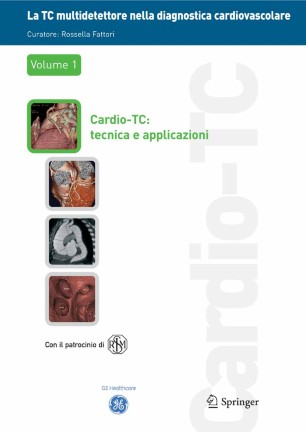
Con il patrocinio della Società Italiana di Radiologia Medica e il supporto di GE Healthcare, Springer-Verlag Italia presenta un'opera multimediale di aggiornamento e formazione dedicata alla TC cardiovascolare. Curata da Rossella Fattori del Dipartimento Clinico di Scienze Radiologiche e Istocitopatologiche del Policlinico S. Orsola di Bologna e con il contributo dei più autorevoli esperti italiani, l'opera è articolata in 4 monografie che trattano in maniera completa gli ambiti applicativi della cardio-TC, un CD-ROM didattico e interattivo basato su casi clinici e un DVD che consentirà di apprendere preziose informazioni attraverso filmati di refertazione.
The aim of this book is to make current data from the experimental and clinical literature accessible to readers. More than a thousand articles are published each year on the theme and the authors aim to synthesize this information. These data relate in particular to the identification of early markers of renal dysfunction without which screening, recognition of the main pathophysiological determinants and prevention remain uncertain. This book focuses attention on clinical situations characterized by the renal impact of the main dysfunctions of vital functions, the prognosis of which is worsened by the occurrence of this renal failure. The following will be treated in particular: the renal consequences of oxidative stress, the renal consequences of respiratory dysfunction, cardiac dysfunction, hepatic dysfunction, alterations in hemostasis, septic shock and hemorrhagic shock. Finally, the physiopathological data from experimental models are gradually finding their echo in the clinical field, opening up therapeutic avenues whose recent evaluations will be analyzed.
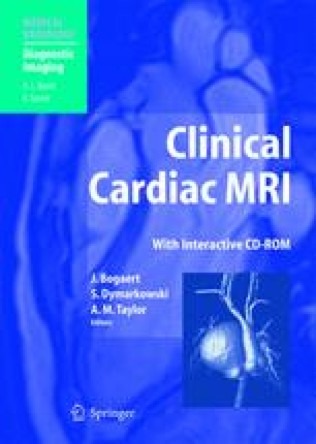
MRI has become the preferred noninvasive imaging modality for the heart and great vessels. The substantial technological progress achieved in recent years has provided the user with state of the art MRI systems, but their optimal use can be limited by restricted awareness of the potential patient benefit and the necessity for teaching. This extensively illustrated volume, has been specifically compiled to meet these needs. Essential theoretical background information is provided, and imaging acquisition and potential pitfalls are considered in detail. Most importantly, structured guidelines are provided on the interpretation of clinical data in the wide range of cardiac pathology that can be encountered. Throughout, the emphasis is on the implementation of cardiac MRI in clinical practice.
This volume focuses on the practical aspects of clinical electrophysiology of cardiac arrhythmias in the young as practiced by current and former faculty and fellows in the Department of Pediatric Cardiology at the University of Michigan.
Catheter ablation of cardiac arrhythmias is an important field of interventional cardiology. This comprehensive overview is a practical guide for exact diagnosis of cardiac arrhythmias, mapping of cardiac arrhythmias with newest 3D technology and catheter ablation of various arrhythmias from WPW syndrome to atrial fibrillation.
Cardiovascular Prevention and Rehabilitation is a timely and thorough review of prevention, lifestyle counseling and rehabilitation for cardiologists and all physicians and other health professionals in cardiac rehabilitation teams. The Editors have gathered over 60 experts from all parts of the globe, each highlighting the role of cardiac rehabilitation and preventative cardiology from exercise testing and training, through nutrition, smoking cessation, behavioral and social support to adapted programs for newer groups with specific demands, such as the elderly, patients with implantable devices and patients after cardiac transplantation.
A Practical Guide for Cardiovascular Magnetic Resonance Imaging provides a comprehensive and reader-friendly educational tool for physicians starting to work with CMR and cardiology and radiology trainees preparing for the Board certification examination.
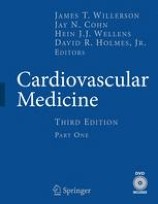
Cardiovascular Medicine, 3rd edition" offers the most up-to-date, user-friendly guidance on the evaluation, diagnosis and medical and surgical treatment of heart and vascular disease and will be relevant to the practice of every cardiologist, cardiac surgeon, vascular surgeon, diabetologist, cardiac radiologist and any physician who manages cardiac patients. Drs Willerson, Cohn, Wellens and Holmes – and over 150 world authorities – offer their decades of scientific and clinical experience. The book and DVD are designed to provide comprehensive coverage of every aspect of cardiovascular medicine from cardiac signs and symptoms .
The multiplicity of cardiological tests and therapeutical procedures demands a sound knowledge of cardiological English and can be extremely demanding for non-native English speaking cardiologists, cardiology residents, nurses, and medical students.
Cardiac rehabilitation can be extremely complex art. In Cardiac Rehabilitation, expert authors provide state-of-the-art information that serves as a manual to the multidisciplinary nature of cardiac rehabilitation in the current era, the current state of cardiac rehabilitation, and the issues facing current CR programs. Covering the major components of a CR program, including medical therapy, exercise, nutrition, and behavioral therapy, from referral to testing to individualizing the program for the participants, the volume is a thorough, vital guide to this important field.
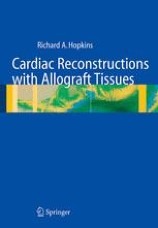
Cryopreserved allograft tissues are now standard materials for the reconstructive cardiac surgeon. Since publication of the first edition ("Cardiac Reconstructions with Allograft Valves") in 1989, the field has progressed dramatically with increased clinical use of cardiovascular allograft tissues, with the development of new surgical techniques, and with advances in the understanding of the fundamentals of valve transplantation biology and cryopreservation. As a result, over two-thirds of the present volume represents new material. Fifty-six authors bring their expertise to thirteen comprehensive, lavishly illustrated sections which discuss the principles of the use of homograft valves, major clinical series of homograft valves for both left and right ventricular outflow tracts, cryopreserved allograft tissue for cardiac reconstruction, cell biology of heart valve leaflets, cryobiology of heart valve preservation, morphological, biochemical, and explant pathology studies of allograft heart valves, allograft valve banking, as well as detailed explanation of surgical techniques for valve and root methods for left and right ventricular outflow tract reconstructions, the Ross operation and variants, and complex reconstructions. A final section presents potential future directions for the field. Over 400 illustrations, created expressly for this book, depict the surgical techniques from the perspective of the surgeon standing at the operating table.
Cardiac PET and hybrid PET/CT have revolutionized the field of cardiovascular imaging and offer new options for diagnosis and management of patients with cardiac conditions. Cardiologists, radiologists, and nuclear medicine specialists must have an up-to-date reference in this rapidly changing field in order to most effectively utilize new technology in practice. Cardiac PET and PET/CT Imaging takes a step-by-step approach to PET and PET/CT instrumentation, imaging, and protocols. Beginning with imaging fundamentals and progressing through advanced discussion of specific applications, this book is a comprehensive source of cardiac PET and PET/CT information.
The second edition of Cardiac Pacing for the Clinician will provide a succinct, yet comprehensive reference for the implantation and follow-up of implantable cardiac rhythm devices. It is intended to be a practical guide for the day-to-day management of these increasingly complex devices.
For about hundred years the investigation of heart physiology has had one central guiding principle, the "law" of Frank and Starling. This connects the return of blood into the heart and the blood pressure with cardiac con traction force. The "law" does it in a way that enables the cardiovascular system to react to perturbations without major malfunctions. This book is a compilation of reviews of prominent scientists on this subject. The differ ence of the original formulation of the Frank-Starling principle is that mechanotransduction is the central theme that leads the reader through the book. Since the discovery of the "law" the scope of topics related to this subject has broadened enormously, as can be seen easily by glancing at the contents of this book. Mechanotransduction in the heart has many faces that range from molecules to humans and their diseases.
Discussions on topics such as gene suppression, editing, and reprogramming; cardiac gene therapy vectors and promoters; cardiac gene delivery methods; pulmonary hypertension; and patient screening and measuring the efficacy of cardiac gene therapy. Written in the highly successful Methods in Molecular Biology series format, chapters include introductions to their respective topics, lists of the necessary materials and reagents, step-by-step, readily reproducible laboratory protocols, and tips on troubleshooting and avoiding known pitfalls.

Daraa Highway - Ghabagheb - Syria
+963-15 2050 - 15 860 380 /1/2/3 - 11 662 3900