



Page 9
Page 9

Numeri e Crittografia
Number Theory is one of the most classic fields of Mathematics. The numbers he deals with are those that are called natural 0, 1, 2, ... and that we use since childhood to count. Seemingly simple and harmless, they nevertheless hide some of the most difficult and exciting mysteries of the whole of mathematics. Cryptography, on the other hand, is concerned with hiding the content of confidential communications from prying eyes and corresponds to widespread needs in our society. The Theory of Numbers can help Cryptography in these needs, thanks to the mysteries that still surround it. The text gives an account of this link. It first introduces Modern Cryptography, its goals and priorities. He then goes on to expose arguments of Number Theory, with particular reference to the two problems of recognizing prime numbers, and of decomposing a natural into its prime factors; for each of the two issues it provides a vast panorama of the algorithms that deal with it and try to solve it as effectively as possible. In particular, it presents the very recent AKS procedure for recognizing prime numbers. The book then returns to Cryptography and shows how ideas and methods of Number Theory apply to the construction of reliable procedures for the secure transmission of confidential information.

Number theory in science and communication : With applications in cryptography, physics, digital information, computing, and self-similarity
"Number Theory in Science and Communication" is a well-known introduction for non-mathematicians to this fascinating and useful branch of applied mathematics . It stresses intuitive understanding rather than abstract theory and highlights important concepts such as continued fractions, the golden ratio, quadratic residues and Chinese remainders, trapdoor functions, pseudoprimes and primitive elements. Their applications to problems in the real world are one of the main themes of the book. This revised fourth edition is augmented by recent advances in primes in progressions, twin primes, prime triplets, prime quadruplets and quintruplets, factoring with elliptic curves, quantum factoring, Golomb rulers and "baroque" integers.

Number Theory and the Periodicity of Matter
The book launch was held at the University of Pretoria (UP) on 26 March 2008. … It’s a fascinating and original concept and I hope you all get the opportunity to read it. It will challenge your current views of numbers. … If there is a link between numbers and the Periodic Table this will of course have major implications as to the ‘meaning’ on the Periodic Table. It’s great to have original thinkers in our midst
Number Theory ; Vol.15 : Tradition and Modernization
This book appears varied, they are unified by two underlying principles:first, making everything readable as a book, and second, making a smooth transition from traditional approaches to modern ones by providing a rich array of examples. The chapters are presented in quite different in depth and cover a variety of descriptive details.The book emphasizes a few common features such as functional equations for various zeta-functions, modular forms, congruence conditions, exponential sums, and algorithmic aspects.

Number Theory ; Vol. II : Analytic and Modern Tools
The central theme of this graduate-level number theory textbook is the solution of Diophantine equations, i.e., equations or systems of polynomial equations which must be solved in integers, rational numbers or more generally in algebraic numbers. This theme, in particular, is the central motivation for the modern theory of arithmetic algebraic geometry. In this text, this is considered through three aspects.
Number Theory ; Vol. I : Tools and Diophantine Equations
The central theme of this graduate-level number theory textbook is the solution of Diophantine equations, i.e., equations or systems of polynomial equations which must be solved in integers, rational numbers or more generally in algebraic numbers. This theme, in particular, is the central motivation for the modern theory of arithmetic algebraic geometry. In this text, this is considered through three aspects.
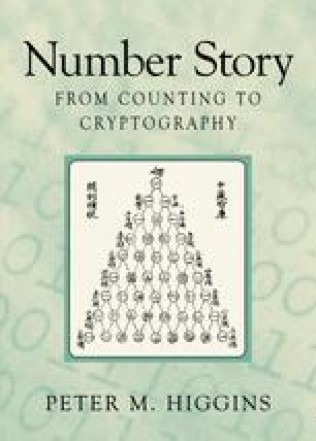
Number Story : From Counting to Cryptography
Numbers have fascinated people for centuries. They are familiar to everyone, forming a central pillar of our understanding of the world, yet the number system was not presented to us "gift-wrapped" but, rather, was developed over millennia. Today, despite all this development, it remains true that a child may ask a question about numbers that no one can answer. Many unsolved problems surrounding number matters appear as quirky oddities of little account while others are holding up fundamental progress in mainstream mathematics.

Number Fields and Function Fields – Two Parallel Worlds
These invited articles by leading researchers in the field explore various aspects of the parallel worlds of function fields and number fields. Topics range from Arakelov geometry, the search for a theory of varieties over the field with one element, via Eisenstein series to Drinfeld modules, and t-motives.

Nuel Belnap on Indeterminism and Free Action
Seeks to further the use of formal methods in clarifying one of the central problems of philosophy: that of our free human agency and its place in our indeterministic world. It celebrates the important contributions made in this area by Nuel Belnap, American logician and philosopher. Philosophically, indeterminism and free action can seem far apart, but in Belnap’s work, they are intimately linked. This book explores their philosophical interconnectedness through a selection of original research papers that build forth on Belnap’s logical and philosophical work. Some contributions take the form of critical discussions of Belnap's published work, some develop points made in his publications in new directions, and others provide additional insights on the topics of indeterminism and free action.

Nucleic Acids Hybridization : Modern Applications
Several approaches, such as microarray hybridization, have become extremely popular tools for specialists in biochemistry and biomedicine, while the potential of many other advantageous techniques seems to be underestimated. Written by an international team of authors, this book details the current state-of-art in hybridization techniques. Coverage includes experimental protocols along with comprehensive and detailed method descriptions.

Nucleic Acids and Proteins in Soil
With millions of different bacterial species living in soil, the microbial community is extremely complex, varying at very small scales. Microbe-driven functions are essential for most processes in soil. Thus, a better understanding of this microbial diversity will be invaluable for the management of the various soil functions. Nucleic Acids and Proteins in Soil combines traditional approaches in soil microbiology and biochemistry with the latest techniques in molecular microbial ecology. Included are methods to analyse the presence and importance of nucleic acids and proteins both inside and outside microbial cells, the horizontal gene transfer which drives bacterial diversity, as well as soil proteomes. Further chapters describe techniques such as PCR, fingerprinting, the challenging use of gene arrays for structural and functional analysis, stable isotope probing to identify in situ metabolic functions, and the use of marker and reporter genes in soil microbial ecology.
Nucleation and Atmospheric Aerosols ; 17th International Conference, Galway, Ireland, 2007
Atmospheric particles are ubiquitous in the atmosphere: they form the seeds for cloud droplets and they form haze layers, blocking out incoming radiation and contributing to a partial cooling of our climate. They also contribute to poor air quality and health impacts. This book brings together the leading experts from the nucleation and atmospheric aerosols research communities to present the current state-of-the-art knowledge in these related fields.
Nuclear Science and Safety in Europe
Recent results on the nature of low-, intermediate- and high-energy nuclear forces as well as on the internal structure of nucleons and atomic nuclei are presented. This book Prospects to find a new state of the nuclear matter at extreme conditions that existed in the early Universe and the utilisation of the nuclear energy are discussed.
Nuclear Risks in Central Asia
Insights into uranium production sites and nuclear explosion testing sites in Former Soviet Union countries Unique information on contamination of NORM and other radionuclides in Central Asia and Caucasus area Highlighting the need of radiation protection in areas contaminated by uranium exploitation in Central Asia and Caucasus area
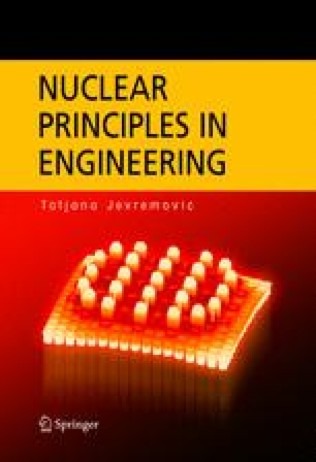
Nuclear Principles in Engineering
Nuclear Principles in Engineering is written for students, engineers, physicians and scientists who need up-to-date information in basic nuclear concepts and calculation methods using numerous examples and illustrative computer application areas.
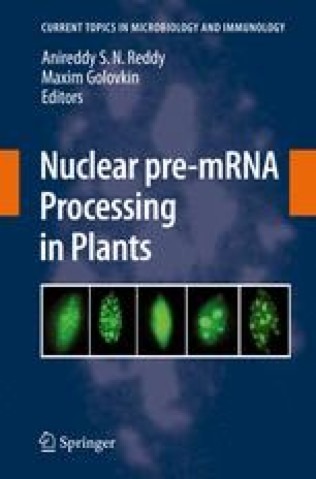
Nuclear pre-mRNA Processing in Plants
In recent years nuclear pre-mRNA processing has taken center stage as an important regulator of gene expression and ultimately growth and development. Large-scale genome and cDNA sequencing projects together with bioinformatic analyses of these sequences have revealed that alternative splicing of pre-mRNAs contributes greatly to transcriptome and proteome complexity in eukaryotes. During the last few years, tremendous progress has been made in understanding various aspects of pre-mRNA processing including alternative splicing and its importance in plant growth and development as well as in plant responses to hormones and stresses. This book, with contributions from leading scientists in this area, summarizes recent advances in nuclear pre-mRNA processing in plants. It provides researchers in the field, as well as those in related areas, with an up-to-date and comprehensive, yet concise, overview of the current status and future potential of this research in understanding plant biology.

Nuclear Medicine Technology : Review Questions for the Board Examinations
Nuclear medicine technology has been a fascinating subject ever since the early rectilinear scanner produced images, and is becoming ever more interesting (and demanding) with the growth of positron emission tomography and other molecular imaging. Taking and passing the exam offered by the Nuclear Medicine Technology Certi? cation Board (NMTCB), or that offered by the American Registry of Radiologic Techno- gists (ARRT), is the ? nal step in reaching the status of Nuclear M edicine Technologist. These exams are both challenging and the breadth of knowledge that they cover mean that a th- ough review is in order before attempting either exam. This book was created to assist in preparation for those exams. In addition to recalling information, the questions require application of information, and analysis of situations.

Nuclear Law : The Global Debate
This open access book traces the journey of nuclear law: its origins, how it has developed, where it is now, and where it is headed. As a discipline, this highly specialized body of law makes it possible for us to benefit from the life-saving applications of nuclear science and technology, including diagnosing cancer as well as avoiding and mitigating the effects of climate change. This book seeks to give readers a glimpse into the future of nuclear law, science and technology. It intends to provoke thought and discussion about how we can maximize the benefits and minimize the risks inherent in nuclear science and technology. This compilation of essays presents a global view in discipline as well as in geography.
Nuclear Import and Export in Plants and Animals
Nuclear Import and Export in Plants and Animals provides insight into the remarkable mechanisms of nuclear import and export. This book covers a range of topics from the nuclear pore structure, to nuclear import and export of macromolecules in plant and animal cells. In addition, the book covers the special cases of nuclear import of Agrobacterium T-DNA during plant genetic transformation, nuclear import and export of animal viruses, and nuclear intake of foreign DNA. A chapter on research methods to study nuclear transport concludes the book.
Nuclear fusion research : Understanding plasma-Surface interactions
It became clear in the early days of fusion research that the effects of the containment vessel (erosion of "impurities") degrade the overall fusion plasma performance. Progress in controlled nuclear fusion research over the last decade has led to magnetically confined plasmas that, in turn, are sufficiently powerful to damage the vessel structures over its lifetime. This book reviews current understanding and concepts to deal with this remaining critical design issue for fusion reactors. It reviews both progress and open questions, largely in terms of available and sought-after plasma-surface interaction data and atomic/molecular data related to these "plasma edge" issues.
