



Page 9
Page 9

Aging and Senescence
Aging is characterized by a progressive loss of physiological integrity, leading to impaired function and increased vulnerability to death. This deterioration is the primary risk factor for major human pathologies, including cancer, diabetes, cardiovascular disorders, and neurodegenerative diseases. Aging research has experienced an unprecedented advance over recent years, particularly with the discovery that the rate of aging is controlled, at least to some extent, by genetic pathways and biochemical processes conserved in evolution. Although recent developments in molecular biology are far from understanding the biological basis of aging, research suggests that targeting the aging process itself could ameliorate many age-related pathologies.

Advances in wheat genetics : From genome to field : Proceedings of the 12th International wheat genetics symposium
Provides a comprehensive review of the forefront of wheat research, across various important topics such as germplasm and genetic diversity, cytogenetics and allopolyploid evolution, genome sequencing, structural and functional genomics, gene function and molecular biology, biotic stress, abiotic stress, grain quality, and classical and molecular breeding. Following an introduction, 9 parts of the book are dedicated to each of these topics. A final, 11th part entitled “Toward Sustainable Wheat Production” contains 7 excellent papers that were presented in the 12th IWGS Special Session supported by the OECD.

Advances in plant and animal boron nutrition ; Proceedings of the 3rd International symposium on all aspects of plant and animal boron nutrition
Reviews all aspects of boron research in recent years and is based on the Third International Symposium on all Aspects of Plant and Animal Boron Nutrition which was held in Wuhan, P.R. China. The following issues are discussed: Boron sorption mechanisms in soils / Deficiency and toxicity of boron / Boron fertilizer application / Basic research on the physiology and molecular biology of plant boron nutrition / The nutritional function of boron in animals and humans
Advances in bioinformatics and computational biology ; 2nd Brazilian symposium on bioinformatics, BSB 2007, Angra dos Reis, Brazil, August 29-31, 2007, Proceedings
This book address a broad range of current topics in computationl biology and bioinformatics featuring original research in computer science, mathematics and statistics as well as in molecular biology, biochemistry, genetics, medicine, microbiology and other life sciences.
Advances in Alzheimer’s and Parkinson’s Disease : Insights, Progress, and Perspectives
Proceedings of the 7th International Conference on Alzheimer’s Disease and Parkinson’s Disease (ADPD), held March 9-13, 2005 in Sorrento, Italy.The subject matter of the ADPD conferences is unique in that it deals not only with issues related individually to Alzheimer’s disease and Parkinson’s disease, but also with the integration of these and other related diseases. The most up-to-date techniques and research findings are illustrated in this volume, covering topics such as immunology, neuroscience, pharmacology, genetics, molecular biology, biochemistry and the history, epidemiology, clinical phenomenology, diagnosis, imaging, treatment ,and future perspectives of Alzheimer’s and Parkinson’s Diseases.
Advanced Techniques in Soil Microbiology
"Advanced Techniques in Soil Microbiology" presents a wide range of biotechnological methods for application in soil microbiology analysis. These include all essential methods involving molecular biology, immunology, microbiology, and structural biology, such as transcriptome analysis, RNAi technology, molecular matchmaking, RAPD, T-RFLP and FT/MS. The techniques and procedures have been selected with the aim of offering practical guides for immediate use in the laboratory. The systems investigated range from individual molecules and cells to entire eukaryotic organisms, with a focus on bacteria, fungi, mycorrhiza, and higher plants. This volume of state-of-the-art, practice oriented methods will be of great use both to the first-timer and to the experienced scientist.

Adult stem cells : Methods and protocols
Expands on the previous edition with updated chapters covering a broader range of tissues and techniques pertaining to stem cell technologies. The chapters also cover topics such as the generation of iPSC-derived cells unique to the individual human genome addressing the possibility of more personalized clinical applications to an individual with a specific degenerative disease; and the use of nanoparticles such as 3D scaffolds and biomaterials as a means of improving stem cell viability after transplantation in the host tissue. Written in the highly successful Methods in Molecular Biology series format, chapters include introductions to their respective topics, lists of the necessary materials and reagents, step-by-step, readily reproducible laboratory protocols, and tips on troubleshooting and avoiding known pitfalls.

Adrenomedullin in Cardiovascular Disease
Adrenomedullin in Cardiovascular Disease is an up-to-date review of the most relevant aspects of adrenomedullin. It encompasses a broad range of fields including biochemistry, molecular biology, physiology, pharmacology, pathophysiology of cardiovascular disease and clinical applications of adrenomedullin to cardiovascular disease.
Adipose-derived stem cells : Methods and protocols
Discusses of the latest technology and advancements in the field of human-derived ASC and SVF. The chapters in this book are organized into four parts. Part One focuses on human ASC’s isolation, characterization, and differentiation. Part Two describes the isolation and characterization of ASC and SVF from canine, feline, and murine tissues. Part Three looks at hydrogels, scaffolds, and microphysiological systems, and Part Four talks about the new assays and applications using ASC. Written in the highly successful Methods in Molecular Biology series format, chapters include introductions to their respective topics, lists of the necessary materials and reagents, step-by-step, readily reproducible laboratory protocols, and tips on troubleshooting and avoiding known pitfalls.
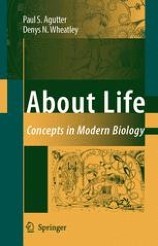
About Life : Concepts in Modern Biology
This book uses modern biological knowledge to tackle the question: "What distinguishes living organisms from the non-living world?" In the first few chapters, the authors draw on recent advances in cell and molecular biology to develop an account of the "living state" that applies to all organisms, but only to organisms. Subsequent chapters use this account to explore questions about evolution, the origin of life and the possibility of extraterrestrial life. Towards the end of the book the authors consider human evolution, intelligence and the extent to which our species can be regarded as biologically unique. About Life is written as far as possible in non-technical language; all scientific terms are explained straightforwardly when they are introduced. It is aimed at the general, non-specialist reader, but the novel approach that it takes to general issues in biology will also interest students of the life sciences.
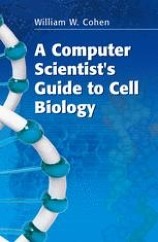
A Computer Scientists Guide to Cell Biology
Provides a succinct treatment of the general concepts of cell biology, furnishing the computer scientist with the tools necessary to read and understand current literature in the field.After a brief introduction to cell biology, the text focuses on the principles behind the most-widely used experimental procedures and mechanisms, relating them to well-understood concepts in computer science. The presentation of the material has been prepared for the reader’s quick grasp of the topic: comments on nomenclature and background notes can be ascertained at a glance, and essential vocabulary is boldfaced throughout the text for easy identification.
3D cell culture : Methods and protocols
Expands on the previous edition with discussions about the latest organoid models developed for many more organs; new hydrogels and devices for 3D culture; and the organoid systems that have been improved by incorporating more components of tissue microenvironments in the in vitro culture. The chapters in this book are organized into five parts and cover topics such as biofabrication, organoids, microfluidic systems, bioprinting, and image analysis. Written in the highly successful Methods in Molecular Biology series format, chapters include introductions to their respective topics, lists of the necessary materials and reagents, step-by-step, readily reproducible laboratory protocols, and tips on troubleshooting and avoiding known pitfalls.
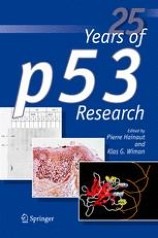
25 Years of P53 Research
Communication, awareness and access to information: Given the complexity of the field and the fact that data pertaining to each particular aspects of p53 biology or deregulation are scattered in many different publications, it is extremely difficult to access the full scale of relevant information of any specific p53-related topic. This book may help in this task by putting into perspective both general considerations on the p53 pathway and more specific information on various aspects of p53. In the longer term, however, open access to p53 complexity will require the development of knowledge bases accessible through the web and using simple navigation tools to guide users towards the specific information they need. Several efforts are currently being developed in that direction. They need to be strenghtened and better integrated within the rapidly growing galaxy of web-based information sources on molecular and individual variations in cancer. 2. Reference functional assays and structural analysis: Given the huge diversity of cellular and animal models for wild-type or mutant p53 functions, it will be important to set up standard, universally accepted assays to measure critical p53 protein functions.
