


Refine Results
Sort By
From
To

The book addresses ways and means of organizing computations, highlighting the relationship between algorithms and the basic mechanisms and runtime structures necessary to execute them using machines. It completely abstracts from concrete programming languages and machine architectures, taking instead the lambda calculus as the basic programming and program execution model to design various abstract machines for its correct implementation. The emphasis is on fully normalizing machines based on full-fledged beta-reductions as essential prerequisites for symbolic computations that treat functions and variables truly as first-class objects. Their weakly normalizing counterparts are shown to be functional abstract machines that sacrifice the flavors of full beta-reductions for decidedly simpler runtime structures and improved runtime efficiency. Further downgrading of the lambda calculus leads to classical imperative machines that permit side-effecting operations on the runtime environment.
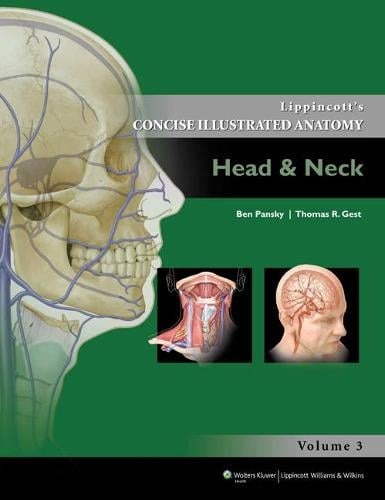
Presents human gross anatomy in an efficient, easy-to-use format by combining core, need-to-know content with detailed atlas-style illustrations. This volume focuses on anatomical structures and functions of the head and neck, and includes clinical considerations concerning these important regions. With artwork adopted from the Lippincott Williams & Wilkins Atlas of Anatomy as well as new illustrations, understanding the functional and clinical relevance of anatomy has never been more at hand!

Provides an overview of the RPD design philosophy developed by Prof F. J. Kratochvil. His'RPI system'—a clasp assembly consisting of a rest, a proximal plate, and an I-bar retainer—changed how clinicians approach partial denture design. Topics in this book include RPD components and functions, design sequences for maxillary and mandibular RPDs, and techniques for surveying and determining the most advantageous treatment position. The authors provide illustrations of clinical cases throughout the book as well as an illustrated glossary of prosthodontic terminology. This book will prepare students and general practitioners to design and fabricate a biomechanically sound RPD framework for just about any dental configuration they encounter.

Features hundreds of new photographs and drawings to explain the intricacies of complex RPDs. The function of each element of an RPD is described in isolation and by class, and the clinical and laboratory steps of RPD design and creation are reviewed, followed by discussions of various types of prostheses and when/how to use them. This technical manual is aimed at experienced practitioners but still presents the information in a neat, organized, and easy-to-follow manner.

Biomaterials are composed of metallic materials, ceramics, polymers, composites and hybrid materials. Biomaterials used in human beings require safety regulations, toxicity, allergic reaction, etc. When used as implantable materials their biological compatibility, biomechanical compatibility, and morphological compatibility must be acessed. This book explores the design and requirements of biomaterials for the use in implantology.

Helps oral implantologists to understand the principles that underlie the use of basal implants as a means to provide simple solutions to complex and highly demanding clinical situations without the need for prior bone grafting.
Provides a comprehensive overview of current developments in anaesthesiology. The chapters : Solutions for Insufficient Epidural Analgesia for Planned Vaginal Birth and Interdisciplinary Emergencies in the Delivery Room, Anesthesia for Robotic Surgeries in Children, Anesthetic Management of Bronchoscopic Lung Volume Reduction, General Anaesthesia in the Context of Haemorrhagic Shock and Trauma, Anesthesiologic Management of Patients with Opioids or Psychoactive Substance Use, Fascial Plane Blocks, Considerations and New Perspectives of Locoregional Anesthesia in Dentistry, The Effect of Parental Anxiety on Postoperative Paediatric Cognitive Dysfunction.

Reviews the progress made in salivary diagnostics during the past two decades and identifies the likely direction of future endeavors. After an introductory section describing the histological and anatomical features of the salivary glands and salivary function, salivary collection devices and diagnostic platforms are reviewed.
This book presents theoretical and practical research relating to the vast, publicly financed program for the construction of new schools and the reorganization of existing educational buildings in Italy.

The last five years have seen the art of bridge management develop into a mature subject. Bridge owners and engineers recognise the importance of implementing fully operational bridge management strategies to ensure that all road and rail bridges remain functional for as long as possible.Bridge structures form a major part of the vast financial investment in infrastructure and consequently their careful management involving structural appraisal, repair and strengthening is of paramount importance.

This book provides a compendium of material properties, demonstrates several successful examples of bio-based materials’ application in building facades, and offers ideas for new designs and novel solutions. It features a state-of-the-art review, addresses the latest trends in material selection, assembling systems, and innovative functions of facades in detail. Selected case studies on buildings from diverse locations are subsequently presented to demonstrate the successful implementation of various biomaterial solutions, which defines unique architectural styles and building functions. The structures, morphologies and aesthetic impressions related to bio-based building facades are discussed from the perspective of art and innovation; essential factors influencing the performance of materials with respect to functionality and safety are also presented. Special emphasis is placed on assessing the performance of a given facade throughout the service life of a building, and after its end.
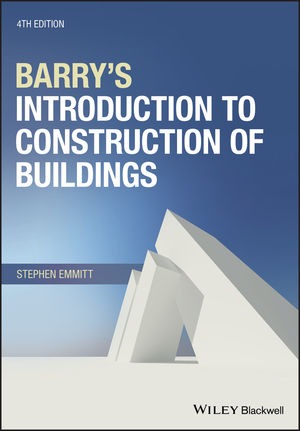
Based mainly on domestic and residential buildings—and filled with extensive illustrations throughout—this concise text is the ideal introduction to the subject of building construction. It provides the basic material that readers need in order to understand the construction process for the majority of low rise buildings. The book explains construction technology through the key functional and performance requirements for the main elements common to all buildings. With a strong focus on building efficiency and meeting the challenges posed by limiting the environmental impact of buildings, and new “at a glance” summaries allowing you to grasp the salient points of each chapter, readers will find the text fully up to date with the latest building regulations and construction technology. Deals with design, technology, site assembly, and environmental issues of domestic and residential buildings. Thoroughly updated, with particular attention paid to the concept of building efficiency and improved integration of the topics covered to match current student needs. New “at a glance” summaries at the beginning of each chapter.
Focuses on the safety assessment of existing structures subjected to multi-hazard scenarios through advanced numerical methods. Whereas the focus is on concrete dams and nuclear containment structures, the presented methodologies can also be applied to other large-scale ones. This book is composed of seven sections: Fundamentals: theoretical coverage of solid mechnics, plasticity, fracture mechanics, creep, / seismology, dynamic analysis, probability and statistics / Damage: that can affect concrete structures, such as cracking of concrete, AAR, chloride ingress, and rebar corrosion, / Finite Element: formulation for both linear and nonlinear analysis including stress, heat and fracture mechanics, / Engineering Models: for soil/fluid-structure interaction, uncertainty quantification, probablilistic and random finite element analysis, machine learning, performance based earthquake engineering, ground motion intensity measures, seismic hazard analysis, capacity/fragility functions and damage indeces, / Applications to dams through potential failure mode analyses, risk-informed decision making, deterministic and probabilistic examples, / Applications to nuclear structures through modeling issues, aging management programs, critical review of some analyses, / Other applications and case studies: massive RC structures and bridges, detailed assessment of a nuclear containment structure evaluation for license renewal.
Deals with both mathematical modeling and experimental studies related to systems relevant for various civil engineering fields. The book addresses several key topics, including artificial intelligence applied to the control and monitoring of construction site personnel, finite element models for endplate beam-to-column connections under various load conditions, random functionally graded micropolar beams, and many others. The book explores the design and study of microstructures aimed at increasing the toughness and durability of novel materials in building and construction, based also on the re-utilization of residues and wastes of metallurgical industry produces.
This book develops a far-reaching generalization of Bohr-Mollerup's theorem to higher order convex functions, along lines initiated by Wolfgang Krull, Roger Webster, and some others but going considerably further than past work. In particular, this generalization shows using elementary techniques that a very rich spectrum of functions satisfy analogues of several classical properties of the gamma function, including Bohr-Mollerup's theorem itself, Euler's reflection formula, Gauss' multiplication theorem, Stirling's formula, and Weierstrass' canonical factorization.
This collection of formulas constitutes a compendium of mathematics for eco nomics and business. It contains the most important formulas, statements and algorithms in this significant subfield of modern mathematics and addresses primarily students of economics or business at universities, colleges and trade schools. But people dealing with practical or applied problems will also find this collection to be an efiicient and easy-to-use work of reference. First the book treats mathematical symbols and constants, sets and state ments, number systems and their arithmetic as well as fundamentals of com binatorics. The chapter on sequences and series is followed by mathematics of finance, the representation of functions of one and several independent vari ables, their differential and integral calculus and by differential and difference equations. In each case special emphasis is placed on applications and models in economics. The chapter on linear algebra deals with matrices, vectors, determinants and systems of linear equations. This is followed by the representation of struc tures and algorithms of linear programming. Finally, the reader finds formu las on descriptive statistics (data analysis, ratios, inventory and time series analysis), on probability theory (events, probabilities, random variables and distributions) and on inductive statistics (point and interval estimates, tests). Some important tables complete the work.
It still holds true: information is not always the answer. Information is often part of the problem. While the main goal of information in the business place is to - able adequate decisions and actions, it can also lead to numerous negative effects: it can confuse, block creativity, or it can lead to hectic activism, stress and fatigue. Information can distract and divert attention, and it may even delay important - cisions – the paralysis by analysis. Strategies to avoid these dysfunctional effects of information can be divided into sender-based strategies and receiver-based strategies.
Managing in the Information Economy: Current Research Issues presents the recent research directions that address the issue of management in this economy. The contributors include leading researchers with interests in a diverse set of topics. While the volume cannot give a complete and comprehensive picture, it can provide introductions to important areas, and point to some important topics for future research. Therefore the book begins with perspectives at the level of the economy as a whole and then progressively addresses industrial structure, sectors, functions (e-commerce) and business practices. Introductions to the main sections and the papers in each section are provided. The volume is organized around six sections: The Information Economy; Structure and the Organization of the Information Economy; Marketing and Ecommerce
Introduction Closing supply chains refers to taking care of items once they are no longer desired or can no longer be used by their user. Smart management of closed-loop supply chains means profitable recovery of value from these items (products, functional components, materials or packaging). The company closing the supply chain may be the original equipment manuf- turer (OEM), a distribution partner or a third party not involved in the f- ward distribution. In recent years, the management of closed-loop supply chains has gained importance because of increased legislation on producer respon- bility, requiring companies to take back products from customers and to organize for proper recovery and disposal. This legislation is partially due to increased awareness of environmental issues. However, smart com- nies have also understood that returned products often contain lots of value to be recovered. They manage closed-loop supply chains simply because it is a profitable business proposition.

Within companies and organizations there is an increased emphasis on making different functional areas work together seamlessly. These developments have led to an increased emphasis on research and practice in business that integrate the functional areas within and between business entities. The research community has recognized the importance of addressing these different, and often conflicting, business perspectives. This has led to research streams that address issues characterizing the domain of business interfaces. These include the benefits of coordination, new product development, product portfolio management, supply chain coordination, and partnerships and collaboration in the Internet space.

Daraa Highway - Ghabagheb - Syria
+963-15 2050 - 15 860 380 /1/2/3 - 11 662 3900