


Refine Results
Sort By
From
To


Catastrophe Modeling: A New Approach to Managing Risk is the first book that systematically analyzes how catastrophe models can be used for assessing and managing risks of extreme events. It focuses on natural disaster risk, but also discusses the management of terrorism risk. A unique feature of this book is the involvement of three leading catastrophe modeling firms, AIR Worldwide, EQECAT, and Risk Management Solutions, who examine the role of catastrophe modeling in rate setting, portfolio management and risk financing. Given the uncertainties associated with terrorism the book points out the opportunities for utilizing catastrophe models to set insurance rates and to examine public-private partnerships for providing financial assistance in the event of a terrorist attack. This book is strongly recommended for individuals who must make decisions regarding the management of impacts of catastrophe risks including those in both the public and private sector.

This book evaluates, from an economic perspective, various measures introduced in Japan to prevent climate change. Although various countries have implemented such policies in response to the pressing issue of climate change, the effectiveness of those programs has not been sufficiently compared.

Provides a set of integrated frameworks—capital, systems, and objects—that transcend managerial or technology hype by focusing on the long-term fundamentals that sustain organizational success. Many organizations are currently addressing two important transformational issues: ecological sustainability and digitization. Sustainability is a goal, an end, and digitization is a process, a means to achieve a goal. This book introduces a flexible model that can be applied to current and future organizational challenges, including sustainability and digitization, because the fundamentals are constant.
The progression of globalization is having profound effects on the capital markets and economic development. The major issues addressed in the book are: · The Basel II capital accord · Bank safety nets · Corruption · Credit ratings and credit spread · International stock exchanges and bond markets · Microfinance · Project finance

Hellermann addresses in his dissertation one of the most interesting - pects of this evolution for OR/MS, the parallel development of long-term and short-term markets for capacity and output, accompanied by a range of option and ?xed-commitment (i. e. , forward) contracts as the basic mec- nisms supporting transactions. This has been a fascinating topic for OR/MS research because it builds on the powerful framework of real options, while connecting directly to key operations decisions (capacity planning, network design, staf?ng, routing, maintenance, and so forth) of the equipment and technologies whose output is the focus of contracts.

This book reveals the psychology behind how we feel about businesses, their communications and their leaders in a digital world. From understanding the new dynamics shaping online behaviour, to the evolving expectations driving employees and consumers, Business Unusual will teach you how to build a resilient business - one that is built on trust, an engaged and fulfilled workforce, and the brand values that can empower you to craft resonant communications and relationships.

In this book practitioners of international companies are offered valuable insights and lessons from established and successful managers, academics and consultants.
This book discusses the role of business models in corporate reporting. It illustrates the evolution of non-financial reporting, the importance of business model reporting, and the main conceptualisations of business models. It also offers a methodological contribution to the assessment of business model reporting. Finally, it discusses the main implication of business model reporting for different categories of subjects and some challenges related to this kind of disclosure

Business Financial Information Secrets shows you how to produce, understand, and utilize financial information to the greatest effect for your business and the economy at large. This book guides you through the surprisingly clean and simple process of proper accounting and reporting, regardless of your organization’s size or structure. Cash flow and business capital management are covered extensively throughout the book as without a thorough understanding of these all-important concepts, you could be lacking critical information about the lifeline of your business.
Combines elements of economic and business history to study business ethics from the nineteenth century to today. It concentrates on American and British business history, delving into issues such as slavery, industrialization, firm behavior and monopolies, and Ponzi schemes. This book draws on the work of economists and historians to highlight the importance of changing technologies, religious beliefs, and cultural attitudes, showing that what is considered ethical differs across time and place.

Business Ethics: Methods and Application provides a new systematic approach to normative business ethics that covers the complex and various ethical challenges of modern business.
Business Education in Emerging Market Economies discusses the impact of business education on emerging markets and explores curricular innovation, pedagogical approaches, and strategic alliances in the context of industrializing economies. Emerging markets consist of eighty percent of the world's population and some 75% of its trade growth in the foreseeable future according to the U.S. Department of Commerce. The potential economic growth of emerging markets has prompted a need to understand the dynamics of these markets, their business institutions, and their educational systems. The pressures of globalization and the recent economic reforms that swept across emerging, developing, and transitioning, economies have had a positive impact on the demand for business education and business knowledge from the developed and industrialized countries. As a result, many methods were developed to transfer know-how from the developed markets including learning through imitation, using western style pedagogical approaches, attending universities in industrialized countries, learning through experience and practice, and using information technology. The conclusion we reach is that business and management education in emerging markets is fast changing the way in which these markets operate and are perceived – business educators are catalysts for greater economic integration.
Business cycle theory has been one of the fastest growing fields in modern nonlinear economic dynamics. The book is centered around models of multiplier-accelerator type, emerging from Samuelson's seminal work, later developed into nonlinear formats by Hicks and Goodwin. These models left open ends, as the tools then available did not permit more systematic analysis.
Building the Agile Business through Digital Transformation is an in-depth guide for all those needing to better understand, implement and lead digital transformation in the workplace. It sets aside traditional thinking and outdated strategies to explain what steps need to be taken for an organization to become truly agile, embed innovation and develop talent to succeed.
How can we manage supply chains well in emerging economies, coordinate information flows with multiple partners, tackle challenges such as unexpected disruptions, diversify the risks and increase flexibilities, are the topics and issues of the book.

"‘This user-friendly book will help the reader to develop insights with respect to a number of models that are important in the study and practice of operations management’. … all the chapters are extremely well written and a pleasure to read. … This would be a good book to use as a text in any operations management course, and in particular for operations management courses which are part of a ‘liberal studies’ program. It would also be good book for managers … ." (R Bharath, Journal of the Operational Research society, Vol. 60 (7), 2009)
In 2003, Goldman Sachs published a startling report on the BRICs (Brazil, Russia, India, and China) region: These four countries would be larger than the G6 economics within 40 years, muscling their way to economic dominance over the coming decades, and powering past developed countries such as the United Kingdom, Germany, and Japan. This book focuses on the technology and technology-enabled services that underpin this social and economic revolution. The editor analyses the reasons why these four countries are in a unique position to lead a 21st century growth in international services. He then features 12 chapters written by the most important chief executives from the BRICs service economy. Indian technology leaders, such as Nandan Nilekani (Infosys), Shiv Nadar (HCL), and Rajendra Pawar (NIIT), feature alongside their peers from Brazil, Russia, and China outlining their views on the next decade for offshoring.

This book tells the story of how Sweden is becoming a virtually cashless society. Its goal is to improve readers’ understanding of what is driving this transition, and of the factors that are fostering and hampering it. In doing so, the book covers the role of central banks, political factors, needs for innovation, and the stakeholders involved in developing a cashless ecosystem. Adopting a historical standpoint, and drawing on a unique dataset, it presents an academic perspective on Sweden’s leading role in this global trend. The global interest in the future of cash payments makes the Swedish case particularly interesting. As a country that is close to becoming a cashless economy, it offers a role model for many other countries to learn from - whether they want to stimulate or reduce the use of cash. This highly topical book will be of interest to politicians, researchers, businesses, financial service providers and payment service providers, as well as fintech start-ups, regulators and other authorities.

Broadband is a key enabler of the information society, increasing productivity and competitiveness across all sectors of the economy. Unlike traditional n- rowband connections, broadband provides high speed, always-on connections to the Internet and supports innovative content and services. Direct consumer welfare gains from mass-market adoption of broadband across the EU could easily reach 50 billion euros or more per annum. This is quite apart from the more profound societal shifts that ubiquitous broadband could bring. It may allow the individual to distribute content and ideas independent of traditional media and bring together communities of interest without regard to borders. Public policy for broadband will have a big impact on whether and how quickly these benefits are realised. Getting policy right could bring large benefits for consumers.
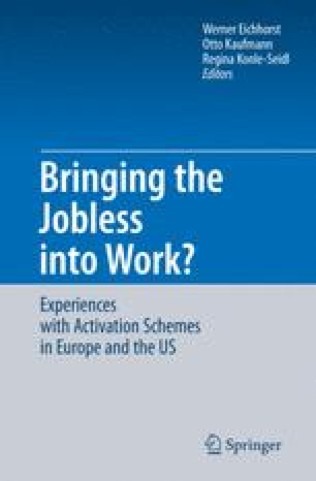
Over the last decade, many industrialized countries shifted from passive unemployment and welfare benefit regimes and traditional active labor market and social policies to activation strategies by making benefit receipt conditional upon accepting job offers or participation in active labor market schemes. But countries differ with regard to the design of activation instruments and their implementation, the definition of target groups and the effects of activation in the national labor market setting. This volume provides an up-to-date overview of activation strategies in unemployment benefit systems and social assistance in selected European countries and the US. A particular focus lies on the development of activation schemes, governance and implementation as well as on the outcomes of activation in terms of labor market and social integration. The volume is the first to address these issues both from a socio-economic and a legal perspective.

Daraa Highway - Ghabagheb - Syria
+963-15 2050 - 15 860 380 /1/2/3 - 11 662 3900