



Page 7
Page 7
Leonardo´s Lost Robots
Reinterprets Leonardo's legacy of notes, showing that apparently unconnected fragments from dispersed manuscripts actually comprise cohesive designs for functioning automata. Using the rough sketches scattered throughout almost all of Leonardo's notebooks, the author has reconstructed Leonardo's programmable cart, which was the platform for other automata: a Robot Lion, a Robot Knight, and a hydraulically powered automaton for striking a bell.
Lectures on Advances in Combinatorics
The main focus of these lectures is basis extremal problems and inequalities – two sides of the same coin. Additionally they prepare well for approaches and methods useful and applicable in a broader mathematical context. Highlights of the book include a solution to the famous 4m-conjecture of Erdös/Ko/Rado 1938, one of the oldest problems in combinatorial extremal theory, an answer to a question of Erdös (1962) in combinatorial number theory "What is the maximal cardinality of a set of numbers smaller than n with no k+1 of its members pair wise relatively prime?", and the discovery that the AD-inequality implies more general and sharper number theoretical inequalities than for instance Behrend's inequality.
Le dépistage du cancer colorectal : État des lieux et perspectives = Colorectal cancer screening: Current status and perspectives
Prevention and screening are two major challenges for Public Health to reduce cancer mortality in our country. Screening for colorectal cancer is therefore quite exemplary. The number one cancer in both sexes in France, its incidence continues to increase due to the aging of the population. Its mortality remains high, in the order of fifty percent, despite the major therapeutic advances made in recent years. Preceded by a precancerous lesion - the adenomatous polyp, which can be removed by colonoscopy - colorectal cancer is also curable at the early stage. Finally, it can be the subject of a screening strategy, the impact of which has been demonstrated today on the reduction in mortality, when it is detected before any symptom by a simple test for blood in the stool followed by , in case of positivity, by a total colonoscopy. This book takes stock of the scientific rationale and the state of play of organized colorectal cancer screening in France. It is also an opportunity to discuss emerging techniques and strategies that can help improve the results of this screening if they prove their superiority over the current strategy. Intended primarily for doctors, this book is also intended for healthcare professionals and all those who, concerned about their health, have a proactive attitude in terms of screening and preventing this cancer.
Le dépistage du cancer bronchique : De l'espoir à la réalité = Lung cancer screening : From hope to reality
An ambitious program has been launched in terms of research, diagnosis, prevention, and screening. Among cancers, the leading cause of cancer death is lung cancer. This disease, so closely linked to behavioral habits, both focuses and encapsulates the problem. Despite constant progress in treatment, the prognosis remains bleak, explaining the fatalistic impression left by the last decade. While significant efforts were being made in screening for other cancer sites, lung cancer remained in the shadows, with studies showing limited effectiveness in this approach. The advent of spiral CT scanning has revolutionized the field, giving rise to new hope alongside anti-smoking campaigns. Autofluorescence endoscopy, by enabling the diagnosis of pre-neoplastic lesions, completes an arsenal that finally allows us to envision an effective, combined strategy. This book brings together all the elements relating to screening and early diagnosis. The road from hope to reality is long, but we must acknowledge that, for the first time, we know it exists.

La phytocosmétologie thérapeutique = Herapeutic phytocosmetology
Deals with restorative cosmetology. This is understood through the eyes of the doctor specializing in phytotherapy. Three main aspects are discussed: the diagnosis of disturbance of the skin and integuments, external treatment with natural substances, as well as oral treatment (internal treatment). Oral cosmetology has no official recognition, yet the effects of plant extracts on the condition of the skin and integuments are well known. After an introduction to the physiology of the skin, the dosage and the phenomena of skin deterioration, the author discusses different types of treatment depending on the extracts used while explaining their mode of action. This work was written by a doctor, Doctor Paul Goetz, teacher in clinical phytotherapy, and a pharmacist, Doctor Christian Busser, pharmaceutical and scientific advisor, doctor in ethnology and ethnopharmacologist.
La lombalgie en 2007 : Aspects pratiques = Low back pain in 2007 : Practical aspects
Low back pain is one of the main reasons for consultation, whether in general or specialized medicine. It poses a real public health problem. This "back pain", which can despair patients and doctors by its sometimes rebellious character, explains the multiplicity of examinations sometimes practiced and the treatments implemented. This work is a collection of the most recent developments in terms of physiopathological knowledge of disc involvement, clinical examination and the place of surgery and in particular disc prostheses. An update concerns the indications and contributions of additional examinations; some formidable diagnostic traps are mentioned. Medical treatments such as infiltrations, manipulations, the benefit of restraints and the provision of acupuncture are being developed. Also discussed are the latest scientific data on isokinetic evaluation and retraining, as well as the role of sports activity as a factor in the prevention or aggravation of low back pain. Finally, the medico-legal aspect is dealt with in the context of work accidents, and the assessment after trauma. This book is the result of the collaboration and experience of undisputed specialists in this field.
La colografia virtuale con TC multistrato (CTC) = Virtual colonography with multislice CT
With the spread of multidetector row CT (MDCT), virtual colonography (VC) is establishing itself as a new, proven alternative radiological method in the diagnosis of intestinal polyps and colorectal cancer. VC is already considered the first-line examination for identifying synchronous tumor lesions in patients with colorectal cancers that cannot be penetrated by endoscope, simultaneously providing accurate staging of malignant lesions. Its minimally invasive nature makes VC a valid alternative to pancolonoscopy, even in the detection of intestinal polyps, and provides the basis for interesting developments regarding future applications in screening programs. The text, aimed at radiologists who are approaching the method, radiology technicians and doctors involved in the diagnostic and therapeutic process of colorectal pathology, indicates the advantages of the normal method, the normal method with fourteen chondrii, the normal method with fourteen chondrii, the pathological method with fourteen chondrii indications.

Knowledge, practices, and awareness of safety risks associated with antiemetic use: A cross-sectional study
Highlighted a high prevalence of self-medication, with most participants keeping these drugs at home due to their accessibility and low cost. A strong correlation was observed between educational level and awareness; individuals with higher education were more likely to seek professional advice and carefully read drug leaflets. Conversely, lower educational groups and younger participants showed a greater tendency to repeat doses without consultation or rely on home remedies.
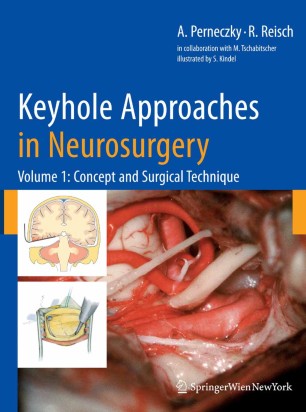
Keyhole Approaches in Neurosurgery : Vol. I Concept and surgical technique
Offers a detailed systematic overview of the different approaches for minimally invasive craniotomies. After a description of the historical development of the particular craniotomy, each chapter illustrates the anatomical construction of the target region and the surgical approach itself with artistic illustrations and photographs of human cadaver dissections.

Keto diet
It‘s a low-carb, high-fat eating plan. Most of what you eat is fat, whether that‘s unsaturated fats like nuts, seeds, and avocados, or saturated fats like butter and coconut oil. About 20%-30% of your diet is protein, either lean (like chicken breast) or fatty (like bacon). You‘re supposed to strictly limit carbs, even those that are typically considered healthy, such as beans, whole grains, milk, and many types of fruits and vegetables...
Jets from Young Stars : Models and Constraints
This volume contains the edited lecture notes of the First JETSET School on Jets from Young Stars: Models and Constraints, held by the Marie Curie Research and Training Network on JET Simulations, Experiments and Theory. At this school the lecturers gave an introduction to observational properties and basic models describing the launching and collimation mechanisms of jets.

ITI treatment guide ; Vol 4 : Loading protocols in implant dentistry : Edentulous patients
The ITI Treatment Guide series is a compendium of evidence-based implant therapy techniques in daily practice. Using an illustrated step-by-step approach, renowned clinicians demonstrate how to manage different clinical situations with an emphasis on sound diagnostics, evidence-based treatment, and predictable outcomes.

Complex Motion ; 1st International Workshop, IWCM 2004, Günzburg, Germany, October 12-14, 2004, Revised Papers
The world we live in is a dynamic one: we explore it by moving through it, and many of the objects which we are interested in are also moving. Trafic, for instance, is an example of a domain where detecting and processing visual motion is of vital interest, both in a metaphoric as well as in a purely literal sense. Visual communication is another important example of an area of science which is dominated by the need to measure, understand, and represent visual motion in an eficient way. Visual motion is a subject of research which forces the investigator to deal with complexity; complexity in the sense of facing efiects of motion in a very large diversity of forms, starting from analyzing simple motion in a changing envir- ment (illumination, shadows, . . . ), under adverse observation conditions, such as bad signal-to-noiseratio (low illumination, small-scaleprocesses, low-dosex-ray, etc. ), covering also multiple motions of independent objects, occlusions, and - ing as far as dealing with objects which are complex in themselves (articulated objects such as bodies of living beings). The spectrum of problems includes, but does not end at, objects which are not ‘bodies’ at all, e. g. , when anal- ing fiuid motion, cloud motion, and so on. Analyzing the motion of a crowd in a shopping mall or in an airport is a further example that implies the need to struggle against the problems induced by complexity.
Common Chinese materia medica ; Vol.7
Describes 247 species of 9 families of medicinal plants, which are commonly used in Chinese medicine. The most important species are Adina rubella, Gardenia jasminoides, Hedyotis diffusa, Morinda officinalis, Rubia cordifolia, Uncaria hirsuta, Uncaria macrophylla, Uncaria rhynchophylla, Uncaria sessilifructus, Uncaria sinensis of Rubiaceae; Lonicera confusa, Lonicera hypoglauca, Lonicera macranthoides, Lonicera japonica of Caprifoliaceae; Patrinia scabiosaefolia, Patrinia villosa, Nardostachys jatamansi of Valerianaceae; Dipsacus asperoides of Dipsacaceae; Arctium lappa, Artemisia annua, Artemisia argyi, Artemisia capillaris, Artemisia scoparia, Atractylodes lancea, Atractylodes macrocephala, Dendranthema indicum, Dendranthema morifolium, Eupatorium chinense, Eupatorium fortunei, Inula helenium, Saussurea costus, Saussurea involucrata, Senecio scandens, Serratula chinensis, Siegesbeckia orientalis, Solidago decurrens, Taraxacum mongolicum, Tussilago farfara、Xanthium sibiricum of Compositae; Gentiana crassicaulis, Gentiana manshurica, Gentiana rigescens, Gentiana scabra, Swertia pseudochinensis of Valerianaceae; Lysimachia christinae of Primulaceae and Plantago asiatica of Plantaginaceae.
Common Chinese materia medica ; Vol.6
Describes 226 species of 32 families of medicinal plants, which are commonly used in Chinese medicine. The most important species are Aquilaria sinensis and Daphne genkwa of Thymelaeaceae; Benincasa hispida, Siraitia grosvenorii, Trichosanthes kirilowii and Trichosanthes rosthornii of Cucurbitaceae; Camellia sinensis of Theaceae; Cleistocalyx operculatus, Eugenia caryophyllata and Rhodomyrtus tomentosa of Myrtaceae; Osbeckia chinensis of Melastomataceae; Quisqualis indica and Terminalia chebula of Combretaceae; Hypericum japonicum of Hypericaceae; Microcos paniculata of Tiliaceae; Hibiscus mutabilis of Malvaceae; Croton crassifolius, C. lachnocarpus, C. tiglium, Euphorbia humifusa, E. lathyris, E. pekinensis, Phyllanthus emblica and Sauropus spatulifolius of Euphorbiaceae. In each specie, it introduces the scientific names, medicinal names, morphologies, habitats, distributions, acquisition and processing methods of these medicinal plants, the content of medicinal properties, therapeutic effects, usage and dosage of these medicinal plants, and attaches unedited color pictures and pictures of part herbal medicines of each species.
Common Chinese Materia Medica ; Vol.4
Describes 256 species of medicinal plants from 5 families, which are commonly used in Chinese medicine. The most important species are Agrimonia pilosa, Amygdalus persica, Armeniaca mume, Armeniaca vulgaris, Armeniaca sibirica, Chaenomeles sinensis, Eriobotrya japonica of Rosaceae; Chimonanthus praecox of Calycanthaceae;Albizia julibrissin, Archidendron clypearia, Entada phaseoloides, Bauhinia championii of Mimosoideae; Caesalpinia sappan, Cassia tora, Gleditsia sinensis of Caesalpiniaceae; Abrus cantoniensis, Astragalus membranaceus, Astragalus membranaceus, Dalbergia odorifera, Desmodium caudatum, Desmodium styracifolium, Erythrina variegata, Euchresta japonica, Flemingia prostrata, Glycyrrhiza uralensis, Glycyrrhiza inflata, Glycyrrhiza glabra, Lablab purpureus, Sophora japonica and Spatholobus suberectus of Butterflyaceae. In each specie, it introduces the scientific names, medicinal names, morphologies, habitats, distributions, acquisition and processing methods of these medicinal plants, the content of medicinal properties, therapeutic effects, usage and dosage of these medicinal plants, and attaches unedited color pictures and pictures of part herbal medicines of each species. This book series has 10 volumes in total, which covers over 2000 kinds of Chinese medicines that are commonly used. These volumes not only introduce the efficacy function and some prescriptions of the medicines, but also introduce the biological characteristics of them in detail with clear photos of the habitats, so that readers can identify them in the field. Apart from the growing environment, the books expound the distribution areas and other information to facilitate researches and other applications. The volumes are targeted at readers of general interests and it is also of high referential value for scientific researcher and teachers. It can be used as a guide to researchers, clinical doctors, and students in the department of pharmaceutics and traditional Chinese medicine.
Common Chinese materia medica ; Vol.2
Contains 231 species of 40 families of medicinal plants. The most important family of which are Magnoliaceae, such as Magnolia officinalis and Magnolia officinalis subsp. biloba; Schisandra chinensis of Schisandraceae; Cinnamomum aromaticum of Lauraceae, Coptis chinensis Franch., Coptis omeiensis and Coptis teeta of Berberidaceae; Isatis indigotica, Lepidium apetalum and Raphanus sativus of Cruciferae; Rheum palmatum, Rheum officinale and Rheum taguticum of Polygonaceae, etc. In each specie, it introduces the scientific names, herbal medicine names, characteristics, habitats, distributions, Acquisition and processing methods, medicinal traits, tastes, functions, use and dosages, and other information of medicinal plants, and attaches unedited color pictures and pictures of part herbal medicines for each species. This book series has totally 10 volumes, which covers 2000 kinds of Chinese medicines that are commonly seen or used. These volumes not only introduce the efficacy, function and some prescriptions of the medicines, but also introduce the biological characteristics of them in detail with clear photos of the habitats, so that readers can identify them in the field. Apart from the growing environment, the books expound the distribution areas and other information to facilitate researches and other applications. The volumes are targeted at readers of general interests and it is also of high referential value for scientific researcher and teachers. It can be used as a guide to researchers, clinical doctors, and students in the department of pharmaceutics and traditional Chinese medicine.

Clinical Maxillary Sinus Elevation Surgery
Dr. Kao and a team of experts begin by discussing anatomy, radiographic image applications and limitations, and then provide step-by-step clinical procedures for the lateral window technique, including piezosurgery, and the trans-alveolar methods, including balloon and controlled hydostatic sinus elevation. Also included are chapters on post-operative care and complication management.
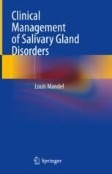
Clinical management of salivary gland disorders
Serves as a complete reference guide for the totality of salivary gland (SG) disease. Focusing on the clues available to the practitioner during the patient examination, it will completely review and update the available data concerning all manner of SG conditions. Looking beyond the perspectives of surgery, imaging, pathology, or sialendoscopy in diagnosis and therapy, this book will provide all professionals interested in the head and neck extensive and detailed diagnostic information about each SG entity.
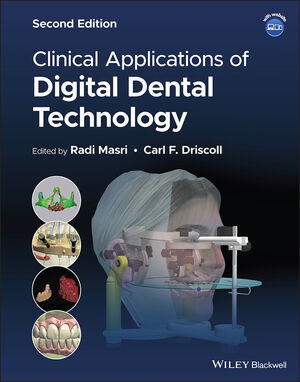
Clinical applications of digital dental technology
Provides comprehensive yet practical references to a wide range of potential uses for digital technology in dental practice, discussing a wide range of digital technologies including their indications, contraindications, advantages, disadvantages, limitations, and applications. Overall, the book emphasizes how to use digital dentistry in daily practice across all specialties. With broad coverage of the subject, Clinical Applications of Digital Dental Technology discusses digital imaging, digital impressions, digital prosthodontics, digital implant planning and placement, and digital applications in endodontics, orthodontics, and oral surgery. Each chapter is written by experts in each topic and covers applications for prosthodontics, implant dentistry, oral surgery, endodontics, orthodontics, and other specialty areas.
