



Page 51
Page 51

Mediterranean Island Landscapes : Natural and Cultural Approaches
Mediterranean islands exhibit many similarities in their biotic ecological, physical and environmental characteristics. There are also many differences in terms of their human colonization and current anthropogenic pressures. This book addresses in three sections these characteristics and examines the major environmental changes that the islands experienced during the Quaternary period. The first section provides details on natural and cultural factors which have shaped island landscapes. It describes the environmental and cultural changes of the Holocene and their effects on biota, as well as on the current human pressures that are now threats to the sustainability of the island communities. The second section focuses on the landscapes of the largest islands namely Sicily, Sardinia, Corsica, Cyprus, Crete, Malta and the Balearics. Each island chapter includes a special topic reflecting a particular characteristic of the island. Part three presents strategies for action towards sustainability in Mediterranean islands and concludes with a comparison between the largest islands.
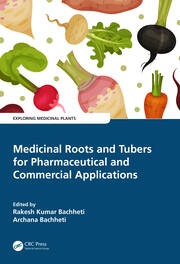
Medicinal roots and tubers for pharmaceutical and commercial applications
The root and tuber are vital parts of medicinal plants providing mechanical support, producing critical growth regulators, and storing food. Bioactive compounds obtained from plant roots and tubers demonstrate health benefits presenting antioxidative, antimicrobial, hypoglycaemic, hypocholesterolaemic, and immunomodulatory properties. Roots of many medicinal plants have been used for the treatment of disease and formulation of drugs, and they are also known for their commercial value, being used as an ingredient in the pharmaceutical and cosmetic industries.

Medicinal plants for cosmetics : Health and diseases
Describes diseases and ailments occurring in individuals worldwide including acne, ageing, various cancers, eczema and other conditions. This book explains each disease and ailment, allowing the reader to gain a better perspective on misunderstood and underestimated assumptions accompanying the ailment or condition. Not only does this book present information on different diseases and ailments, it presents a variety of plants and plant-based compounds demonstrating potential health benefits.

Medicinal plants and antimicrobial therapies
Serves as an excellent comprehensive material covering the current understandings and updates on antimicrobial resistance (AMR) and the use of medicinal plant resources for tackling it. Chapters cover important aspects of AMR and strategies to address this threatening issue with medicinal plants and their resources. One health perspectives for addressing AMR have been presented for the readers. Antimicrobial medicinal plant therapeutic resources including crude extracts, active fractions, pure molecules and essential oils, besides using them as functionalizing agents for nano-antimicrobials have been covered. Further, plant endophytes as a source of antimicrobial compounds have been discussed. Chapters cover both the bactericidal as well as resistance-reversal (or potentiating/ combinatorial therapies) potencies of medicinal plant resources. The book also focuses on how medicinal plant resources effectively target major determinants of AMR.
Medicinal plants : From farm to pharmacy
Discuss current research on medicinal plants that connects traditionally accumulated botanical wisdom with current bioprospecting trends and (pre-clinical studies Provide an account of recent research activities on select medicinal plants from various phytogeographical regions all over the world Cater to the interest of a wide range of readers including lay enthusiasts, traditional practitioners as well as research and clinical professionals

Medicinal plants : Bioprospecting and pharmacognosy
Touches on a diverse selection of topics related to medicinal plants. Chapters look at the use of medicinal plants in healthcare and disease management, such as to treat inflammation, anti-hyperglycemia, and obesity and as immunity boosters. The authors also address the conservation, maintenance, and sustainable utilization of medicinal plants along with postharvest management issues. Topics include consumption, supply chain, marketing, trade, and future directions of research. Some specific plants discussed include fennel, basil, clove, ginger, lavender, turmeric, ginsing, and asparagus in connection with their various therapeutic properties, including anti-rheumatic, anti-asthmatic, anti-diabetic, carminative, diuretic, fever-reducing, and hypotensive. Medicinal Plants: Bioprospecting and Pharmacognosy will prove informative for scientists and researchers in medicinal plants as well as for faculty and students, pharmaceutical researchers, and others.

Medicinal foods as potential therapies for type-2 diabetes and associated diseases : The chemical and pharmacological basis of their action
Focuses on active pharmacological principles that modulate diabetes, associated risk factors, complications and the mechanism of action of widely used anti-diabetic herbal plants—rather than just the nutritional composition of certain foods. Provides up-to-date information on acclaimed antidiabetic super fruits, spices and other food ingredients. Sections cover diabetes and obesity at the global level, the physiological control of carbohydrate and lipid metabolism, the pathophysiology of type-2 diabetes, the chemistry and pharmacology of a variety of spices, and much more. This book will be invaluable for research scientists and students in the medical and pharmaceutical sciences, medicinal chemistry, herbal medicine, drug discovery/development, nutrition science, and for herbal practitioners and those from the nutraceutical and pharm industries.

Medicinal Chemistry for Practitioners
Presenting both a panoramic introduction to the essential disciplines of drug discovery for novice medicinal chemists as well as a useful reference for veteran drug hunters, this book summarizes the state-of-the-art of medicinal chemistry. It covers key drug targets including enzymes, receptors, and ion channels, and hit and lead discovery. The book hen surveys a drug's pharmacokinetics and toxicity, with a solid chapter covering fundamental bioisosteres as a guide to structure-activity relationship investigations.

Medicinal Chemistry and Pharmacological Potential of Fullerenes and Carbon Nanotubes
Medicinal Chemistry and Pharmacological Potential of Fullerenes and Carbon Nanotubes features important insights into the applications of fullerenes and carbon nanotubes. It discusses the fullerene and nanotubes derivatives which are effective against viruses, cells, and bacteria and those which are able to interact and inhibit certain enzymes. Also covered in this book are the formation of complex structures between biologically active molecules and carbon materials. Furthermore, the application of fullerenes in certain medical therapies is explored, including the very recent discovery of new bio-compatible media which could be used as carriers in the delivery of fullerenes in vivo. An additional topic of this text is the formation of hybrids between nanotubes and biological molecules and their use as chemical sensors.

Medicina fisica e riabilitativa nei disturbi di equilibrio = Physical and rehabilitative medicine in balance disorders
Balance disorders are very common in the population: particularly frequent over the age of 40, are the first motivation for a medical examination after the age of 65 and frequently tend to become chronic. Balance disorders are symptoms of system dysfunction vestibular, complex sensory-psycho-motor system, whose task is that to control the activity of the antigravity muscles to maintain the erect station, of the oculomotor ones to allow the stabilization of the visual field during movement, and the neurovegetative functions they have relationship with standing and movement. Whether the vestibular system provides the information necessary for the check-up of the erect position, the rachis realizes it through a "stability dynamic ", allowed by its structural characteristics proprioception the spine is also a fundamental sensor for controlling balance ; therefore the techniques of physical and rehabilitative medicine and of manual medicine represent a powerful tool for curing ailments equilibrium. This volume comes from the comparison between a physiatrist and an audiologist, who for 15 years have integrated their clinical experience and therefore proposes a new one inter-specialist approach to the diagnostic and therapeutic problems of patients with balance disorders.

Medical terminology systems : A body systems approach
Create an immersive, multimedia experience that tracks each student’s progress until they’ve mastered the language of medicine. Established record of presenting medical word building principles based on competency based curricula. Because of the pedagogical success of previous editions, this edition continues its structural design as a textbook-workbook that complements all teaching formats, including traditional lecture, distance learning, and independent or self-paced study
Medical Retina
Although the treatment of retinal diseases remains one of the most challenging fields in ophthalmology, the standard of knowledge has improved substantially over the past few years. The insight into basic mechanisms of disease has been expanded and novel diagnostic and therapeutic strategies have been developed, bridging the gap between laboratory and clinical science.

Medical Reprints: 3D ed.
3D printing or additive manufacturing is a novel method of manufacturing parts directly from a digital model by using layer by layer material build-up approaches. This discovery is predicted to have the greatest impact on the future industries. Additive manufacturing has numerous applications in different areas including healthcare. Applications encompass many medical fields such as dentistry, surgery, and medical devices as well as the pharmaceutical field. Due to transplant donor deficiencies, ‘bioprinting’ has been invented to print biocompatible organs. Adding ‘time’ as a 4th dimension, 4D printing uses ‘smart materials’ to initiate the ‘smart drugs’ era.

Medical Pharmacology and Therapeutics
Provides all the information medical and healthcare students need throughout their degree programme and beyond, including for professional qualifications such as the PSA. This all-round textbook covers basic pharmacology through to drug prescribing in clinical contexts, covering the pathogenic mechanisms of disease; drug actions, side effects, and the therapeutic principles of drug use. It takes a helpful systems-based approach that orders information according to body systems and disease areas, rather than by drug class. Now in its sixth edition, the book has been fully updated to include latest scientific understanding of drug action and administration and current best practice in prescribing medications, informed by the latest national guidelines.

Medical Malpractice : A Physician's Sourcebook
In Medical Malpractice: A Physician's Sourcebook, a panel of physicians, attorneys, academics, researchers, and insurance industry experts consider these and other questions about the origin, nature, and ramifications of the medical malpractice litigation crisis, as well as possible solutions and alternatives to the current system. The authors focus on the clinical face of litigation from the perspective of the practicing physician in a variety of specialties, ranging from family and emergency medicine to anesthesiology, obstetrics, gynecology, and plastic surgery. Special consideration is given to breast cancer and Pap smear litigation, risk management for the family physician, and the importance of effective patient communication.. Authoritative and wide-ranging, Medical Malpractice: A Physician's Sourcebook gets to the heart of issues facing physicians and surgeons today. It focuses on the practical aspects of medical malpractice lawsuits, and prepares physicians and surgeons to participate in the public policy debate by addressing current topics that will help them understand the crisis, the threat to healthcare access, and the possibilities for legal reform.

Medical laboratory technology procedure : manual for routine diagnostic tests ; Vol.3
Salient features Predominantly tailored to the requirements of laboratories with limited facilities in developing countries, this manual: Introduces methods and procedures for producing reliable laboratory findings Describes all tests in a step-by-step manner with guidelines to avoid errors and hazards Explains care and use of laboratory equipment and preparation of reagents Details Zika and Chikungunya virus infections Highlights the clinical significance of laboratory findings Provides illustrations for easy comprehension The fourth edition features a number of important additions containing the latest topics relevant to the subject

Medical Informatics : Knowledge Management and Data Mining in Biomedicine
Knowledge Management and Data Mining in Biomedicine covers the basic foundations of the area while extending the foundational material to include the recent leading-edge research in the field. The newer concepts, techniques, and practices of biomedical knowledge management and data mining are introduced and examined in detail. It is the research and applications in these areas that are raising the technical horizons and expanding the utility of informatics to an increasing number of biomedical professionals and researchers. These concepts and techniques are illustrated with detailed case studies.

Medical imaging systems : An introductory guide
Gives a complete and comprehensive introduction to the fields of medical imaging systems, as designed for a broad range of applications. The authors of the book first explain the foundations of system theory and image processing, before highlighting several modalities in a dedicated chapter. The initial focus is on modalities that are closely related to traditional camera systems such as endoscopy and microscopy. This is followed by more complex image formation processes: magnetic resonance imaging, X-ray projection imaging, computed tomography, X-ray phase-contrast imaging, nuclear imaging, ultrasound, and optical coherence tomography.

Medical Imaging and Informatics ; 2nd International Conference, MIMI 2007, Beijing, China, August 14-16, 2007 Revised Selected Papers
This book constitutes the thoroughly refeered post-conference proceedings of the Second Interational Conference on Medical Imaging and Informatics, MIMI 2007, held in Beijing, China, in August 2007.The 40 revised full papers presented together with 4 keynote talks were carefully reviewed and selected from 110 submissions. The papers are organized in topical sections on medical image segmentation and registration, medical informatics, PET, fMRI, ultrasound and thermal imaging, 3D reconstruction and visualization. The volume is rounded off by 4 papers from 2 workshops on legal, ethical and social issues in medical imaging and informatics, as well as on computer-aided diagnosis (CAD).

Medical Imaging and Augmented Reality ; 4th International Workshop Tokyo, Japan, August 1-2, 2008 Proceedings
Constitutes the refereed proceedings of the 4th International Workshop on Medical Imaging and Augmented Reality, MIAR 2008, held in Tokyo, Japan, in August 2008.The 44 revised full papers presented together with 3 invited papers were carefully reviewed and selected from 90 submissions. The papers are organized in topical sections on surgical planning and simulation, medical image computing, image analysis, shape modeling and morphometry, image-guided robotics, image-guided intervention, interventional imaging, image registration, augmented reality, and image segmentation.
