


Refine Results
Sort By
From
To

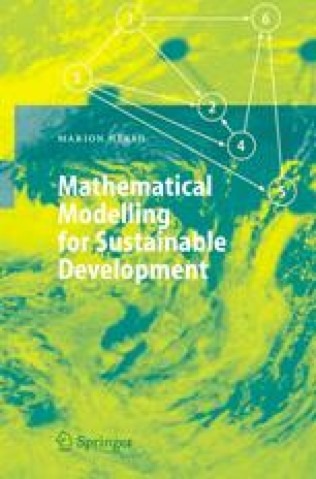
Mathematics needs Sustainable Development. When science was gradually reinvented in European medieval societies, it was legitimised as contributing to the disclosure of God’s divine creation. The conflicts that emerged became well known as a result of the clash between Galileo and the Church. Science found a new legitimacy through recognition that it was a powerful force against superstition. In the Enlightenment the argument was pushed forward by attributing Progress to the advancement of science: science could produce a better world by promoting rationality. In our modern society, science has become intimately linked to technology. Science for its own sake unfortunately rarely has positive outcomes in terms of research grant applications. Meanwhile, science and technology, and the progress they are supposed to produce, meet with wide scale scepticism. We all know of the current global problems: climate change, resource depletion, a thinning ozone layer, space debris, declining biodiversity, malnutrition, dying ecosystems, global inequity, and the risk of unprecedented nuclear wars

This book contains six chapters on central topics in materials science. Each is written by specialists in the field, and gives a state-of-the-art presentation of the subject for graduate students and scientists not necessarily working in that field. Computer simulations of new materials, theory and experimental work are all extensively discussed. As nanomaterials are of great current interest, most of the topics discussed have a bearing on nanomaterials and nanodevices. In addition to inorganic nanotubes, metallic nanocrystals, electronic nanodevices, spintronics and interfaces on an atomic scale, the text also presents computer simulations on one of the less well understood fields in solid-state physics and materials science: glasses and undercooled fluids.

Examines the conditions where humans and martens are compatible and incompatible, and promotes land use practices that allow Martes to be representatively distributed and viable. All Martes have been documented to use forested habitats and 6 species (excluding the stone marten) are generally considered to require complex mid- to late-successional forests throughout much of their geographic ranges. All species in the genus require complex horizontal and vertical structure to provide escape cover protection from predators, habitat for their prey, access to food resources, and protection from the elements. Martens and the fisher have high metabolic rates, have large spatial requirements, have high surface area to volume ratios for animals that often inhabit high latitudes, and often require among the largest home range areas per unit body weight of any group of mammals. Resulting from these unique life history characteristics, this genus is particularly sensitive to human influences on their habitats, including habitat loss, stand-scale simplification of forest structure via some forms of logging, and landscape-scale effects of habitat fragmentation. Given their strong associations with structural complexity in forests, martens and the fisher are often considered as useful barometers of forest health and have been used as ecological indicators, flagship, and umbrella species in different parts of the world. Thus, efforts to successfully conserve and manage martens and fishers are associated with the ecological fates of other forest dependent species and can greatly influence ecosystem integrity within forests that are increasingly shared among wildlife and humans.We have made great strides in our fundamental understanding of how animals with these unique life history traits perceive and utilize habitats, respond to habitat change, and how their populations function and perform under different forms of human management and mismanagement.

This carefully edited proceedings volume provides an extensive review and analysis of the work carried out over the past 20 years at the Mainz Microtron (MAMI). This research centered around the application of Quantum Chromodynamics in the strictly nonperturbative regime at hadronic scales of about 1 fm. Due to the many degrees of freedom in hadrons at this scale the leitmotiv of this research is "Many body structure of strongly interacting systems". Further, an outlook on the research with the forthcoming upgrade of MAMI is given. This volume is an authoritative source of reference for everyone interested in the field of the electro-weak probing of the structure of hadrons.

With climate change now charging up the political agenda, there are three issues commonly making the headlines: carbon budgets, renewable energy, and the anticipated impacts of climate change. Equally important, though currently less well covered, is the issue how these effects might be mitigated. Given the significant role that forests play in the climate system – as sources, sinks, and through carbon trading – this book discusses the current scientific evidence on the relationships between climate, forest resources and forest management practices around the world. Drawing on expertise from forest scientists from several continents, the book presents both in depth analysis of the current knowledge, and a series of case studies which assess the biological and the economic impacts of climate change. It includes sections on forest responses to climate change, monitoring and modeling changes, economic and management implications, and carbon sequestration under specific management systems.

Many coastal areas and human activities are subject to increasing risks from natural and man-induced hazards such as flooding resulting from major changes in hydrology of river systems that has reached a global scale. Changes in the hydrological cycle coupled with changes in land and water management alter fluxes of materials transmitted from river catchments to the coastal zone, which have a major effect on coastal ecosystems. The increasing complexity of underlying processes and forcing functions that drive changes on coastal systems are witnessed at a multiplicity of temporal and spatial scales.

Intensifying worldwide environmental changes as well as political, cultural, religious, and economic crises have made intergovernmental organisations (IGOs) important instruments in international and global cooperation. In order to cope with their diverse stakeholders, it is more imperative than ever for intergovernmental organisations to engage in personnel policy on an international scale. Successful diversity management is an essential prerequisite for organisational performance, conflict management, and dynamics of IGOs. Björn A. Peters examines the challenges of diversity and managing diversity in IGOs on the basis of the Mekong River Commission case study.

The book presents research on 15 different teacher education programs and describes individual renewal efforts. The stories -- including both the successes and challenges -- are inspiring and informative. In this age of accountability these teacher educators have used a range of research methods to gather data on their work and in turn used it to guide future decisions. The text includes examples of both large scale research and individual efforts. The common thread among the authors is a commitment to "walking the talk."

Gives an comprehensive account of magnetism, spanning the historical development, the physical foundations and the continuing research underlying the field, one of the oldest yet still vibrant field of physics. It covers both the classical and quantum mechanical aspects of magnetism and novel experimental techniques. Perhaps uniquely, it also discusses spin transport and magnetization dynamics phenomena associated with atomically and spin engineered nano-structures against the backdrop of spintronics and magnetic storage and memory applications.

A team of outstanding scientists in the field of modern magnetic nanotechnologies illustrates the state of the art in several areas of advanced magneto-electronic devices, magnetic micro-electromechanical systems and high density information storage technologies.The physics and chemistry of nano-scale systems have made rapid advances and there are real prospects of translating exciting scientific findings into a new generation of processes and high technology products with a potential impact on several industrial sectors. In particular the development of nano-structured magnetic materials plays a leading role in the increasing miniaturization of devices with superior performances.

Addresses the exciting and rapidly developing topic of nanostructured magnetic materials. It combines modern topics in nanoscale magnetism with issues relating to the fabrication and characterization of magnetic nanostructures. The chapters describe a wide range of physical aspects, together with theoretical and experimental methods. "Magnetic Nanostructures" will be of interest to researchers and specialists both in academic and industrial research. Graduate students will also find in this book an accessible introduction to the essential issues.

Contains a comprehensive collection of overview articles on novel microscopy methods for imaging magnetic structures on the nanoscale. Written by leading scientists in the field the book covers synchrotron based methods, spin polarized electron methods, and scanning probe techniques. It will be a valuable source of reference for graduate students and newcomers to the field.

Macro-engineering involves the large-scale modification and manipulation of natural systems for the benefit of mankind. The primary goals of some Earth-based macroprojects described in this book are power production, land reclamation, food production, climate change, environment, water, transport and coastal protection. Other Earth or space projects considered here have a more futuristic ring, but our present-day technical skill makes their realization possible. Earth-based macroprojects usually combine different aspects and aims. They have a major impact on the ecology of a region and the inhabitants' means of living (like tourism, fishing, shipping). Its effects may be felt worldwide, like the rise in global sea level after the damming and evaporation of large ocean gulfs for power production, or the change in climate following the regional reduction of solar insolation.
Low-Power High-Level Synthesis for Nanoscale CMOS Circuits addresses the need for analysis, characterization, estimation, and optimization of the various forms of power dissipation in the presence of process variations of nano-CMOS technologies. The authors show very large-scale integration (VLSI) researchers and engineers how to minimize the different types of power consumption of digital circuits.

Low-Frequency Noise in Advanced CMOS Devices begins with an introduction to noise, describing the fundamental noise sources and basic circuit analysis. The characterization of low-frequency noise is discussed in detail and useful practical advice is given. The various theoretical and compact low-frequency (1/f) noise models in MOS transistors are treated extensively providing an in-depth understanding of the low-frequency noise mechanisms and the potential sources of the noise in MOS transistors. Advanced CMOS technology including nanometer scaled devices, strained Si, SiGe, SOI, high-k gate dielectrics, multiple gates and metal gates are discussed from a low-frequency noise point of view. Some of the most recent publications and conference presentations are included in order to give the very latest view on the topics. The book ends with an introduction to noise in analog/RF circuits and describes how the low-frequency noise can affect these circuits.

In this book, experts in statistics and psychometrics describe classes of linkages, the history of score linkings, data collection designs, and methods used to achieve sound score linkages. They describe and critically discuss applications to a variety of domains including equating of achievement exams, linkages between computer-delivered exams and paper-and-pencil exams, concordances between the current version of the SAT® and its predecessor, concordances between the ACT® and the SAT®, vertical linkages of exams that span grade levels, and linkages of scales from high-stakes state assessments to the scales of the National Assessment of Educational Progress (NAEP).

Light scattering is a very powerful method to characterize the structure of polymers and nanoparticles in solution. Recent technical developments have strongly enhanced the possible applications of this technique, overcoming previous limitations like sample turbidity or insufficient experimental time scales. However, despite their importance, these new developments have not yet been presented in a comprehensive form. In addition, and maybe even more important to the broad audience, there lacks a simple-to-read textbook for students and non-experts interested in the basic principles and fundamental techniques of light scattering. As part of the Springer Laboratory series, this book tries not only to provide such a simple-to-read and illustrative textbook about the seemingly very complicated topic of light scattering from polymers and nanoparticles in dilute solution, but also intends to cover some of the newest technical developments in experimental light scattering.

Lipids are as important for life as proteins, sugars, and genes. The present book gives a multi-disciplinary perspective on the physics of life and the particular role played by lipids and the lipid-bilayer component of cell membranes. The book is aimed at undergraduate students and young research workers within physics, chemistry, biochemistry, molecular biology, nutrition, as well as pharmaceutical and biomedical sciences. The emphasis is on the physical properties of lipid membranes seen as soft and molecularly structured interfaces. By combining and synthesizing insights obtained from a variety of recent studies, an attempt is made to clarify what membrane structure is and how it can be quantitatively described. Furthermore, it is shown how biological function mediated by membranes is controlled by lipid membrane structure and organization on length scales ranging from the size of the individual molecule, across molecular assemblies of proteins and lipid domains in the range of nanometers, to the size of whole cells. Applications of lipids in nano-technology and biomedicine are also described.

Contains two of the three lectures that were given at the 33rd Probability Summer School in Saint-Flour (July 6-23, 2003). Amir Dembo’s course is devoted to recent studies of the fractal nature of random sets, focusing on some fine properties of the sample path of random walk and Brownian motion. In particular, the cover time for Markov chains, the dimension of discrete limsup random fractals, the multi-scale truncated second moment and the Ciesielski-Taylor identities are explored. Tadahisa Funaki’s course reviews recent developments of the mathematical theory on stochastic interface models, mostly on the so-called nabla varphi interface model. The results are formulated as classical limit theorems in probability theory, and the text serves with good applications of basic probability techniques.

Laser Fabrication and Machining of Materials introduces readers to the fundamental properties and physical phenomena of laser machining and its applications on the macro, micro, and nano scales. Examples of existing, emerging, and potential techniques are discussed, giving students and practicing engineers alike the opportunity to expand their use of lasers in such disciplines as mechanical processes, electronics, materials, and manufacturing.

Daraa Highway - Ghabagheb - Syria
+963-15 2050 - 15 860 380 /1/2/3 - 11 662 3900