


Refine Results
Sort By
From
To

Addresses recent trends, developments, and future of accounting and auditing of small and medium-sized practices (AASMPs) in the public and private sectors.the book has three main objectives: firstly, to provide an analysis of how different societal trends, including digitalization, impact AASMPs and what role education and training play in proactive adaptation to those trends; secondly, to outline major scenarios for global AASMP development by 2035; and thirdly, to offer a conceptual framework for better understanding of AASMPs' dynamic and transformative capabilities that are necessary to create sustained competitive advantage in a rapidly changing society. beyond presenting a conceptual framework, this book also offers a discussion of future scenarios for AASMPs' development and their role in the global economic development.
Offering fundamental concepts and prescriptive techniques in a highly visual format, this book provides clear, practical guidance on utilizing the latest in lighting techniques and technology to showcase a space without sacrificing utility. Covering more than 25 different design scenarios with in-depth rationale for proposed solutions, this book provides insightful distribution diagrams, floor plans, and details for lighting installation and construction. Real-world case studies illustrate lighting design in residential, commercial, healthcare, education, and hospitality settings, and skill-building exercises offer practice for real-world projects as well as NCIDQ and NCARB exam preparation.
Launching the Imagination treats design as both a verb and a noun—as both a process and a product. Through an immersion in 2D, 3D, and 4D concepts and possibilities, students develop visual thinking strategies that will serve them throughout their studies and their careers. They discover that design is deliberate—a process of exploring a wide range of solutions and choosing the most promising option for development. They are encouraged to analyze each resulting solution thoughtfully in order to produce the clearest and most inventive solution to each assignment.
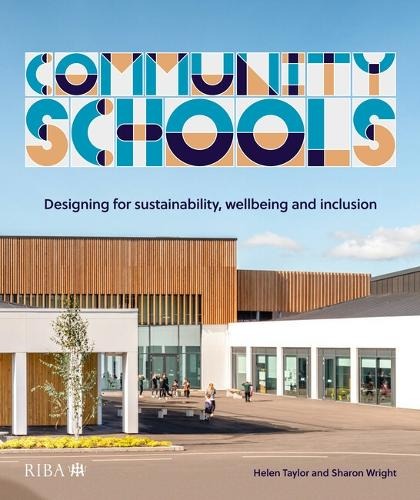
Reconsiders what is required from physical school environments, building on the learning gathered from the sector over the past two decades. To meet the new social, environmental and economic challenges it advocates designing differently, both in terms of the form that buildings take and the evaluation of their impact and performance. By calling for a reframing of the way that schools are regarded as community-wide amenities, this book explores the potential for architects to deliver design in a manner that supports healthy lifestyles and promotes wellbeing. Through encouraging social connections, new possibilities open up for educational facilities to become open, welcoming and inclusive. Featuring: Over 12 international case studies from practices including: Architype, Argyll + Bute, Bogle Architects, DRMM, Revaerk, Scott Brownrigg and XDGA. Key themes of wellbeing, connectivity, inclusion, indicators and evaluation. Practical guidance and learning points throughout. A new design brief for community schools
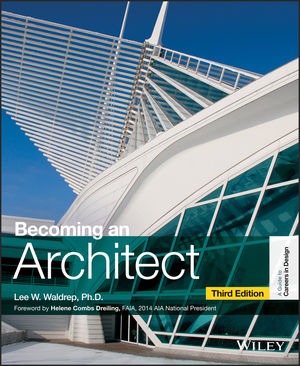
Covers recent changes to the Intern Development Program (IDP) Provides advice on obtaining professional experience while studying to be an architect Considers career paths in a myriad of work environments, such as government agencies, education, and research Includes helpful appendixes with resources for further information, such as career-related associations, websites, and recommended reading
Reports on several advances in architectural graphics, with a special emphasis on education, training and research. It gathers a selection of contributions to the 19th International Conference on Graphic Design in Architecture, EGA 2022, held on June 2–4, 2022, in Cartagena, Spain, with the motto: "Beyond drawings. The use of architectural graphics".
Reports on several advances in architectural graphics, with a special emphasis on education, training, and research. It gathers a selection of contributions to the 19th International Conference on Graphic Design in Architecture, EGA 2022, held on June 2–4, 2022, in Cartagena, Spain, with the motto: "Beyond drawings. The use of architectural graphics".
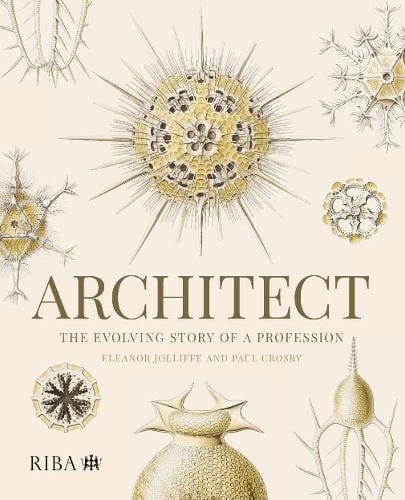
From Ancient Egypt, where architects were members of the ruling class, tied into the running of the empire, to the 21st century when questions are being raised about the future of the profession, this book, with its engaging narrative, explores the constant threads that remain as the profession adapts. While architects are no longer deified, their ability to imagine a new impending reality in built form implies a visionary dimension to their work. By focusing on both the practicalities of the profession and the more intangible motivations behind design – humans’ need to make a mark upon their surroundings – this volume provides a critical overview of over 3000 years of practice and education.

Presents an up-to-date and comprehensive introduction to the principles and findings of immunology. It contains full-colour illustrations, study questions, study aids and much more
We talk about theater even if the page cannot tell about Bustric's unforgettable show. And about art, and applied arts, such as geometric structure and spiritual meaning of the Zen garden of Ryoanji in Kyoto, and of soap bubbles, which are almost never lacking in Venetian encounters, Four-dimensional bubbles and gigantic bubbles that serve as a model for the Olympic swimming pool in Bejing
This book is the first comprehensive overview of maritime spatial planning. Situated at the intersection between theory and practice, the volume draws together several strands of interdisciplinary research, reflecting on the history of MSP as well as examining current practice and looking towards the future. The authors and contributors examine MSP from disciplines as diverse as geography, urban planning, political science, natural science, sociology and education; reflecting the growing critical engagement with MSP in many academic fields. This innovative and pioneering volume will be of interest and value to students and scholars of maritime spatial planning, as well as planners and practitioners.
Making Meaning in English examines the broader purpose and reasons for teaching English and explores what knowledge looks like in a subject concerned with judgement, interpretation and value. He discusses the principles and tools we can use to make decisions about what to teach and offers a curriculum framework that draws these strands together to allow students to make sense of the knowledge they encounter.
The book presents research on 15 different teacher education programs and describes individual renewal efforts. The stories -- including both the successes and challenges -- are inspiring and informative. In this age of accountability these teacher educators have used a range of research methods to gather data on their work and in turn used it to guide future decisions. The text includes examples of both large scale research and individual efforts. The common thread among the authors is a commitment to "walking the talk."
In this book, experts in statistics and psychometrics describe classes of linkages, the history of score linkings, data collection designs, and methods used to achieve sound score linkages. They describe and critically discuss applications to a variety of domains including equating of achievement exams, linkages between computer-delivered exams and paper-and-pencil exams, concordances between the current version of the SAT® and its predecessor, concordances between the ACT® and the SAT®, vertical linkages of exams that span grade levels, and linkages of scales from high-stakes state assessments to the scales of the National Assessment of Educational Progress (NAEP).
The book addresses the “balancing act” between developing students’ modelling skills on the one hand, and using modelling to help them learn mathematics on the other, which arises from the integration of modelling into classrooms. In addition the book highlights professional learning and development for in-service teachers, particularly in systems where the introduction of modelling into curricula means reassessing how mathematics is taught.
Begins with a reflection on the history of test design--the core activity of all educational and psychological testing. It then presents a standard language for modeling test design problems as instances of multi-objective constrained optimization. The main portion of the book discusses test design models for a large variety of problems from the daily practice of testing, and illustrates their use with the help of numerous empirical examples. The presentation includes models for the assembly of tests to an absolute or relative target for their information functions, classical test assembly, test equating problems, item matching, test splitting, simultaneous assembly of multiple tests, tests with item sets, multidimensional tests, and adaptive test assembly. Two separate chapters are devoted to the questions of how to design item banks for optimal support of programs with fixed and adaptive tests. Linear Models for Optimal Test Design, which does not require any specific mathematical background, has been written to be a helpful resource on the desk of any test specialist.
In many countries, schools, universities and other traditional learning institutions are not providing for the educational needs of all members of the community. In many communities, particularly in regional, rural and disadvantaged areas, there are only limited options for people to undertake learning. Limited participation in learning has the danger of reinforcing people’s alienation from mainstream education and from participation and inclusion in social institutions and economic and community life more generally. This book addresses the challenge of identifying effective ways of accommodating the learning needs of all people and in so doing achieving the goals of lifelong learning for all.
In Europe, the idea of Lifelong Learning has developed from an education policy to the most important pedagogic paradigm. The concept was created as an answer to the international education crisis, diagnozed by Philip H. Coombs in 1967. Since the European Year of Lifelong Learning in 1996, it has been regarded as an alternative to deal with the rapid social, political and economic changes of the modern world. Andrea Óhidy shows the genesis of the concept and its development towards a pedagogic paradigm. She investigates the relations between the concept of Lifelong Learning and school education and points out the most important links between Lifelong Learning and adult education.
This text explores the different ways in which the various social practices in which people participate becomes signed as learning, how and why that occurs and with what consequences. It takes seriously the linguistic turn in social theory to draw upon semiotics and poststructuralism through which to explore the significance of lifelong learning as an emerging discourse in education. The text explores the different ways in which learning conveys meaning and is given meaning. Given this, lifelong learning therefore is a way, and a significant way, in which learning is fashioned. The text then explores the notion that, if learning is lifelong and lifewide, what precisely is learning as distinct from other social practices and how those practices are given meaning as learning.
This book critically reviews a diverse body of scholarship and practice that informs the conceptualization, curriculum, teaching and measurement of life skills in education settings around the world. It discusses life skills as they are implemented in schools and non-formal education, providing both qualitative and quantitative evidence of when, with whom, and how life skills do or do not impact young women’s and men’s lives in various contexts. Specifically, it examines the nature and importance of life skills, and how they are taught.

Daraa Highway - Ghabagheb - Syria
+963-15 2050 - 15 860 380 /1/2/3 - 11 662 3900