


Refine Results
Sort By
From
To

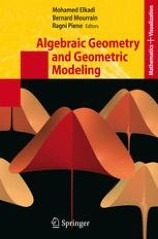
Algebraic Geometry provides an impressive theory targeting the understanding of geometric objects defined algebraically. Geometric Modeling uses every day, in order to solve practical and difficult problems, digital shapes based on algebraic models. In this book, we have collected articles bridging these two areas. The confrontation of the different points of view results in a better analysis of what the key challenges are and how they can be met. We focus on the following important classes of problems: implicitization, classification, and intersection. The combination of illustrative pictures, explicit computations and review articles will help the reader to handle these subjects.

The book summarizes international progress over the last few decades in upper atmosphere airglow research. Measurement methods, theoretical concepts and empirical models of a wide spectrum of upper atmospheric emissions and their variability are considered. The book contains a detailed bibliography of studies related to the upper atmosphere airglow.

This book is the result of the Proceedings of the NATO Advanced Research Workshop on Air, Water and Soil Quality Modelling for Risk and Impact Assessment,The aim of the NATO Advanced Research Workshop on was to further joint environmental compartment modelling and applications of control theory to environmental management. The articles of the proceedings provide an overview of ongoing research in this field regarding assessment of environmental risks and impacts. Besides selected issues of practical application they address questions of forward and inverse modelling, integrated treatment of environmental changes and economic impacts as well as aspects of future development of numerical environmental modelling.
This book reports on the results of an extended survey conducted across Europe within the framework of the APPRAISAL FP7 project to determine the extent to which an integrated assessment approach to air quality is being adopted, on the one hand, by regional and local authorities to develop air quality plans and, on the other, by researchers. Following a detailed analysis of the role and structure of the components of an integrated assessment study, the results of the survey are considered from a variety of perspectives.
This volume contains the papers and posters presented at the 27 NATO/CCMS International Technical Meeting on Air Pollution Modeling and Its Application held in Banff, Canada, 24-29 October 2004. The key topics at this ITM included: Role of Atmospheric Models in Air Pollution Policy and Abatement Strategies; Integrated Regional Modeling; Effects of Climate Change on Air Quality; Aerosols as Atmospheric Contaminants; New Developments; and Model Assessment and Verification. 104 participants from North and South America, Europe, Africa and Asia attended th the 27 ITM.
The book is aimed at researchers and government policy makers who wish to keep abreast of the most recent developments in air pollution modelling and air quality issues. The book emphasizes the following key topics: 1. Local and urban scale modelling; 2. Regional and intercontinental modelling; 3. Data assimilation and air quality forecast; 4. Model assessment and verification; 5. Aerosols in the atmosphere; 6. Interactions between air quality and climate change; 7. Air quality and human health.
Provides a good example of the diverse scope and standard of research achieved in simulation and gaming today. The theme of the special session at ISAGA2003 was Agent-Based Modeling Meets Gaming Simulation. Nowadays, agent-based simulation is becoming very popular for modeling and solving complex social phenomena. It is also used to arrive at practical solutions to social problems. At the same time, however, the validity of simulation does not exist in the magni?cence of the model. R. Axelrod stresses the simplicity of the agent-based simulation model through the “Keep it simple, stupid” (KISS) principle: As an ideal, simple modeling is essential.

Concerned with the evolution and achievements of cooperation in research and innovation between Africa and Europe, and points to the need for more diversified funding and finance mechanisms, and for novel models of collaboration to attract new actors and innovative ideas. It reflects on the political, economic, diplomatic and scientific rationale for cooperation, while also examining practical developments, illustrated with examples, in the fields of food security, health, and climate change. The need to mobilise scientific knowledge and to ensure equality and fairness in the cooperation are recurrent themes. Africa-Europe Cooperation in Research and Innovation is essential reading for policy makers and researchers in international relations and science diplomacy.

Presents the latest trends in research in the area. Following an introduction and a survey chapter providing a concise overview of the state-of-art in the field of mathematics-related affect, the book is divided into three main sections: motivation and values, engagement, and identity in mathematics education. Each section comprises several independent chapters based on original research, as well as a reflective commentary by an expert in the area. Collectively, the chapters present a rich methodological spectrum, from narrative analysis to structural equation modelling.
Advocates for the Social Sciences and Humanities to be more involved in energy policymaking. It forms part of the European platform for energy-related Social Sciences and Humanities’ activities, and works on the premise that crossing disciplines is essential. All of its contributions are highly interdisciplinary, with each chapter grounded in at least three different Social Sciences and Humanities disciplines. These varying perspectives come together to cover an array of issues relevant to the energy transition, including: energy poverty, justice, political ecology, governance, behaviours, imaginaries, systems approaches, modelling, as well as the particular challenges faced by interdisciplinary work. As a whole, the book presents new ideas for future energy policy, particularly at the European level. It is a valuable resource for energy researchers interested in interdisciplinary and society-relevant perspectives. Those working outside the Social Sciences and Humanities will find this book an accessible way of learning more about how these subjects can constructively contribute to energy policy.

Advances of Computational Intelligence in Industrial Systems reports the exploration of CI frontiers with an emphasis on a broad spectrum of real-world applications. Section I – Theory and Foundation presents some of the latest developments in CI.

This monograph presents a comprehensive introduction to timed automata (TA) and time Petri nets (TPNs) which belong to the most widely used models of real-time systems. Some of the existing methods of translating time Petri nets to timed automata are presented, with a focus on the translations that correspond to the semantics of time Petri nets, associating clocks with various components of the nets. "Advances in Verification of Time Petri Nets and Timed Automata – A Temporal Logic Approach" introduces timed and untimed temporal specification languages and gives model abstraction methods based on state class approaches for TPNs and on partition refinement for TA. Moreover, the monograph presents a recent progress in the development of two model checking methods, based on either exploiting abstract state spaces or on application of SAT-based symbolic techniques.
There has been tremendous emphasis in unmanned aerial vehicles, both of fixed (airplanes) and rotary wing (vertical take off and landing, helicopters) types over the past ten years. Applications span both civilian and military domains, the latter being the most important at this stage. This edited book provides a solid and diversified reference source related to basic, applied research and development on small and miniature unmanned aerial vehicles, both fixed and rotary wing. As such, the book offers background information on the evolution of such vehicles over the years, followed by modeling and control fundamentals that are of paramount importance due to unmanned aerial vehicle model complexity, nonlinearity, coupling, inhirent instability and parameter values uncertainty. Aspects of navigation, including visual-based navigation and target tracking are discussed, followed by applications to attitude estimation on micro unmanned aerial vehicles, autonomous solar unmanned aerial vehicle, biomimetic sensing for autonomous flights in near-earth environments, localization of air-ground wireless sensor networks, decentralized formation tracking, design of an unmanned aerial vehicle for volcanic gas sampling and design of an on-board processing controller for miniature helicopters.
The main purpose of this book is to provide readers with recent advances in the field of Telerobotics. It describes methods, experimental results, applications, and developments, highly relevant for scientists, researchers, and students in Teleoperation. This book is structured in three parts: I. Human System Interfaces, II. Control, and III. Applications. Chapters in part I concentrate on human interface technology which allows a human operator to close the control loop of a remote robot. Topics related to control algorithms - in particular for the case with time delay in the communication network - are the focus in part II, concentrating on bilateral control methods. Part III presents a variety of advanced applications in surgery, space, and other fields relevant to everyday life.
This volume, an outgrowth of an "International Conference on Statistical Methods in Health Sciences," covers a wide range of topics pertaining to new statistical methods and novel applications in the health sciences.
The book documents the state-of-the-art in Services Science. It combines contributions in Service Engineering, Service Management and Service Marketing and helps to develop a roadmap for future R & D activities in these fields. The book is written for researchers in engineering and management.

Realizing the growing importance of semantic adaptation and personalization of media, the editors of this book brought together leading researchers and practitioners of the field to discuss the state-of-the-art, and explore emerging exciting developments. This volume comprises extended versions of selected papers presented at the 1st International Workshop on Semantic Media Adaptation and Personalization (SMAP 2006).

This book presents 53 independently reviewed papers which embody the latest advances in the theory, design, control and application of robotic systems, which are intended for a variety of purposes such as manipulation, manufacturing, automation, surgery, locomotion and biomechanics.

This carefully edited book brings together in one volume some of the most important topics of current research in probabilistic graphical modelling, learning from data and probabilistic inference. This includes topics such as the characterisation of conditional independence, the sensitivity of the underlying probability distribution of a Bayesian network to variation in its parameters, the learning of graphical models with latent variables and extensions to the influence diagram formalism. In addition, attention is given to important application fields of probabilistic graphical models, such as the control of vehicles, bioinformatics and medicine.

Multiresolution methods in geometric modelling are concerned with the generation, representation, and manipulation of geometric objects at several levels of detail. Applications include fast visualization and rendering as well as coding, compression, and digital transmission of 3D geometric objects.The book contains seven survey papers, providing a detailed overview of recent advances in the various fields within multiresolution modelling, and sixteen additional research papers. Each of the seven parts of the book starts with a survey paper, followed by the associated research papers in that area.

Daraa Highway - Ghabagheb - Syria
+963-15 2050 - 15 860 380 /1/2/3 - 11 662 3900