


Refine Results
Sort By
From
To

This book proposes a novel approach to Artificial Intelligence (AI) ethics. AI offers many advantages: better and faster medical diagnoses, improved business processes and efficiency, and the automation of boring work.
This book provides a timely and first-of-its-kind collection of contributed chapters on anatomy ontologies. It is interdisciplinary in its approach, bringing together relevant expertise from computing and biomedical studies, and covering both theoretical and applied aspects, with an emphasis on newer work relevant to the emerging Semantic Web.
Artificial intelligence (AI) and machine learning (ML) will play a major role. By adopting AI software and services, businesses can create predictive strategies, enhance their capabilities, better interact with customers, and streamline their business processes. Explores novel concepts and cutting-edge research and developments towards designing these fully automated advanced digital systems. Fostered by technological advances in artificial intelligence and machine learning, such systems potentially have a wide range of applications in robotics, human computing, sensing and networking. The chapters focus on models and theoretical approaches to guarantee automation in large multi-scale implementations of AI and ML systems; protocol designs to ensure AI systems meet key requirements for future services such as latency; and optimisation algorithms to leverage the trusted distributed and efficient complex architectures.
Agile software is a means of putting the software first while at the same time reacting to these user requirements in a flexible and agile way.Agile Software Construction covers the emerging methods and approaches (including extreme programming, feature-driven development and adaptive software development), that are loosely described as "Agile" and shows how to apply them effectively to software development projects. It shows how to plan, organise and develop systems using agile techniques, and highlights some of the problems that may be encountered.
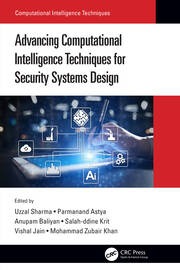
Security systems have become an integral part of the building and large complex setups, and intervention of the computational intelligence (CI) paradigm plays an important role in security system architecture. This book covers both theoretical contributions and practical applications in security system design by applying the Internet of Things (IoT) and CI. It further explains the application of IoT in the design of modern security systems and how IoT blended with computational intel- ligence can make any security system improved and realizable. Focuses on the computational intelligence techniques of security system design / Covers applications and algorithms of discussed computational intelligence techniques / Includes convergence-based and enterprise integrated security systems with their applications / Explains emerging laws, policies, and tools affecting the landscape of cyber security / Discusses application of sensors toward the design of security systems

On a newly emerging field of discrete differential geometry and an excellent way to access this exciting area. It surveys the fascinating connections between discrete models in differential geometry and complex analysis, integrable systems and applications in computer graphics. The authors take a closer look at discrete models in differential geometry and dynamical systems. Their curves are polygonal, surfaces are made from triangles and quadrilaterals, and time is discrete. Nevertheless, the difference between the corresponding smooth curves, surfaces and classical dynamical systems with continuous time can hardly be seen. This is the paradigm of structure-preserving discretizations. Current advances in this field are stimulated to a large extent by its relevance for computer graphics and mathematical physics.

Advances in Digital Forensics IV describes original research results and innovative applications in the emerging discipline of digital forensics. In addition, it highlights some of the major technical and legal issues related to digital evidence and electronic crime investigations.
Adaptive agents and multi-agent systems is an emerging and exciting interdisciplinary area of research and development involving artificial intelligence, software engineering, and developmental biology, as well as cognitive and social science. This book presents 17 revised and carefully reviewed papers taken from two workshops on the topic as well as 2 invited papers by leading researchers in the area. The papers deal with various aspects of machine learning, adaptation, and evolution in the context of agent systems and autonomous agents.
Access Control Systems: Security, Identity Management and Trust Models provides a thorough introduction to the foundations of programming systems security, delving into identity management, trust models, and the theory behind access control models. The book details access control mechanisms that are emerging with the latest Internet programming technologies, and explores all models employed and how they work. The latest role-based access control (RBAC) standard is also highlighted.

Pesents the principles of biological dentistry along with emerging scientific research on the mouth’s vital role in the body’s microbiome—a key to whole body wellness. Challenging conventional dental wisdom that views the teeth as separate from the rest of the body, and conventional dental practices that often cause more harm than good. Offers a necessary new approach to natural immunity to chronic disease and integrating dental hygiene into whole body health.

This book combines explanation of the scientific base underpinning vital pulp treatment with description of current and emerging trends in clinical practice. It guides the reader through modern views on pulp diagnostics, deep caries, and pulp exposure management, leading to an analysis of the biological aspects of regenerative techniques such as angiogenesis, neurogenesis, inflammation, and epigenetics.

This volume collects emerging issues in Environmental and Civil Engineering, originating from outstanding doctoral dissertations discussed at Politecnico di Milano in 2021. The advanced innovative insights provided are presented with reference to the relevant sustainable development goals (SDGs), hoping that scientists, technicians and decision makers will find them as a valid support to face future sustainability challenges.

Focuses on fly ash-based alkali-activated geopolymer concrete, its production and characteristic properties. The re-use of waste materials and industrial by-products, such as fly ash, is not only economically of interest but also helps to reduce carbon dioxide emissions. The carbon footprint of these materials is much lower than that of concrete using ordinary Portland cement. They thus offer new sustainable solutions to the construction industry.

Includes recording and analysis of maritime archaeology through emerging technologies, including both practical and theoretical contributions. Topics include photogrammetric recording, laser scanning, marine geophysical 3D survey techniques, virtual reality, 3D modelling and reconstruction, data integration and Geographic Information Systems. This convergence of digital technologies such as underwater photography and photogrammetry, 3D sonar, 3D virtual reality, and 3D printing has highlighted a pressing need for these new methodologies to be considered together, both in terms of defining the state-of-the-art and for consideration of future directions.

Mass Customization: Challenges and Solutions defines the parameters of the emerging business strategy, mass customization. The book will cover the main categories of the area with a systematic examination of the following themes: manufacturing systems and mass customization, supply chain management and mass customization, and information systems and mass customization.
Aims to share fascinating perspectives on marketing communications by discussing the shift in the power of public relations, and highlighting how the small and local use communication effectively to improve performance and shares useful lessons on how to communicate hope by responding to customer emotions during uncertainties. The book contains valuable lessons and insights on communicating corporate social responsibility, effective social media communication, enacting brand purpose through communication, and using aesthetics in point-of-purchase advertising to drive purchase intention.

India’s telephone network is the second largest in the world, next to China. Over the last decade, these emerging economies have been the drivers of growth in the world economy. Therefore foreign companies have been rushing to invest in these countries more or less successfully.Kiruba Jeyaseeli Benjamin Levi highlights why the Indian telecom market is so attractive to foreign investors. She describes the rules and regulations for telecoms in India, and examines the reasons for success and failure of the foreign telecom companies in India.

Discusses the risks and opportunities that arise in Emerging Asia given the context of a new environment in global liquidity and capital flows. It elaborates on the need to ensure financial and overall economic stability in the region through improved financial regulation and other policy measures to minimize the emergent risks. "Managing Elevated Risk: Global Liquidity, Capital Flows, and Macroprudential Policy—An Asian Perspective" also explores the range of policy options that may be deployed to address the impact of global liquidity on domestic financial and socio-economic conditions including income inequality. The book is primarily aimed at policy makers, financial market regulators and supervisory agencies to help them improve national regulatory systems and to promote harmonization of national regulations and practices in line with global standards.
Collaboration of organizations reshapes traditional managerial practices and creates new inter-organizational contexts for strategy, coordination and control, information and knowledge management. Heralded as organizational forms of the future, networks are at the same time fragile and precarious organizational arrangements, which regularly fail. In order to investigate the new realities created by technology-enabled forms of network organizations and to address the emerging managerial challenges, this book introduces an integrative view on inter-firm network management. Centred on a network life cycle perspective, strategic, economic and relational facets of business networking are explored.
Describes in detail how the BTRM, combined with a focus on value creation and value delivery, will enable continuous change, in the context of current, emerging and future technologies. It illustrates the potential for real-time insight and control not previously considered and provides a wide range of information to plan an implementation, understand where AI can be applied, and its importance in the world of self-managing systems.

Daraa Highway - Ghabagheb - Syria
+963-15 2050 - 15 860 380 /1/2/3 - 11 662 3900