



Page 28
Page 28

Foundation ASP.NET for Flash
If you're a reasonably experienced Flash user who has mastered the basics but wants to empower your SWFs, taking them further toward rich Internet applications, then you've come to the right place! Foundation ASP.NET for Flash will teach you everything you need to know to integrate two of the most exciting technologies used on the Web today. Using Flash and ASP.NET, it's possible to utilize the amazing user interface capabilities of Flash along with the extensive power of ASP.NET to create dynamic, data-driven web applications. In this book, advanced topics are made easy by providing intuitive step-by-step examples. This book covers Flash MX 2004 and Flash 8, ASP.NET 2.0, Visual Studio 2005, and Access and SQL Server 2005. It is an essential part of any Flash or ASP.NET web developer's arsenal.

Foundation ActionScript animation : Making things move!
In this book Keith Peters guides you through some basic animation theory and then demystifies the math and physics behind creating realistic animation, looking at trigonometry, velocity and acceleration, and bouncing & friction. This book will teach you how to use Flash ActionScript to move the objects in your movies, rather than letting Flash's tween engine do it for you. The benefit of this is smaller, more realistic, more dynamic interactive movies that seem to come alive on your screen. Almost all of the code featured in this book will work fine in either Flash MX 2004 or Flash 8, and with a few minor adjustments, most of it can even be applied to Flash MX.

Foundation ActionScript 3.0 with Flash CS3 and Flex
If you want to create exciting dynamic web sites that will amaze your online audience, then the Flash platform is a great way to go, with it's many features, including powerful graphical and sound and video capabilities. To really harness the power of Flash though, you need to make use of ActionScript to provide dynamic effects, enable user interaction, and manipulate data. ActionScript 3.0, the Flash Platform's scripting language, offers a lot of new and powerful features. ActionScript is now a full-fledged programming language, with complete object-oriented capabilities, improved event handling, sound and video support, drawing capabilities, support for regular expressions, and much more. This book covers all the essential techniques from the ground up, allowing you to get up and running quickly and easily. Starting with the fundamentals, you'll learn about using ActionScript objects, manipulating sound and video, and harnessing the power of regular expressions and XML.

Formal techniques for networked and distributed systems - FORTE 2005 ; 25th IFIP WG 6.1 International Conference, Taipei, Taiwan, October 2-5, 2005, Proceedings
FORTE (Formal Techniques for Networked and Distributed Systems) 2005 was sp- sored by Working Group 6.1, Technical Committee 6 (TC6) of the International Fed- ation for InformationProcessing (IFIP).The conferenceseries started in 1981underthe name PSTV (ProtocolSpeci?cation, Testing, and Veri?cation).In 1988,a second series under the name FORTE was started. Both series merged to FORTE/PSTV in 1996. The conference name was changed to FORTE in 2001. During its 24-year history, many important contributions have been reported in the conference series. The last ?ve me- ings of FORTE were held in Pisa (Italy), Cheju Island (Korea), Houston (USA), Berlin (Germany), and Madrid (Spain). The 25th FORTE was held from Sunday to Wednesday, October 2–5, 2005 on the beautiful campus of the National Taiwan University (NTU), Taipei, Taiwan, ROC.

Formal techniques for computer systems and business processes ; European performance engineering workshop, EPEW 2005 and International workshop on web services and formal methods, WS-FM 2005, Versailles, France, September 1-3, 2005, Proceedings
This book constitutes the refereed proceedings of two colocated international workshops EPEW 2005 (European Performance Engineering Workshop) and WS-FM 2005 (Web Services and Formal Methods) held in Versailles, France in September 2005. The 20 revised full papers presented were carefully reviewed and selected from 59 submissions. For EPEW 2005 only 10 papers - of the 32 submitted - were accepted for presentation; they deal with queueing theory, bounding techniques, stochastic model checking, communication schemes analysis for high-speed LAN, QOS analysis in wireless ad-hoc networks and optical networks analysis. The main topics of the 10 papers accepted for WS-FM 2005 - from 27 submissions - include: protocols and standards for WS (SOAP, WSDL, UDDI, etc.); languages and description methodologies for Choreography/Orchestration/Workflow (BPML, XLANG and BizTalk, WSFL, WS-BPEL, etc.); coordination techniques for WS (transactions, agreement, coordination services, etc.); semantics-based dynamic WS discovery services (based on Semantic Web/Ontology Techniques or other semantic theories); security, performance evaluation and quality of service of WS; semi-structured data and XML related technologies; comparisons with different related technologies/approaches.

Formal Methods for Mobile Computing ; 5th International School on Formal Methods for the Design of Computer, Communication, and Software Systems, SFM-Moby 2005, Bertinoro, Italy, April 26-30, 2005, Advanced Lectures
This book presents 8 tutorial survey papers by leading researchers who lectured at the 5th International School on Formal Methods for the Design of Computer, Communication, and Software Systems, SFM 2005, held in Bertinoro, Italy in April 2005. SFM 2005 was devoted to formal methods and tools for the design of mobile systems and mobile communication infrastructures. The 8 lectures are organized into topical sections on models and languages, scalability and performance, dynamic power management, and middleware support.

Forest Radioecology in Fukushima : Radiocesium Dynamics, Impact, and Future
This book provides holistic information on the radioactive contamination of forests. Topics are highly interdisciplinary, ranging from the dynamics of radioactive cesium in forest ecosystems to the radiation protection or the socio-economic aspects of radiation effects. It is designed to help people understand the radioactive contamination in forests and provide hints of how to cope with it and restore their livelihoods. The book is characterized by its well-balanced structure that allows the reader to understand the whole picture without going into too much scientific content. After explaining the basics of radioactive materials and radiation, the book illustrates the radioactive contamination of forests, it also describes the impacts on the forestry and life of local people and the measures taken by. Few books address the concerns about how to deal with radioactive contamination of forests and the future perspectives. In this book, people can learn all about the Fukushima nuclear accident of forests, forest products, and people with abundant reference materials.

Forest Diversity and Management
Natural forests with thousands of years of ecological continuity are unrivalled as the treasure store of terrestrial biodiversity on Earth. And while there is currently no fully comprehensive inventory of the biota associated with any given forest, it is reasonable to assume that in conserving natural forests we can conserve the myriads of unnamed bacteria, fungi, insects, mites and nematodes that forests support. Drawing on diverse research from biodiversity experts around the world, this collection of papers reflects the diversity of forest types and forest issues that concern forest scientists globally. Forest types considered vary from savannah and tropical rainforests to the ancient oak forests of Poland; issues explored include the effects of logging, management practices, forest dynamics and climate change on forest structure and biodiversity.

Foreign Investor Misconduct in International Investment Law
examines the issue of foreign investor misconduct in modern international investment law, focusing on the approach that international investment law as it currently operates has developed towards foreign investor misconduct. The term ‘misconduct’ is not a legal notion, but is used to describe a certain phenomenon, namely, a group/class of actions. This term is convenient since it makes it possible to introduce and describe the phenomenon as such, without a division into concrete types of conduct, like ‘abuse of process’, ‘violation of national law’, ‘corruption’, ‘investment contrary to international norms and standards’, etc.
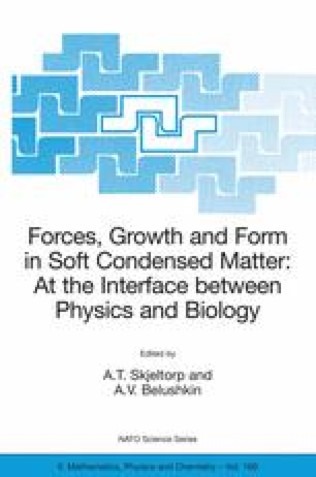
Forces, Growth and Form in Soft Condensed Matter : At the Interface between Physics and Biology
This volume comprises the proceedings of a NATO Advanced Study Institute held at Geilo, Norway, 24 March - 3 April 2003, the seventeenth ASI in a series held every two years since 1971. The objective of this ASI was to identify and discuss areas where synergism between modern physics, soft condensed matter and biology might be most fruitful. The main pedagogical approach was to have lecturers focussing on basic understanding of important aspects of the relative role of the various interaction- electrostatic, hydrophobic, steric, conformational, van der Waals etc. Soft condensed matter and the connection between physics and biology have been the themes of several earlier Geilo Schools. A return to these subjects thus allowed a fresh look and a possibility for defining new directions for research. Examples of soft materials, which were discussed at this ASI, included colloidal dispersions, gels, biopolymers and charged polymer solutions, polyelectrolytes, protein/membrane complexes, nucleic acids and their complexes. Indeed, most forms of condensed matter are soft and these substances are composed of aggregates and macromolecules, with interactions that are too weak and complex to form crystals spontaneously. A characteristic feature is that small external forces, slight perturbations in temperature, pressure or concentration, can all be enough to induce significant structural changes. Thermal fluctuations are almost by definition strong in soft materials and entropy is a predominant determinant of structure, so that disorder, slow dynamics and plastic deformation are the rule. Hence the phrase ‘soft condensed matter’ has been coined.

Food lens = فود لينس
Food lens is an innovative application designed to revolutionize dietary management by leveraging advanced image recognition and nutritional analysis. The primary objective of this senior project is to develop a user-friendly tool that identifies various foods through a camera interface and provides detailed nutritional information. This application not only enhances the user's understanding of their dietary intake but also assists in achieving personalized health and fitness goals. The core functionality of Food Lens involves the integration of a robust image recognition system capable of accurately identifying a wide range of foods. Upon identification, the application retrieves comprehensive nutritional data, including calorie content, macronutrient distribution (proteins, fats, carbohydrates), and essential micronutrients (vitamins and minerals). This data is then seamlessly integrated into the user's dietary profile. Food Lens is designed to track the user's daily caloric intake and compare it against personalized recommendations based on age, gender, weight, height, and activity level. By maintaining a dynamic record of consumed foods, the application provides real-time feedback on the user’s nutritional progress. This feature is particularly beneficial for individuals aiming to manage weight, address dietary restrictions, or improve overall health.

Food Anxiety in Globalising Vietnam
This book approaches the anxieties inherent in food consumption and production in Vietnam. The country’s rapid and recent economic integration into global agro-food systems and consumer markets spurred a new quality of food safety concerns, health issues and distrust in food distribution networks that have become increasingly obscured. This edited volume further puts the eating body centre stage by following how gendered body norms, food taboos, power structures and social differentiation shape people’s ambivalent relations with food. It uncovers Vietnam’s trajectories of agricultural modernisation against which consumers and producers manoeuvre amongst food self-sufficiency, security and abundance. It provides social science perspectives on anxieties related to food and surrounding discourses that travel between the local and the global, the individual and society and into the body. Therefore, the book’s lens of food anxiety matters for social theory and for understanding the embeddedness and discontinuities of food globalizations in Vietnam and beyond.

Fondamenti di ingegneria clinica ; Vol.2 : Ecotomografia = Fundamentals of clinical engineering ; Vol.2 : Ultrasound
With the second volume of Clinical Engineering, the Author intends to provide an updated scientific-didactic overview of the physical principles of ultrasound, of the technology and of the implementation aspects of the ecotomograph.

Flux-corrected transport : Principles, algorithms, and applications
Addressing students and researchers as well as CFD practitioners, this book describes the state of the art in the development of high-resolution schemes based on the Flux-Corrected Transport (FCT) paradigm. Intended for readers who have a solid background in Computational Fluid Dynamics, the book begins with historical notes by J.P. Boris and D.L. Book. Review articles that follow describe recent advances in the design of FCT algorithms as well as various algorithmic aspects. The topics addressed in the book and its main highlights include: the derivation and analysis of classical FCT schemes with special emphasis on the underlying physical and mathematical constraints; flux limiting for hyperbolic systems; generalization of FCT to implicit time-stepping and finite element discretizations on unstructured meshes and its role as a subgrid scale model for Monotonically Integrated Large Eddy Simulation (MILES) of turbulent flows. The proposed enhancements of the FCT methodology also comprise the prelimiting and 'failsafe' adjustment of antidiffusive fluxes, the use of characteristic variables, and iterative flux correction. The cause and cure of detrimental clipping/terracing effects are discussed. Many numerical examples are presented for academic test problems and large-scale applications alike.

Fluid Transport in Nanoporous Materials : Proceedings of the NATO Advanced Study Institute, held in La Colle sur Loup, France, 16-28 June 2003
The most promising include molecular sieves which are being developed as inorganic or polymeric systems with 0. 3-30nm in pore dimensions. These nanoporous solids have a broad spectrum of applications in chemical and biochemical processes. The unique applications of molecular sieves are based on their sorption and transport selectivity. Yet, the transport processes in nanoporous systems are not understood well. At the same time, the theoretical capabilities have increased exponentially catalyzed by increases in computational capabilities. The interactions between a diffusing species and the host solid are being studied with increasing details and realism. Further, in situ experimental techniques have been developed which give an understanding of the interactions between diffusing species and nanoporous solids that was not available even a few years ago. The time was ripe to bring together these areas of common interest and study to understand what is known and what has yet to be determined concerning transport in nanoporous solids. Molecular sieves are playing an increasing role in a broad range of industrial petrochemical and biological processes. These include shape-selective separations and catalysis as well as sensors and drug delivery. Molecular sieves are made from inorganic as well as organic solids, e. g. , polymers. They can be employed in packed beds, as membranes and as barrier materials. Initially, the applications of molecular sieves were dominated by the use of zeolites.

Fluid Mechanics : With Problems and Solutions, and an Aerodynamics Laboratory
This textbook introduces the major branches of fluid mechanics of incompressible and compressible media, the basic laws governing their flow, and gasdynamics. "Fluid Mechanics" demonstrates how flows can be classified and how specific engineering problems can be identified, formulated and solved, using the methods of applied mathematics. The material is elaborated in special applications sections by more than 200 exercises and separately listed solutions. The final section comprises the Aerodynamics Laboratory, an introduction to experimental methods treating eleven flow experiments. This class-tested textbook offers a unique combination of introduction to the major fundamentals, many exercises, and a detailed description of experiments.

Fluid Mechanics : An Introduction to the Theory of Fluid Flows
Advancements of fluid flow measuring techniques and of computational methods have led to new ways to treat laminar and turbulent flows. These methods are extensively used these days in research and engineering practise. This also requires new ways to teach the subject to students at higher educational institutions in an introductory manner. The book provides the knowledge to students in engineering and natural science needed to enter fluid mechanics applications in various fields. Analytical treatments are provided, based on the Navier-Stokes equations. Introductions are also given into numerical and experimental methods applied to flows. The main benefit the reader will derive from the book is a sound introduction into all aspects of fluid mechanics covering all relevant subfields.

Fluid Mechanics
This successful textbook emphasizes the unified nature of all the disciplines of Fluid Mechanics as they emerge from the general principles of continuum mechanics. The different branches of Fluid Mechanics, always originating from simplifying assumptions, are developed according to the basic rule: from the general to the specific.

Fluid dynamics of cavitation and cavitating turbopumps
The book focuses on the fluid dynamics of cavitation with special reference to high power density turbopumps, where it represents the major source of performance and life degradation and often generates the conditions for the onset of dangerous fluid dynamic instabilities. To this purpose the first part of the book covers the more fundamental aspects of cavitation (nucleation, bubble dynamics, thermodynamic effects, cavitation erosion, stability of parallel bubbly flows) and the main kinds of cavitating flows (attached cavitation, cloud cavitation, supercavitation, ventilated supercavities, vortex cavitation, shear cavitation). The second part focuses on the hydrodynamics and instabilities of cavitating turbopumps (cavitation surge, rotating cavitation, higher order cavitation surge, rotordynamic whirl forces). Finally, the third part illustrates the alternative approaches for modeling and engineering simulation of cavitating flows.

Fluid and thermodynamics ; Vol.1 : Basic fluid mechanics
Simple, yet precise solutions to special flows are also constructed, namely Blasius boundary layer flows, matched asymptotics of the Navier-Stokes equations, global laws of steady and unsteady boundary layer flows and laminar and turbulent pipe flows
