



Page 2
Page 2

Essential dental therapeutics
A practical guide to drugs and their effects on dental care. Covering both medical and dental prescribing, all major categories of prescription drugs, their possible side effects, and potential drug interactions are discussed. The medical section is succinct and easily understandable, providing busy dentists with the information they need about medical conditions and the drugs used to treat them. The dental section offers practical, straightforward information that is relevant to everyday dental prescribing.

Encyclopedia of Molecular Pharmacology
It provides rapid access to information on molecular pharmacology for research scientists, clinicians and advanced students. With the A-Z format of over 2,000 entries, around 350 authors provide a complete reference to the area of molecular pharmacology. The book combines the knowledge of classic pharmacology with the more recent approach of the precise analysis of the molecular mechanisms by which drugs exert their effects. Short keyword entries define common acronyms, terms and phrases. In addition, detailed essays provide in-depth information on drugs, cellular processes, molecular targets, techniques, molecular mechanisms, and general principles.

Drugs Easily Explained
Provides an overview of the most common diseases and the drugs used to treat them. The book is designed for a general audience. It provides patients with essential information about how medications work and what side effects and interactions to expect. Finally, the book gives patients advice on what they can do themselves to improve drug therapy and safety. Summaries, bullet points, tables and diagrams support the information process.

Drugs Compromising Male Sexual Health
This concise drug guide lists approximately 500 substances, such as pharmaceutical drugs, lifestyle drugs, and environmental toxicants, that show documented untoward effects on the male sexual organs and their functions.

Drug utilization research : Methods and applications
Drug Utilization Research (DUR) is a discipline which combines aspects of pharmacotherapy, epidemiology, and health services research into an interdisciplinary set of methods for analyzing and assessing the prescribing, dispensing and consumption of medicines. It combines both qualitative and quantitative approaches to facilitate the safe and effective use of pharmaceuticals. Drug Utilization Research: Methods and Applications provides a comprehensive introduction to this discipline, prepared by an international team of authors with broad experience in numerous fields. Now reorganized and updated to reflect the latest research and global challenges, it is an indispensable resource for understanding the use of pharmaceuticals.

Drug safety evaluation
Presents an all-inclusive practical guide for those who are responsible for developing new drugs and ensuring the safety of an ever-expanding spectrum of therapeutics. This book helps readers understand how the safety of these products are evaluated for use. Extensively revised to reflect up-to-date information, this edition includes changes to the scope of products (vaccines, small synthetic, large protein moieties, cells and tissues), harmonized global and national regulatory requirements, the therapeutic development process, and available technologies to identify and evaluate the relevance of potential patient risks

Drug delivery via nasal route
Over the past 10 years, the interest in intranasal drug delivery has increased. The objective of this research is to summarize recent developments on intranasal administration for local and systemic delivery, as well as for CNS indications. Nasal delivery offers many advantages over standard systemic delivery systems, nevertheless, there are still formulation limitations and side effects to be optimized. Intranasal drug delivery in the field of drug development is an interesting delivery route for the treatment of neurological disorders. Systemic approaches often fail to efficiently supply the CNS with drugs. This research describes the anatomical, histological and physiological basis and summarizes currently approved drugs for administration via intranasal delivery. Further, the research focuses on advantages and disadvantages of intranasal applied compounds and discusses formulation aspects that need to be considered for drug development.

Drug delivery systems using quantum computing
Drug delivery systems (DDS) are defined as methods by which drugs are delivered to desired tissues, organs, cells, and subcellular organs for drug release and absorption through a variety of drug carriers. By controlling the precise level and/or location of a given drug in the body, side effects are reduced, doses are lowered, and new therapies are possible. Nevertheless, there are still significant obstacles to delivering certain medications to particular cells. Drug delivery methods change pharmacokinetic, pharmacodynamic, and drug release patterns to enhance product efficacy and safety, as well as patient convenience and compliance.

Clinical Pharmacology for Prescribing
Provides key points of basic pharmacology to explain drug actions / Shows clear relationship between pathophysiology and prescribing / Illustrations explain pharmacological mechanisms / Practical prescribing boxes highlight therapies for common conditions / 'Prescribing warnings' help readers to avoid adverse reactions and minimise side effects / Clear links to current medical guidelines throughout / Clear consistent structure in every chapter helps navigation and learning
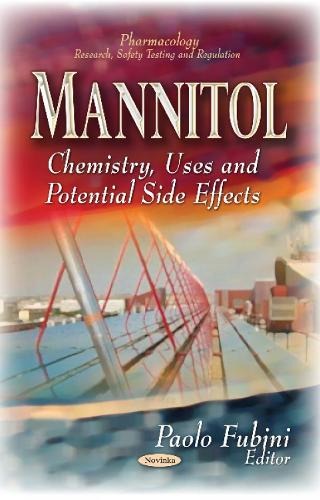
Mannitol : Chemistry, Uses and Potential Side Effects
Presents topical research in the study of the chemistry, uses and potential side effects of mannitol. Topics discussed include the utilization and production of D-mannitol by bacteria; concentration of mannitol and other soluble carbohydrates in the crustose lichen rhizocarpon geographicum; disease-related changes and mannitols use for clinical disorders; use of mannitol in thermal energy storage applications; and chiral phosphorous ligands derived from D-mannitol.

Managing Your Headaches
Frequent headaches seriously affect the lives of millions of sufferers. The result can be lost productivity and income, restrict activity, lower self-esteem, and even social isolation. For many, it takes years to find the appropriate medication to manage your headaches effectively. In Managing Your Headaches, Mark and Leah Green and John Rothrock explain what information you should record for your physician, what a physician is looking for in a neurological examination, and what you should (and should not) do to reduce the frequency and severity of your headaches. They discuss the effects of stress, psychological factors, possible food triggers, and environmental risk factors. The authors explain the symptoms of migraine, cluster, and tension-type headaches as well as less common types. They address common concerns and misconceptions and explain current knowledge about headache causes in understandable terms. The newest, most effective medications and their possible side effects are evaluated. The authors also explain how to prevent rebound headaches from over-medications and how non-medical treatments can be of value. Managing Your Headaches will tell you what you need to know to better control your headaches. Armed with the information in this book, you can be aware of the latest treatment options and can have more productive, informed discussions with your physician.

Longs COVID-19 patients
Nearly 250 million people around the world have recovered from Covid-19. But here, the word "recovered" refers only to the acute phase of the illness. Approximately 10 and 40 percent of Covid patients continue to experience symptoms several weeks to months after falling sick, a nebulous condition now referred to as post-Covid condition, or long Covid. In long Covid, we are witnessing the emergence of a legitimate new illness, officially recognized by the World Health Organization's International Classification of Diseases...
Local Anaesthesia in Dentistry
A comprehensive guide to the use of local anaesthesia in dentistry that will meet the needs of both students and dental practitioners. It provides the reader with ample background information on the origin of pain and the pharmacology of anaesthetics, and describes the anatomy of the trigeminal nerve in detail. Subsequent chapters cover key are as such as general practical aspects, local anesthaesia in the upper and the lower jaw, the use of local anaesthetics in children, local and systematic complications, and the prevention of side effects. Patients at particular risk of adverse effects are identified and attention drawn to significant legal aspects.

Liposomes as Drug Carriers
Patients have recently suffered from the side effects of a large number of drugs and from the weak pharmacological effect, due to the biokinetics and the difficulty of delivering the drug to the targeted cells, which negatively affected the therapeutic efficacy, creating an opportunity to discover nanometric carriers to load the active drug substances, so we covered in this research the most famous and widely used nanocarriers which are liposomes. We touched in some detail its composition, types, the relationship of structure to influence, methods of preparation, its delivery mechanism for the drug, and at the end of the research, we attached various applications in the field of therapeutic diagnostics and its role in cosmetics, cancers and many other fields.

Lasers in the Conservation of Artworks ; LACONA V Proceedings, Osnabrück, Germany, Sept. 15-18, 2003
Since 1995, when Costas Fotakis first brought together restorers and scientists to discuss the potential of lasers in art conservation, the field has grown enormously in importance, and today restorers and laser scientists work together to develop new applications. This book presents the more than six dozen research papers prepared for LACONA V (Lasers in Art Conservation), held in Osnabrueck/Germany in September 2003. The fifth congress once again gathers restorers, art historians, museum staff, laser scientists and laser manufacturers. The topics include, among others: laser cleaning of artworks (case studies and side effects), removal of former conservation layers, fundamentals of laser-artwork interaction, online monitoring and process control, laser diagnostics, spectroscopy for monitoring and identification, networks and co-operation projects.

Chia seeds : Tiny superfood, big impact
Chia (Salvia hispanica) is an annual herbaceous plant, the seeds of which were consumed already thousands of years ago. Current research results indicate a high nutritive value for chia seeds and confirm their extensive health-promoting properties. Research indicates that components of chia seeds are ascribed a beneficial effect on the improvement of the blood lipid profile, through their hypotensive, hypoglycemic, antimicrobial and immunostimulatory effects. This article provides a review of the most important information concerning the potential application of chia seeds in food production. The chemical composition of chia seeds is presented and the effect of their consumption on human health is discussed.
Cardiac drug therapy
Cardiac Drug Therapy, 7th ed., addresses the pharmacology and therapeutic application of drugs used to treat heart diseases and hypertension. Additions and updates to the sixth edition include six new chapters on current controversies in cardiac drug therapy such as the beta blocker issue many cardiologists are presently grappling with. The book provides practical advice on how to manage cardiac diseases and addresses the choice of one particular cardiac agent vs. another. In addition to providing core knowledge in cardiovascular therapeutics, the text assists in resolving some of the issues surrounding cardiac drugs. Cardiac Drug Therapy provides practical information including properties, dosage, side effects, potential salutary benefits, and drawbacks on virtually all commercially available cardiac drugs.
Cancer drug safety and public health policy : A changing landscape
Description and analysis of recent developments and current trends in health policy with regard to cancer drug safety. Opens with an overview of pharmacovigilance for cancer blockbuster drugs, covering both general considerations and efforts to develop a structured framework for the identification and reporting of adverse drug reactions (ADRs). A number of important examples of serious ADRs to hematology and oncology drugs are then reviewed, with evaluation of the lessons learned and the policy implications of the ensuing legal cases and their settlements. Further, the difficulty of reporting such blockbuster side effects in the medical literature is explored in an empirical study. Significant advances have been achieved in analytic methods for the identification of ADRs, and here there is a particular focus on the value of optimal discriminant analysis. Finally, the impacts on pharmacovigilance and drug safety of the huge fines paid under the U.S. False Claims Act relating to the defrauding of governmental programs also receive careful attention – these fines are playing an important role in changing the landscape for pharmaceutical safety.

Bisphosphonates in medical practice : Actions - side effects - indications - strategies
Clinical osteology is now an independent specialty which nevertheless encompasses all branches of medicine and effects each and every one of us: Bone is Every Body´s Business: This book has been designed as an up to date manual to deal with the currently recognized indications for bisphosphonates, to outline situations and conditions for prevention of skeletal disorders, and to provide practical guidelines for treatment. It is intended for doctors who seek precise information on bisphosphonates in medical practice to enable them to treat patients with disorders of bone or better still to avoid their occurrence .
Bioinformatics tools for pharmaceutical drug product development
Presents the latest information on bioinformatics tools, artificial intelligence, machine learning, computational methods, protein interactions, peptide-based drug design, and omics technologies. And include bioinformatics tools for the pharmaceutical sector and the healthcare sector. Bioinformatics brings a new era in research to accelerate drug target and vaccine design development, improving validation approaches as well as facilitating and identifying side effects and predicting drug resistance. As such, this will aid in more successful drug candidates from discovery to clinical trials to the market, and most importantly make it a more cost-effective process overall.
