



Page 2
Page 2

Handbook of International Insurance : Between Global Dynamics and Local Contingencies
The globalization of insurance markets means that understanding both international developments and local trends around the world is now fundamental for insurance executives coping with today’s complex and competitive environment. By providing such a comprehensive picture of the world’s insurance markets, this unique and necessary book becomes an essential tool for anyone seeking to operate wisely and successfully"This book depicts in an outstanding way the dichotomy of the insurance world today, which is still torn between global approaches and local solutions. Both insurance professionals and academics will profit enormously from its intelligent insights.

Fundamentals of operational risk management : Understanding and implementing effective tools, policies and frameworks
Threats to an organization's operations, such as fraud, IT disruption or poorly designed products, could result in serious losses. Understand the key components of effective operational risk management with this essential book for risk professionals and students. Outlines how to implement a sound operational risk management framework which is embedded in day-to-day business activities. It covers the main operational risk tools including categorisation, risk and control self-assessment and scenario analysis, and explores the importance of risk appetite and tolerance.

Fluctuation Theory for Lévy Processes : Ecole d'Eté de Probabilités de Saint-Flour XXXV - 2005
Lévy processes, i.e. processes in continuous time with stationary and independent increments, are named after Paul Lévy, who made the connection with infinitely divisible distributions and described their structure. They form a flexible class of models, which have been applied to the study of storage processes, insurance risk, queues, turbulence, laser cooling, ... and of course finance, where the feature that they include examples having "heavy tails" is particularly important. Their sample path behaviour poses a variety of difficult and fascinating problems

Financial Compensation for Victims of Catastrophes : A Comparative Legal Approach
Some countries have created a specific fund solution; others follow a generous ad hoc approach whereby large amounts of compensation are made available on an ex post basis. This book shall pay attention to all of these seemingly quite different solutions. Experts from different countries report on the way catastrophes are dealt with in their particular jurisdiction from the angle of tort law, social security, insurance or alternative compensation mechanisms such as compensation funds. Various possible remedies for victims are critically discussed; attention is also paid to the economic analysis of law.

Finance for Food : Towards New Agricultural and Rural Finance
Reflects the current state of discussion about agricultural and rural finance in developing and transition countries. It provides insight into specific themes, such as commodity value chains, farm banking, risk management in agricultural banking, structured finance, crop insurance, mobile banking, and how to increase effectiveness in rural finance. Case studies illustrate various aspects of agricultural and rural finance in developing economies. The book is based on one of the yearly financial Sector Development Symposia held by the KfW Development Bank.

Extremes in Nature : An Approach Using Copulas
The study of the statistics of extreme events is an essential first step in the mitigation of natural catastrophies, that often cause severe economic losses worldwide. This book is about the theoretical and practical aspects of the statistics of Extreme Events in Nature. Most importantly, this is the first text in which Copulas are introduced and used in Geophysics. Several topics are fully original, and show how standard models and calculations can be improved by exploiting the opportunities offered by Copulas. In addition, new quantities useful for design and risk assessment are introduced. Practicioners in all research areas of Geosciences and extreme events (including Finance and Insurance, closely related to natural disasters) will definitely benefit from the new Copula-approach outlined in the book.

European Tort Law 2006
The European Tort Law Yearbook provides a comprehensive overview of the latest developments in tort law in Europe. It contains reports on most EU Member States, including the new Member States the Czech Republic, Estonia, Hungary, Latvia, Lithuania, Poland, Slovakia and Slovenia. Furthermore, the Yearbook provides contributions from Norway and Switzerland, an overview of the developments in the field of EU law as well as a paper on Romanian tort law. In conclusion, a comparative summary reviews the essential aspects of all reports.

European Tort Law 2004
The European Tort Law Yearbook provides a comprehensive overview of the latest developments in tort law in Europe. It contains reports on the developments in most EU Member States, including the new Member States the Czech Republic, Estonia, Hungary, Latvia, Lithuania, Poland, Slovakia and Slovenia – as well as Norway and Switzerland. Furthermore, an overview of the developments in the field of EU law is provided. In conclusion, a comparative report reviews the essential aspects of all reports. The reports are written by scholars from the respective jurisdictions. Focusing on the year 2004, the authors critically report on important court decisions, present new legislation and provide a literature overview. In addition to the national reports, several essays on key topics in the field of tort law are included, most of which focus on questions of strict liability.

Essentials of Excel VBA, Python, and R Vol. I : Financial statistics and portfolio analysis
Teaches statistical analyses and research methods utilizing business case studies and financial data, with the applications of Excel VBA, Python and R. Each chapter engages the reader with sample data drawn from individual stocks, stock indices, options, and futures. Now in its second edition, it has been expanded into two volumes, each of which is devoted to specific parts of the business analytics curriculum. To reflect the current age of data science and machine learning, the used applications have been updated from Minitab and SAS to Python and R.

Empowered Enterprise Risk Management : Theory and Practice
In this book, two experts on the topic raise the question of why many ERM programmes end up as box-checking silos with almost no connection to important decision-making processes, whereas others are empowered and end up having a profound impact on the firm’s culture, governance structures, and strategy process. The book establishes a path to empowered ERM by drawing on insights from theory and hard-won lessons from practice.

Driving digital transformation through data and AI : A practical guide to delivering data science and machine learning products
Explains how to build the organizational capability to deliver Data and AI products and drive immediate business results as new digital technologies significantly disrupt business Provides best practices, tools and templates for managing the organizational and technological change process to become an AI-driven enterprise Includes a variety of international case studies across several industries such as insurance, fashion, consumer goods, finance, technology and automotive Outlines how to develop a product strategy, build teams and design the platform and architecture Provides key principles for sharing knowledge, educating staff on data and AI, and effectively engaging top executives

Developing a distributed medical system
Our project is a distributed medical system that is used by patients and multiple medical sectors such as doctors, pharmacists, analysis labs, hospitals, and medical insurance companies. The aim of the project is to add and store all the patient’s medical data in our system, such as previous treatments and past medical records from previous doctors, previous prescriptions and older lab test’s results, in addition, the insurance companies will have the ability to check on the medical treatment of its customers to do the necessary procedures needed for the them to perform their work. All of our actors are working in a secure and synchronized system in order to provide the best medical results possible, each actor has its own transactions to do in our system and can only manage and access the data allowed for him to perform his required job.

Demand Planning : Processi, metodologie e modelli matematici per la gestione della domanda commerciale = Demand Planning : Processes, methodologies and mathematical models for managing commercial demand
Il libro Demand Planning analizza metodi quantitativi, modelli matematici e processi aziendali per la gestione e la pianificazione della domanda commerciale delle aziende, relativa ai prodotti ed ai servizi realizzati.

Data-Driven Policy Impact Evaluation : How Access to Microdata is Transforming Policy Design
Provides statistical tools for evaluating the effects of public policies advocated by governments and public institutions. Experts from academia, national statistics offices and various research centers present modern econometric methods for an efficient data-driven policy evaluation and monitoring, assess the causal effects of policy measures and report on best practices of successful data management and usage. Topics include data confidentiality, data linkage, and national practices in policy areas such as public health, education and employment. It offers scholars as well as practitioners from public administrations, consultancy firms and nongovernmental organizations insights into counterfactual impact evaluation methods and the potential of data-based policy and program evaluation.

Data Quality and Record Linkage Techniques
This book helps practitioners gain a deeper understanding, at an applied level, of the issues involved in improving data quality through editing, imputation, and record linkage. The first part of the book deals with methods and models. Here, we focus on the Fellegi-Holt edit-imputation model, the Little-Rubin multiple-imputation scheme, and the Fellegi-Sunter record linkage model. Brief examples are included to show how these techniques work. In the second part of the book, the authors present real-world case studies in which one or more of these techniques are used. They cover a wide variety of application areas. These include mortgage guarantee insurance, medical, biomedical, highway safety, and social insurance as well as the construction of list frames and administrative lists.

Computer Vision and Internet of Things : Technologies and Applications
Explores the utilization of Internet of Things (IoT) with computer vision and its underlying technologies in different applications areas. Using a series of present and future applications – including business insights, indoor-outdoor securities, smart grids, human detection and tracking, intelligent traffic monitoring, e-health departments, and medical imaging – this book focuses on providing a detailed description of the utilization of IoT with computer vision and its underlying technologies in critical application areas, such as smart grids, emergency departments, intelligent traffic cams, insurance, and the automotive industry.
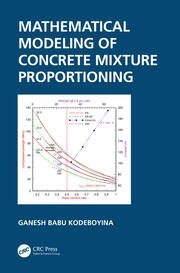
Mathematical Modeling of Concrete Mixture Proportioning
It puts together an understanding of the appropriate principles of ensuring performance and sustainability of concrete. Broadly subdivided into three parts, first part contains the fundamental aspects introducing the constituent materials, the concepts of concrete mixture designs and the mathematical formulations of the various parameters involved in these designs. The second part is dedicated to discussing approaches and recommendations of American, British and European bodies related to mathematical modelling. Lastly, it discusses perceptions and prescriptions towards both the performance assessment and insurance of the resulting concrete compositions.
Mathematical and Statistical Methods in Insurance and Finance
The interaction between mathematicians and statisticians reveals to be an effective approach to the analysis of insurance and financial problems, in particular in an operative perspective. The Maf2006 conference, held at the University of Salerno in 2006, had precisely this purpose and the collection here published gathers some of the papers presented at the conference and successively worked out to this aim. They cover a wide variety of subjects in insurance and financial fields, all treated in light of the successful cooperation between the two quantitative methods.
Market-Consistent Actuarial Valuation
It is a challenging task to read the balance sheet of an insurance company. This derives from the fact that different positions are often measured by different yardsticks. Assets, for example, are mostly valued at market prices whereas liabilities are often measured by established actuarial methods. Market-Consistent Actuarial Valuation presents powerful methods to measure liabilities and assets in the same way. The mathematical framework that leads to market-consistent values for insurance liabilities is explained in detail by the authors. Topics covered are Stochastic discounting, Valuation portfolio in life and non-life insurance, Asset and liability management, Financial risks, Insurance technical risks, and Solvency.
Managing Weather and Climate Risks in Agriculture
In many parts of the world, weather and climate are one of the biggest production risks and uncertainty factors impacting on agricultural systems performance and management. Both structural and non-structural measures can be used to reduce the impacts of the variability (including extremes) of climate resources on crop production. While the structural measures include strategies such as irrigation, water harvesting, windbreaks etc., the non-structural measures include use of seasonal to interannual climate forecasts, improved application of medium-range weather forecasts and crop insurance. This book based on an International Workshop held in New Delhi, India should be of interest to all organizations and agencies interested in improved risk management in agriculture.
