


Refine Results
Sort By
From
To

This book evaluates, from an economic perspective, various measures introduced in Japan to prevent climate change. Although various countries have implemented such policies in response to the pressing issue of climate change, the effectiveness of those programs has not been sufficiently compared.
Sustainable development, climate policy, and biodiversity conservation are examples of issues on the current political agenda in many countries. These themes are also subject to economic research, and economic insights are increasingly finding their way into the design of environmental policy. Still, the reception of academic findings by policy makers as well as the timely identification of policy-relevant questions by economic researchers often seem to be problematic. This volume attempts to vitalise the exchange between policy makers and academics. It offers a snapshot of environmental economic research on a range of policy-relevant problems.
This book demonstrates how bounded rational decision models can be standardized and parameterized by socio-economic data. Focusing on private energy technology investment decisions, the author shows how different representative agents can be constructed using search rules, analysis tools and decision strategies. Diffusion curves for energy technologies such as solar collectors, boilers and efficiency upgrades for buildings are calculated. Further, the model is extended to study the impact of firms’ competition on technology diffusion. The modeling approach presented in this book may serve as a template for applications in other domain.
The following issues are addressed: background issues on climate change, whole-life performance and design collaboration generic strategies for energy efficient, low-carbon design health and wellbeing and post occupancy evaluation building ventilation air conditioning and HVAC system selection thermal energy generation and distribution systems low-energy approaches for thermal control electrical systems, data collection, controls and monitoring building thermal load assessment building electric power load assessment space planning and design integration with other disciplines.
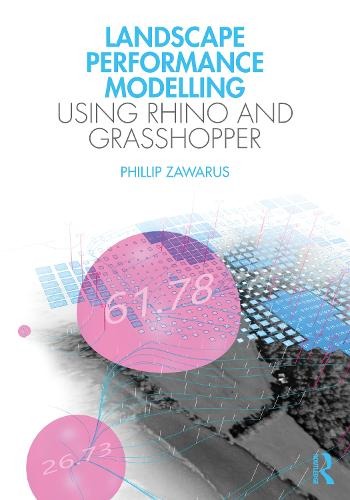
A guidebook for landscape architects to learn the fundamental practices and use of the computational software Rhino 3D and the plugin Grasshopper for parametric modeling, landscape inventory, and performative analysis. This process visually connects intangible and abstract information with physical and spatial relationships to signify the impact ecological, climate, and cultural factors have on landscape performance and decision making.
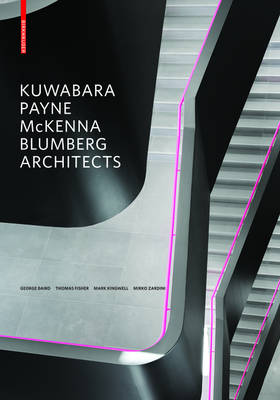
Kuwabara Payne McKenna Blumberg Architects, founded in 1987 in Toronto, is one of most innovative architectural offi ces in North America today. They have made a name for themselves both for their integrated design process embodying collaboration with experts, clients and future users as well as the diversity of their aesthetically refined and finely detailed designs. The work ranges from cultural institutions such as the Toronto International Film Festival and Orchestra Hall in Minneapolis to ecologically innovative concepts such as Manitoba Hydro Place in Winnipeg, developed with leading climate engineers Transsolar of Stuttgart.
In the search for sustainable architecture, there is growing interest in the relationship between nature and design. In this context, Bioclimatic Housing covers creative, vernacular architecture to present both the theory and practice of innovative, low-energy architecture.The book interweaves the themes of social progress, technological fixes and industry transformation within a discussion of global and country trends, climate types, solutions and technologies. this is a truly international and authoritative work, providing an essential primer for building designers, builders, developers and advanced students in architecture and engineering.
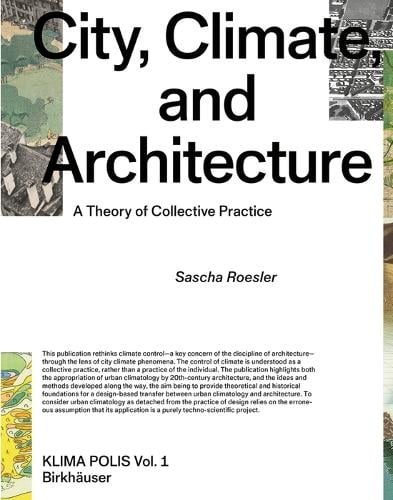
Based on a history of climate control on urban scales, it promotes the integration of indoors and outdoors in order to reduce environmental and thermal loads in cities. Just as heating and cooling practices inside the buildings are affecting the (urban) climate outdoors, urban heat islands are influencing the energy requirements and thermal conditions inside the buildings. While the first part of the book focuses on the interwar period in Europe, the publication’s second part considers examples from all over the globe, tracing the growing significance of ecological thinking for the design of urban environments.
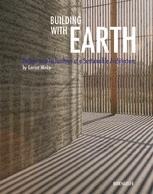
For a number of years, the healthy and environment-friendly building material earth, in common use for thousands of years, has been enjoying increasing popularity, including in industrialized nations. In hot dry and temperate climate zones, earth offers numerous advantages over other materials. Its particular texture and composition also holds great aesthetic appeal.
Provides the readers with a timely guide to the application of biomimetic principles in architecture and engineering design. As a result of a combined effort by two internationally recognized authorities, the biologist Werner Nachtigall and the architect Göran Pohl, the book describes the principles which can be used to compare nature and technology, and at the same time it presents detailed explanations and examples showing how biology can be used as a source of inspiration and “translated” in building and architectural solutions (biomimicry). Even though nature cannot be directly copied, the living world can provide architects and engineers with a wealth of analogues and inspirations for their own creative designs. But how can analysis of natural entities give rise to advanced and sustainable design? By reporting on the latest bionic design methods and using extensive artwork, the book guides readers through the field of nature-inspired architecture, offering an extraordinary resource for professional architects, engineers, designers and urban planners, as well as for university teachers, researchers and students.
This book offers an optimistic view of the future and provides a road map for societies to get there. Drawing upon extensive research and many years as a thought leader in environmental and sustainability issues in Japan and internationally, Hiroshi Komiyama analyzes the most pressing challenges to the attainment of sustainability of economically advanced nations and argues forcefully for Japan to lead them out of the present dilemma through active promotion of creative consumer and societal demand. He shows how an active industry–government–academic partnership can provide the environment needed to promote such new creative demand and illustrates its potential through presentation of a Platinum Society Network that was launched on a regional basis in Japan in 2010 to facilitate the solution of common issues through the exchange of information and ideas.
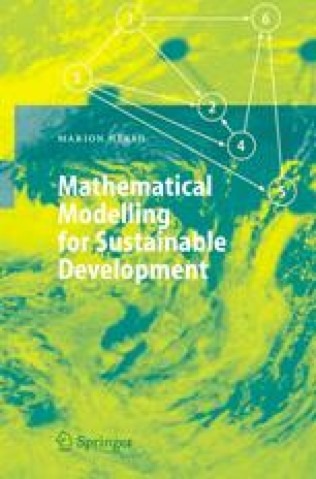
Mathematics needs Sustainable Development. When science was gradually reinvented in European medieval societies, it was legitimised as contributing to the disclosure of God’s divine creation. The conflicts that emerged became well known as a result of the clash between Galileo and the Church. Science found a new legitimacy through recognition that it was a powerful force against superstition. In the Enlightenment the argument was pushed forward by attributing Progress to the advancement of science: science could produce a better world by promoting rationality. In our modern society, science has become intimately linked to technology. Science for its own sake unfortunately rarely has positive outcomes in terms of research grant applications. Meanwhile, science and technology, and the progress they are supposed to produce, meet with wide scale scepticism. We all know of the current global problems: climate change, resource depletion, a thinning ozone layer, space debris, declining biodiversity, malnutrition, dying ecosystems, global inequity, and the risk of unprecedented nuclear wars
Since 1980 a considerable amount of scientific research dealing with geochemical processes in marine sediments has been carried out. This textbook summarizes the state of the art in this field of research. The topics comprise the examination of sedimentological and physical properties of the sedimentary solid phase, of pore water and pore water constituents, organic matter as the driving force of most microbiological processes, biotic and abiotic redox reactions, carbonates and stable isotopes as proxies for paleoclimate reconstruction, metal enrichments in ferromanganese nodules and crusts as well as in hot vents and cold seeps on the seafloor. A new chapter describes properties, occurrence and formation of gas hydrates in marine sediments. The textbook ends with a chapter on model conceptions and computer models to quantify processes of early diagenesis.
In many parts of the world, weather and climate are one of the biggest production risks and uncertainty factors impacting on agricultural systems performance and management. Both structural and non-structural measures can be used to reduce the impacts of the variability (including extremes) of climate resources on crop production. While the structural measures include strategies such as irrigation, water harvesting, windbreaks etc., the non-structural measures include use of seasonal to interannual climate forecasts, improved application of medium-range weather forecasts and crop insurance. This book based on an International Workshop held in New Delhi, India should be of interest to all organizations and agencies interested in improved risk management in agriculture.
Addresses the need for sharing knowledge and experience in the field of biodiversity conservation and climate change. There is an urgent need to build capacity in protected areas to monitor, assess, manage and report the effects of climate change and their interaction with other pressures. The contributors identify barriers to the adaptation of conservation management, such as the mismatch between planning reality and the decision context at site level. Short and vivid descriptions of case studies, drawn from investigation areas all over Central and Eastern Europe, illustrate both the local impacts of climate change and their consequences for future management.
With climate change now charging up the political agenda, there are three issues commonly making the headlines: carbon budgets, renewable energy, and the anticipated impacts of climate change. Equally important, though currently less well covered, is the issue how these effects might be mitigated. Given the significant role that forests play in the climate system – as sources, sinks, and through carbon trading – this book discusses the current scientific evidence on the relationships between climate, forest resources and forest management practices around the world. Drawing on expertise from forest scientists from several continents, the book presents both in depth analysis of the current knowledge, and a series of case studies which assess the biological and the economic impacts of climate change. It includes sections on forest responses to climate change, monitoring and modeling changes, economic and management implications, and carbon sequestration under specific management systems.
Macro-engineering involves the large-scale modification and manipulation of natural systems for the benefit of mankind. The primary goals of some Earth-based macroprojects described in this book are power production, land reclamation, food production, climate change, environment, water, transport and coastal protection. Other Earth or space projects considered here have a more futuristic ring, but our present-day technical skill makes their realization possible. Earth-based macroprojects usually combine different aspects and aims. They have a major impact on the ecology of a region and the inhabitants' means of living (like tourism, fishing, shipping). Its effects may be felt worldwide, like the rise in global sea level after the damming and evaporation of large ocean gulfs for power production, or the change in climate following the regional reduction of solar insolation.
Takes an in-depth look at Louisiana as a state which is ahead of the curve in terms of extreme weather events, both in frequency and magnitude, and in its responses to these challenges including recovery and enhancement of resiliency.
Provides an authoritative insight on the Loss and Damage discourse by highlighting state-of-the-art research and policy linked to this discourse and articulating its multiple concepts, principles and methods. Written by leading researchers and practitioners, it identifies practical and evidence-based policy options to inform the discourse and climate negotiations. With climate-related risks on the rise and impacts being felt around the globe has come the recognition that climate mitigation and adaptation may not be enough to manage the effects from anthropogenic climate change.

The remote mountain loch of Lochnagar is one of the most studied freshwater bodies in Europe. This book brings together knowledge gained over two decades of multi-disciplinary scientific study, with the results of lake sediment research covering millennia, to show how the loch has developed both naturally and as a result of human impact

Daraa Highway - Ghabagheb - Syria
+963-15 2050 - 15 860 380 /1/2/3 - 11 662 3900