


Refine Results
Sort By
From
To

This book provides an overview of the most recent techniques, agents and approaches for breast cancer that contribute to the individualization of treatment. Current biomedical research focuses on facilitating the transfer of molecular biology knowledge into the clinical management of patients, leading to increased survival as well as improved quality of life. Particular attention is given in this book to organ-specific tailored approaches, specific populations, patients’ preferences and rehabilitation.
This text is intended to provide an overview of brain death. The topics explored in this book are the concept and historical approach of human death, clinical examinations of brain-dead patients, ancillary tests in coma and brain death, bioethical discussions of brain death and its relationship with some consciousness disturbances, and the legal considerations of human death.
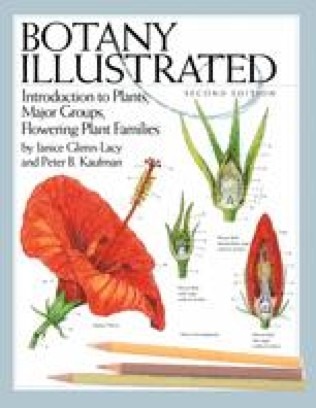
This easy-to-use book helps you acquire a wealth of fascinating information about plants. There are 130 pages with text, each facing 130 pages of beautiful illustrations. Each page is a separate subject. Included is a coloring guide for the realistic illustrations. The illustration pages are composed of scientifically accurate line drawings with the true sizes of the plants indicated. Using colored pencils and the authors’ instructions, you can color the various plant structures to stand out in vivid clarity. Your knowledge of plants increases rapidly as you color the illustrations.
The book emphasizes the different techniques that are used for the production of biosurfactants from microorganisms and their characterization. Various aspects of biosurfactants, including structural characteristics, developments, production, bio-economics and their sustainable use in the environment and biomedicine, are addressed, and the book also presents metagenomic strategies to facilitate the discovery of novel biosurfactants producing microorganisms.
Source of the latest innovative research and technical development in biomanufacturing systems. It is organised into 2 parts: 1) Manufacturing of recombinant therapeutic proteins (e.g. therapeutic antibodies, biosimilars/biogenerics) and 2) Manufacturing aspects of cell and gene therapy. Each with selected chapters on the following topics for both up- and downstream, such as: Advanced process strategies, especially continuous manufacturing, Advanced culture techniques, especially single-use systems, Process transfer, scale-up/scale-down models, Processing advances/Manufacturing productivity/efficiency, Model-assisted process understanding and development/Digital Twins, Process controls and analytics, Quality control, Quality by design, Facility design and full-scale commercial systems, manufacturing technology innovation.
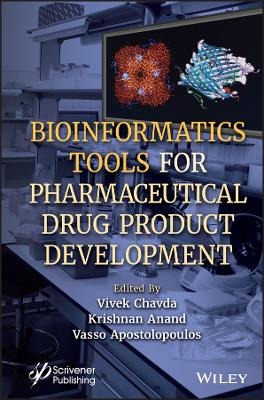
Presents the latest information on bioinformatics tools, artificial intelligence, machine learning, computational methods, protein interactions, peptide-based drug design, and omics technologies. And include bioinformatics tools for the pharmaceutical sector and the healthcare sector. Bioinformatics brings a new era in research to accelerate drug target and vaccine design development, improving validation approaches as well as facilitating and identifying side effects and predicting drug resistance. As such, this will aid in more successful drug candidates from discovery to clinical trials to the market, and most importantly make it a more cost-effective process overall.
This volume tends to focus on the biology of biofilms that affect human disease. It opens with chapters that provide the reader with current perspectives on biofilm development, physiology, environmental and regulatory effects, the role of quorum sensing, and resistance/phenotypic persistence to antimicrobial agents during biofilm growth. The next chapters are devoted to common problematic biofilms, those that colonize venous and urinary catheters. The final series of chapters examines biofilm formation by four species that are important pathogens and well studied models, one of which, Yersinia pestis, cleverly adopts a biofilm state of growth within its insect vector to promote disease transmission to mammalian hosts.
Soft drinks with pHs lower than 4. 0 are subjected to minimum pasteuri- tion at 65 °C for 10 min as required by the Japanese Food Sanitation Law. Not only pathogenic bacteria but most spore-forming bacteria are unable to grow at this low pH condition, and thus reports of microbial spoilage in pasteurized acidic soft drinks are rare. Since 1982, when the spoilage of aseptically packed apple juice was - tributed to a new type of acidophilic spore-forming bacteria in Germany, a succession of similar complaints regarding other fruit juice concentrates and their products has been received. In the beginning, the bacteria were classified in the genus Bacillus, but later, in 1992, the new genus Ali- clobacillus was proposed owing to their characteristic cellular membranes containing omega-alicyclic fatty acids. A group of Alicyclobacillus strains, responsible for the tainting of fruit juices, was then described as A. a- doterrestris in 1999. They are acidophilic and grow preferably at around pH 4. 0. They are thermophilic and grow better at temperatures above 40 °C. This indicates that we might have been missing them by our or- nary methods of bacterial detection at pH 7. 0 and 35 °C.
Focuses on current progress in the broad field of medical microbiology, and covers both basic and applied topics related to the study of microbes, their interactions with human and animals, and emerging issues relevant for public health. Original research and review articles present and discuss multidisciplinary findings and developments on various aspects of microbiology, infectious diseases, and their diagnosis, treatment and prevention.
Discusses of the latest technology and advancements in the field of human-derived ASC and SVF. The chapters in this book are organized into four parts. Part One focuses on human ASC’s isolation, characterization, and differentiation. Part Two describes the isolation and characterization of ASC and SVF from canine, feline, and murine tissues. Part Three looks at hydrogels, scaffolds, and microphysiological systems, and Part Four talks about the new assays and applications using ASC. Written in the highly successful Methods in Molecular Biology series format, chapters include introductions to their respective topics, lists of the necessary materials and reagents, step-by-step, readily reproducible laboratory protocols, and tips on troubleshooting and avoiding known pitfalls.
The general practitioner finds himself alone in the face of difficult and urgent situations. Her internship years taught her to work with the nursing team. At the patient's home, he must act alone with "the means at hand". To have known these difficulties, we conceived this work: it is intended to be a simple, effective and complete help. It sums up what we have learned from the “field”. It complies with scientific recommendations.
A Sea Change in a Changing Sea The oceans, seas and coastal areas encompass over 70% of the earth’s surface. They are a critical driver of the earth’s hydrologic cycle and climate system, important for c- merce, transport, and tourism, a source of economically important living marine resources, minerals such as hydrocarbons, as well as new pharmaceutical compounds. The marine environment provides essential habitats for thousands of marine living 1 2 resources, which in turn contribute significantly to global food security, employment, 3 and trade. Overall, the sea’s contribution to human welfare, in terms of market and non-market resources and environmental services, has been estimated at US$21 trillion/year (Costanza, 2000). However, despite the importance of the ocean realm to humans, there is a growing sense that human impacts are destabilizing this system. Some experts believe that current fishing levels are approaching or exceeding the total 4 productivity of the ocean ecosystem (National Research Council, 1999).
This book traces humanity’s long experience of natural amputations due to congenital absence, disease, frostbite, toxins, domestic and wild animal trauma, and for non-medical reasons related to punitive, ritual, and legal actions, ultimately leading to the development of elective surgical amputation. While the evolution of surgical techniques forms a major chapter in the book, many ancillary problems are addressed including the control of hemorrhage and infection, the approach to pain relief, the development of suitable instruments and equipment, and the invention of prostheses, all suitably illuminated with case histories and relevant illustrations. In addition, alternative procedures designed to avoid amputation, increasingly important in the last two centuries, are debated, and factors associated with self-amputation in extremis, not rare according to press reports, are also examined. A separate chapter considers the philosophy and interpretations of society, patients, and surgeons faced with amputation, particularly before anesthesia.
This book shows the factors linking information flow, social intelligence, rights management and modelling with epistemic democracy, offering licensed linked data along with information about the rights involved. This model of democracy for the web of data brings new challenges for the social organisation of knowledge, collective innovation, and the coordination of actions. Licensed linked data, licensed linguistic linked data, right expression languages, semantic web regulatory models, electronic institutions, artificial socio-cognitive systems are examples of regulatory and institutional design (regulations by design). The web has been massively populated with both data and services, and semantically structured data, the linked data cloud, facilitates and fosters human-machine interaction. Linked data aims to create ecosystems to make it possible to browse, discover, exploit and reuse data sets for applications. Rights Expression Languages semi-automatically regulate the use and reuse of content.

This volume is a selection of essays taken from the excellent range of papers presented at the British Legal History Conference hosted by the Institute for Legal and Constitutional Research at the University of St Andrews, 10-13 July 2019. The theme of the conference gives this book its title: 'comparative legal history'. The topic came easily to the organisers because of their association with the St Andrews-based European Research Council Advanced grant project 'Civil law, common law, customary law: consonance, divergence and transformation in Western Europe from the late eleventh to the thirteenth centuries'.
Showcase novel use-cases and applications, present empirical research results from user-centered qualitative and quantitative experiments of these new applications, and facilitate a discussion forum to explore the latest trends in big data and machine learning by providing algorithms which can be trained to perform interdisciplinary techniques such as statistics, linear algebra, and optimization and also create automated systems that can sift through large volumes of data at high speed to make predictions or decisions without human intervention
Content management, blogs, and online forums are among the most significant online trends today, and Drupal, phpBB, and WordPress are three of the most popular open source applications facilitating these trends. Drupal is a full content management system that allows you to create any type of website you desire, from an e-commerce to a community-based site. phpBB enables you to set up a bulletin board or forum. And WordPress is the software of choice for the exploding blog community. All three technologies are based on PHP and MySQL.
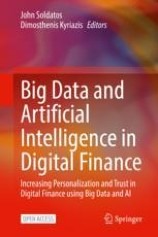
This book presents how cutting-edge digital technologies like Machine Learning, Artificial Intelligence (AI), and Blockchain are set to disrupt the financial sector. The book illustrates how recent advances in these technologies facilitate banks, FinTechs, and financial institutions to collect, process, analyze, and fully leverage the very large amounts of data that are nowadays produced and exchanged in the sector. To this end, the book also introduces some of the most popular Big Data, AI and Blockchain applications in the sector, including novel applications in the areas of Know Your Customer (KYC), Personalized Wealth Management and Asset Management, Portfolio Risk Assessment, as well as variety of novel Usage-based Insurance applications based on Internet-of-Things data.
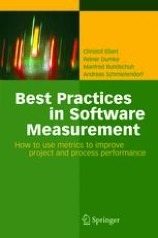
Not everything that counts can be counted. Not everything that is counted counts. Albert Einstein This is a book about software measurement from the practitioner’s point of view and it is a book for practitioners. Software measurement needs a lot of practical guidance to build upon experiences and to avoid repeating errors. This book t- gets exactly this need, namely to share experiences in a constructive way that can be followed. It tries to summarize experiences and knowledge about software measurement so that it is applicable and repeatable. It extracts experiences and lessons learned from the narrow context of the specific industrial situation, thus facilitating transfer to other contexts. Software measurement is not at a standstill. With the speed software engine- ing is evolving, software measurement has to keep pace. While the underlying theory and basic principles remain invariant in the true sense (after all, they are not specific to software engineering), the application of measurement to specific contexts and situations is continuously extended. The book thus serves as a ref- ence on these invariant principles as well as a practical guidance on how to make software measurement a success.
Beginning Perl Web Development: From Novice to Professional introduces you to the world of Perl Internet application development. This book tackles all areas crucial to developing your first web applications and includes a powerful combination of real-world examples coupled with advice. Topics range from serving and consuming RSS feeds, to monitoring Internet servers, to interfacing with e-mail. You'll learn how to use Perl with ancillary packages like Mason and Nagios. Though not version-specific, this book is an ideal read if you have had some grounding in Perl basics and now want to move into the world of web application development. Author Steve Suehring emphasizes the security implications of Perl, drawing on years of experience teaching readers how to think safe, avoid common pitfalls, and produce well-planned, secure code.

Daraa Highway - Ghabagheb - Syria
+963-15 2050 - 15 860 380 /1/2/3 - 11 662 3900