



Page 185
Page 185

Artificial intelligence and simulation ; 13th international conference on AI, simulation, and planning in high autonomy systems, AIS 2004, Jeju Island, Korea, October 4-6, 2004, Revised Selected Papers
This volume is the proceedings of AIS 2004. The AI, Simulation and Planning in High Autonomy Systems (AIS) 2004 C- ference was held on Korea, AIS 2004 was the thirteenth in the series ofbiennial conferences on AI and simulation. The conf- enceprovidedthemajorforumforresearchers ,scientistsandengineerstopresent the state-of-the-art research results in the theory and applications of AI, si- lation and their fusion. This volume includes the invited speakers’ papers, along with thepapers presented in the conference.In addition to the scientific tracks presented.
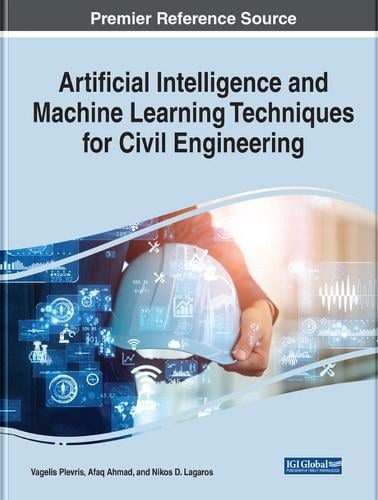
Artificial intelligence and machine learning techniques for civil engineering
Offers state-of-the-art contributions in the area of AI and its applications in the field of civil engineering presenting methods and implementation of AI and machine learning in multiple facets of civil engineering
Artificial intelligence and machine learning in health care and medical sciences : Best practices and pitfalls
Provides a detailed review of the latest methods and applications of artificial intelligence (AI) and machine learning (ML) in medicine. With chapters focusing on enabling the reader to develop a thorough understanding of the key concepts in these subject areas along with a range of methods and resulting models that can be utilized to solve healthcare problems, the use of causal and predictive models are comprehensively discussed. Care is taken to systematically describe the concepts to facilitate the reader in developing a thorough conceptual understanding of how different methods and resulting models function and how these relate to their applicability to various issues in health care and medical sciences. Guidance is also given on how to avoid pitfalls that can be encountered on a day-to-day basis and stratify potential clinical risks.

Artificial intelligence and knowledge engineering applications : A bioinspired approach ; 1st international work-Conference on the interplay between natural and artificial computation, IWINAC 2005, Las Palmas, Canary Islands, Spain, June 15-18, 2005, Proceedings, Part II
The computational paradigm considered here is a conceptual, theoretical andformal framework situated above machines and living creatures (two instantia-tions), sufficiently solid, and still non-exclusive, that allows us:1. to help neuroscientists to formulate intentions, questions, experiments, meth-ods and explanation mechanisms assuming that neural circuits are the psy-chological support of calculus;2. to help scientists and engineers from the fields of artificial intelligence (AI)and knowledge engineering (KE) to model, formalize and program the com-putable part of human knowledge;3. to establish an interaction framework between natural system computation(NSC) and artificial system computation (ASC) in both directions, fromASC to NSC (in computational neuroscience), and from NSC to ASC (inbioinspired computation).

Artificial intelligence and innovations 2007 : from theory to applications ; Proceedings of the 4th IFIP International Conference on Artificial Intelligence Applications and Innovations (AIAI2007)
This book brings together leading research from engineers and practitioners interested in the technical advances, business and industrial applications of intelligent systems.It is focused on providing insights on how AI can be implemented in real world applications. Intelligent Internet Systems: Emerging Technologies and Applications
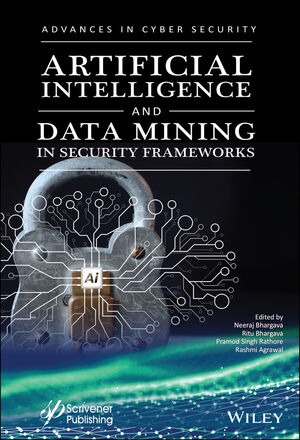
Artificial intelligence and data mining approaches in security frameworks
Offers solutions to the problems of security, outlining the concepts behind allowing computers to learn from experience and understand the world in terms of a hierarchy of concepts, with each concept defined through its relation to simpler concepts. provides state of the art approaches of artificial intelligence and data mining in these areas. It includes areas of detection, prediction, as well as future framework identification, development, building service systems and analytical aspects. In all these topics, applications of AI and data mining, such as artificial neural networks, fuzzy logic, genetic algorithm and hybrid mechanisms, are explained and explored. This book is aimed at the modeling and performance prediction of efficient security framework systems, bringing to light a new dimension in the theory and practice. This groundbreaking new volume presents these topics and trends, bridging the research gap on AI and data mining to enable wide-scale implementation. Whether for the veteran engineer or the student, this is a must-have for any library. This groundbreaking new volume: Clarifies the understanding of certain key mechanisms of technology helpful in the use of artificial intelligence and data mining in security frameworks ; Covers practical approaches to the problems engineers face in working in this field, focusing on the applications used every day ; Contains numerous examples, offering critical solutions to engineers and scientists ; Presents these new applications of AI and data mining that are of prime importance to human civilization as a whole
Artificial Intelligence and COVID Effect on Accounting
This book considers the effects of COVID-19 on accounting, particularly with regard to the role of artificial intelligence in accounting in the post-pandemic business environment. The contributions in the book consider a variety of sectors that have been affected by the pandemic, such as the stock market, forensic accounting, Bitcoin, as well as the economic and educational responses to the pandemic and the aftermath felt by both developing and developed countries.

Artificial intelligence : Theories, models and applications ; 5th Hellenic Conference on AI, SETN 2008, Syros, Greece, October 2-4, 2008. Proceedings
This book constitutes the refereed proceedings of the 5th Hellenic Conference on Artificial Intelligence, SETN 2008, held at Syros, Greece in October 2008.

Artificial intelligence : The revolution of drug discovery
The successful application of AI is dependent on the availability of high-quality data, the addressing of ethical concerns, and the recognition of the limitations of AI-based approaches. Moreover artificial intelligence has been a game changer in the past decade. AI proved his worth by making the impossible possible in a short period of time. The health care industry has adopted artificial intelligence technology to deal with the ever-changing therapeutic and drug requirements of patients every day, as we encounter new viruses for which no antidote has been prepared, such as the Corona virus, diseases such as malaria, and the most important problem is the resistance to antibiotics by superbugs that are constantly developing new resistance mechanisms causing harm and confusion.

Artificial intelligence : Methodology, systems, and applications ; 13th International Conference, AIMSA 2008, Varna, Bulgaria, September 4-6, 2008. Proceedings
This book constitutes the refereed proceedings of the 13th International Conference on Artificial Intelligence: Methodology, Systems, and Applications, AIMSA 2008, held in Varna, Bulgaria in September 2008.

Artificial intelligence : Methodology, systems, and applications ; 12th International Conference, AIMSA 2006, Varna, Bulgaria, September 12-15, 2006, Proceedings
This book constitutes the refereed proceedings of the 12th International Conference on Artificial Intelligence: Methodology, Systems, and Applications, AIMSA 2006. The 28 revised full papers presented together with the abstracts of 2 invited lectures were carefully reviewed and selected from 81 submissions. The papers are organized in topical sections on agents, constraints and optimization, user concerns, decision support, models and ontologies, machine learning, ontology manipulation, natural language processing, and applications.

Artificial intelligence : Methodology, systems, and applications ; 10th International Conference, AIMSA 2002, Varna, Bulgaria, September 4-6, 2002. Proceedings
The AIMSA conference series was frst conceived in 1984 as a gathering of AI researchers and students from Eastern and Central Europe.Sincethenthecon- rence has followed a biennial schedule of meetings in Bulgaria, attracting parti- pantsfrom awidergeographicalarea.The AIMSA organizers are delighted to present you with another exciting program, coveringmostareasof Artifcial Intelligence.Inkeepingwithitsm- sion to inform the research community and excite the commercial sector, AIMSA presents this year two invited contributions from world-leading European rese- chersworkingoncutting-edgeAIresearch: Prof.CaroleGoble, ontheSemantic Web.
Artificial Intelligence : Applications and innovations
It's about the science of artificial intelligence (AI). AI is the study of the design of intelligent computational agents. This book provides a valuable resource for researchers, scientists, professionals, academicians and students dealing with the new challenges and advances in the areas of AI and innovations. This book also covers a wide range of applications of machine learning such as fire detection, structural health and pollution monitoring and control. Provides insight into prospective research and application areas related to industry and technology / Discusses industry- based inputs on success stories of technology adoption / Discusses technology applications from a research perspective in the field of AI / Provides a hands- on approach and case studies for readers of the book to practice and assimilate learning

Artificial immune systems ; Vol. 3627 ; 4th International conference, ICARIS 2005, Banff, Alberta, Canada, August 14-17, 2005, Proceedings
Your immune system is unique. It is in many ways as complex as your brain, butit is not centred in one location, like the brain. It is not a single organ—it consistsof many different cell types, diverse methods of intercellular communication, andmany different organs. Its functionality is blurred throughout you—we can’textract the immune system, or point to where it begins and ends. The immunesystem is not separable from the system it protects. It has integral links to everyorgan of our bodies.This has radical implications for the field of Artificial Immune Systems (AIS),that we are only now beginning to comprehend. One of the first insights is thatmodelling the immune system, or developing any kind of immune algorithm, isdifficult. The immune system is one aspect of biology that we find difficult toapply simple reductionist explanations to. We can very successfully extract sub-processes of the whole and create immune algorithms based on those processes.

Artificial immune systems ; 6th International Conference, ICARIS 2007, Santos, Brazil, August 26-29, 2007, Proceedings
This book contains sections on search and optimization, classification and clustering, anomaly detection and negative selection, robotics, control and electronics. Modeling papers, conceptual papers, and technical papers and general applications are also included.
Artificial economics : Agent-based methods in finance, game theory and their applications
The purpose of this book is to give an up-to date view of the scientific production in the fields of Agent-based Computational Economics (mainly in Market Finance and Game Theory). Based on communications given at AE'2005 (Lille, USTL, France), this book offers a wide panorama of recent advances in ACE (both theoretical and methodological) that will interest academics as well as practitioners.

Articulated Motion and Doformable Objects ; 4th International Conference, AMDO 2006, Port d'Andratx, Mallorca, Spain, July 11-14, 2006, Proceedings
The subject of the conference was ongoing research in articulated motionon a sequence of images and sophisticated models for deformable objects. Thegoals of these areas are to understand and interpret the motion of complexobjects that can be found in sequences of images in the real world. The maintopics considered as priority were: geometric and physical deformable models,motion analysis, articulated models and animation, modelling and visualizationof deformable models, deformable models applications, motion analysis applica-tions, single or multiple human motion analysis and synthesis, face modelling,tracking, recovering and recognition models, virtual and augmentedreality, haptics devices, biometrics techniques.

Aritmetica, crittografia e codici = Arithmetic, cryptography and codes
The basic techniques of algebra and number theory useful in recent applications to cryptography and codes are developed, with the aim of being elementary and self-sufficient. The emphasis is on computational problems. This part of the volume can be useful as a textbook for a first course in algebra for mathematicians, computer scientists or engineers. Important applications of algebra and geometry to cryptography and codes are then illustrated. Both, cryptography and codes have significant applications in daily life which are illustrated here. Cryptography is developed in detail in much of its classic and current aspects, and both private and public key cryptography are developed. Cryptography with the use of elliptic curves on finite fields is also illustrated. A chapter introducing the subject is dedicated to linear codes.

Arid Dune Ecosystems: The Nizzana Sands in the Negev Desert
Sand dune dynamics plays a key role in many arid deserts. This volume provides a synthesis of a specific sand dune ecosystem, the Nizzana site in the Negev Desert. Describing its climate and geophysical/geochemical properties of soils, geological history, flora and fauna, and past/present land-use patterns, it elucidates ecological and geomorphological processes and their interrelations, based on long-term monitoring, in situ experiments and satellite imagery. Particular attention is drawn to the impact of the topsoil biological crust in controlling water availability at local/regional scales. The interdisciplinary approach adopted in this case study offers a good example of a highly complex and dynamic system, which could easily be applied to other sandy ecosystems.

Argumentation in multi-agent systems ; Vol. 3366 ; 1st International Workshop, ArgMAS 2004, New York, NY, USA, July 19, 2004, revised selected and invited papers
The theory of argumentation is a rich, interdisciplinary area of research lying across philosophy, communication studies, linguistics, and psychology (at least). Its techniques and results have found a wide range of applications in both t- oretical and practical branches of arti'cial intelligence and computer science. Several theories of argumentation with various semantics have been proposed in the literature. Multi-agent systems theory has picked up argument-inspired approaches and speci'cally argumentation-theoretic results from many di'erent areas. The community of researchers in argumentation and multi-agent systems is currently presented with a unique opportunity to integrate the various und- standings of argument into a coherent and core part of the functioning of - tonomouscompu...
