


Refine Results
Sort By
From
To


There are several crucial feedbacks from forests to the climate system. The mechanisms for those feedbacks are elaborated in the book: they involve changes in the carbon cycle, albedo, N2O emissions and the production of aerosols. Much of this work is new and the feedback relationships have not yet been incorporated into models of the climate system. The book will be an important introduction for students and climate modellers alike, providing conceptual tools and ideas that are broadly applicable to terrestrial systems.
Bone Resorption, the second volume in the series Topics in Bone Biology, deals with the osteoclast, the bone-resorbing cell, its origins, its enzymes, the regulation of osteoclast activity, and structural aspects of bone resorption. Diseases involving osteoclast function are discussed from the genetic viewpoint in two chapters that span transgenic mouse models to human pathology. Another chapter treats diseases of osteoclast function. Because osteoporosis may be considered a disease in which the bone resorption rate exceeds formation, a separate chapter deals with current and potential therapeutic approaches to this widespread disease that affects both men and women. Bone metastases and an analysis of the central role of the osteoclast in this condition are treated in the concluding chapter.
Bone and Osteoarthritis places emphasis on the molecular and cellular events that lead to osteoarthritis, stressing the role of subchondral bone, which distinguishes this from other books on the disease.

This book explores the problem of male and female circumcision in modern society from religious, anthropological, psychological, medical, legal, and ethical perspectives. Bodily Integrity and the Politics of Circumcision provides a much-needed, thoughtful, and detailed analysis of the devastating impact of circumcision on bodily integrity and human rights, and it provides hope for change.

Details techniques to study biotic elicitors involved in the field of agriculture for the benefit of the environment and growers. Chapters guide readers through protein, carbohydrate, lipid, glycoprotein and glycolipid components derived from microorganisms and their production, purification, and characterization.

Since the terrorist attack on the United States on September 11, 2001 and subsequent cases of anthrax in Florida and New York City, attention has been focused on the threat of b- logical warfare and bioterrorism. Biological warfare agents are de?ned as “living org- isms, whatever their nature, or infected material derived from them, which are used for h- tile purposes and intended to cause disease or death in man, animals and plants, and depend for their efforts on the ability to multiply in person, animal or plant attacked.” Biological warfare agents may be well suited for bioterrorism to create havoc and terror in a civilian population, because they are cheap and easy to obtain and dispense. Infectious or contagious diseases have played a major part in the history of warfare – deliberately or inadvertently – in restricting or assisting invading armies over the centuries. In 1346, the Tartars catapulted plaque-infected bodies into Kaffa in the Crimea to end a 3-year siege. Blankets contaminated with smallpox to infect North American Indians were used by British forces in the 18th century. More recently, the Japanese released ?eas infected with plaque in Chinese cities in the 1930s and 1940s. Biological research programs for both offensive and defensive strategies have been developed by the United States, Britain, the former Soviet Union, and Canada; several other nations are thought to have such programs.
The book emphasizes the different techniques that are used for the production of biosurfactants from microorganisms and their characterization. Various aspects of biosurfactants, including structural characteristics, developments, production, bio-economics and their sustainable use in the environment and biomedicine, are addressed, and the book also presents metagenomic strategies to facilitate the discovery of novel biosurfactants producing microorganisms.
The progressive affirmation of evidence-based medicine requires radiology to make a qualitative leap: from demonstrating the ability to see more and better to demonstrating a significant improvement in the health or quality of life of patients.
Since the first volume on Biophysical Techniques in Photosynthesis Research, published in 1996, new experimental techniques and methods have been devised at a rapid pace. The present book is a sequel which complements the first volume (Volume 3 in the Series) by providing a comprehensive overview of the most important new techniques developed over the past ten years, especially those that are relevant for research on the mechanism and fundamental aspects of photosynthesis. The contributions are written by leading scientists in their field. The book has 5 sections: Imaging; Structure; Optical and laser spectroscopy; Magnetic resonance; Theory. Each chapter describes the basic concepts of the technique, practical applications and scientific results. Possibilities and limitations from a technical as well as a scientific point of view are addressed, allowing the reader not only to recognize the potential of a particular method for his/her own quest, but also to assess the resources that are required for implementation. The book is intended for use by graduate students and researchers in photosynthesis as well as in (bio)physics, (bio)chemistry and biology in general.

Presents reproducible and step-by-step procedures for the peptide synthesis, their characterization and applications. The volume includes an introductory section on in silico modelling of new peptide molecules, Molecular Dynamics Simulations, Docking, Electrostatic fingerprinting of peptides, and other modelling tools for peptide designing and optimization. Further, it covers protocols for the solid phase peptide synthesis, chromatographic and mass spectrometric characterization of peptides. Importantly, it covers methods for biophysical characterizations of peptides for their potential applications as drug delivery vehicles, peptide nano-assembly, bionanocatalysis, protein aggregation diseases, and peptide-based anti-bacterial.
Beginning with an expansive introduction to the basics of biopharmaceutics and the context that underpins the field, the included resources go on to discuss how biopharmaceutics are integrated into product development within the pharmaceutical industry. Explorations of how the regulatory aspects of biopharmaceutics function, as well as the impact of physiology and anatomy on the rate and extent of drug absorption, follow.

Biopharmaceutical Processing: Development, Design, and Implementation of Manufacturing Processes covers bioprocessing from cell line development to bulk drug substances. The methods and strategies described are essential learning for every scientist, engineer or manager in the biopharmaceutical and vaccines industry. The integrity of the bioprocess ultimately determines the quality of the product in the biotherapeutics arena, and this book covers every stage including all technologies related to downstream purification and upstream processing fields. Economic considerations are included throughout, with recommendations for lowering costs and improving efficiencies.

Biopharmaceutical Drug Design and Development, Second Edition, updates the widely successful first edition, published in 1999. This new, expanded edition investigates the dozens of new biopharmaceutical drugs that have become available since the publication of the first edition. Among the drugs discussed are ones in the categories of monoclonal antibodies for in-vivo use, cytokines, growth factors, enzymes, immunomodulators, thrombolytics, and immonotherapies including vaccines. Additionally, the volume examines new and emerging technologies, such as bioinformatics, DNA microarrays, transgenics, therapeutic gene delivery, stem cells, nucleic acid-based therapeutics, and macromolecular drug delivery. Authors also study pharmacogenetics in the clinic and changes in biologic drug approval at the FDA. Biopharmaceutical Drug Design and Development, Second Edition, is a worthy sequel in the discussion on the dynamic, exciting field of biotechnology.
Bionanotechnology is the key integrative technology of the 21st century and aims to use the knowledge, gathered from the natural construction of cellular systems, for the advancement of science and engineering. Investigating the topology and communication processes of cell parts can lead to invention of novel biological devices with exciting applications. Though microscale to nanoscale research offers an excellent space for the development of futuristic technologies, a number of challenges must be overcome. Due to paucity of a dedicated literature on the protein based nanodevices we bring you this monograph that combines collective research works of scientists probing into this fascinating universe of bionanotechnology. The monograph has been written with an aim of surveying engineering design principles of biomolecular nanodevices, prototype nanodevices based on redox proteins, bacteriorhodopsins and natural fibers, and touching upon the future developments in the field.
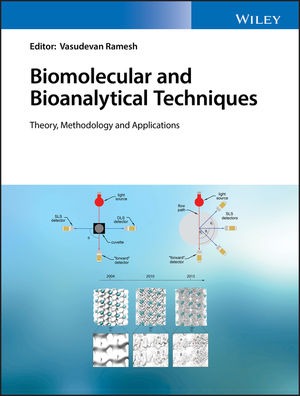
Offers an introduction to, and a basic understanding of, a wide range of biophysical techniques. The text takes an interdisciplinary approach with contributions from a panel of distinguished experts. With a focus on research, the text comprehensively covers a broad selection of topics drawn from contemporary research in the fields of chemistry and biology. Each of the internationally reputed authors has contributed a single chapter on a specific technique. The chapters cover the specific technique’s background, theory, principles, technique, methodology, protocol and applications.
Biomining is the biotechnology that uses microorganisms to recover metals, in particular copper and gold, from ores and concentrates. Having developed from a very simple operational (in terms of both engineering and biology) process, biomining has developed into a multifaceted technology, to the extent that many of the largest industrial stirred tanks and heaps throughout the world are employed for bioprocessing minerals. This book has a strong applied approach and describes emerging and established industrial processes, as well as the underlying theory of the process, and the biology of the microorganisms involved. Chapters have been written by personnel from leading biomining companies, consultants and internationally recognized researchers and academics

This book follows "Bio-mechanisms of Animals in Swimming and Flying" published in 2004 including 11 chapters. This time, the book includes 31 chapters on the latest researches into natural autonomous systems and locomotion in both flying and swimming organisms. The area of sports science such as analysis and simulation of human swimming is newly added. The computational frameworks for the modeling, simulation and optimization of animals in swimming and flying demonstrate an important role in the progress of interdisciplinary work in the fields of biology and engineering. An innovative technology is exhibited for the flight of an insect size micro air vehicle. Neuronal science is not only unveiling the locomotion mechanisms of swimming in fish from the aspect of the neuronal activities, but also applied to underwater biomimetic robots. The interdisciplinary works are exhibited in the fields of biology and engineering, yielding real-world benefits in innovative technologies.

This book presents a concise and comprehensive review of the biology, ecology, and management of Norway spruce. It integrates classic and contemporary literature (more than 2000 works cited in the text), highlighting basic research and forestry practices in central and eastern Europe. The topics include anatomy and morphology, physiology and nutrition, reproductive biology and genetics, and ecology. In addition, it examines mycorrhiza, diseases and pests as well as silviculture and wood products. In the light of increasing threats to forest health from air pollution, climate change, and insects and disease, it provides an essential information source to those concerned with the ecology, conservation, and management of the species
The advantages and disadvantages of hormone replacement therapy (HRT) are discussed by a group of experts with regard to the epidemiological evidence. However, the focus of the discussion is the problem of breast cancer risk. Among other things, it is shown that the results derived from epidemiological studies do not coincide with the growth characteristics of these tumors, so that further population studies with the inclusion of pathobiological expertise appear necessary. The benefits and risks of hormone replacement therapy (HRT) are discussed by a group of experts with a view towards the evidence provided by recent epidemiological studies. Although all aspects of HRT indications and contra-indications are reviewed, the particular emphasis of this discussion is on breast cancer. Among other things, it is shown that the evidence on breast cancer provided in epidemiological studies does not match the growth characteristics of the tumors, and that further population research incorporating pathobiological assessments is required.
The idea for this book was born during the symposium on biologics organized by ZAFES (Center for Drug Research, Development and Safety at the University of Frankfurt am Main) in September 2005. Highly distinguished researchers special- ing in the field of biologics had gathered together to exchange information on this relatively new subject. Realizing that this symposium was one of the few sources of condensed information on biologics, it became obvious that we had to create a means of informing an interested wider circle of scientists and especially general c- nicians. Therefore, the editors of this book suggested to the researchers at the symposium andalsotoprominent scientists andcliniciansinvolvedinthe developmentand application of biologics as their major field of interest the idea of assembling this compendium. We received an overwhelmingly positive response – thankfully also from the publisher – most being more than willing to support this innovative project with highly relevant chapters on the latest state of the art.

Daraa Highway - Ghabagheb - Syria
+963-15 2050 - 15 860 380 /1/2/3 - 11 662 3900