



Page 12
Page 12
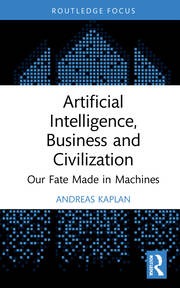
Artificial Intelligence, Business and Civilization : Our Fate Made in Machines
Looks at what exactly artificial intelligence is, how it can be classified, how it differentiates from other concepts such as machine learning, big data, blockchain, or the Internet-of-Things, and how it has evolved and might evolve over time.
Artificial intelligence for marketing management
Artificial intelligence (AI) has driven businesses to adopt new business practices rapidly, enhance product development and services, has helped to power AI-based market intelligence and customer insights, and improve customer relationship management. This timely book addresses the use of AI in marketing.
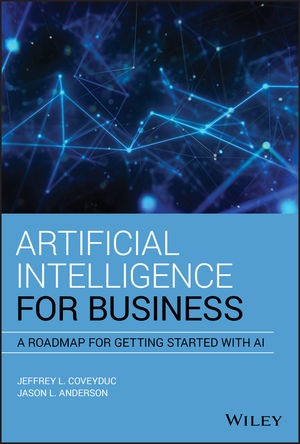
Artificial intelligence for business : A roadmap for getting started with AI
Artificial Intelligence for Business: A Roadmap for Getting Started with AI will provide the reader with an easy to understand roadmap for how to take an organization through the adoption of AI technology. It will first help with the identification of which business problems and opportunities are right for AI and how to prioritize them to maximize the likelihood of success. Specific methodologies are introduced to help with finding critical training data within an organization and how to fill data gaps if they exist.
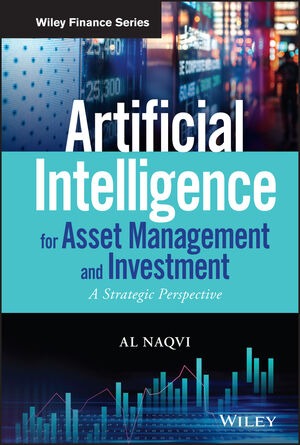
Artificial intelligence for asset management and investment : A strategic perspective
The rise of artificial intelligence is nothing short of a technological revolution. AI is poised to completely transform asset management and investment banking, yet its current application within the financial sector is limited and fragmented. Existing AI implementations tend to solve very narrow business issues, rather than serving as a powerful tech framework for next-generation finance. Artificial Intelligence for Asset Management and Investment provides a strategic viewpoint on how AI can be comprehensively integrated within investment finance, leading to evolved performance in compliance, management, customer service, and beyond.
Artificial Intelligence and COVID Effect on Accounting
This book considers the effects of COVID-19 on accounting, particularly with regard to the role of artificial intelligence in accounting in the post-pandemic business environment. The contributions in the book consider a variety of sectors that have been affected by the pandemic, such as the stock market, forensic accounting, Bitcoin, as well as the economic and educational responses to the pandemic and the aftermath felt by both developing and developed countries.
Artificial economics : Agent-based methods in finance, game theory and their applications
The purpose of this book is to give an up-to date view of the scientific production in the fields of Agent-based Computational Economics (mainly in Market Finance and Game Theory). Based on communications given at AE'2005 (Lille, USTL, France), this book offers a wide panorama of recent advances in ACE (both theoretical and methodological) that will interest academics as well as practitioners.

ARIS design platform : Getting started with BPM
Containing tips, techniques and short cuts gained from practical experience, this book show how to use ARIS in an easy way, supporting smart methods and smart models, and displays how ARIS can be used as a powerful tool for BPM.
ARIS design platform : Advanced process modelling and administration
ARIS is ranked as the leading Business Process Modelling tool in the Gartner Quadrant for Business Process Analysis and Optimization. The ARIS Design Platform is being used as a business process management (BPM) tool for projects in BPM, quality management, business analysis and design, software development, implementation of service-oriented architectures and so forth. Following on from Rob Davis’ successful introductory text, ARIS Design Platform: Getting Started with BPM, this new book covers in detail some of the more advanced concepts of using ARIS Business Architect in the new ARIS 7 Design Platform. Written in a reader-friendly style, it contains detailed explanations of key concepts combined with numerous examples, hints and tips gained from many years of practical experience of using ARIS.
Approaching consumer culture : Global flows and local contexts
This collection analyzes the impact of Western consumer culture on local cultures and consumption in Southeast Europe and East Asia. Cultural, historical, economic and sociopolitical contexts are examined regarding buying behaviors, usage and customization practices and consumer activism, specifically in Bulgaria, Serbia, and Romania as cultures continue to evolve in the post-socialist era, and in China and Japan as a continuation of movements toward modernity and progress. Surprising and thought-provoking contrasts stand out as consumers balance the global with the local in terms of clothing, technology, luxury items, and food.
Applied Research in Uncertainty Modeling and Analysis
For a long time uncertainty has been considered synonymous with random, stochastic, statistic, or probabilistic. Since the early sixties views on uncertainty have become more heterogeneous. In the past forty years numerous tools that model uncertainty, above and beyond statistics, have been proposed by several engineers and scientists. The tool/method to model uncertainty in a specific context should really be chosen by considering the features of the phenomenon under consideration, not independent of what is known about the system and what causes uncertainty. In this fascinating overview of the field, the authors provide broad coverage of uncertainty analysis/modeling and its application. Applied Research in Uncertainty Modeling and Analysis presents the perspectives of various researchers and practitioners on uncertainty analysis and modeling outside their own fields and domain expertise. Rather than focusing explicitly on theory, the authors use real-world examples to demonstrate the strength of the chosen methodology. Applied Research in Uncertainty Modeling and Analysis concentrates on general aspects of uncertainty, modeling, and methods, and focuses on various applications, included Biomedical Engineering, Chemical Engineering, Structural Engineering, and Transportation Engineering.
Applied Research in Environmental Economics
Sustainable development, climate policy, and biodiversity conservation are examples of issues on the current political agenda in many countries. These themes are also subject to economic research, and economic insights are increasingly finding their way into the design of environmental policy. Still, the reception of academic findings by policy makers as well as the timely identification of policy-relevant questions by economic researchers often seem to be problematic. This volume attempts to vitalise the exchange between policy makers and academics. It offers a snapshot of environmental economic research on a range of policy-relevant problems.
Applied Econometrics with R
This is the first book on applied econometrics using the R system for statistical computing and graphics. It presents hands-on examples for a wide range of econometric models, from classical linear regression models for cross-section, time series or panel data and the common non-linear models of microeconometrics such as logit, probit and tobit models, to recent semiparametric extensions. In addition, it provides a chapter on programming, including simulations, optimization, and an introduction to R tools enabling reproducible econometric research.
Applications of simulation methods in environmental and resource economics
Simulation methods are revolutionizing the practice of applied economic analysis. This volume collects eighteen chapters written by leading researchers from prestigious research institutions the world over. The common denominator of the papers is their relevance for applied research in environmental and resource economics. The topics range from discrete choice modeling with heterogeneity of preferences, to Bayesian estimation, to Monte Carlo experiments, to structural estimation of Kuhn-Tucker demand systems, to evaluation of simulation noise in maximum simulated likelihood estimates, to dynamic natural resource modeling. Empirical cases are used to show the practical use and the results brought forth by the different methods.
Applications of computational intelligence in data-driven trading
The main purpose of this book is pedagogical in nature, and it is specifically aimed at defining an adequate level of engineering and scientific clarity when it comes to the usage of the term “Artificial Intelligence,” especially as it relates to the financial industry.
Antecedents of venture firms' internationalization : A conjoint analysis of international entrepreneurship in the net economy
With the continuing dispersion of the global digital network and performance improvements of information and communication technologies, resource-poor start-ups with online business models have emerged in large numbers. These firms are able to deploy their competitive advantages across their country borders early in their life-cycle and engage in international commerce at a fast pace. An increased immediacy between the firms and the globally accessible customer is observed. Julia Christofor’s study aims to analyze the conditions of the initial internationalization decision in the Net Economy. Based on Information Systems, International Entrepreneurship, and Entrepreneurship literature, factors, which constitute the internationalization propensity, are derived. The results of this study suggest that a holistic perspective including the founder, business model and the firm level should be considered when explaining the internationalization propensity of entrepreneurs.
Analysis, Control and Optimization of Complex Dynamic Systems
Analysis, Control and Optimization of Complex Dynamic Systems gathers in a single volume a spectrum of complex dynamic systems related papers written by experts in their fields, and strongly representative of current research trends. Complex systems present important challenges, in great part due to their sheer size which makes it difficult to grasp their dynamic behavior, optimize their operations, or study their reliability. Yet, we live in a world where, due to increasing inter-dependencies and networking of systems, complexity has become the norm. With this in mind, the volume comprises two parts. The first part is dedicated to a spectrum of complex problems of decision and control encountered in the area of production and inventory systems. The second part is dedicated to large scale or multi-agent system problems occurring in other areas of engineering such as telecommunication and electric power networks, as well as more generic context.
Analysis of microdata
The availability of microdata has increased rapidly over the last decades, and standard statistical and econometric software packages for data analysis include ever more sophisticated modeling options. The goal of this book is to familiarize readers with a wide range of commonly used models, and thereby to enable them to become critical consumers of current empirical research, and to conduct their own empirical analyses.
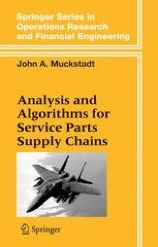
Analysis and Algorithms for Service Parts Supply Chains
Services requiring parts has become a $1.5 trillion business annually worldwide, creating a tremendous incentive to manage the logistics of these parts efficiently by making planning and operational decisions in a rational and rigorous manner. This book provides a broad overview of modeling approaches and solution methodologies for addressing service parts inventory problems found in high-powered technology and aerospace applications. The focus in this work is on the management of high cost, low demand rate service parts found in multi-echelon settings. This unique book, with its breadth of topics and mathematical treatment, begins by first demonstrating the optimality of an order-up-to policy [or (s-1,s)] in certain environments. This policy is used in the real world and studied throughout the text. The fundamental mathematical building blocks for modeling and solving applications of stochastic process and optimization techniques to service parts management problems are summarized extensively. A wide range of exact and approximate mathematical models of multi-echelon systems is developed and used in practice to estimate future inventory investment and part repair requirements.
An Introduction to Efficiency and Productivity Analysis
It is designed to be a "first port of call" for people wishing to study efficiency and productivity analysis. The book provides an accessible introduction to the four principal methods involved: econometric estimation of average response models; index numbers; data envelopment analysis (DEA); and stochastic firontier analysis (SFA). For each method, we provide a detailed introduction to the basic concepts, give some simple numerical examples, discuss some of the more important extensions to the basic methods, and provide references for further reading. In addition, we provide a number of detailed empirical applications using real-world data.
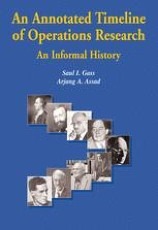
An annotated timeline of operations research: An informal history
An Annotated Timeline of Operations Research: An Informal History recounts the evolution of Operations Research (OR) as a new science - the science of decision making. Arising from the urgent operational issues of World War II, the philosophy and methodology of OR has permeated the resolution of decision problems in business, industry, and government. The Timeline chronicles the history of OR in the form of self-contained, expository entries. Each entry presents a concise explanation of the events and people under discussion, and provides key sources where further relevant information can be obtained. In addition, books and papers that have influenced the development of OR or helped to educate the first generations of OR academics and practitioners are cited throughout the book.
