


Refine Results
Sort By
From
To

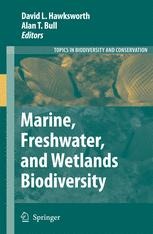
Marine, coastal and wetland habitats are threatened, not only through exploitation, but also by the prospect of climate change – as ocean currents change course, sea levels rise, and rainfall patterns change. Even the once-common cod is now under threat from the combined effects of over-fishing and a dramatic change-induced decrease in the plankton that cod larvae feed on. Meanwhile, coral reefs remain especially vulnerable to rapid sea-level changes exacerbated by the effects of tourism and disease. This book gathers together a wide range of papers reporting on key research into the biodiversity conservation of these critical and increasingly threatened habitats. Collectively these papers provide a snap-shot of the types of problems they are experiencing, and offer a wealth of topical examples which render this volume especially valuable to teachers of courses in marine, freshwater and wetlands ecology, biological conservation and ecological restoration.

Focusing on Venezuela and Mexico, this edited volume from the International Society of Halophyte Utilisation (ISHU) explores the environmental issues facing South and Central America's coastal ecosystems, and discusses the uses of mangrove species and other halophytes in addressing issues of both coastal pollution and upland soil salinisation. The book draws on expertise from Europe and South America to present a series of case studies that detail Venezuela’s saline ecosystems and examine the economic potential of mangrove restoration and halophyte production. It includes cutting-edge research into the establishment of new mangrove stands which could serve as prototypes for the sustainable use of halophytes, including Chenopodium quinoa and Tamarix aphylla. Moreover, the detailed examples from Venezuela and other Caribbean countries provide useful models for comparison with halophyte utilisation in other parts of the world – especially the Mediterranean region, where much of the earlier research of the ISHU had been conducted.

All over the world, sustainable river basin management is a leading principle of policy plans and legal instruments for water management (e.g. the European Water Framework Directive). The evidence, however, to underpin the full scope of sustainability is rather scanty. In this book an integrative perspective on trends and challenges in river science and management is demonstrated. The three pillars underneath sustainable water management, ecology, economy and sociology, are elaborated by experts in their fields. A number of papers integrate the current knowledge on the structure, functioning and management of ‘living rivers’. The book includes data and experiences concerning the rivers Allier, Meuse, Rhine, Sava and Tagliamento in Europe and the river Illinois in the USA. Sustainable river basin management asks for un-orthodox rehabilitation programmes and ecosystem based and transboundary management approaches.

Recognizes the critical roles of disturbance ecology, landscape ecology, ecological assembly, invasion biology, ecosystem health, and historical ecology in habitat restoration and argues that restoration within a successional context will best utilize the lessons from each of these disciplines.

The present book summarises investigations on Lake Verevi (surface 12.6 ha, mean depth 3.6 m). The seventeen articles in this issue deal with a wide range of questions, starting with a holistic overview of the ecological status, over assessments of long-term changes in biotic and abiotic conditions and finishing with proposed restoration plans. Abiotic chapters provide calculations on water and mass balance, distribution and fractions of phosphorus in the sediment, optical properties and penetration of radiation in the water column, sedimentation rate during the formation of stratification, and nitrogen circulation characteristics.
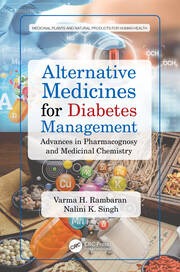
Apart from diet and exercise, the strategic use of different classes of prescribed or non-prescribed xenobiotic compounds for the restoration of euglycemic levels in the body is well known. The ongoing rivalry between the recommended usage of allopathic medicines versus ayurvedic remedies has encouraged many researchers to focus their studies on thoroughly isolating and characterizing the extracts from different parts of plants and then evaluating their relative activities via in vitro, in vivo and in some cases clinical studies.
Images contain information about the spatial properties of the scene they depict. When coupled with suitable assumptions, images can be used to infer three-dimensional information. This useful volume concentrates on motion blur and defocus, which can be exploited to infer the 3-D structure of a scene—as well as its radiance properties—and which in turn can be used to generate novel images with better quality. 3-D Shape Estimation and Image Restoration presents a coherent framework for the analysis and design of algorithms to estimate 3-D shape from defocused and motion blurred images, and to eliminate defocus and motion blur to yield "restored" images. It provides a collection of algorithms that are optimal with respect to the chosen model and estimation criterion.
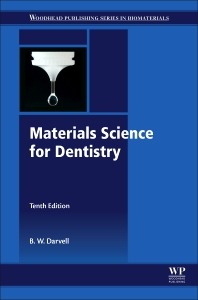
A standard resource for undergraduate and postgraduate courses in dentistry. It provides fundamental coverage of the materials on which dentistry depends, covering the structure and chemistry that govern the behavior and performance of materials. Particular classes of materials include gypsum, polymers, acrylic, cements, waxes, ceramics and metals. Other chapters review surfaces, corrosion, mixing, casting, cutting and bonding, and mechanical testing. This updated edition, which includes substantial chapters on chemistry, has been extensively revised with new material on temporary restoration resins, hydraulic silicate cements and the practical aspects of wetting surfaces. Mindfully written to provide explanations for behavior, formulation, clinical and laboratory instructions and procedures, there is no comparable resource for researchers, students, teachers and practitioners in the field of dentistry.
Combines up-to-date clinical and research information that will help clinicians to advance their theoretical and clinical knowledge on mandibular implant overdentures. Furthermore, it describes treatment considerations for geriatric populations, covering all relevant aspects from physiology to treatment planning and patient management in the surgical and prosthetic phases.

Describes the challenges that deep carious lesions pose for dental practitioners, including the risk of endodontic complications and the difficulty of restorative treatment, and identifies options for overcoming these challenges on the basis of the best available evidence. The opening chapter sets the scene by discussing pathophysiology, histopathology, clinical symptomatology, and treatment thresholds. The various treatment options are then systematically presented and reviewed, covering non-selective, stepwise, and selective carious tissue removal and restoration, sealing of lesions using resin sealants or crowns, and non-restorative management approaches. In each case the current evidence with respect to the treatment is carefully evaluated. Advantages and disadvantages are explained and recommendations made on when to use the treatment in question. Illustrative clinical cases and treatment pathways for clinicians are included. This book will be of value for all practitioners who treat dental caries and carious lesions, whether in the permanent or the primary dentition. It will also be of interest to under- and postgraduate students in cariology and restorative, operative, preventive, and pediatric dentistry.
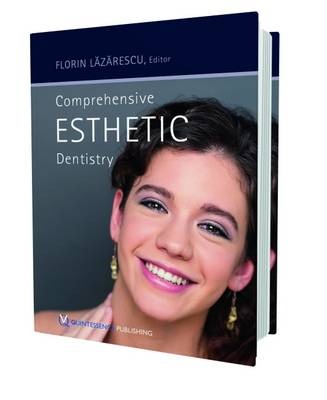
Allows a clinician to shape dental treatment and elevate patient smiles. Based on scientific research, clinical evidence, and the practical experience of the authors, this book is a practical approach to esthetic dentistry.
Dedicated to all relevant aspects of bulk fill materials and their uses in clinical practice. Today, we count over 30 different bulk fill materials, which can be used in the dental clinic. The composition of bulk fill materials and their different modes of application for moderate to large direct resin restorations placement are explained in this book. It is written by a group of international specialists and allows the reader to evaluate available materials, learn predictable techniques and evaluate long term survival as well as future developments. The book covers all fields related to the history of bulk fill composites, their composition and physical properties, and a step by step guide to their successful clinical applications.
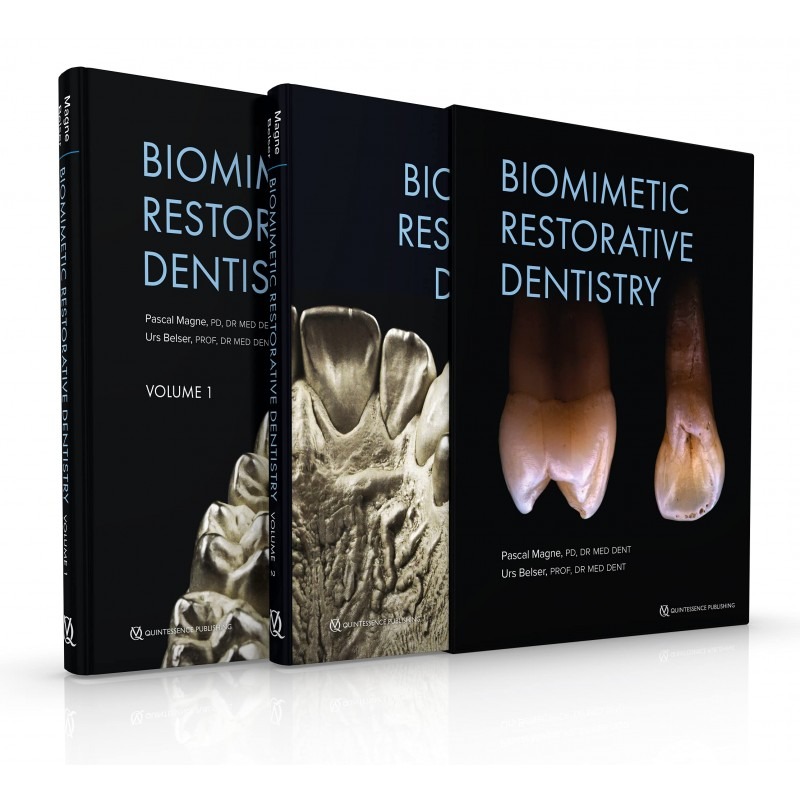
Takes the science of esthetic dental reconstruction to a new level both clinically and academically, and it offers all that a clinician could wish for in terms of indications and the classic clinical steps for tooth preparation, laboratory and CAD/CAM procedures, adhesive luting procedures, and maintenance. But above all, what makes this book so unique is the biomimetic principle—as such, restoring or mimicking the biomechanical, structural, and esthetic integrity of teeth is paramount. The core of this book centers on the application of the biomimetic principle in the form of bonded restorations using composite resins and ceramics, covering indications, treatment planning, diagnosis, tooth preparation and impression, laboratory and CAD/CAM procedures, final delivery, follow-up, maintenance, and repair. Written by a true master and artist, this book will undoubtedly inspire excellence in anyone who picks it up.
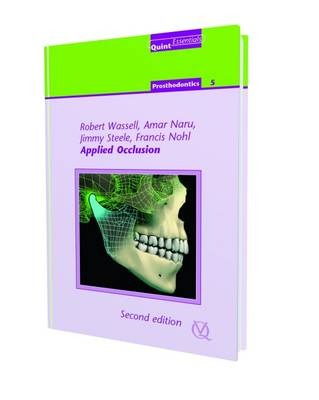
Includes many new illustrations, highlighted practical tips, and updates to the text with the most recent advances in the literature. The narrated 3D animations on the accompanying DVD clarify the effects of jaw movement, and comprehensive clinical videos demonstrate the process of investigating and managing real-life occlusal problems. The authors of this practical guide bring occlusal concepts and techniques to life and demystify them for dentists and students alike.
Includes eight chapters that focus on various important aspects of dental prosthetics and implantology, such as modern materials choices, prosthetic management of teeth malposition, and novel approaches to restoration design.
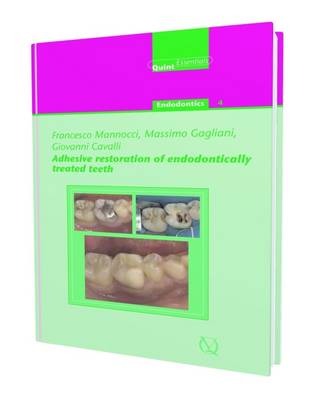
Dentine bonding systems, composite resins and fibre posts have widely replaced cast posts and amalgam as core materials; all-ceramic and composite crowns have also replaced metal ceramic crowns in many aesthetic cases. The aim of this book is to provide the general practitioner with some principles and techniques for the adhesive restoration of root filled teeth.
A Review on Dental Materials discusses the current biomaterials used for dental applications and the basic sciences underpinning their application.
Considers occlusion within the different disciplines of clinical dentistry, taking into account the challenges specific to each, in order to develop guidelines of good occlusal practice (GGOP). The GGOP for each discipline has benefited from an authoritative contribution of a recognised specialist in that field. Readers will find full description of what constitutes good occlusal practice in, for example, simple and advanced restorative dentistry, removable prosthodontics, the restoration of the worn dentition and implantology. It is clearly explained why and how the GGOP differ in the various branches of dentistry, the key point being that it is the support for the occlusal surfaces that determines GGOP.

This book introduces readers to a new methodology for assessing the risks to the marine environment following accidental oil spills. The methodology will soon be implemented on the Norwegian Continental Shelf and will be complemented by guidelines for its use in a regulatory framework.
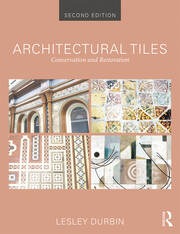
It not only contains new and up to date information on materials, practical methods, and historical research but also reflects changes in the attitudes, outlook and perceptions within the wider conservation, architectural heritage and construction communities which give a new dimension to the conservation and restoration. The growing interest in the preservation of post war ceramic tile murals and the subsequent demand for information pertaining specifically to this era is a welcome and useful addition.

Daraa Highway - Ghabagheb - Syria
+963-15 2050 - 15 860 380 /1/2/3 - 11 662 3900