


Refine Results
Sort By
From
To

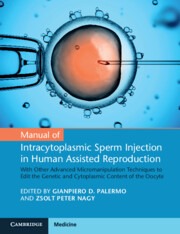
For around half of the couples who have trouble conceiving the cause of infertility is sperm-related. Intracytoplasmic sperm injection (ICSI) is the most common and successful treatment for male infertility. Here, the pioneers for the technique, along with authorities in the field, describe the underlying science of ICSI and other micromanipulation techniques. Practical advice for performing the techniques is covered in depth, including sperm selection, laser-assisted ICSI, and the use of piezo in ICSI. Examining the safety of ICSI in animal models as well as the impact of ICSI on the health and well-being of the children conceived through the procedure is discussed. This manual is an essential resource for clinical embryologists and laboratory personnel wishing to refine or develop techniques and improve outcomes.

The various consequences on the anatomy and physiology of the female genitalia, as well as male, of children exposed in utero are reviewed. The impact on girls is greater than on boys: modification of the uterine cervix, reduction in the volume of the uterus with its consequences on fertility and the progress of pregnancies, risk of cancer of the vagina and the cervix. . The potential repercussions on the third generation are analyzed from experimental studies. Finally, the medico-legal implication is studied from the various trials that took place in the United States and from the first French trial that took place in Nanterre in November 2003. This work is the result of the collaboration of several experts recognized for their competence in this field. It will be of interest to all obstetrician gynecologists, urologists, but also public health physicians and midwives.
The notable recent cognitive advances in the field of cytogenetics and molecular genetics have made it possible to identify chromosomal anomalies and gene mutations responsible for numerous male infertility, which were completely ignored until recently. The fact is not without relevance, if the principle is valid that the recognition of the causes of a disease is also the first and necessary approach towards its correct therapy. With this publication, the authors wanted to offer specialists working in the field of assisted reproduction an update on this complex subject, dealing with both genetic causes in male infertility and infertility in genetic diseases.

This book examines the concept of care and care practices in healthcare from the interdisciplinary perspectives of continental philosophy, care ethics, the social sciences, and anthropology. Areas addressed include dementia care, midwifery, diabetes care, psychiatry, and reproductive medicine. Special attention is paid to ambivalences and tensions within both the concept of care and care practices. Contributions in the first section of the book explore phenomenological and hermeneutic approaches to care and reveal historical precursors to care ethics. Empirical case studies and reflections on care in institutionalised and standardised settings form the second section of the book.

This open access edited book brings together new research on the mechanisms by which maternal and reproductive health policies are formed and implemented in diverse locales around the world, from global policy spaces to sites of practice. The authors – both internationally respected anthropologists and new voices – demonstrate the value of ethnography and the utility of reproduction as a lens through which to generate rich insights into professionals’ and lay people’s intimate encounters with policy.

This book aims to clarify and develop the particularities of the clinical examination in obstetrics; it deliberately excludes childbirth and the aftermath of childbirth.

Daraa Highway - Ghabagheb - Syria
+963-15 2050 - 15 860 380 /1/2/3 - 11 662 3900