


Refine Results
Sort By
From
To

An extensive compendium on laxatives. It covers all aspects of the clinical use of laxatives complete with physiological information related to constipation. The mechanisms of action of the main classes of laxatives are widely described. The text contains illustrations that help to understand the origins of plant laxatives and the pharmacology of the most interesting ones. Doctors, pharmacists, herbalists, nurses and students will find this volume interesting and useful.

In Laboratory Control System Operations in a GMP Environment, readers are given the guidance they need to implement a CGMP compliant Laboratory Control System (LCS) that fits within Global Regulatory guidelines. Using the Quality Systems Approach, regulatory agencies like the FDA and the European Medicine Agency have developed a scheme of systems for auditing pharmaceutical manufacturing facilities which includes evaluating the LCS.
This volume summarizes notions of phytotherapy; the intent is to offer the doctor essential knowledge so that he can easily prescribe plant products and to stimulate the pharmacist and herbalist to use them in a more rational way.
Support pharmacists in identifying, diagnosing, treating or referring the illnesses and conditions they will commonly encounter in the community. A logical structure covers the full range of common presentations, including respiratory, ear, eye, gastroenterological and skin conditions. Clear pictures, referral criteria and summaries of treatment options support clinical reasoning, differential diagnosis and selection of appropriate products. Suitable for both pharmacy students and qualified pharmacists, the sixth edition has been fully updated to align with changes to the pharmacy curriculum and the rapidly expanding scope of pharmacists working in primary care and community pharmacy.
Describes 247 species of 9 families of medicinal plants, which are commonly used in Chinese medicine. The most important species are Adina rubella, Gardenia jasminoides, Hedyotis diffusa, Morinda officinalis, Rubia cordifolia, Uncaria hirsuta, Uncaria macrophylla, Uncaria rhynchophylla, Uncaria sessilifructus, Uncaria sinensis of Rubiaceae; Lonicera confusa, Lonicera hypoglauca, Lonicera macranthoides, Lonicera japonica of Caprifoliaceae; Patrinia scabiosaefolia, Patrinia villosa, Nardostachys jatamansi of Valerianaceae; Dipsacus asperoides of Dipsacaceae; Arctium lappa, Artemisia annua, Artemisia argyi, Artemisia capillaris, Artemisia scoparia, Atractylodes lancea, Atractylodes macrocephala, Dendranthema indicum, Dendranthema morifolium, Eupatorium chinense, Eupatorium fortunei, Inula helenium, Saussurea costus, Saussurea involucrata, Senecio scandens, Serratula chinensis, Siegesbeckia orientalis, Solidago decurrens, Taraxacum mongolicum, Tussilago farfara、Xanthium sibiricum of Compositae; Gentiana crassicaulis, Gentiana manshurica, Gentiana rigescens, Gentiana scabra, Swertia pseudochinensis of Valerianaceae; Lysimachia christinae of Primulaceae and Plantago asiatica of Plantaginaceae.
Describes 226 species of 32 families of medicinal plants, which are commonly used in Chinese medicine. The most important species are Aquilaria sinensis and Daphne genkwa of Thymelaeaceae; Benincasa hispida, Siraitia grosvenorii, Trichosanthes kirilowii and Trichosanthes rosthornii of Cucurbitaceae; Camellia sinensis of Theaceae; Cleistocalyx operculatus, Eugenia caryophyllata and Rhodomyrtus tomentosa of Myrtaceae; Osbeckia chinensis of Melastomataceae; Quisqualis indica and Terminalia chebula of Combretaceae; Hypericum japonicum of Hypericaceae; Microcos paniculata of Tiliaceae; Hibiscus mutabilis of Malvaceae; Croton crassifolius, C. lachnocarpus, C. tiglium, Euphorbia humifusa, E. lathyris, E. pekinensis, Phyllanthus emblica and Sauropus spatulifolius of Euphorbiaceae. In each specie, it introduces the scientific names, medicinal names, morphologies, habitats, distributions, acquisition and processing methods of these medicinal plants, the content of medicinal properties, therapeutic effects, usage and dosage of these medicinal plants, and attaches unedited color pictures and pictures of part herbal medicines of each species.
Describes 256 species of medicinal plants from 5 families, which are commonly used in Chinese medicine. The most important species are Agrimonia pilosa, Amygdalus persica, Armeniaca mume, Armeniaca vulgaris, Armeniaca sibirica, Chaenomeles sinensis, Eriobotrya japonica of Rosaceae; Chimonanthus praecox of Calycanthaceae;Albizia julibrissin, Archidendron clypearia, Entada phaseoloides, Bauhinia championii of Mimosoideae; Caesalpinia sappan, Cassia tora, Gleditsia sinensis of Caesalpiniaceae; Abrus cantoniensis, Astragalus membranaceus, Astragalus membranaceus, Dalbergia odorifera, Desmodium caudatum, Desmodium styracifolium, Erythrina variegata, Euchresta japonica, Flemingia prostrata, Glycyrrhiza uralensis, Glycyrrhiza inflata, Glycyrrhiza glabra, Lablab purpureus, Sophora japonica and Spatholobus suberectus of Butterflyaceae. In each specie, it introduces the scientific names, medicinal names, morphologies, habitats, distributions, acquisition and processing methods of these medicinal plants, the content of medicinal properties, therapeutic effects, usage and dosage of these medicinal plants, and attaches unedited color pictures and pictures of part herbal medicines of each species. This book series has 10 volumes in total, which covers over 2000 kinds of Chinese medicines that are commonly used. These volumes not only introduce the efficacy function and some prescriptions of the medicines, but also introduce the biological characteristics of them in detail with clear photos of the habitats, so that readers can identify them in the field. Apart from the growing environment, the books expound the distribution areas and other information to facilitate researches and other applications. The volumes are targeted at readers of general interests and it is also of high referential value for scientific researcher and teachers. It can be used as a guide to researchers, clinical doctors, and students in the department of pharmaceutics and traditional Chinese medicine.
Contains 231 species of 40 families of medicinal plants. The most important family of which are Magnoliaceae, such as Magnolia officinalis and Magnolia officinalis subsp. biloba; Schisandra chinensis of Schisandraceae; Cinnamomum aromaticum of Lauraceae, Coptis chinensis Franch., Coptis omeiensis and Coptis teeta of Berberidaceae; Isatis indigotica, Lepidium apetalum and Raphanus sativus of Cruciferae; Rheum palmatum, Rheum officinale and Rheum taguticum of Polygonaceae, etc. In each specie, it introduces the scientific names, herbal medicine names, characteristics, habitats, distributions, Acquisition and processing methods, medicinal traits, tastes, functions, use and dosages, and other information of medicinal plants, and attaches unedited color pictures and pictures of part herbal medicines for each species. This book series has totally 10 volumes, which covers 2000 kinds of Chinese medicines that are commonly seen or used. These volumes not only introduce the efficacy, function and some prescriptions of the medicines, but also introduce the biological characteristics of them in detail with clear photos of the habitats, so that readers can identify them in the field. Apart from the growing environment, the books expound the distribution areas and other information to facilitate researches and other applications. The volumes are targeted at readers of general interests and it is also of high referential value for scientific researcher and teachers. It can be used as a guide to researchers, clinical doctors, and students in the department of pharmaceutics and traditional Chinese medicine.
Records 5 species of resin, 74 species of animals, 41 species of minerals and fossils. There are resins such as Liquidambar orientalis, Commiphore myrrha, Boswellia carterii, Garcinia hanburyi; animals such as Solenognathus hardwickii, , Cervus nippon, Scolopendra subspinipes, Cryptotympana pustulata, Agkistrodon acutus, Bombyx mori, Collocalia esculenta, Moschus moschiferus, Hippocampus kelloggi, Gekko gekko; minerals and fossils such as mercury, gypsum, alum, mirabilite, cinnabar, actinolite, calomel, keel, dens draconis, lithodes, fossilia spiriferis.
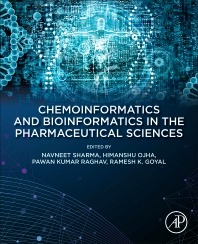
Chemoinformatics and Bioinformatics in the Pharmaceutical Sciences brings together two very important fields in pharmaceutical sciences that have been mostly seen as diverging from each other: chemoinformatics and bioinformatics. As developing drugs is an expensive and lengthy process, technology can improve the cost, efficiency and speed at which new drugs can be discovered and tested. This book presents some of the growing advancements of technology in the field of drug development and how the computational approaches explained here can reduce the financial and experimental burden of the drug discovery process.
Gives the reader, through the specific selection of chemical-biological techniques and concepts, the necessary tools to be able to develop new ways of thinking and thus new therapeutic options in the complex field of chemical biology and drug development. The stated aim of this book is to provide concrete solutions and inspiration to students, (post)graduate students, and experienced scientists at universities as well as in industry in their problems.
Updates knowledge on recent advances in computational and bioinformatics tools/techniques and their practical applications in modern drug design and discovery programme. Also it encompasses fundamental principles, advanced methodologies and applications of various CADD approaches including several cutting-edge areas / presenting recent developments covering ongoing trends in the field of computer-aided drug discovery. Having contributions by a global team of experts, the book is expected to be an ideal resource for drug discovery scientists, medicinal chemists, pharmacologists, toxicologists, phytochemists, biochemists, biologists, RandD personnel, researchers, students, teachers and those working in the field of drug discovery. It will fill the knowledge gaps that exist in the current CADD approaches and methodologies/ protocols being widely used in both academic and research practices. Further, a special focus on current status of various computational drug design approaches (SBDD, LBDD, De-novo drug design, Pharmacophore-based search), bioinformatics tools and databases, computational screening and modeling of phytochemicals/natural products, artificial intelligence and machine learning, and network pharmacology and system biology would certainly guide researchers, students or readers to conduct their research in the emerging area(s) of interest. It is also expected to be highly beneficial to different stakeholders working in the pharmaceutical and biotechnology industries (RandD), the academic as well as research sectors. .
Provides a comprehensive overview of the biosimilar regulatory framework, the development process and clinical aspects for development of biosimilars. The development path of a biosimilar is just as unique as a development path of a new drug, tailored by the mechanism of action, the quality of the molecule, published information on the reference product, the current competitive environment, the target market and regulatory guidance, and most importantly, the emerging totality of evidence for the proposed biosimilar during development.
Aims to build a new generation of experts with a broader understanding of key topics in the Alzheimer’s disease field. Chapters guide readers through innovative approaches to the discovery of novel biomarkers in cerebrospinal fluid, innovation in blood-based biomarkers, a comprehensive overview of magnetic resonance imaging and molecular imaging approaches and their value for developing drugs for Alzheimer’s disease, cutting-edge developments in neuropathology and their relevance for Alzheimer’s disease trials, novel genomic strategies for biomarker development, and related topics including neuropsychological testing and advanced analytical methods.Written in the highly successful Methods in Molecular Biology series format, chapters include introductions to their respective topics, lists of the necessary materials and reagents, step-by-step, readily reproducible laboratory protocols, and tips on troubleshooting and avoiding known pitfalls.
Looks at the applications of biomarkers as important tools for herbal drug discovery, presenting research on phytoconstituents with advanced nanotechnological applications for healthcare benefits. Herbal drug discovery based on biomarkers is an emerging area in complementary and alternative medicine that has tremendous potential in healthcare. Conventional medications have limited efficacy and high toxicity, whereas herbal drugs are said to provide wide structural diversity that is not usually seen with conventional/synthetic drug molecules. Recognition of various herbal constituents, such as terpenoids, fatty acids, flavonoids and steroids, are well explored in the management and treatment of various disorders in this volume. These agents target various biomarkers such as nitric oxide (NO), cytokines, chemokines, adhesion molecules, NF- kβ, lipoxygenase (LOX), and arachidonic acid. Reviews the literature on inflammatory biomarkers in the treatment of diseases Looks at the development of herbal drug discovery based on biomarkers Explores emerging concepts of nanomedicines for herbal drug delivery Takes an interdisciplinary approach, with application to disciplines related to medical, pharmaceutical, biotechnological, Ayurvedic, Unani and biomedical engineering fields
Introduces basic pharmacokinetic concepts to beginner learners to help them understand the absorption, distribution, metabolism, and excretion of drugs. Accompanying the book is a website with self-instructional tutorials and pharmacokinetic and pharmacokinetic-pharmacodynamic simulations, allowing visualization of concepts for enhanced comprehension. This learning tool received an award from the American Association of Colleges of Pharmacy for innovation in teaching, making it a valuable supplement to this essential text.
Concise and up-to-date coverage of the most important drugs Integration of experimental and clinical pharmacology with focus on diseases Discusses the most important drugs (400) in the context of relevant diseases. Summary tables and schemes, MCQ exam questions, case studies and a list of drugs aid memorization of the material before an exam. All chapters are written in the same concise style and use a modern and precise pharmacological nomenclature. After reading of the book, the student will be able to critically assess the proper use of the most important drugs and advise patients properly. The didactic concept of the book has been developed on the author’s own pharmacology courses for which he has received numerous teaching awards. The book takes advantage of the learning spiral, in which material is presented repeatedly from various angles.
Summarizes antiviral drug design and discovery approaches Provides the latest update in the field of antiviral therapeutics Includes antiviral research of coronaviruses
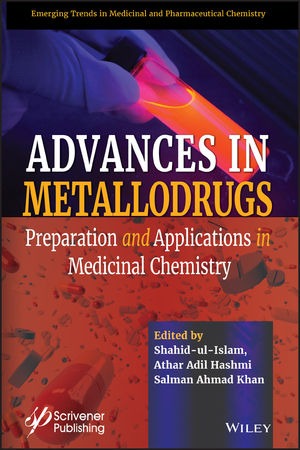
This book is organized into 12 important chapters that focus on the progress made by metal-based drugs as anticancer, antibacterial, antiviral, anti-inflammatory, and anti-neurodegenerative agents, as well as highlights the application areas of newly discovered metallodrugs. It can prove beneficial for researchers, investigators and scientists whose work involves inorganic and coordination chemistry, medical science, pharmacy, biotechnology and biomedical engineering
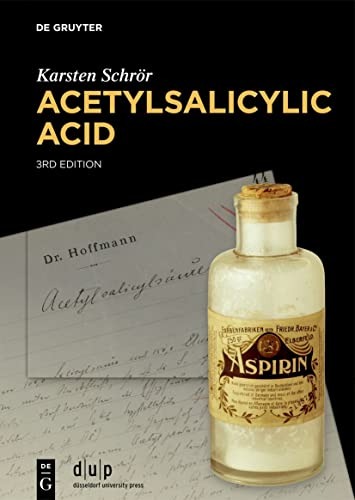
Contains the latest results of clinical and pharmacological research on Acetylsalicylic acid, addressing the multiple pharmacological properties of this famous drug with a balanced view on their translation into clinical practice, including prevention and treatment of cardiovascular diseases, thromboinflammation and colorectal cancer. Understandable for clinicians, pharmacists, biomedical researchers and pharmacologists alike.

Daraa Highway - Ghabagheb - Syria
+963-15 2050 - 15 860 380 /1/2/3 - 11 662 3900