


Refine Results
Sort By
From
To

The book also covers cutting-edge research and technological advances that will shape the surgery of tomorrow. There is little doubt that technological advances in preoperative imaging, such as 3-D reconstruction, preoperative preparation with portal vein embolisation and operative techniques using bloodless RF resection methods, are already changing the nature of liver surgery.

Nanomaterials, which possess at least one dimension lower than 100 nanometers, are increasingly at the forefront of technological and chemical innovation. The properties of these uniquely minute materials give them distinctive applications across a huge range of industries and research fields. It is therefore critical that the next generation of engineers and materials scientists understand these materials, their chemical properties, and how they form bonds

In Cancer in the Spine: Comprehensive Care, distinguished physicians and researchers from prestigious cancer centers around the world critically examine current trends and innovations in spinal cancer management. Detailing both the fundamental principles of diagnosis and treatment planning, and the cutting-edge techniques of tumor treatment, these experts bring together in one volume a guide to coordinated management of all aspects of cancer in the spine.
Source of the latest innovative research and technical development in biomanufacturing systems. It is organised into 2 parts: 1) Manufacturing of recombinant therapeutic proteins (e.g. therapeutic antibodies, biosimilars/biogenerics) and 2) Manufacturing aspects of cell and gene therapy. Each with selected chapters on the following topics for both up- and downstream, such as: Advanced process strategies, especially continuous manufacturing, Advanced culture techniques, especially single-use systems, Process transfer, scale-up/scale-down models, Processing advances/Manufacturing productivity/efficiency, Model-assisted process understanding and development/Digital Twins, Process controls and analytics, Quality control, Quality by design, Facility design and full-scale commercial systems, manufacturing technology innovation.
Covers the recent trends on the biological applications of nanomaterials, methods for their preparation, and techniques for their characterization. Further, the book examines the fundamentals of nanotoxicity, methods to assess the toxicity of engineered nanomaterials, approaches to reduce toxicity during synthesis. It also provides an overview of the state of the art in the application of Artificial intelligence-based methodologies for evaluation of toxicity of drugs and nanoparticles. The book further discusses nanocarrier design, routes of various nanoparticle administration, nano based drug delivery systems, and the toxicity challenges associated with each drug delivery method. It presents the latest advances in the interaction of nanoparticles with the cellular environment and assess nanotoxicity of these engineered nanoparticles. The book also explores the comparative and mechanistic genotoxicity assessment of the nanomaterials. This book is useful source of information for industrial practitioners, policy makers, and other professionals in the fields of toxicology, medicine, pharmacology, food, and drugs.
Aims to build a new generation of experts with a broader understanding of key topics in the Alzheimer’s disease field. Chapters guide readers through innovative approaches to the discovery of novel biomarkers in cerebrospinal fluid, innovation in blood-based biomarkers, a comprehensive overview of magnetic resonance imaging and molecular imaging approaches and their value for developing drugs for Alzheimer’s disease, cutting-edge developments in neuropathology and their relevance for Alzheimer’s disease trials, novel genomic strategies for biomarker development, and related topics including neuropsychological testing and advanced analytical methods.Written in the highly successful Methods in Molecular Biology series format, chapters include introductions to their respective topics, lists of the necessary materials and reagents, step-by-step, readily reproducible laboratory protocols, and tips on troubleshooting and avoiding known pitfalls.
This open access book looks at the dramatic history of ovariotomy, an operation to remove ovarian tumours first practiced in the early nineteenth century. Bold and daring, surgeons who performed it claimed to be initiating a new era of surgery by opening the abdomen. Ovariotomy soon occupied a complex position within medicine and society, as an operation which symbolised surgical progress, while also remaining at the boundaries of ethical acceptability. This book traces the operation’s innovation, from its roots in eighteenth-century pathology, through the denouncement of those who performed it as ‘belly-rippers’, to its rapid uptake in the 1880s, when ovariotomists were accused of over-operating. Throughout the century, the operation was never a hair’s breadth from controversy.
Introduces basic pharmacokinetic concepts to beginner learners to help them understand the absorption, distribution, metabolism, and excretion of drugs. Accompanying the book is a website with self-instructional tutorials and pharmacokinetic and pharmacokinetic-pharmacodynamic simulations, allowing visualization of concepts for enhanced comprehension. This learning tool received an award from the American Association of Colleges of Pharmacy for innovation in teaching, making it a valuable supplement to this essential text.
Explains task management concepts and outlines practical knowledge to help pharmaceutical analytical scientists become productive and enhance their career. •Presents broad topics such as product development process, regulatory requirement, task and project management, innovation mindset, molecular recognition, separation science, degradation chemistry, and statistics. •Provokes thinking through figures, tables, and case studies to help understand how the various functions integrate and how analytical development can work efficiently and effectively by applying science and creativity in their work. •Discusses how to efficiently develop a fit-for-purpose HPLC method without screening dozens of columns, gradients, or mobile phase combinations each time, since the extra effort may not provide enough of a benefit to justify the cost and time in a fast-paced product development environment.
Discusses the integration of artificial intelligence to revolutionize disease detection approaches, with case studies of AI in disease detection as well as insight into the opportunities and challenges of AI in healthcare as a whole. The book explores a wide range of individual AI components such as computer vision, natural language processing, and machine learning as well as the development and implementation of AI systems for efficient practices in data collection, model training, and clinical validation.

This book shows the factors linking information flow, social intelligence, rights management and modelling with epistemic democracy, offering licensed linked data along with information about the rights involved. This model of democracy for the web of data brings new challenges for the social organisation of knowledge, collective innovation, and the coordination of actions. Licensed linked data, licensed linguistic linked data, right expression languages, semantic web regulatory models, electronic institutions, artificial socio-cognitive systems are examples of regulatory and institutional design (regulations by design). The web has been massively populated with both data and services, and semantically structured data, the linked data cloud, facilitates and fosters human-machine interaction. Linked data aims to create ecosystems to make it possible to browse, discover, exploit and reuse data sets for applications. Rights Expression Languages semi-automatically regulate the use and reuse of content.

Aims to show which factors have been decisive in the rise of successful countries. Never before have so many people been so well off. However, prosperity is not a law of nature; it has to be worked for. A liberal economy stands at the forefront of this success – not as a political system, but as a set of economic rules promoting competition, which in turn leads to innovation, research and enormous productivity.
Presents new approaches and innovative challenges to address bringing technology into community-oriented policing efforts. “Community-oriented policing” is an approach that encourages police to develop and maintain personal relationships with citizens and community organizations. By developing these partnerships, the goal is to enhance trust and legitimacy of police by the community (and vice versa), and focus on engaging the community crime prevention and detection efforts for sustainable, long-term crime reduction. The contributions to this volume emphasize how technological innovations can advance community-oriented policing goals.
This book aims to present an overview of China and the world from diverse angles. It brings together essays by ambassadors to China on a range of bilateral and multilateral issues, including trade and investment, regional economic cooperation, sustainable development, technology and innovation, and entrepreneurship. Given their familiarity with China and extensive international experience, the insights of these ambassadors are useful for policymakers, academics, entrepreneurs, students, and anyone trying to make sense of our rapidly changing world.
This book was finalized while countries around the world were still confronting a global public health crisis caused by the COVID-19 pandemic. Many came to rely on digital services as an infrastructure for social interaction and professional endeavors, including academic and educational work. The pandemic seems to have precipitated a further shift towards digital technologies and artificial intelligence. It is our hope that this book will contribute to an informed discussion about the relevance of and implications for international economic law beyond the pandemic"
This book is the outcome of a Global Forum on Innovation, Intellectual Property and Access to Medicines held in December 2019 at the Max Plank Instititute in Munich, organised by the South Centre and the Max Plank Institute. The academics and experts from international organisations participating have contributed chapters to this book. The book is for policy makers (in Ministries of Health, Ministries of Trade, Ministries of Foreign Affairs, patent offices), but also relevant for academics (law, trade, public health), on the flexibilities available in the Agreement on Trade Related Aspects of Intellectual Property Rights (TRIPS) of the World Trade Organization to promote access to medicines.
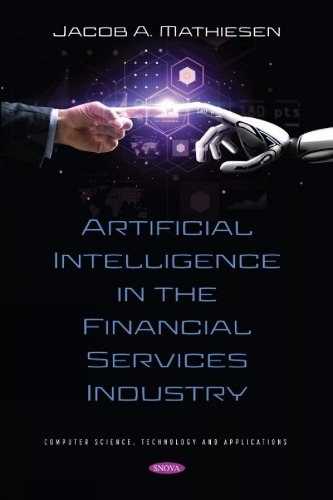
Today, the financial services sector is facing a period of rapid disruption and innovation, and artificial intelligence (AI) is at the heart of these changes. Artificial intelligence can be used to gather enormous amounts of data, detect abnormalities, and solve complex problems. Financial institutions are already experimenting extensively with AI strategies to enhance and streamline financial institutions, BSA and AML compliance, CRA requirements, fraud detection, and real estate valuations, all while reducing cost levels. This book looks at how artificial intelligence is affecting the financial services industry.
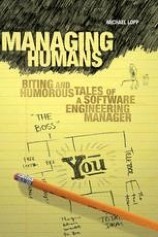
Managing Humans is a selection of the best essays from Michael Lopp's web site, Rands in Repose. Drawing on Lopp's management experiences at Apple, Netscape, Symantec, and Borland, this book is full of stories based on companies in the Silicon Valley where people have been known to yell at each other. It is a place full of dysfunctional bright people who are in an incredible hurry to find the next big thing so they can strike it rich and then do it all over again. Among these people are managers, a strange breed of people who through a mystical organizational ritual have been given power over your future and your bank account.
Discusses the IT management tasks and the objects involved. This book outlines traditional IT management; deals with controlling IT; and, tackles the financial, personnel, purchasing, legal and security aspects in IT. It explains the effects of striving for 'utility computing' and control of IT by means of 'IT portfolio management'.
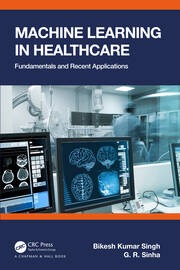
Discusses how to build various ML algorithms and how they can be applied to improve healthcare systems. Healthcare applications of AI are innumerable: medical data analysis, early detection and diagnosis of disease, providing objective-based evidence to reduce human errors, curtailing inter- and intra-observer errors, risk identification and interventions for healthcare management, real-time health monitoring, assisting clinicians and patients for selecting appropriate medications, and evaluating drug responses. Extensive demonstrations and discussion on the various principles of machine learning and its application in healthcare is provided, along with solved examples and exercises.

Daraa Highway - Ghabagheb - Syria
+963-15 2050 - 15 860 380 /1/2/3 - 11 662 3900