



Page 1
Page 1

When Can Oil Economies Be Deemed Sustainable?
Questions the stereotype depicting all Gulf (GCC) economies as not sustainable, and starts a critical discussion of what these economies and polities should do to guarantee themselves a relatively stable future.

Urban Modernity in the Contemporary Gulf : Obsolescence and Opportunities
Offers a timely and engaging discussion on architectural production in the modernization era in the Arabian Peninsula. Focusing on the 20th century as a starting point, the book explores the display of transnational architectural practices resulting in different notions of locality, cosmopolitanism, and modernity. Contextually, with an eye on the present, the book reflects on the initiatives that recently re-engaged with the once ville moderne which, meanwhile, lost its pivotal function and meaning. A city within a bigger city, the urban fabric produced during the modernization era has the potential to narrate the social growth, East–West dynamics, and citizens’ memories of the recent past.

The Saudi Arabian Economy : Policies, Achievements, and Challenges
Offers an analysis of key challenges facing the Saudi economy, including the potential costs and benefits of privatization, globalization, and eventual membership in the WTO. Employment, education, economic and social stability, and Saudi Arabia’s place in the Gulf Cooperation Council are offered as keys to the consensus building needed to ensure the Kingdom’s healthy economic future.

The Environment in Asia Pacific Harbours
Urbanization has already reached unprecedented levels in the estuarine and coastal zone of the Asia Pacific region where mega-cities and mega-harbours have developed and are still growing. Environmental degradation is significant and growing. The social, economic and environmental problems are pressing and call for science-based solutions. This book details how science can provide solutions so that economic and social developments can be ecologically sustainable. Twelve sites are discussed in detail, integrating physics and biology, and between science and engineering. In turn these are linked to economic and social issues. These sites are Tokyo Bay, the Pearl Estuary, Hong Kong, Shanghai and the Yangtze delta, Klang, Manila Bay, Jakarta Bay, Pearl Harbor, Ho Chi Minh City, Bangkok and the upper Gulf of Thailand, Singapore, and Darwin.

Strategic Management in Islamic Finance
The framework integrates insights into the current practices of Islamic finance, a variety of theories – namely the market-based view, the resource-based view, and, to some extent, New Institutional Economics approaches – as well as previous research from the fields of strategic management and economics. The author is testing the theoretical framework empirically in a survey of 36 major Islamic financial institutions based in the Gulf Cooperation Council area and in Malaysia.

Protecting the Gulfs Marine Ecosystems from Pollution
This volume reviews present sources and levels of pollution in the Gulf, assesses their causes and effects on biota and ecosystems, and identifies gaps and obstacles currently preventing an effective integrated transboundary management of the marine and coastal resources. It highlights preventive and remedial measures reducing levels of pollution and mitigating adverse impacts.

Oil and Security : A World Beyond Petroleum
This book examines the economic impact of changes in the global demand and supply for fossil fuels both on the major producers in Middle Eastern countries around the Persian Gulf, other producers, as well as the world at large. The economic, social and political life of most countries is not only intimately linked to and influenced by the energy market but also affected by historical developments. Among other issues, it shows how the economic, social and political development of societies in Arabia, the peoples of the Arab Peninsula are influenced by their historic and cultural environment, and what the future may bring to this region when their principal economic assets, petroleum and gas, start to lose markets as alternative sources of fossil fuel, alternative, and renewable energy supply the bulk of global energy needs. It also describes how changing fossil fuel costs, access, security of supply, and environmental impacts may affect future economic, social, and political developments as well as technological advances and changes in priorities.

In Search of an Integrative Vision for Technology : Interdisciplinary Studies in Information Systems
This book provides a fascinating reading experience for anyone interested in an inquiring relationship between technical progress and the quality of the human condition. It manages to keep a healthier balance between these two complex topics than is found in most publications of the genre, too often they consist either of much technology and little philosophy or the converse.... The book also manages to build accessible bridges over the gulf that tends to separate the philosophical language from the 'real' concerns of technologists."

Habitats and Biota of the Gulf of Mexico : Before the deepwater horizon oil spill ; Vol.2 : Fish resources, fisheries, sea turtles, avian resources, marine mammals, diseases and mortalities
The Gulf of Mexico is an open and dynamic marine ecosystem rich in natural resources but heavily impacted by human activities, including agricultural, industrial, commercial and coastal development. Nutrients and pollutants from coastal communities and dozens of rivers flow into the Gulf, including material from the Mississippi River watershed, which drains over one third of continental United States. The Gulf of Mexico has been continuously exposed to petroleum hydrocarbons for millions of years from natural oil and gas seeps on the sea floor, and more recently from oil drilling and production activities located in the water near and far from shore. Major accidental oil spills in the Gulf are infrequent; two of the most significant include the Ixtoc I blowout in the Bay of Campeche in 1979 and the Deepwater Horizon Oil Spill in 2010.

Habitats and Biota of the Gulf of Mexico : Before the deepwater horizon oil spill ; Vol.1 : Water quality, sediments, sediment contaminants, oil and gas Seeps, coastal habitats, offshore plankton and benthos, and shellfish
The Gulf of Mexico is an open and dynamic marine ecosystem rich in natural resources but heavily impacted by human activities, including agricultural, industrial, commercial and coastal development. Nutrients and pollutants from coastal communities and dozens of rivers flow into the Gulf, including material from the Mississippi River watershed, which drains over one third of continental United States. The Gulf of Mexico has been continuously exposed to petroleum hydrocarbons for millions of years from natural oil and gas seeps on the sea floor, and more recently from oil drilling and production activities located in the water near and far from shore. Major accidental oil spills in the Gulf are infrequent; two of the most significant include the Ixtoc I blowout in the Bay of Campeche in 1979 and the Deepwater Horizon Oil Spill in 2010.
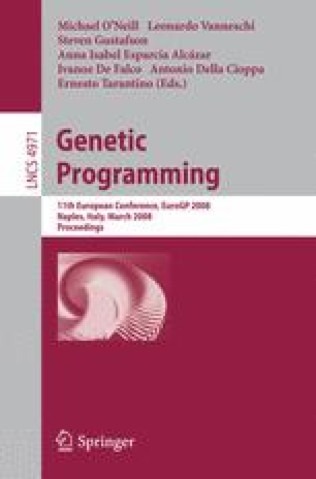
Genetic Programming ; 11th European Conference, EuroGP 2008, Naples, Italy, March 26-28, 2008. Proceedings
The 11th European Conference on Genetic Programming, EuroGP 2008, took place in Naples, Italy from 26 to 28 March in the University of Naples Congress Centre with spectacular views over the Gulf of Naples. This volume contains the papers for the 21 oral presentations and 10 posters that were presented during this time. A diverse array of topics were covered refecting the current state of research in the ?eld of Genetic Programming, including the latest work on representations, theory, operators and analysis, evolvable hardware, agents and numerous applications. A rigorous, double-blind peer review process was employed, with each s- mission reviewed by at least three members of the international Program C- mittee.

Economics: Complex Windows
This volume contains papers that provide an analysis of topics in the following areas: Agent Based Models, Non-linear Time Series Analysis, Financial Market Dynamics, Econo-physics, Deterministic Chaos, Macroeconomic Dynamics. Economics: Complex Windows, does not present contributions to the sterile debate as to the merits of the different grand, or potentially grand paradigms of economics. Rather it offers a balanced collection of methodological advances which can be applied to concrete economic problems. Starting with a presentation of the "complexity approach" to economics, it goes on to provide a collection of applications to areas such as the analysis of market imperfections, risk assessment, non-linear dynamics, forecasting and highly irregular fluctuations. The tools used help to provide a clearer understanding and a more accurate analysis of these areas of economics. They also highlight the gulf which exists between current economic theory and real economic practice. The basic idea is to encourage economic researchers to embrace a more open and pragmatic approach to economics rather than to reluctantly move in this direction as if it were somehow a betrayal of established dogma. We hope, in this way, to open up avenues which will lead to progress beyond the "holy trinity", (rationality, equilibrium and greed) of modern economics.
Macro-Engineering : A Challenge for the Future
Macro-engineering involves the large-scale modification and manipulation of natural systems for the benefit of mankind. The primary goals of some Earth-based macroprojects described in this book are power production, land reclamation, food production, climate change, environment, water, transport and coastal protection. Other Earth or space projects considered here have a more futuristic ring, but our present-day technical skill makes their realization possible. Earth-based macroprojects usually combine different aspects and aims. They have a major impact on the ecology of a region and the inhabitants' means of living (like tourism, fishing, shipping). Its effects may be felt worldwide, like the rise in global sea level after the damming and evaporation of large ocean gulfs for power production, or the change in climate following the regional reduction of solar insolation.
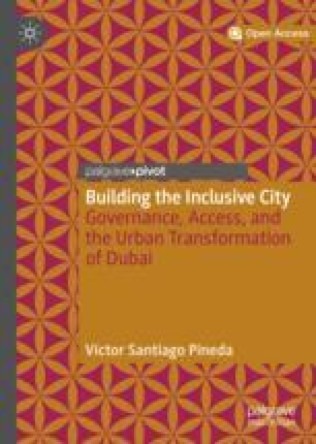
Building the Inclusive City : Governance, Access, and the Urban Transformation of Dubai
This book is an anthropological urban study of the Emirate of Dubai, its institutions, and their evolution. It provides a contemporary history of disability in city planning from a non-Western perspective and explores the cultural context for its positioning. Three insights inform the author’s approach. First, disability research, much like other urban or social issues, must be situated in a particular place
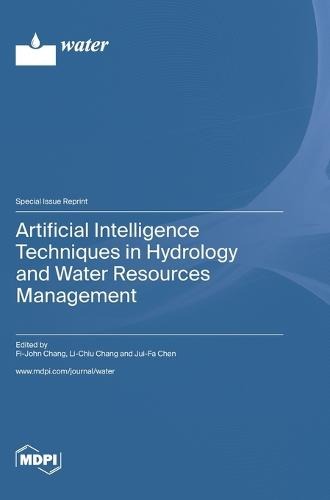
Artificial intelligence techniques in hydrology and water resources management
The sustainable management of water cycles is crucial in the context of climate change and global warming. It involves managing global, regional, and local water cycles, as well as urban, agricultural, and industrial water cycles, to conserve water resources and their relationships with energy, food, microclimates, biodiversity, ecosystem functioning, and anthropogenic activities. Hydrological modeling is indispensable for achieving this goal, as it is essential for water resources management and the mitigation of natural disasters. In recent decades, the application of artificial intelligence (AI) techniques in hydrology and water resources management has led to notable advances. In the face of hydro-geo-meteorological uncertainty, AI approaches have proven to be powerful tools for accurately modeling complex, nonlinear hydrological processes and effectively utilizing various digital and imaging data sources, such as ground gauges, remote sensing tools, and in situ Internet of Things (IoT) devices.
