



Page 1
Page 1

Hydrological and Biological Responses to Forest Practices : The Alsea Watershed Study
Through analyses of works generated by the study, Hydrological and Biological Responses to Forest Practices: The Alsea Watershed Study addresses the quantification of forest resource sustainability and bolsters the case for long-term monitoring at a time when managers and policy makers are searching for ways to restore the runs of salmon and steelhead to rivers and streams of the Pacific Northwest. Edited by John D. Stednick, a forest hydrologist responsible for the study’s reactivation, this book will be of interest to students in natural resources, land managers, policy makers, and researchers, particularly in water and fishery resources.

Handbook of Pathogens and Diseases in Cephalopods
The aim of this book is to facilitate the identification and description of the different organs as well as pathogens and diseases affecting the most representative species of cephalopods focussed on Sepia officinalis, Loligo vulgaris and Octopus vulgaris. These species are valuable ‘morphotype’ models and belong to the taxonomic groups Sepioidea, Myopsida and Octopoda, which include most of the species with a high market value and aquaculture potential. The study is based on photographs at macroscopic and histological level in order to illustrate the role of the most important pathogens and related diseases from the view of a pathological diagnosis. The reader is able to familiarize with functional anatomy, necropsy and general histology of adults and paralarvae, as well as with the identification of different pathogens and pathologies. This work is thus an invaluable guide for the diagnosis of cephalopod diseases. Besides including pathogens for non-European cephalopod species, it also provides a useful contribution encouraging marine pathologists, parasitologists, veterinarians and those involved in fishery sanitary assessments, aquarium maintenance and aquaculture practices aiming to increase their knowledge about the pathology of cephalopods.

Handbook Of Operations Research In Natural Resources
Handbook of Operations Research in Natural Resources will be the first systematic handbook treatment of quantitative modeling natural resource problems, their allocated efficient use, and societal and economic impact. Andrés Weintraub is the very top person in Natural Resource research. Moreover, he has an international reputation in OR and a former president of the International Federation of Operational Research Societies (IFORS). He has selected co-editors who are at the top of the sub-fields in natural resources: agriculture, fisheries, forestry, and mining. The book will cover these areas in terms with contributions from researchers on modeling natural research problems, quantifying data, developing algorithms, and discussing the benefits of research implementations. The handbook will include tutorial contributions when necessary.

Habitats and Biota of the Gulf of Mexico : Before the deepwater horizon oil spill ; Vol.2 : Fish resources, fisheries, sea turtles, avian resources, marine mammals, diseases and mortalities
The Gulf of Mexico is an open and dynamic marine ecosystem rich in natural resources but heavily impacted by human activities, including agricultural, industrial, commercial and coastal development. Nutrients and pollutants from coastal communities and dozens of rivers flow into the Gulf, including material from the Mississippi River watershed, which drains over one third of continental United States. The Gulf of Mexico has been continuously exposed to petroleum hydrocarbons for millions of years from natural oil and gas seeps on the sea floor, and more recently from oil drilling and production activities located in the water near and far from shore. Major accidental oil spills in the Gulf are infrequent; two of the most significant include the Ixtoc I blowout in the Bay of Campeche in 1979 and the Deepwater Horizon Oil Spill in 2010.

Governance of Arctic Shipping : Rethinking Risk, Human Impacts and Regulation
This is a result of the Dalhousie-led research project Safe Navigation and Environment Protection, supported by a grant from the Ocean Frontier Institute’s the Canada First Research Excellent Fund (CFREF).

Global Change and Integrated Coastal Management : The Asia-Pacific Region
Most of the world’s population lives close to the coast and is highly dependent on coastal resources, which are being exploited at unsustainable rates. These resources are being subject to further pressures associated with population increase and the globalization of coastal resource demand. This is particularly so for the Asia-Pacific region which contains almost two thirds of the world’s population and most of the world’s coastal megacities. The region has globally important atmospheric and oceanic phenomena, which affect world climate such as the Asian Monsoon and the El-Niño Southern Oscillation phenomena. The Asia-Pacific region also has highly significant marine diversity but over the last few decades, coastal resources such as mangroves, coral reefs and fisheries have experienced large-scale depletion.

Formal Methods in Systems Biology ; 1st International Workshop, FMSB 2008, Cambridge, UK, June 4-5, 2008. Proceedings
This book constitutes the refereed proceedings of the First International Workshop on Formal Methods in Systems Biology, FMSB 2008, held in Cambridge, UK, in June, 2008.The 9 revised full papers presented were carefully reviewed and selected from the workshop lectures that all were invited contributions. The purpose of this meeting was to identify techniques for the specification, development and verification of biological models. It also focused on the design of tools to execute and analyze biological models that can significantly advance our understanding of biological systems.

Fluctuations, Information, Gravity and the Quantum Potential
A main theme of the book outlines the role of the quantum potential in quantum mechanics and general relativity and one of its origins via fluctuations formulated in terms of Fisher information. Another theme is the description of various approaches to Bohmian mechanics and their role in quantum mechanics and general relativity. Along the way various approaches to, for instance, the Dirac equation, the Einstein equations, the Klein-Gordon equation, the Maxwell equations and the Schr?dinger equations are described. Statistics and geometry are intertwined in various ways and, among other matters, the aether, cosmology, entropy, fractals, quantum Kaehler geometry, the vacuum and the zero point field are discussed. There is also some speculative material and some original work along with material extracted from over 1000 references and the work is current up to April 2005.

Fish Bioacoustics
The study of how fish make and respond to sound has important implications for communication, physiology, behavior, and commercial techniques. Fish Bioacoustics, a new definitive volume on fish auditory systems, will interest investigators in both basic research of fish bioacoustics as well as investigators in applied aspects of fisheries and resource management. Topics cover structure, physiology, localization, and acoustic behavior as well as more applied topics such as using sound to detect and locate fish.

Essential Fish Habitat Mapping in the Mediterranean
This book presents latest advances in EFH mapping and modelling and introduces the environmental approach to EFH identification through the combined use of latest technologies and advanced techniques, such as Remote Sensing, Geographic Information Systems and Spatial Statistics.The contents of this book include overviews and comparisons of different approaches on species habitat modelling, methods to identify teleconnection patterns between large-scale meteo-oceanic phenomena and local environmental variation, and EFH maps for cephalopod, shrimp, hake, anchovy, sardine, and swordfish resources in the Mediterranean.

Environmental History of the Rhine-Meuse Delta : An ecological story on evolving human–environmental relations coping with climate change and sea-level rise
This book presents the environmental history of the Delta of the lowland rivers Rhine and Meuse, an ecological story on evolving human–environmental relations coping with climate change and sea-level rise. It offers a combination of in-depth ecology and environmental history, dealing with exploitation of land and water, the use of everything nature provided, the development of fisheries and agriculture, changes in biodiversity of higher plants, fish, birds, mammals and invasive exotics. It is the first comprehensive book written in English on the integrated environmental history of the Delta, from prehistoric times up to the present day. It covers the l- acy of human intervention, the inescapable fate of reclaimed, nevertheless subs- ing and sinking polders, ‘bathtubs’ attacked by numerous floods, reclaimed in the Middle Ages and unwittingly exposed to the rising sea level and the increasing amplitude between high and low water in the rivers. The river channels, constricted and regulated between embankments, lost their flood plains, silted up, degraded and incised. Cultivation of raised bog deposits led to oxidation and compacting of peat and clay, resulting in progressive subsidence and flooding; arable land had to be changed into grassland and wetland. For millennia muscular strength and wind and water powers moulded the country into its basic form. From 1800 onwards, acceleration and scaling up by steam power and electricity, and exponential popu- tion growth, resulted in the erection of human structures ‘fixed forever’, and severe pressure on the environment.

Environmental Crises
This book studies the art and science of analyzing, assessing and anticipating environmental change. Among the issues considered are the observational evidence, statistical analysis and dynamic modeling as well as visioning of not-implausible changes in the environment, the changing public perception of the environment, functions of the environment and its use. Coverage also reviews a series of four prominent cases, namely climate change, the emissions of gasoline lead into the atmosphere and water bodies, fisheries policies and the management of marine oil pollution.

Diabetes drug notes
Diabetes is becoming more common in both older and younger generations and in keeping with this escalation in cases, there are an ever increasing number of drugs and drug classes that are suitable to treat hyperglycaemia. In a unique blend of diabetes practice, clinical pharmacology, and cardiovascular medicine, Diabetes Drug Notes describes the principles of clinical pharmacology with regards to diabetes prescribing. Each drug class for the treatment of diabetes is covered in detail, along with the effect on the cardiovascular and renal systems caused by each drug. Building upon the success of their "Drug Notes" series for Practical Diabetes and their "Drugs for Diabetes" series in the British Journal of Cardiology, the team of experts focuses on the glycaemic management of type 1 and type 2 diabetes, with other effects of antidiabetic drugs covered as well.

Developments in spatial data handling ; 11th International Symposium on Spatial Data Handling
The International Symposium on Spatial Data Handling is the premier research forum for Geographic Information Science. The papers published in this volume are carefully refereed by an international programme committee composed of experts in various areas of GIS who are especially renowned for their scientific innovation.

Developments in Fish Telemetry ; Proceedings of the Sixt Conference on Fish Telemetry held in Europe
This volume includes 33 peer-reviewed papers presented at the Sixth Conference on Fish Telemetry held in Europe (Sesimbra, Portugal, 5-11 June 2005). The papers focus on the application of aquatic telemetry techniques by scientists to investigate fundamental aspects of animal biology in order to conserve and manage natural resources. The topics addressed in this issue are human impacts and fisheries, migration and behaviour, species conservation and habitat rehabilitation, and methodology and new technology. This book is aimed at scientists and engineers actively involved in aquatic telemetry projects, aquatic biologists (marine and freshwater), fisheries biologist and managers.

Design of Observational Studies
This book introduction to statistical inference in observational studies and a detailed discussion of the principles that guide the design of observational studies. An observational study is an empiric investigation of effects caused by treatments when randomized experimentation is unethical or infeasible. Observational studies are common in most fields that study the effects of treatments on people, including medicine, economics, epidemiology, education, psychology, political science and sociology. The quality and strength of evidence provided by an observational study is determined largely by its design. Design of Observational Studies is organized into five parts. Chapters 2, 3, and 5 of Part I cover concisely many of the ideas discussed in Rosenbaum’s Observational Studies. Part II discusses the practical aspects of using propensity scores and other tools to create a matched comparison that balances many covariates, and includes an updated chapter on matching in R. In Part III, the concept of design sensitivity is used to appraise the relative ability of competing designs to distinguish treatment effects from biases due to unmeasured covariates. Part IV discusses evidence factors and the computerized construction of more than one comparison group. Part V discusses planning the analysis of an observational study, with particular reference to Sir Ronald Fisher’s striking advice for observational studies: "make your theories elaborate."

Design for Personalisation
Presents taxonomy of personalisation, and its potential consequences for the design profession as well as its ethical and political dimensions through a collection of essays from a range of academic perspectives. The thought-provoking introduction, conclusion and nine chapters present a well-balanced mixture of in-depth literature review and practical examples to deepen our understanding of the consequences of personalisation for our professional and personal lives. Collectively, this book points towards the implications of personalisation for design-led social innovation.

Decolonising blue spaces in the anthropocene : Freshwater management in Aotearoa New Zealand
This book crosses disciplinary boundaries to connect theories of environmental justice with Indigenous people’s experiences of freshwater management and governance.
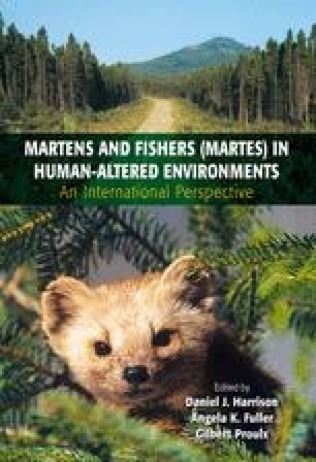
Martens and Fishers (Martes) in human-altered environments : An international perspective
Examines the conditions where humans and martens are compatible and incompatible, and promotes land use practices that allow Martes to be representatively distributed and viable. All Martes have been documented to use forested habitats and 6 species (excluding the stone marten) are generally considered to require complex mid- to late-successional forests throughout much of their geographic ranges. All species in the genus require complex horizontal and vertical structure to provide escape cover protection from predators, habitat for their prey, access to food resources, and protection from the elements. Martens and the fisher have high metabolic rates, have large spatial requirements, have high surface area to volume ratios for animals that often inhabit high latitudes, and often require among the largest home range areas per unit body weight of any group of mammals. Resulting from these unique life history characteristics, this genus is particularly sensitive to human influences on their habitats, including habitat loss, stand-scale simplification of forest structure via some forms of logging, and landscape-scale effects of habitat fragmentation. Given their strong associations with structural complexity in forests, martens and the fisher are often considered as useful barometers of forest health and have been used as ecological indicators, flagship, and umbrella species in different parts of the world. Thus, efforts to successfully conserve and manage martens and fishers are associated with the ecological fates of other forest dependent species and can greatly influence ecosystem integrity within forests that are increasingly shared among wildlife and humans.We have made great strides in our fundamental understanding of how animals with these unique life history traits perceive and utilize habitats, respond to habitat change, and how their populations function and perform under different forms of human management and mismanagement.
Making Fisheries Management Work : Implementation of Policies for Sustainable Fishing
This book seeks to widen the perspective taken on implementation in fisheries management. The cases presented in this volume addresses legal, administrative, and political challenges regarding implementation of resource conservation policies. The book addresses problems relating to goal achievement, but also causes of deliberate change of political goals during implementation. Fisheries management systems are embedded in inert social structures and natural conditions that vary among different states. Consequently, the book takes a historical and comparative approach, describing the historical developments of national implementation systems and the conditions that shaped their development. It thus seeks to explain why national fisheries management systems have evolved differently, focusing on Norwegian, Faeroese, and EU/Danish management systems. The descriptive and explanatory outlines are accompanied by qualitative assessments of the systems effectiveness as tools for collective action.
