



Page 1
Page 1

Oncology : An Evidence-Based Approach
Reflect the principles and current practice of oncology with contributors from the fields of medical, surgical, and radiation oncology. The textbook will incorporate an evidence-based approach, enabling the reader to make decisions on the basis of concrete data. Sections on solid tumors, hematologic malignancies and the practice of oncology address the natural history and therapy for the full spectrum of neoplastic diseases in the adult. Further sections present fundamentals of supportive care of the cancer patient, the management of oncologic emergencies and acute toxicities of therapy, as well as care of metastatic disease and the terminally-ill patient. Breaking new ground, the textbook features thoughtful, in-depth sections on cancer prevention and control, cancer surviorship, the economics of cancer care, and cancer informatics. Cancer imaging is covered with an organ system-based approach, with an additional chapter on the especially intriguing potential of PET. Furthermore, a comprehensive section on translational basic science reviews the fundamentals of molecular biology, the cell cycle and signal transduction, carcinogenesis, cancer genetics, the biology of invations and metastasis, and tumor immunology.

Obstetric life support manual
A comprehensive review in normal and abnormal pregnancy physiology, the most common etiologies of maternal medical emergencies, recognition of maternal deterioration and pending cardiopulmonary arrest, modifications to cardiopulmonary resuscitation in pregnant and postpartum patients, special procedures that can assist in diagnosing and treating maternal medical emergencies tailored to the setting (e.g., point-of-care ultrasound, resuscitative cesarean delivery, extracorporeal cardiopulmonary resuscitation), treatment of trauma/stroke in pregnancy, and postpartum maternal medical emergencies. There are streamlined algorithms and cognitive aids designed to improve a team’s ability to successfully implement techniques unique to treating maternal medical emergencies and car..
Nutrition and Health in Developing Countries
Nutrition and Health in Developing Countries, Second Edition was written with the underlying conviction that global health and nutrition problems can only be solved through a firm understanding of the different levels of causality and the interactions between the various determinants. This volume provides policy makers, nutritionists, students, scientists, and professionals with the most recent and up-to-date knowledge regarding major health and nutritional problems in developing countries.

Nuclear and Radiological Emergencies in Animal Production Systems, Preparedness, Response and Recovery
This volume explains how major nuclear and radiological emergencies (NREs) can have implications at local, national and international level. The response to NREs requires a competent decision-making structure, clear communication and effective information exchange. National veterinary services have the responsibility to plan, design and manage animal production system in their countries. These activities cover animal health, animal movement control, production control and improvement, and control of the products of animal origin before their placement on the market.
Medical Emergencies in the Dental Office
Prepares dental professionals to promptly and proactively recognize and manage medical emergencies that may occur in the dental office. It details how to anticipate potential emergencies and what resources must be on hand to deal effectively with these situations. The book is arranged in eight sections concentrating on topics such as prevention of emergencies through patient evaluation (medical history) and specific types of more common emergencies that practitioners may encounter. "It successfully fulfils its aim of stimulating all members of the dental team to improve and maintain their skills in the effective prevention, recognition and management of medical emergencies.
Medical emergencies in dental practice
Practitioners and their entire dental staff must be ready to confront medical emergencies that may arise during treatment with sufficient medical knowledge to initiate appropriate primary treatment. This accessible manual addresses the most common medical emergencies encountered during dental treatment. Step-by-step treatment guidelines and decision-making algorithms outline the steps for immediate treatment and make this practical book an essential office manual.

Integration of Information for Environmental Security : Environmental Security - Information Security - Disaster Forecast and Prevention - Water Resources Management
Currently the necessary information exists in a multitude of forms and formats geographically and physically scattered over different countries, institutes and organisations, and are subject to widely different data policies and management schemes. Moreover, there is no complete and updated overview of the existing information, e.g. in the form of a metadata catalogue. As a result, integration of this information in case of emergencies has proven to be extremely difficult, if not impossible. Although in some cases, interesting and impressive "demonstrations" have been shown of the possibilities of the integration of information, for a number of reasons these have reached the "operational" stage.
Inglese per radiologi : Scrivere, presentare e comunicare in ambito internazionale = Imaging in vascular emergencies - Body : Case studies for Radiologists : Writing, presenting and communicating internationally
The volume deals with the different aspects and multiple applications of radiological English, providing useful suggestions for preparing a scientific work, for understanding the meaning of abbreviations and acronyms commonly used in the Anglo-Saxon language, for presenting a report to a congress international or to moderate a scientific session.
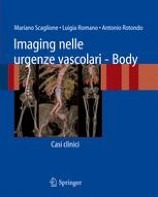
Imaging nelle urgenze vascolari - Body : Casi clinici = Imaging in vascular emergencies - Body : Clinical cases
Vascular urgency is true urgency. Given the variability of clinical presentations, the radiologist is increasingly called into question for diagnostic-differential problems and he is entrusted with the nosological framework and the therapeutic choices of doubtful cases. The purpose of the book is to provide, through the presentation of a large number of cases, an easy, fast and stimulating means through which the reader can confront.

Geo-information for Disaster Management
Geo-information technology offers an opportunity to support disaster management: industrial accidents, road collisions, complex emergencies, earthquakes, fires, floods and similar catastrophes (for example the recent huge disaster with the Tsunami in South-East Asia on 26 December 2004). Access to needed information, facilitation of the interoperability of emergency services, and provision of high-quality care to the public are a number of the key requirements. The book provides a broad overview of the (geo-information) technology, software, systems needed, used and to be developed for disaster management. The book provokes a wide discussion on systems and requirements for use of geo-information under time and stress constraints and unfamiliar situations, environments and circumstances.

General ultrasound in the critically ill
General ultrasound in the critically ill describes a bedside tool destined for use by the intensivist and any physician involved in emergencies. It specifically deals with findings of immediate clinical relevance throughout the body. New emergency applications of ultrasound in the abdomen, the vessels, the head and the heart are considered. The major topic, the lung, is extensively discussed. Interventional ultrasound forms part of nearly every chapter. Flow charts simplify daily concerns: acute dyspnea, shock, unexplained fever, etc. The strong points and pitfalls of ultrasound are reviewed. Technical notes are mingled with general considerations. Benefiting from the extensive experience of an intensivist intimately familiar with ultrasound, this book accurately answers most daily problems arising in the critically ill. it offers not only an exhaustive atlas but also a permanent aid to the therapeutic decision. All in all, General ultrasound in the critically ill provides a key for practicing a kind of visual medicine. Since 1990 Daniel Lichtenstein has been an intensivist in a medical ICU which already occupied a pioneering place in echocardiography. He has from the beginning devoted his efforts to the development of general ultrasound. He regularly publishes studies on lung ultrasound, his main topic, in the international literature.
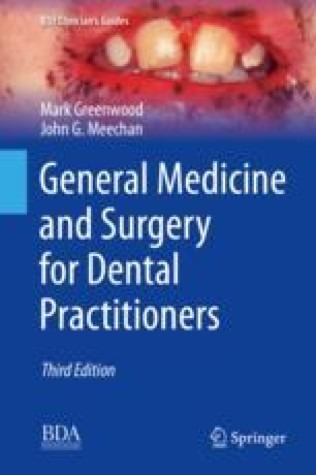
General Medicine and Surgery for Dental Practitioners
Aimed at the practising clinician provides a welcome detailed overview of the medical and surgical conditions that affect patients seen in everyday dental practice.
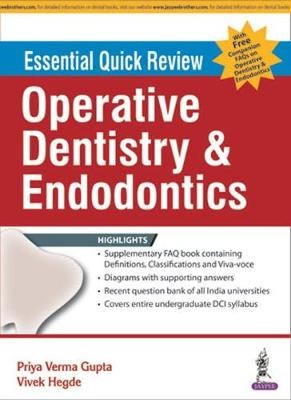
Essential Quick Review : Operative Dentistry & Endodontics
Provides a complete outline for writing an essay type, a short answer type, or a viva voce type of questions. Written in a simple language along with well-illustrated diagrams wherever possible. Supported with a supplementary booklet for each subject containing three sections: definitions, classifications, and viva voce.

Endodontic treatment, retreatment, and surgery : Mastering clinical practice
Provides clear, concise guidance on a range of essential treatment strategies for the provision of reliable endodontic care. Practical clinical procedures are described step by step and key concepts emphasized with the aid of a wealth of high-quality illustrations and photographs.

Emergency Radiology : Imaging and Intervention
There is an increasing trend towards the use of tries, hospital emergency departments have become a MDCT to evaluate traumatic injuries and non-traumatic major part of the healthcare safety net. In the last decade emergencies. The use of workstations for reporting and for economically-driven structural changes in health care further image reconstruction becomes standard practice. delivery have caused a dramatic increase in emergency On the occasion of the European Congress of Radiology department visits. In response to capacity and staffing (ECR) 2003 and 2004 a Categorical Course on “Emergency pressures, hospitals are developing and implementing a Radiology”has been organized to assess current devel- variety of strategies designed to improve patient flow and ments and concepts in this rapidly growing field. reduce overcrowding in the emergency department. Numerous radiologists,all outstanding and international- Several factors are considered critical for success, such as ly renowned experts in their field,have made superb c- having the right multidisciplinary teams in place and opti- tributions in an ECR syllabus.

Emergencies in Urology
Emergencies in Urology is a comprehensive textbook covering one of the few remaining white spots on the map of urological literature. To date only a small number of publications have been dedicated to the topic of urgent and emergent problems in urology – important as these are in our daily clinical life.Therefore the editors, both of them internationally recognized urological experts, have taken the effort to present an in-depth study into virtually every possible urgent urological situation with which a urologist may be confronted today. Consequently, the book includes chapters on topics such as urological trauma, urosepsis, urinary obstruction, oncological emergencies, intra- and postoperative complications, acute problems in children, and many more.They did so not only by writing the regular book chapters but also by delivering short stories about urgent situations they encountered in their own professional life. These vignettes are one of the rare opportunities where experience can be relayed without restriction from one urological generation to the next.

Dental trauma and adverse oral conditions : practice and management techniques
Endeavors to provide readers with information on dental emergencies and dental trauma, with their associated management and other issues. Other relevant conditions that are highlighted include avulsion, orbital trauma, salivary duct cysts and periodontal disease. Information is also included on mental health and quality of life impacts arising for individuals from dental trauma. Teledentistry, which is relevant for all clinicians in the current climate of digital technologies, is also covered.
Dental science for the medical professional: an evidence-based approach
A guide for the medical practitioner on dentistry and dental emergencies. The book is divided into five sections for ease of use: The first section gives an overview of local head and neck anatomy; the second section provides a discussion of potential head and neck infections; the third section discusses important perioral pathology; the fourth section gives an overview on the management of soft and hard tissue trauma; the fifth section discusses some other topics which might be encountered by the medical professional like managing patient anxiety and pain.
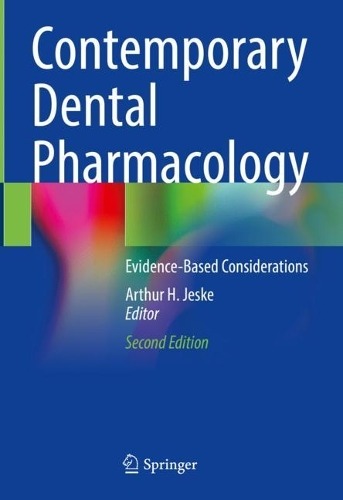
Contemporary dental pharmacology : Evidence-based considerations ; 2nd ed.
Aims to equip practitioners with a sound understanding of both the scientific evidence for various interventions and the comparative efficacy of those interventions. The focus is on the drugs most commonly used in conjunction with dental treatment, including local anesthetics, analgesics, antibiotics, sedatives, and drugs for the management of medical emergencies. Summaries of the scientific evidence from the available published literature are provided, with assessment of the level and quality of the evidence base.

Contemporary dental pharmacology : Evidence-based considerations ; 1st ed.
This book on current approaches to the use of drugs in dentistry aims to equip practitioners with a sound understanding of both the scientific evidence for various interventions and the comparative efficacy of those interventions. The focus is on the drugs most commonly used in conjunction with dental treatment, including local anesthetics, analgesics, antibiotics, sedatives, and drugs for the management of medical emergencies.
