



Page 1
Page 1

Nucleation and Atmospheric Aerosols ; 17th International Conference, Galway, Ireland, 2007
Atmospheric particles are ubiquitous in the atmosphere: they form the seeds for cloud droplets and they form haze layers, blocking out incoming radiation and contributing to a partial cooling of our climate. They also contribute to poor air quality and health impacts. This book brings together the leading experts from the nucleation and atmospheric aerosols research communities to present the current state-of-the-art knowledge in these related fields.

Modeling Solar Radiation at the Earth’s Surface : Recent Advances
Solar radiation data is important for a wide range of applications, e.g. in engineering, agriculture, health sector, and in many fields of the natural sciences. A few examples showing the diversity of applications may include: architecture and building design e.g. air conditioning and cooling systems; solar heating system design and use; solar power generation; weather and climate prediction models; evaporation and irrigation; calculation of water requirements for crops; monitoring plant growth and disease control; skin cancer research.

Interactions Between Charged Particles in a Magnetic Field : A Theoretical Approach to Ion Stopping in Magnetized Plasmas
This monograph focusses on the influence of a strong magnetic field on the interactions between charged particles in a many-body system. Two complementary approaches, the binary collision model and the dielectric theory are investigated in both analytical and numerical frameworks.

Heating, cooling, lighting : Sustainable design methods for architects
Helps architects minimize mechanical systems and energy usage over the life of the building by siting, building design, and landscaping to maximize natural heating, cooling, and lighting. This new fourth edition includes new information on integrated design strategies and designing for the Tropics. Resources include helpful case studies, checklists, diagrams, and a companion website featuring additional cases, an image bank, and instructor materials. Designing buildings that require less energy to heat, cool, and light means allowing the natural energy of the sun and wind to reduce the burden on the mechanical and electrical systems. Basic design decisions regarding size, orientation, and form have a great impact on the sustainability, cost, and comfort of a building. Heating, Cooling, and Lighting provides detailed guidance for each phase of a design project.

Heating versus Cooling in Galaxies and Clusters of Galaxies ; Proceedings of the MPA/ESO/MPE/USM Joint Astronomy Conference held in Garching, Germany, 6-11 August 2006
The present volume is the record of a recent topical conference on the interplay between heating and cooling processes in galaxies and clusters of galaxies. The volume documents recent progress in our understanding of the dense central regions of these objects.

Heat and cold storage with PCM : An up to date introduction into basics and applications
Latent heat storage with phase change materials (PCM) has the potential to improve significantly the efficiency of heat and cold storages and to reduce their size considerably. The book is an introduction into the field for researchers and students. It summarizes and explains the basics, general concepts, and applications with examples in a single text. For a better understanding, many derivations, graphs and tables are included. All aspects from materials analysis and modification, storage design, storage integration, and different application examples are covered. Special focus is on applications in buildings.

Future space-transport-system components under high thermal and mechanical loads : results from the DFG Collaborative Research Center TRR40
This book presents the findings of Collaborative Research Center Transregio 40 (TRR40), initiated in July 2008 and funded by the German Research Foundation (DFG). Gathering innovative design concepts for thrust chambers and nozzles, as well as cutting-edge methods of aft-body flow control and propulsion-component cooling, it brings together fundamental research undertaken at universities, testing carried out at the German Aerospace Center (DLR) and industrial developments from the ArianeGroup

Fluctuation Theory for Lévy Processes : Ecole d'Eté de Probabilités de Saint-Flour XXXV - 2005
Lévy processes, i.e. processes in continuous time with stationary and independent increments, are named after Paul Lévy, who made the connection with infinitely divisible distributions and described their structure. They form a flexible class of models, which have been applied to the study of storage processes, insurance risk, queues, turbulence, laser cooling, ... and of course finance, where the feature that they include examples having "heavy tails" is particularly important. Their sample path behaviour poses a variety of difficult and fascinating problems

Eco-efficient materials for reducing cooling needs in buildings and construction : Design, properties and applications
Provides a comprehensive review on building envelope materials and technologies for reducing cooling needs in buildings. The book offers in-depth analysis of the performance of new innovative materials and technologies used in pavements, facade and roofing materials, PCMs and chromogenic smart materials. Includes practical case study examples of their applications in building and construction. The book is an essential reference resource for researchers, architects and civil engineers, city planners, product developers, manufacturers, and other professionals working in eco-efficient cooling materials and sustainable and zero-energy building design.

Dynamics of Fibre Formation and Processing : Modelling and Application in Fibre and Textile Industry
The book deals with the modelling of steady state and non-steady state basic processes of fibre formation and fibre processing. Focal points are melt spinning processes (polymers and glass, drawing, spunbonded nonwoven), spun yarn spinning processes (drafting, carding) and the description of the dynamics in different process steps during the fibre processing (fibre transport, fibre heating and cooling, false twist texturing). A special chapter deals with dynamics of tensile force (measuring and evaluation possibilities) and its importance for the process stability. All presented examples are based on industrial practice and give the reader a direct imagination of the discussed problems. The results are explained in a userfriendly way and give the practitioner the possibility to optimize his or her own processing.

Cryocoolers 13
The last two years have witnessed a continuation in the breakthrough shift toward pulse tube cryocoolers for long-life, high-reliability cryocooler applications. New this year are papers de scribing the development of very large pulse tube cryocoolers to provide up to 1500 watts of cooling for industrial applications such as cooling the superconducting magnets of Mag-lev trains, coolmg superconducting cables for the power mdustry, and liquefymg natural gas. Pulse tube coolers can be driven by several competing compressor technologies. One class of pulse tube coolers is referred to as "Stirling type" because they are based on the linear Oxford Stirling-cooler type compressor; these generally provide coolmg m the 30 to 100 K temperature range and operate ^t frequencies from 30 to 60 Hz. A second type of pulse tube cooler is the so-called "Gifford-McMahon type. " Pulse tube coolers of this type use a G-M type compressor and lower frequency operation (~1 Hz) to achieve temperatures in the 2 to 10 K temperature range. The third type of pulse tube cooler is driven by a thermoacoustic oscillator, a heat engine that functions well in remote environments where electricity is not readily available. All three types are described, and in total, nearly half of this proceedings covers new developments in the pulse tube arena. Complementing the work on low-temperature pulse tube and Gifford-McMahon cryocoolers is substantial continued progress on rare earth regenerator materials.

Computational Contact Mechanics
This is the second edition of the valuable reference source for numerical simulations of contact mechanics suitable for many fields like civil engineering, car design, aeronautics, metal forming, or biomechanics. Boundary value problems involving contact are of great importance in industrial applications in engineering such as bearings, metal forming processes, rubber seals, drilling problems, crash analysis of cars, rolling contact between car tires and the road, cooling of electronic devices... Other applications are related to biomechanical engineering design where human joints, implants or teeth are of consideration. Due to this variety, contact problems are today combined either with large elastic or inelastic deformations including time dependent responses. Thermal coupling also might have to be considered. Even stability behaviour has to be linked to contact.
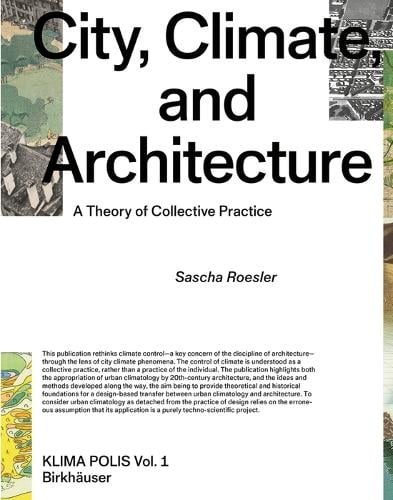
City, climate, and architecture : A theory of collective practice
Based on a history of climate control on urban scales, it promotes the integration of indoors and outdoors in order to reduce environmental and thermal loads in cities. Just as heating and cooling practices inside the buildings are affecting the (urban) climate outdoors, urban heat islands are influencing the energy requirements and thermal conditions inside the buildings. While the first part of the book focuses on the interwar period in Europe, the publication’s second part considers examples from all over the globe, tracing the growing significance of ecological thinking for the design of urban environments.

Charged Particle Traps : Physics and Techniques of Charged Particle Field Confinement
This book provides an introduction and guide to modern advances in charged particle (and antiparticle) confinement by electromagnetic fields. Confinement in different trap geometries, the influence of trap imperfections, classical and quantum mechanical description of the trapped particle motion, different methods of ion cooling to low temperatures, and non-neutral plasma properties (including Coulomb crystals) are the main subjects. They form the basis of such applications of charged particle traps as high-resolution optical and microwave spectroscopy, mass spectrometry, atomic clocks, and, potentially, quantum computing.

150 Best New Eco Home Ideas
Features nearly 500 pages of full-color photographs and dozens of inventive and decorative profiles. Architects, designers, and homeowners today looking for comfortable, beautiful dwellings with a minimal carbon footprint will find a cornucopia of ideas in this handsome compendium. A fabulous review of the most forward-thinking eco-friendly house designs being created today, 150 Best New Eco Home Ideas showcases the work of internationally renowned architects and designers who have achieved practical, innovative, and stunning solutions around the globe. From solar paneling and wind energy systems to environmentally-friendly heating and cooling solutions and thermal glazing to trombe walls, 150 Best New Eco Home Ideas covers the latest trends and breakthroughs in eco homes. Inspiring and inventive, this lush sourcebook is essential for architects, designers, interior decorators, and all conscientious homeowners interested in creating warm and inviting homes with only a fraction of the environmental impact of those using conventional methods
