


Refine Results
Sort By
From
To


Benirschke and Kaufmann's Pathology of the Human Placenta has long been regarded as the gold standard in the field. It is comprehensive and thorough and contains the detail necessary for those in the subspecialties of placental, perinatal and pediatric pathology. However, placentas are relatively common specimens and are not examined primarily by specialists in the field, but by general pathologists. Thus, there is a need for a more practical and concise manual that can be used by pathology trainees and generalists in their daily work. Manual of Benirschke and Kaufmann's Pathology of the Human Placenta will fill that need. The Manual is a practical, user-friendly guidebook for the general pathologist and pathologist in training for everyday, bench-side use. Organized in 27 chapters, the book will discuss placental development, general features, approach to the specimen by macroscopic and microscopic evaluation, all aspects of placental abnormalities and lesions, disease processes and the placenta, legal aspects of the placental examination, future directions and much more. The sections on macroscopic and microscopic evaluations feature quick-reference tables that allow the reader to identify abnormalities, learn the situations where they occur, and refer back to the text for in-depth discussions. Each chapter will end with selected readings from Pathology of the Human Placenta for more detailed discussions, classic recommended readings, as well as an up-to-date bibliography of current literature. The manual features over 444 illustrations, more than 100 of them in full-color. A must-have for every pathologist and pathology resident.

Provides the interested and informed reader with an overview of current approaches, strategies and considerations relating to the purification, analytics and characterization of therapeutic antibodies and related molecules. While there are obviously other books published in and around this subject area, they seem to be either older (c.a. year 2000 publication date) or are more limited in scope. The book will include an extensive bibliography of the published literature in the respective areas covered. It is not, however, intended to be a how-to methods book.
Modern cryptology employs mathematically rigorous concepts and methods from complexity theory. Conversely, current research in complexity theory often is motivated by questions and problems arising in cryptology. This book takes account of this trend, and therefore its subject is what may be dubbed "cryptocomplexity,'' some sort of symbiosis of these two areas. This textbook is suitable for undergraduate and graduate students of computer science, mathematics, and engineering, and can be used for courses on complexity theory and cryptology, preferably by stressing their interrelation. Starting from scratch, it is an accessible introduction to cryptocomplexity and works its way to the frontiers of current research. It provides the necessary mathematical background, has numerous figures, exercises, and examples, and presents some central, up-to-date research topics and challenges. Due to its comprehensive bibliography and subject index, it is also a valuable source for researchers, teachers, and practitioners working in these fields.
In this textbook present mathematical models in bioinformatics and they describe the biological problems that inspire the computer science tools used to handle the enormous data sets involved. The first part of the book covers the mathematical and computational methods, while the practical applications are presented in the second part. The mathematical presentation is descriptive and avoids unnecessary formalism, and yet remains clear and precise. Emphasis is laid on motivation through biological problems and cross applications. Each of the four chapters in the first part is accompanied by exercises and problems to support an understanding of the techniques presented. Each of the six chapters of the second part is devoted to some specific application domain: sequence alignment, molecular phylogenetics and coalescence theory, genomics, proteomics, RNA, and DNA microarrays. Each chapter concludes with a problems and projects section, to deepen the reader's understanding and to allow for the design of derived methods. Many of the projects involve publicly available software and/or Web-based bioinformatics depositories. Finally, the book closes with a thorough bibliography, reaching from classic research results to very recent findings, providing many pointers for future research.Overall, this volume is ideally suited for a senior undergraduate or graduate course on bioinformatics, with a strong focus on its mathematical and computer science background.
Introduces graph algorithms on an intuitive basis followed by a detailed exposition using structured pseudocode, with correctness proofs as well as worst-case analyses. Centered around the fundamental issue of graph isomorphism, the content goes beyond classical graph problems of shortest paths, spanning trees, flows in networks, and matchings in bipartite graphs. Advanced algorithmic results and techniques of practical relevance are presented in a coherent and consolidated way. Numerous illustrations, examples, problems, exercises, and a comprehensive bibliography support students and professionals in using the book as a text and source of reference. Furthermore, Python code for all algorithms presented is given in an appendix. Topics and features: Algorithms are first presented on an intuitive basis, followed by a detailed exposition using structured pseudocode / Correctness proofs are given, together with a worst-case analysis of the algorithms / Full implementation of all the algorithms in Python / An extensive chapter is devoted to the algorithmic techniques used in the book / Solutions to all the problems

The book sets the philosophical writings of philosophers in the context of the development of Marxist philosophy internationally, and examines particularly the influence on these philosophers of Soviet Marxist philosophy. It argues that these Chinese Marxist philosophers’ interpretations of Marxist philosophy were quite orthodox when judged by the standards of contemporary Soviet Marxism. The book explores core themes in Marxist philosophy in China, including the dilemma of determinism, and investigates the way in which these Chinese Marxist philosophers sought a formula for the ‘Sinification’ of Marxist philosophy that both retained the universal dimensions of Marxism and allowed its application to the Chinese context. The book concludes with analysis of the role of the Yanan New Philosophy Association in developing from Soviet Marxist philosophy the philosophical dimension of Mao Zedong Thought, the official ideology of the Chinese Communist Party after 1945.

Subject areas discussed in this book include shipwrecks and abandoned vessels, The application of National and State legislation and management regimes to these underwater cultural heritage sites is also highlighted, together with the important role of avocational divers and training programs in raising the profile of underwater and maritime heritage sites.The book includes a comprehensive bibliography of work conducted both in Australia and by Australian maritime archaeologists in the Asia-Pacific region. This book will be of interest to students and practitioners of maritime and historical archaeology and cultural heritage managers throughout the world .

This monograph addresses the field theoretical aspects of magnetic monopoles. Written for graduate students as well as researchers, the author demonstrates the interplay between mathematics and physics. He delves into details as necessary and develops many techniques that find applications in modern theoretical physics. This introduction to the basic ideas used for the description and construction of monopoles is also the first coherent presentation of the concept of magnetic monopoles. It arises in many different contexts in modern theoretical physics, from classical mechanics and electrodynamics to multidimensional branes. The book summarizes the present status of the theory and gives an extensive but carefully selected bibliography on the subject. The first part deals with the Dirac monopole, followed in part two by the monopole in non-abelian gauge theories. The third part is devoted to monopoles in supersymmetric Yang-Mills theories.
The concrete impact of the Levinasian philosophy upon the variousdirections of thinking – from ontology and ethics to Jewish thought, theolo-gy, aesthetics or feminism – attests moreover the great significance of thissingular figure of our times.For more than three decades now his philosophy has come to be thesubject of many doctoral theses, articles and books. The complete “Levinasbibliography” counts currently thousands of titles in more than ten lan-guages. The important contribution that a Levinas Concordancewould bring asa valuable instrument for exegetes,
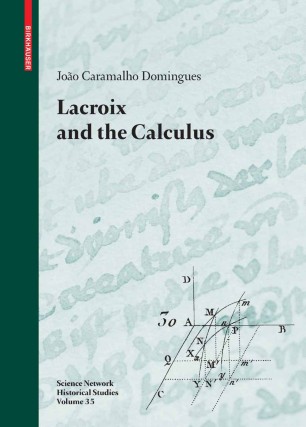
Lacroix and the Calculus is the first major study of Lacroix’s large Traité. It uses the unique and massive bibliography given by Lacroix to explore late 18th-century calculus, and the way it is reflected in Lacroix’s account. Several particular aspects are addressed in detail, including: the foundations of differential calculus, analytic and differential geometry, conceptions of the integral, and types of solutions of differential equations (singular/complete/general integrals, geometrical interpretations, and generality of arbitrary functions).
This book points out the need of a multidisciplinary approach in the field of risk assessment and management. It provides an overview of the problems, approaches and common practices directly related to earthquake risk mitigation and, in particular, to the preparation of earthquake emergency plans. Written by a team of specialists from different disciplines, the authors worked together extensively in order to create unity and continuity in the text as a whole. Each topic is illustrated with examples of actual applications taken from the bibliography – including websites with available relevant information. Case studies and information on some relevant international projects are given.
Arnold's Problems contains mathematical problems.The invariable peculiarity of these problems was that Arnold did not consider mathematics a game with deductive reasoning and symbols, but a part of natural science (especially of physics), i.e. an experimental science. Many of these problems are still at the frontier of research today and are still open, and even those that are mainly solved keep stimulating new research, appearing every year in journals all over the world.The second part of the book is a collection of commentaries, mostly by Arnold's former students, on the current progress in the problems' solutions (featuring a bibliography inspired by them).
Intended to be a contribution to the algorithmic re-reading of some classic topics of elementary number theory and an invitation to more demanding reading, according to the indications provided by the bibliography annexed to it.
This text is designed for a one-semester course on Probability and Statistics. The exposition unfolds systematically from an introductory chapter to such topics as random variables and vectors, stochastic processes, estimation, testing and regression. The topics are well chosen and the presentation is enriched by many examples from real life. Following every chapter, the reader will find many original, solved and unsolved problems and hundreds of multiple choice questions, enabling those unfamiliar with the topics to master them. Additionally appealing are the interesting historical notes on the mathematicians mentioned throughout and a useful bibliography. A distinguishing character of the book is the thorough and succinct handling of the various topics.

The Annual Bibliography of the History of the Printed Book and Libraries aims at recording articles of scholarly value which relate to the history of the printed book, to the history of arts, crafts, techniques and equipment, and of the economic social and cultural environment, involved in its production, distribution, conservation and description.

The book summarizes international progress over the last few decades in upper atmosphere airglow research. Measurement methods, theoretical concepts and empirical models of a wide spectrum of upper atmospheric emissions and their variability are considered. The book contains a detailed bibliography of studies related to the upper atmosphere airglow.

What makes an event count as an action? Typical answers appeal to the way in which the event was produced: e.g., perhaps an arm movement is an action when caused by mental states (in particular ways), but not when caused in other ways. Andrew Sneddon argues that this type of answer, which he calls "productionism", is methodologically and substantially mistaken. In particular, productionist answers to this question tend to be either individualistic or foundationalist, or both, without explicit defence.
It includes many new recent insights and illustrations, a new appendix on Chinese primary sources and a guide to the to the bibliography. From the reviews: "This book ranks with the most erudite Asian publications, and is the most informative and most broadly informed on its topic in any language.this book apart from the usual histories of mathemathics (in any language, Chinese or Western, of any period or country) is its emphasis first on context, then on content, in describing the long history of Chinese mathematics. It is primarily the question of context that Martzloff approaches directly. Perhaps the greatest contribution his book makes is the chance it offers to consider issues of cultural context as significant, determining factors in the history of mathematics.

Daraa Highway - Ghabagheb - Syria
+963-15 2050 - 15 860 380 /1/2/3 - 11 662 3900