



Page 1
Page 1

Oculoplastics and Orbit
This book have been provided throughout each chapter. evidence-based medicine into clinical practice.It is reasonable to now update our With the start of the second cycle of subspecialty readers with what has been achieved. coverage, the dissemination of practical inform- a Te immediate goal was to transfer inform- a tion will be continued as we learn more about tion through a high quality quarterly publication the emerging advances in various ophthalmic in which ophthalmology would be represented by subspecialties that can be applied to obtain the eight subspecialties.

M-Health : Emerging Mobile Health Systems
M-health: Emerging Mobile Health Systems presents recent advances in this area and explores future trends in the applications of current and emerging wireless communication and network technologies for healthcare delivery and new wireless telemedical services. This work also evaluates the impact of the synergies between the 2.5G and 3G systems and beyond for healthcare applications and explores the augmentation of these technologies for the next generation of m-health services. M-health is commonly defined as the ‘emerging mobile communications and network technologies for healthcare systems’.

Implant therapy : Clinical approaches and evidence of success
Brings together the knowledge of the foremost leaders in implant dentistry, covering all aspects of the treatment process, from decision-making and treatment planning through imaging, surgical techniques, bone and soft tissue augmentation, multidisciplinary approaches, loading protocols, and finally strategies for preventing and treating complications and peri-implantitis as well as providing effective implant maintenance therapy. Filled with expert knowledge based on decades of research and clinical experience as well as abundant illustrations and clinical case presentations, this book is an indispensable resource for clinicians seeking to provide implant treatment at the highest standard of care.

Groundwater : Resource evaluation, augmentation, contamination, restoration, modeling and management
The demand for water resources is increasing day by day due to ever increasing population, mostly from developing countries. This has resulted in abstracting more water from the subsurface stratum and forcing the water managers to manage the limited groundwater resources in a more scientific way, which in turn needs a more sophisticated way of assessing the underground resource and manage it optimally.

Dataset Studio
Data is the new oil, which means that AI engineers can face difficulties in locating suitable datasets. Dataset Studio is a comprehensive platform designed to support AI engineers in the creation and optimization of datasets. This project offers a diverse range of services that encompass data collection, data augmentation, and data classification. As a result, this software empowers engineers by automatically generating structured data through the utilization of advanced tools and AI techniques. By automating the laborious tasks of manual data collection and extraction, Dataset Studio effectively streamlines the workflow for AI engineers, enabling them to save valuable time and focus on the more intricate aspects of dataset development and refinement.

Contaminated Soils, Sediments and Water : Science in the Real World
Contaminated Soils Volume 9 contains 38 technical papers, covering a wide range of environmental issues. Volume discussion includes: Part I Bioremediation; Part II Chemical Oxidation; Part III Heavy Metals; Part IV MTBE; Part V Phytoremediation; Part VI Radiation; Part VII Regulatory and Legal issues; Part VIII Remediation; Part IX Risk Based Cleanup; and Part X Site Assessment. Contributing authors to this volume are from government agencies, academic institutions, the consulting community and industrial companies. This important volume documents the state of environmental science and provides perspective on where we as an industry have come from. Increased scientific, engineering and consulting alliances and collaboration should drive our efforts going forward.
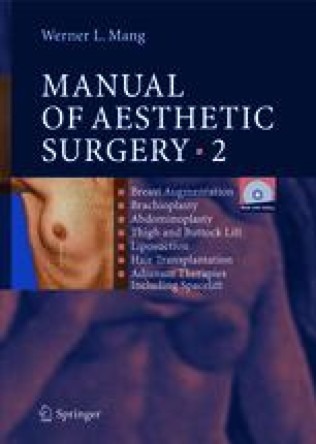
Manual of Aesthetic Surgery 2 : Breast Augmentation ; Brachioplasty ; Abdominoplasty ; Thigh and Buttock Lift ; Liposuction ; Hair Transplantation ; Adjuvant Therapies including Space Lift
Focuses on operative procedures in aesthetic plastic surgery. This manual displays techniques with instructive drawings and pre- and post-operative photographs.

ITI treatment guide ; Vol.7 : Ridge augmentation procedures in implant patients: a staged approach
Provides clinicians with the latest evidence-based information on the techniques and materials used for ridge augmentation. Twelve clinical cases demonstrate the planning and treatment principles required to successfully rehabilitate patients with varying degrees of ridge atrophy.

ITI treatment guide ; Vol.5 : Sinus floor elevation procedures
Provides clinicians with evidence-based data and practical information relating to sinus floor elevation procedures to ensure adequate bone volume for implant placement. This guide places emphasis on proper case selection based on a comprehensive clinical and radiologic examination of the patient.

ITI treatment guide ; Vol.12 : Peri-implant soft-tissue integration and management
Highlights the integration and management of peri-implant soft tissues. It discusses soft-tissue management before and during implant placement and during supportive peri-implant therapy and addresses the techniques and materials used for peri-implant soft-tissue augmentation and replacement and for the treatment of peri-implant soft-tissue dehiscences.

Bone Management in Dental Implantology
This book describes all methods of bone management currently employed within the field of dental implantology, with the aim of equipping oral surgeons and other practitioners with a sound practical understanding of bone augmentation. Readers will find clear guidance on diagnosis and treatment planning and helpful discussion of the basic principles of bone augmentation.
Bone augmentation in implant dentistry : A step-by-step guide to predictable alveolar ridge and sinus grafting
Implant dentistry has evolved tremendously over the past three decades and is rapidly progressing as new materials and protocols become available each year. With the number of advancements made in digitally based media and marketing, it is imperative that the clinician is able to separate new trends from evidence-based protocols to make sound and predictable choices for the ultimate benefit of patients. This textbook presents cases from the author's 35-year practice to show the successes and failures of various treatment approaches and protocols. Early chapters discuss the relevant biomaterials and instruments utilized for bone augmentation protocols, including barrier membranes, bone grafting materials, and growth factors. Surgical chapters dedicated to extraction socket management, alveolar ridge augmentation, and sinus grafting follow, each chapter detailing specific indications and patient selection criteria as well as step-by-step surgical procedures, aspects of postoperative treatment, and complications. The final chapter focuses on full-arch reconstruction using fully guided immediate reconstruction protocols. The author's teaching institute is credited with preparing some of the world's best clinicians, and this book will pave the way for countless more.
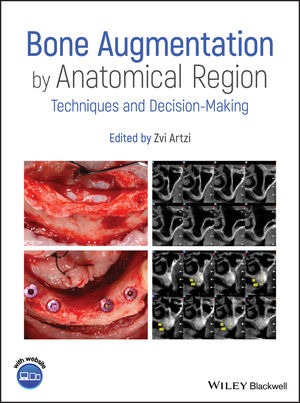
Bone augmentation by anatomical region : Techniques and decision-making
It's a unique, evidence-based guide focusing on each specific anatomical region – anterior maxilla, posterior maxilla, anterior mandible, and posterior mandible – in order to emphasize the correct implemented procedures needed to successfully perform oral osseous reconstruction.

Bioremediation of Soils Contaminated with Aromatic Compounds
Environmental biotechnology, which was in its infancy in the early 80's, has evolved thanks to the revolution brought about by molecular biology. Multiple successes in the biological cleanup of civil and industrial wastewater and of hydrocarbon soil pollution, demonstrate the vast power of clean technologies. In addition, the buildup of information on the activities of microorganisms as catalysts in all sorts of natural, industrial and animal environments has flourished. There is a continuing realization of the critical role of microbial processes in biological, industrial and geological systems. Since environmental biotechnology has matured, it is ready to tackle bigger challenges: the scaling up of many bioremediation systems still in progress, the search for novel biocatalysts for industrial applications, the continuing effort against common human life-threatening processes such as antibiotic resistance, the accumulation of hormone-mimicking substances (endocrine disrupters), the deposition of air-borne pesticides in the environment and, the degradation of recalcitrant contaminants. These endeavors will help prevent the contamination of food chains, protect human life and allow for human activity and economic development that do not compromise environmental sustainabijity.
Adapting dermal fillers in clinical practice
There have been many different brands of dermal fillers approved for use for soft tissue augmentation in the US market alone, comprising four different types of temporary fillers and one permanent type, with several other brands and types also available elsewhere in the world. Against such a potentially bewildering variety and range of choices, this new text offers a scientific and an anatomic rationale for why a particular filler should be selected as optimal for each individual location and indication and how it should best be used in treatments. International experts share their clinical knowledge and expertise to guide all levels of aesthetic practitioners toward the best results for each individual patient.
