


Refine Results
Sort By
From
To


designed to be read section by section in the order in which it is presented. I would then recommend a re-reading of the first section so that the tenets laid down in this area are more readily understood after having experienced the tech nical presentations. The serious student will then utilize the book as an atlas of techniques that can be conveniently referenced when needed in any particular situation. All surgeons should then use any new information as a beginning plat form of information from which to develop and refine their own experience, col lecting and analyzing their own personal library of techniques, as they advance though this most wonderful and satisfying Discipline.

Learning the diagnostic elements of lung pathology requires not only great familiarity with a wide diversity of cases, but also a sharp eye for analyzing pictorial images. In Lung Pathology: A Consultative Atlas, leading experts offer a novel and substantive approach to the teaching of pulmonary pathology. Drawing on 263 challenging, yet exemplary, referral cases taken from files collected over 20 years by internationally renowned lung pathologist, Dr. Eugene Mark, the authors introduce his state-of-the-art approach to the interpretation of pulmonary pathology. This text includes the primary and/or differential diagnosis and the pertinent histological features of each case, as well as clinical history, when available. Key words or phrases in the text are highlighted and digitally hyperlinked to associated images or regions of interest within those images to assist the readers in their correlation. Novel and user friendly, Lung Pathology: A Consultative Atlas describes a cutting-edge diagnostic approach to pulmonary pathology, describing its principles and demonstrating its application in text and full-color illustrations drawn from 263 difficult cases of human lung pathologies.
Chassin’s Operative Strategies in Esophageal Surgery offers the reader a succinct review of surgical techniques for disorders of the esophagus. Spanning from well-established legacy procedures to the most up-to-date minimally invasive approaches for GERD, this brilliantly illustrated atlas exclusively presents the theoretical basis of the operations as well as the strategies required to steer clear of common pitfalls. Educed from Chassin’s Operative Strategies in General Surgery.

This superbly illustrated practical guide is an excellent resource on all aspects of breast MRI for practicing radiologists, oncologists, and surgeons, as well as residents and fellows. Drs. Elizabeth Morris and Laura Liberman, two experts in the field from the Memorial Sloan-Kettering Cancer Center, have collaborated with colleagues from their institution and selected medical centers to share their expertise. Introductory chapters are devoted to diagnosis and cover the basics of performing breast MRI exams, setting up a breast MRI program, and understanding clinical indications. Additional chapters discuss breast interventional procedures including MRI-guided needle localization, MRI-guided biopsy, and percutaneous ablation of breast cancer; MRI of breast implants.

he „Atlas of Woody Plant Stems“ is a com- Naturally, it was impossible to cover completely the Tprehensively illustrated book with short, in- enormous variability of plant life forms. We have formative texts. We chose this layout because plant tried, however, to illustrate the main principles and anatomy and morphology can only be conveyed by features. Many decades of collection and prepa- detailed pictures. In addition, a vivid presentation tion provided the basis for this book.

he atlas contains over 400 specially created black and white illustrations describing the anatomical extent of the malignant tumor in the primary site (T), regional lymph nodes (N) and distant metastases (M) for various sites, including the head and neck area, the digestive system, the thorax, the musculoskeletal system, the soft tissues, the breast, the urinary system and the genital system. Each illustration provides precise and detailed descriptions designed to clarify the crucial anatomical structures and to provide the reader with an immediate view of the progressive extension of the disease. The most important anatomical structures are identified by specific definitions.
This book provides a timely and first-of-its-kind collection of contributed chapters on anatomy ontologies. It is interdisciplinary in its approach, bringing together relevant expertise from computing and biomedical studies, and covering both theoretical and applied aspects, with an emphasis on newer work relevant to the emerging Semantic Web.
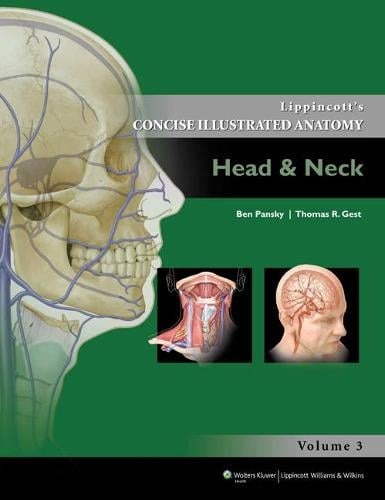
Presents human gross anatomy in an efficient, easy-to-use format by combining core, need-to-know content with detailed atlas-style illustrations. This volume focuses on anatomical structures and functions of the head and neck, and includes clinical considerations concerning these important regions. With artwork adopted from the Lippincott Williams & Wilkins Atlas of Anatomy as well as new illustrations, understanding the functional and clinical relevance of anatomy has never been more at hand!
Provides a detailed step-by-step approach to the dissection of the forehead, face, and neck, in a structural, layered approach. This dissection manual follows an atlas format, with color photographs from past professional lectures and classroom courses, as well as line drawings, enhancing descriptions. Clinical correlations are also interjected throughout to highlight the importance of individual anatomic structures. Chapters describe the preparation and storage of specimens and the dissection of the forehead and eyebrows, the midface, nose, ear, and lower face, and the neck.
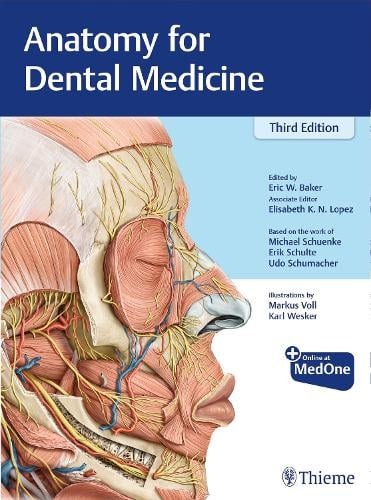
Strikes an optimal balance between systemic and regional approaches to complex head and neck anatomy. Award-winning full-color illustrations, succinct text, summary tables, and questions put anatomical structures and knowledge into a practical context. NEW! Additional radiologic images and landmark features throughoutNEW! Reorganized brain/nerve sectionsNEW! Expanded clinical question appendix including patient box questions in the style of the INBDENEW! Factual question appendix places greater emphasis on areas including the skull, larynx, cross sectional anatomy, body below the neck, and local anesthesia

This book provides a multi-perspective approach to the caravan trade in the Sahara during the 19th century. Based on travelogues from European travelers, recently found Arab sources, historical maps and results from several expeditions, the book gives an overview of the historical periods of the caravan trade as well as detailed information about the infrastructure which was necessary to establish those trade networks.

Organized to make it easy for astronomers to use, enabling ground-based images and views to be compared with the Orbiter photographs. The photographs are striking for their consistent Sun angles (for uniform appearance). All features are identified with their current IAU-approved names, and each photograph is located in terms of latitude and longitude. To help practical astronomers, all the photographs are systematically related to an Earth-based view.
Landscapes of Mars is essentially a picture book that provides a visual tour of Mars. All the major regions and topographical features will be shown and supplemented with chapter introductions and extended captions. In a way, think of it as a visual tourist guide. Other topics covered are Martian uplands on the order of the elevation of Mt. Everest, Giant volcanoes and a rift system, the Grand Canyon of Mars, craters and the absence of craters over large regions (erosion), and wind shadows around craters, sand dunes, and dust devils.

Maritime canals dissolve natural barriers to the dispersal of marine organisms, thus providing novel opportunities for natural dispersal, as well as for shipping-mediated transport. The introduction of alien species has proved to be one of the most profound and damaging of anthropogenic deeds - with both ecological and economic costs. This book is the first to assess the impacts of the world’s three principal maritime canals – the Kiel, the Panama, the Suez – as invasion corridors for alien biota. These three canals differ in their hydrological regimes, the types of biotas they connect, and in their permeability to invasions.

Daraa Highway - Ghabagheb - Syria
+963-15 2050 - 15 860 380 /1/2/3 - 11 662 3900