


Refine Results
Sort By
From
To


Community Health Care’s O-Process for Evaluation offers step-by-step assistance in achieving these goals, from determining areas for assessment to disseminating the results. The steps can be conducted in-house or adapted for use with outsiders, laying a solid foundation for a cycle of continuous evaluation and continued improvement for long-term sustainability.
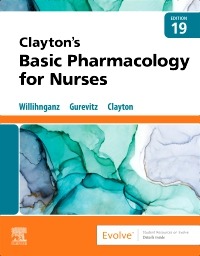
Helps you understand the principles of pharmacology and apply them to nursing practice. Known for its practical application of the nursing process to drugs and disorders, this book explains how to make informed decisions about drug therapy, educate patients, and administer medications. This edition adds new Next Generation NCLEX® (NGN)-style case studies and questions to prepare you for the critical thinking questions on the NGN exam. Concise and easy to use, this text teaches the basics of medication administration and drug actions.
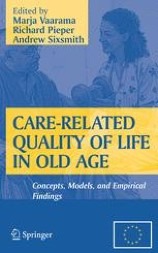
Care-Related Quality of Life in Old Age explains the theory behind Care Keys, its methodology, empirical findings, and practical considerations in promoting effective, efficient elder care aimed at social and emotional well-being and including disabled and cognitively impaired patients.
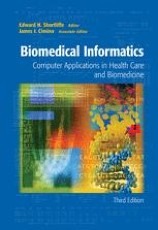
This series is directed to healthcare professionals who are leading the transformation of health care by using information and knowledge. Launched in 1988 as Computers in Health Care, the series offers a broad range of titles: some addressed to specific prof- sions such as nursing, medicine, and health administration; others to special areas of practice such as trauma and radiology.
Covers the recent trends on the biological applications of nanomaterials, methods for their preparation, and techniques for their characterization. Further, the book examines the fundamentals of nanotoxicity, methods to assess the toxicity of engineered nanomaterials, approaches to reduce toxicity during synthesis. It also provides an overview of the state of the art in the application of Artificial intelligence-based methodologies for evaluation of toxicity of drugs and nanoparticles. The book further discusses nanocarrier design, routes of various nanoparticle administration, nano based drug delivery systems, and the toxicity challenges associated with each drug delivery method. It presents the latest advances in the interaction of nanoparticles with the cellular environment and assess nanotoxicity of these engineered nanoparticles. The book also explores the comparative and mechanistic genotoxicity assessment of the nanomaterials. This book is useful source of information for industrial practitioners, policy makers, and other professionals in the fields of toxicology, medicine, pharmacology, food, and drugs.

Examines the complex interactions associated with clinical toxicological events as a result of therapeutic drug administration or chemical exposure. Special emphasis is placed on signs and symptoms of diseases and pathology caused by toxins and clinical drugs. Includes the source, pharmacological and toxicological mechanism of action, detection and identification in body fluids, and treatment of exposure. An overview of protocols for managing various toxic ingestions, and the antidotes and treatments associated with their pathology, are discussed. In addition, effect of toxins on a limited number of body systems and drug-induced adverse drug reactions are also covered
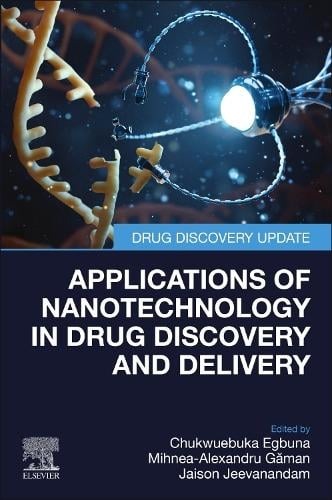
Presents complete coverage of the application of nanotechnology in the discovery of new drugs and efficient target delivery of drugs. The book highlights recent advances of nanotechnology applications in the biomedical sciences, starting with chapters that provide the basics of nanotechnology, nanoparticles and nanocarriers. Part II deals with the application of nanotechnology in drug discovery, with an emphasis on enhanced delivery of pharmaceutical products, with Part III discussing toxicological and safety issues arising from the use of nanomaterials
There have been many different brands of dermal fillers approved for use for soft tissue augmentation in the US market alone, comprising four different types of temporary fillers and one permanent type, with several other brands and types also available elsewhere in the world. Against such a potentially bewildering variety and range of choices, this new text offers a scientific and an anatomic rationale for why a particular filler should be selected as optimal for each individual location and indication and how it should best be used in treatments. International experts share their clinical knowledge and expertise to guide all levels of aesthetic practitioners toward the best results for each individual patient.

The Nature of Comparative and International Criminal JusticeThe Purpose of Comparative and International Criminal Justice Systems; Crime and Criminal Law: Global PerspectiveCrime: International and Comparative;Overview of Model Criminal Justice Systems
This book examines everyday practices in an asylum administration. Asylum decisions are often criticised as being ‘subjective’ or ‘arbitrary’. Asylum Matters turns this claim on its head.
Discusses how to build various ML algorithms and how they can be applied to improve healthcare systems. Healthcare applications of AI are innumerable: medical data analysis, early detection and diagnosis of disease, providing objective-based evidence to reduce human errors, curtailing inter- and intra-observer errors, risk identification and interventions for healthcare management, real-time health monitoring, assisting clinicians and patients for selecting appropriate medications, and evaluating drug responses. Extensive demonstrations and discussion on the various principles of machine learning and its application in healthcare is provided, along with solved examples and exercises.
Introduces and explores a variety of schemes designed to empower, enhance, and represent multi-institutional and multi-disciplinary machine learning (ML) and deep learning (DL) research in healthcare paradigms. Serving as a unique compendium of existing and emerging ML/DL paradigms for the healthcare sector, this book demonstrates the depth, breadth, complexity, and diversity of this multi-disciplinary area. It provides a comprehensive overview of ML/DL algorithms and explores the related use cases in enterprises such as computer-aided medical diagnostics, drug discovery and development, medical imaging, automation, robotic surgery, electronic smart records creation, outbreak prediction, medical image analysis, and radiation treatments.
Business process management is usually treated from two different perspectives: business administration and computer science. While business administration professionals tend to consider information technology as a subordinate aspect for experts to handle, by contrast computer scientists often consider business goals and organizational regulations as terms that do not deserve much thought but require the appropriate level of abstraction.This textbook is ideally suited for classes on business process management, information systems architecture, and workflow management. It is also valuable for project managers and IT professionals working in business process management.
The book is organized as follows. In the beginning of this book (chapters 1 through 6), you learn how to build a data warehouse, for example, defining the architecture, understanding the methodology, gathering the requirements, designing the data models, and creating the databases. Then in chapters 7 through 10, you learn how to populate the data warehouse, for example, extracting from source systems, loading the data stores, maintaining data quality, and utilizing the metadata. After you populate the data warehouse, in chapters 11 through 15, you explore how to present data to users using reports and multidimensional databases and how to use the data in the data warehouse for business intelligence, customer relationship management, and other purposes. Chapters 16 and 17 wrap up the book: After you have built your data warehouse, before it can be released to production, you need to test it thoroughly. After your application is in production, you need to understand how to administer data warehouse operation.
You love it as the world's most popular desktop Linux distribution, and now Ubuntu is available at a server near you. Embracing the very same features desktop users have grown to love, system administrators are rapidly adopting Ubuntu due to their ability to configure, deploy, and manage network services more effectively than ever. Beginning Ubuntu Server Administration guides you through all of the key configuration and administration tasks you'll need to know. Whether you're interested in adopting Ubuntu within a Fortune 500 environment or just want to use Ubuntu to manage your home network, this book is your go–to guide to using the distribution securely for a wide variety of network services. Topics include file, print, web, and FTP management, command–line tips and tricks, automated installation, configuration and deployment processes, and kernel management.
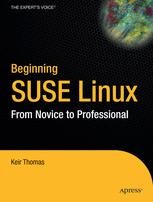
The book begins by discussing the background of Linux and open source software, then proceeds to guide you through the SUSE installation process. You'll learn how to use the basic functions, and modify the look and feel according to your tastes. This book is packed with troubleshooting tips, so even the most cautious beginner will feel right at home. Next, the book covers the daily usage tasks that are enjoyable and interesting to learn. You'll learn how to configure your system to listen to audio CDs and MP3s, burn CDs, watch movies, connect to the Internet, and reproduce common Windows tasks.
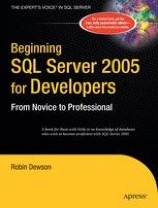
SQL Server 2005 will increase your programming options, productivity, analysis, and database management. If you have some basic knowledge of relational databases and want to start a career as a developer using SQL Server, then this book is your ideal first step. It explains the core jobs and roles for developing a database in both SQL Server 2000 and 2005. This book features practical steps to help you overcome issues youre likely to encounter. You'll learn to use SQL for querying, inserting, updating, and deleting data. You'll also learn how to back up and restore databases for basic administration in SQL Server.
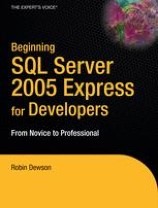
This book is a comprehensive guide that covers installing and configuring SQL Server 2005 Express, creating, backing up, and restoring databases, creating tables, then querying and manipulating them with T-SQL, coding stored procedures and triggers, and using Reporting Services to deliver information to end users.
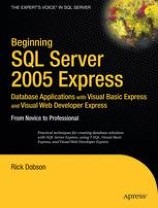
SQL Server 2005 Express is the database component of Microsoft's Express Suite of products. It is free of charge, inherits many (non-enterprise) features from SQL Server 2005, and comes complete with development and administration tools. As such, it is an ideal database for developers and administrators to use in prototype/evaluation projects. It is also a powerful development platform for database applications on nonprofit websites, e-commerce sites, and in small offices and departments.
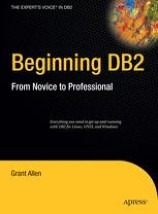
IBM’s DB2 Express Edition is one of the most capable of the free database platforms available in today’s marketplace. In Beginning DB2, author Grant Allen gets you started using DB2 Express Edition for web sites, desktop applications, and more. The author covers the basics of DB2 for developers and database administrators, shows you how to manage data in both XML and relational form, and includes numerous code examples so that you are never in doubt as to how things work.

Daraa Highway - Ghabagheb - Syria
+963-15 2050 - 15 860 380 /1/2/3 - 11 662 3900