


Refine Results
Sort By
From
To


Nanomedicine is evolving with novel drug formulations devised for multifunctional approaches towards diagnostics ad therapeutics. Nanomedicine-based drug therapy is normally explored at a fixed dose. The drug action is time-dependent, dose-dependent and patient-specific. To overcome challenges of nanomedicine testing, artificial intelligence (AI) serves as a helping tool for optimizing the drug and dose parameters. Real time conversions between these two features enables upgradation of patient data acquisition and improved design of nanomaterials. In this scenario, AI-based pattern analysis and algorithms models can greatly improve accuracy of diagnostics and therapeutics.

The field of androgen excess disorders has advanced substantially since the original publication of this book. The Androgen Excess Society (AES) was founded to bring together investigators in the field. A better understanding of the screening, progression, and molecular genetics of nonclassic adrenal hyperplasia (NCAH) has improved the clinical care and diagnostic accuracy of these patients. New criteria for the diagnosis of the polycystic ovary syndrome (PCOS) were proposed in Rotterdam, criteria that have resulted in controversy and, hopefully, initiation of new studies. The association of insulin resistance with PCOS has been strengthened, and the role of metformin in tre- ing the infertility of the PCOS has been validated. Risks for diabetes and, more cont- versially, cardiovascular disease in women with PCOS have received substantial investigation. Our understanding of the epidemiology and economic impact of these disorders has expanded, emphasizing their critical importance.

Matching Properties of Deep Sub-Micron MOS Transistors examines this interesting phenomenon. Microscopic fluctuations cause stochastic parameter fluctuations that affect the accuracy of the MOSFET. For analog circuits this determines the trade-off between speed, power, accuracy and yield.
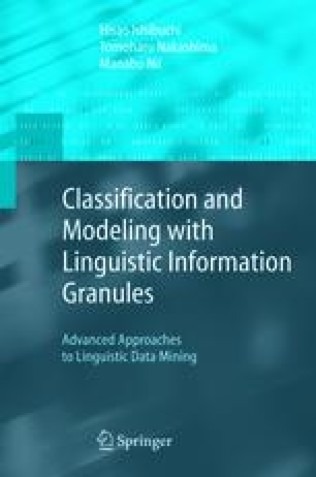
Many approaches have already been proposed for classification and modeling in the literature. These approaches are usually based on mathematical mod els. Computer systems can easily handle mathematical models even when they are complicated and nonlinear (e.g., neural networks). On the other hand, it is not always easy for human users to intuitively understand mathe matical models even when they are simple and linear. This is because human information processing is based mainly on linguistic knowledge while com puter systems are designed to handle symbolic and numerical information. A large part of our daily communication is based on words. We learn from various media such as books, newspapers, magazines, TV, and the Inter net through words. We also communicate with others through words. While words play a central role in human information processing, linguistic models are not often used in the fields of classification and modeling. If there is no goal other than the maximization of accuracy in classification and modeling, mathematical models may always be preferred to linguistic models. On the other hand, linguistic models may be chosen if emphasis is placed on interpretability.

Sheds new light on a selection of big data scenarios from an interdisciplinary perspective. It features legal, sociological and economic approaches to fundamental big data topics such as privacy, data quality and the ECJ’s Safe Harbor decision on the one hand, and practical applications such as smart cars, wearables and web tracking on the other. Addressing the interests of researchers and practitioners alike, it provides a comprehensive overview of and introduction to the emerging challenges regarding big data.All contributions are based on papers submitted in connection with ABIDA (Assessing Big Data), an interdisciplinary research project exploring the societal aspects of big data and funded by the German Federal Ministry of Education and Research.
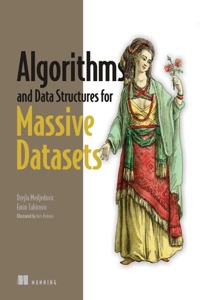
Learn: Probabilistic sketching data structures for practical problems Choosing the right database engine for your application Evaluating and designing efficient on-disk data structures and algorithms Understanding the algorithmic trade-offs involved in massive-scale systems Deriving basic statistics from streaming data Correctly sampling streaming data Computing percentiles with limited space resources Algorithms and Data Structures for Massive Datasets reveals a toolbox of new methods that are perfect for handling modern big data applications. You'll explore the novel data structures and algorithms that underpin Google, Facebook, and other enterprise applications that work with truly massive amounts of data. These effective techniques can be applied to any discipline, from finance to text analysis. Graphics, illustrations, and hands-on industry examples make complex ideas practical to implement in your projects--and there's no mathematical proofs to puzzle over. Work through this one-of-a-kind guide, and you'll find the sweet spot of saving space without sacrificing your data's accuracy. About the Technology Standard algorithms and data structures may become slow--or fail altogether--when applied to large distributed datasets. Choosing algorithms designed for big data saves time, increases accuracy, and reduces processing cost.

This new monograph integrates mathematical theory and revealing experimental work. It demonstrates mathematically the validity of the reliability claimed by conformal predictors when they are applied to independent and identically distributed data, and it confirms experimentally that the accuracy is sufficient for many practical problems. Later chapters generalize these results to models called repetitive structures, which originate in the algorithmic theory of randomness and statistical physics. The approach is flexible enough to incorporate most existing methods of machine learning, including newer methods such as boosting and support vector machines and older methods such as nearest neighbors and the bootstrap.

The book has been well received internationally by a wide audience of clinicians, including general dentists, oral surgeons, otolaryngologists, primary care physicians, nurse practitioners, dental hygienists, physician assistants, and dermatologists, and sales have been strong among students and post-graduate residents training in medical, dental, and allied health fields, supporting the versatility of this work and serving as testimony to its value in both the academic and private practice arenas. Several key updates and improvements have been made to the second edition. All informational content has been updated to ensure accuracy and relevance, particularly in the rapidly evolving fields of oncology and pharmacology. A new chapter has been added entitled "Oral Sequelae of Cancer and Cancer Therapy" which better organizes and consolidates previous content while expanding on topics such as targeted therapies and hematopoietic stem cell transplantation. Additional clinical images have been included throughout the book so that the full clinical spectrum of any given condition is well-represented. Furthermore, the print quality, as well as the positioning and layout of the clinical images has been improved for optimal utility. Lastly, the summary boxes that follow each condition have been reconfigured with color-coded icons for improved definition, ease of use and cross-referencing.

Provides an introduction to next-generation applications and technologies for improving diagnostic accuracy and prediction of treatment outcomes in dentistry through the use of artificial intelligence (AI) and machine learning (ML). The authors attempt to bridge the gap between dental research and global health outcomes, as well as provide a comprehensive guide to general and clinical aspects of dental and oral health issues and the etiology, prevalence, assessment, and management of these conditions.

Presents an analysis of structures using numerical methods and mathematical modeling. This structural analysis also includes beam, plate, and pipe elements, and examines deflection and frequency or buckling loads. The various engineering theories of beams/plates/shells are comprehensively presented, and the relationships between stress and strain, and the governing equations of the structure are extracted. To solve governing equations with numerical methods, there are two general types, including methods based on derivatives or integrals. Derivative-based methods have the advantage of flexibility in modeling boundary conditions, low analysis time, and a very high degree of accuracy.

Provides in-depth information Numerous practical tips, clear explanations, concrete examples Aims and Scope Architectural models are used at various stages of a project. As working models they support the design process: they are made up from time to time using simple materials, such as cardboard, without any attempt at accuracy, and continue to be adjusted and added to as the ideas and the design progress. The point here is to swiftly check a design idea, to allow it to be continued or dismissed. Presentational models are more involved; at this stage the design has been completed and the purpose of the model is to convey the ideas to the potential user in a clear and easy-to-understand way.
Reports on several advances in architectural graphics, with a special emphasis on education, training, and research. It gathers a selection of contributions to the 19th International Conference on Graphic Design in Architecture, EGA 2022, held on June 2–4, 2022, in Cartagena, Spain, with the motto: "Beyond drawings. The use of architectural graphics".
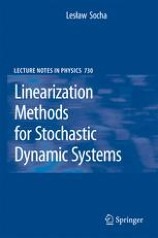
The aim of this book is to give a systematic introduction to and overview of the relatively simple and popular linearization methods available. The scope is limited to models with continous external and parametric excitations, yet these cover the majority of known approaches. The book contains an application chapter with emphasis on vibration analysis of stochastic mechanical structures as well as a chapter devoted to the assessment of the accuracy of the theoretical methods presented, both with respect to numerical and to experimental studies.

Over the next decade the gravitational physics community will benefit from dramatic improvements in many technologies critical to testing gravity. Highly accurate deep space navigation, interplanetary laser communication, interferometry and metrology, high precision frequency standards, precise pointing and attitude control, together with drag-free technologies, will revolutionize the field of experimental gravitational physics. The centennial of the general theory of relativity in 2015 will motivate a significant number of experiments designed to test this theory with unprecedented accuracy.

It is shown that in order to achieve high speed and high accuracy at high power efficiency, calibration is required. Calibration reduces the overall power consumption by using the available digital processing capability to relax the demands on critical power hungry analog components. Several calibration techniques are analyzed. The calibration techniques presented in this book are applicable to other analog-to-digital systems, such as those applied in integrated receivers. Further refinements will allow using analog components with less accuracy, which will then be compensated by digital signal processing. The presented methods allow implementing this without introducing a speed or power penalty.

Builds further on the contents of the first volume in the Philips Research Book Series, Battery Management Systems - Design by Modelling. Since the subject of battery SoC indication requires a number of disciplines, this book covers all important disciplines starting from (electro)chemistry to understand battery behaviour, via mathematics to enable modelling of the observed battery behaviour and measurement science to enable accurate measurement of battery variables and assessment of the overall accuracy, to electrical engineering to enable an efficient implementation of the developed SoC indication system. It will therefore serve as an important source of information for any person working in engineering and involved in battery management.

In this book we focus on sensors on Low Earth Orbit (LEO) satellites, which exploit solar, lunar, stellar, GNSS (Global Navi- tion Satellite Systems), and LEO-crosslink signals for observing the Earth's - mosphere and climate. The methods all share the key properties of self-calibration, high accuracy and vertical resolution, global coverage, and (if using radio signals) all-weather ca- bility. The atmospheric parameters obtained extend from the fundamental va- ables temperature, density, pressure and water vapor via trace gases, aerosols and cloud liquid water to ionospheric electron density. Occultation data are therefore of high value in a wide range of fields including climate monitoring and research, atmospheric physics and chemistry, operational meteorology, and ionospheric physics.

Fundamentals of Analytical Chemistry are usually presented as a sum of chemical and physical foundations, laws, axioms and equations for analytical methods and procedures. In contrast, this book delivers a practice-oriented, general guiding theory valid for all methods and techniques. Starting with a closer look to analytical signals and their dependencies, all the important figures of merit characterizing the power of analytical procedures and the reliability of analytical results are discussed and quantified, such as sensitivity, precision, accuracy and ruggedness. Elements of signal theory, information theory, statistics and fundamentals of calibration are also presented for this aim.

This book comprises a selection of papers from IFSA 2007 on new methods for analysis and design of hybrid intelligent systems using soft computing techniques. Soft Computing (SC) consists of several computing paradigms, including fuzzy logic, neural networks, and genetic algorithms, which can be used to produce powerful hybrid intelligent systems for solving problems in pattern recognition, time series prediction, intelligent control, robotics and automation. Hybrid intelligent systems that combine several SC techniques are needed due to the complexity and high dimensionality of real-world problems. Hybrid intelligent systems can have different architectures, which have an impact on the efficiency and accuracy of these systems, for this reason it is very important to optimize architecture design. The architectures can combine, in different ways, neural networks, fuzzy logic and genetic algorithms, to achieve the ultimate goal of pattern recognition, time series prediction, intelligent control, or other application areas.

The book covers all levels from the description of AE basics for AE beginners (level of a student) to sophisticated AE algorithms and applications to real large-scale structures as well as the observation of the cracking process in laboratory specimen to study fracture processes.

Daraa Highway - Ghabagheb - Syria
+963-15 2050 - 15 860 380 /1/2/3 - 11 662 3900