


Refine Results
Sort By
From
To

Provides a detailed review of the latest methods and applications of artificial intelligence (AI) and machine learning (ML) in medicine. With chapters focusing on enabling the reader to develop a thorough understanding of the key concepts in these subject areas along with a range of methods and resulting models that can be utilized to solve healthcare problems, the use of causal and predictive models are comprehensively discussed. Care is taken to systematically describe the concepts to facilitate the reader in developing a thorough conceptual understanding of how different methods and resulting models function and how these relate to their applicability to various issues in health care and medical sciences. Guidance is also given on how to avoid pitfalls that can be encountered on a day-to-day basis and stratify potential clinical risks.

Provides advanced system implementation for Smart Cities using artificial intelligence. It addresses the complete functional framework workflow and explores basic and high-level concepts. The book is based on the latest technologies covering major challenges, issues and advances, and discusses intelligent data management and automated systems.
Applies the functional OCaml programming language to numerical or computational weighted data science, engineering, and scientific applications. This book is based on the authors' first-hand experience building and maintaining Owl, an OCaml-based numerical computing library. You'll first learn the various components in a modern numerical computation library. Then, you will learn how these components are designed and built up and how to optimize their performance. After reading and using this book, you'll have the knowledge required to design and build real-world complex systems that effectively leverage the advantages of the OCaml functional programming language.
Membrane computing is a branch of natural computing which investigates computing models abstracted from the structure and functioning of living cells and from their interactions in tissues or higher-order biological structures. The models considered, called membrane systems (P systems), are parallel, distributed computing models, processing multisets of symbols in cell-like compartmental architectures. In many applications membrane systems have considerable advantages – among these are their inherently discrete nature, parallelism, transparency, scalability and nondeterminism.
Introduces a novel approach to the design and operation of large ICT systems. It views the technical solutions and their stakeholders as complex adaptive systems and argues that traditional risk analyses cannot predict all future incidents with major impacts. To avoid unacceptable events, it is necessary to establish and operate anti-fragile ICT systems that limit the impact of all incidents, and which learn from small-impact incidents how to function increasingly well in changing environments. The book applies four design principles and one operational principle to achieve anti-fragility for different classes of incidents. It discusses how systems can achieve high availability, prevent malware epidemics, and detect anomalies. Analyses of Netflix’s media streaming solution, Norwegian telecom infrastructures, e-government platforms, and Numenta’s anomaly detection software show that cloud computing is essential to achieving anti-fragility for classes of events with negative impacts.
Manufacturing of products in urban production sites is connected to unique potentials, yet also to specific challenges. Urban factories can provide functional diversity and contribute positive impacts to a city. The concept of urban production receives rising attention in research and industry and it is recognized in its interdisciplinary nature. With a holistic approach from both the urban perspective and the factory perspective, negative impacts can be minimized, positive effects enabled and mutually beneficial, symbiotic combinations created. The presented framework and methods for the evaluation and implementation of sustainable urban production systems allow the assessment of impacts and provide the means to control and utilize the unique strengths of urban factories for cities and industry. This will allow a structured derivation of methods and measures from the concept of urban production for producing enterprises and the urban stakeholders.
This book presents the key aspects of statistics in Wasserstein spaces, i.e. statistics in the space of probability measures when endowed with the geometry of optimal transportation.

This book teaches the principles of natural language processing, first covering linguistics issues such as encoding, entropy, and annotation schemes; defining words, tokens and parts of speech; and morphology. It then details the language-processing functions involved, including part-of-speech tagging using rules and stochastic techniques; using Prolog to write phase-structure grammars; parsing techniques and syntactic formalisms; semantics, predicate logic and lexical semantics; and analysis of discourse, and applications in dialog systems. The key feature of the book is the author's hands-on approach throughout, with extensive exercises, sample code in Prolog and Perl, and a detailed introduction to Prolog. The reader is supported with a companion website that contains teaching slides, programs, and additional material.
This book constitutes the refereed proceedings of the 8th International Workshop on Algorithms in Bioinformatics, WABI 2008, held in Karlsruhe, Germany, in September 2008 as part of the ALGO 2008 meeting.
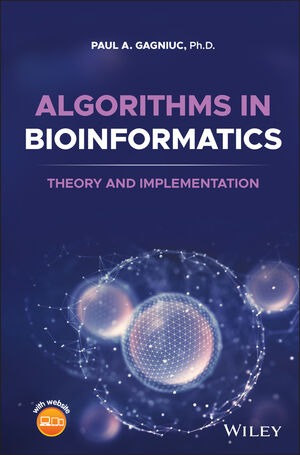
Explores a comprehensive and insightful treatment of the practical application of bioinformatic algorithms in a variety of fields. Delivers a fulsome treatment of some of the main algorithms used to explain biological functions and relationships. It introduces readers to the art of algorithms in a practical manner which is linked with biological theory and interpretation. The book covers many key areas of bioinformatics, including global and local sequence alignment, forced alignment, detection of motifs, Sequence logos, Markov chains or information entropy. Other novel approaches are also described, such as Self-Sequence alignment, Objective Digital Stains (ODSs) or Spectral Forecast and the Discrete Probability Detector (DPD) algorithm. Readers will also benefit from the inclusion of: A detailed presentation of new methods, such as Self-sequence alignment, Objective Digital Stains and Spectral Forecast ; A treatment of sequence alignment, including local sequence alignment, global sequence alignment and forced sequence alignment with full implementations ; Discussions of position-specific weight matrices, including the count, weight, relative frequencies, and log-likelihoods matrices ; A detailed presentation of the methods related to Markov Chains as well as a description of their implementation in Bioinformatics and adjacent fields ; An examination of information and entropy, including sequence logos and explanations related to their meaning ; A chapter on philosophical transactions that allows the reader a broader view of the prediction process ; Extensive worked examples with detailed case studies that point out the meaning of different results
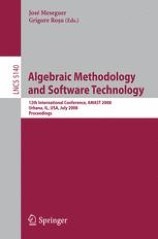
This book constitutes the refereed proceedings of the 12th International Conference on Algebraic Methodology and Software Technology, AMAST 2008, held in Urbana, IL, USA, in July 2008.

This book contains a selection of the best papers given at the international Advanced Computer Systems Conference in October 2006 in Miedzyzdroje, Poland. Combining research areas from both Computer Science and Industrial Management.

On a newly emerging field of discrete differential geometry and an excellent way to access this exciting area. It surveys the fascinating connections between discrete models in differential geometry and complex analysis, integrable systems and applications in computer graphics. The authors take a closer look at discrete models in differential geometry and dynamical systems. Their curves are polygonal, surfaces are made from triangles and quadrilaterals, and time is discrete. Nevertheless, the difference between the corresponding smooth curves, surfaces and classical dynamical systems with continuous time can hardly be seen. This is the paradigm of structure-preserving discretizations. Current advances in this field are stimulated to a large extent by its relevance for computer graphics and mathematical physics.
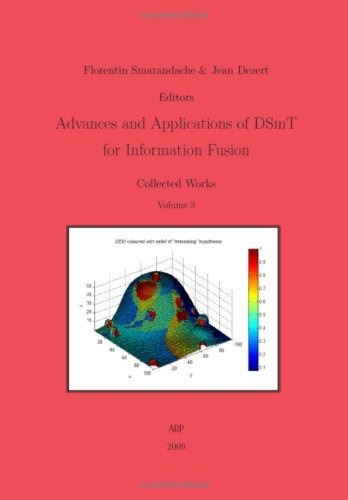
One of the most comprehensive and flexible fusion theory based on belief functions. It can work in all fusion spaces: power set, hyper-power set, and super-power set, and has various fusion and conditioning rules that can be applied depending on each application. Some new generalized rules are introduced in this volume with codes for implementing some of them. For the qualitative fusion, the DSm Field and Linear Algebra of Refined Labels (FLARL) is proposed which can convert any numerical fusion rule to a qualitative fusion rule. When one needs to work on a refined frame of discernment, the refinement is done using Smarandache s algebraic codification. New interpretations and implementations of the fusion rules based on sampling techniques and referee functions are proposed, including the probabilistic proportional conflict redistribution rule.
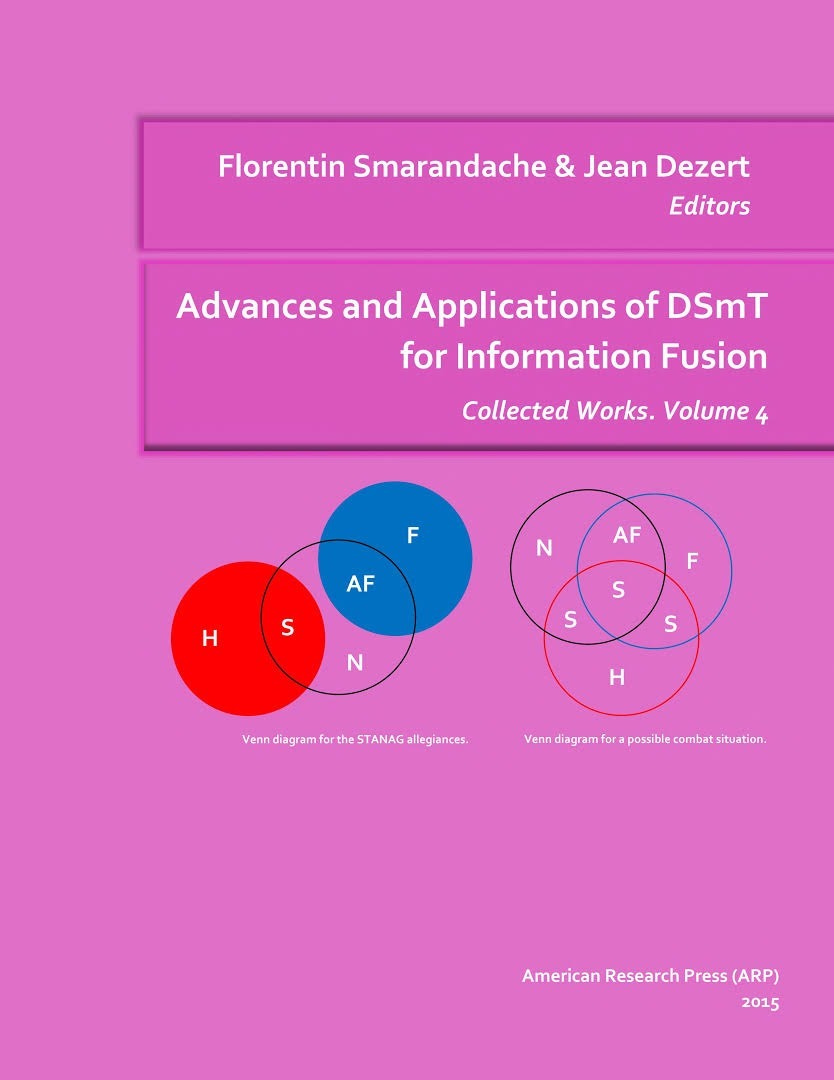
One of the most comprehensive and flexible fusion theory based on belief functions. It can work in all fusion spaces: power set, hyper-power set, and super-power set, and has various fusion and conditioning rules that can be applied depending on each application. Some new generalized rules are introduced in this volume with codes for implementing some of them. For the qualitative fusion, the DSm Field and Linear Algebra of Refined Labels (FLARL) is proposed which can convert any numerical fusion rule to a qualitative fusion rule. When one needs to work on a refined frame of discernment, the refinement is done using Smarandache s algebraic codification. New interpretations and implementations of the fusion rules based on sampling techniques and referee functions are proposed, including the probabilistic proportional conflict redistribution rule.
In just the past five years, deep learning has taken the world by surprise, driving rapid progress in fields as diverse as computer vision, natural language processing, automatic speech recognition, etc. This book presents an introduction to deep learning and various applications of deep learning such as recommendation systems, text recognition, diabetic retinopathy prediction of breast cancer, prediction of epilepsy, sentiment, fake news detection, software defect prediction and protein function prediction.
As a web designer or developer, you know how powerful DOM scripting is for enhancing web pages and applications, adding dynamic functionality and improving the user experience. You've got a reasonable understanding of JavaScript and the DOM, but now you want to take your skills further. This book is all you need—it shows you how to add essential functionality to your web pages.
Macromedia's architecture is like a chest filled with precious jewels, and this book is quite simply the key to open it! One of the most important tools provided with Flash is the Macromedia Component Architecture: a framework of components written in ActionScript 2, based on established design patterns, that provides a wealth of functionality you can just bolt on to your Flash applications when desired. This can save you an enormous amount of time during application development and help you improve the quality of your code. What's more, the source code is included, so if you can't find the component you need within the component architecture, you can just modify existing components to create your own!

Apparently, the ability of animals and robots to adapt in a real world cannot be explained or realized by one single function in a control system and mechanism. That is, adaptation in motion is induced at every level from the central nervous system to the musculoskeletal system.Thus,weorganized the International Symposium on Adaptive Motion in Animals and Machines (AMAM) forscientist sandengineersconcerned with adaptation on various level stobebrought together todiscussprinciplesateachleveland to investigate principles governing total systems.
Probabilistic techniques are increasingly being employed in computer programs and systems because they can increase efficiency in sequential algorithms, enable otherwise nonfunctional distribution applications, and allow quantification of risk and safety in general. This makes operational models of how they work, and logics for reasoning about them, extremely important. Abstraction, Refinement and Proof for Probabilistic Systems presents a rigorous approach to modeling and reasoning about computer systems that incorporate probability. Its foundations lie in traditional Boolean sequential-program logic—but its extension to numeric rather than merely true-or-false judgments takes it much further, into areas such as randomized algorithms, fault tolerance, and, in distributed systems, almost-certain symmetry breaking. The presentation begins with the familiar "assertional" style of program development and continues with increasing specialization: Part I treats probabilistic program logic, including many examples and case studies; Part II sets out the detailed semantics; and Part III applies the approach to advanced material on temporal calculi and two-player games.

Daraa Highway - Ghabagheb - Syria
+963-15 2050 - 15 860 380 /1/2/3 - 11 662 3900